
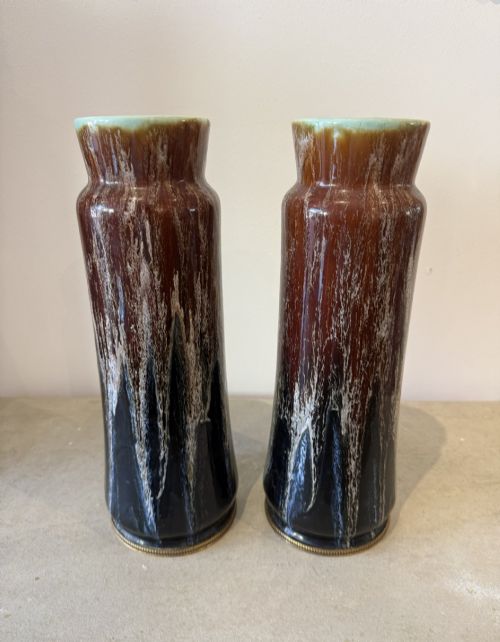
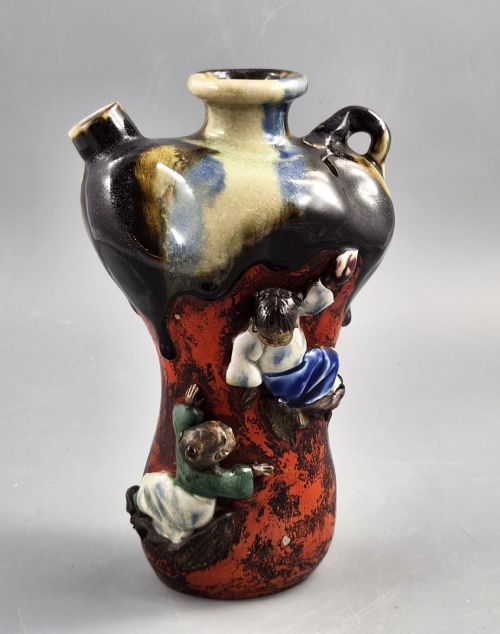


Drip Glaze Ceramic Vase
A drip glaze ceramic vase brings tactile, flowing colour to a room through centuries of kiln experimentation.
Drip Glaze Ceramic Vase
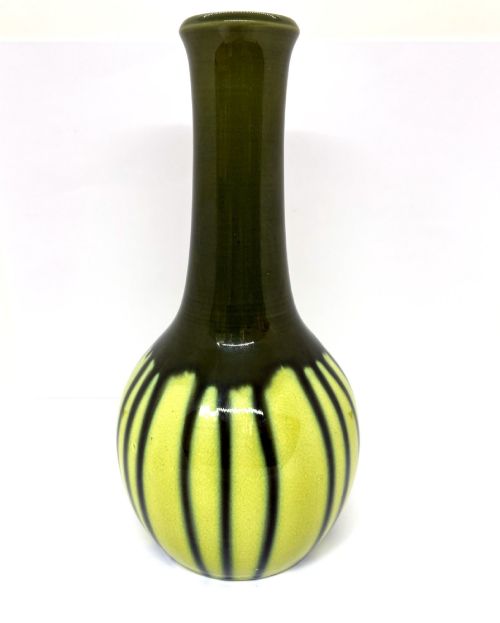
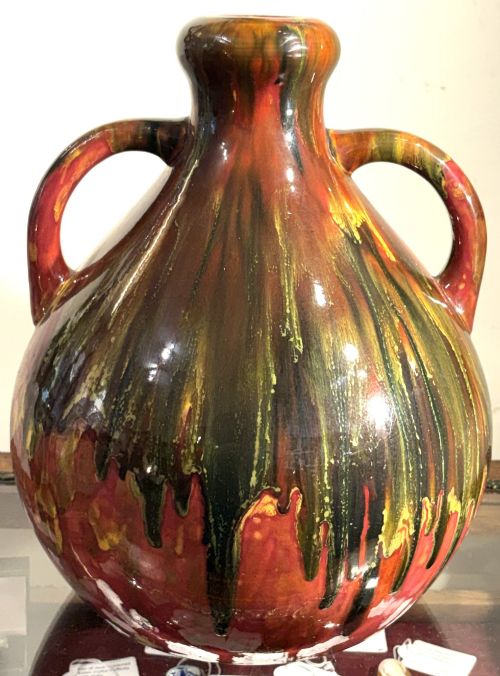
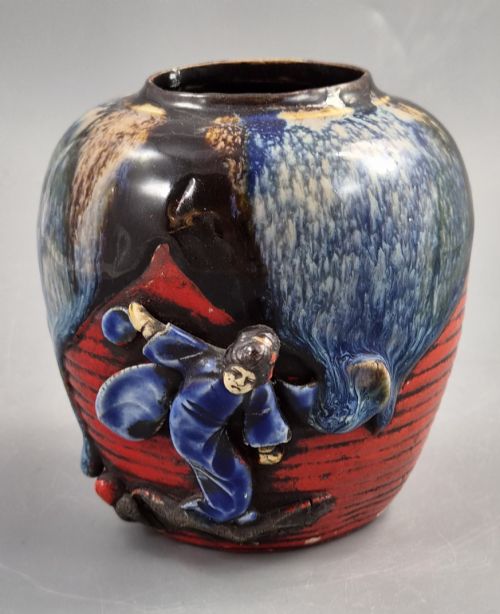
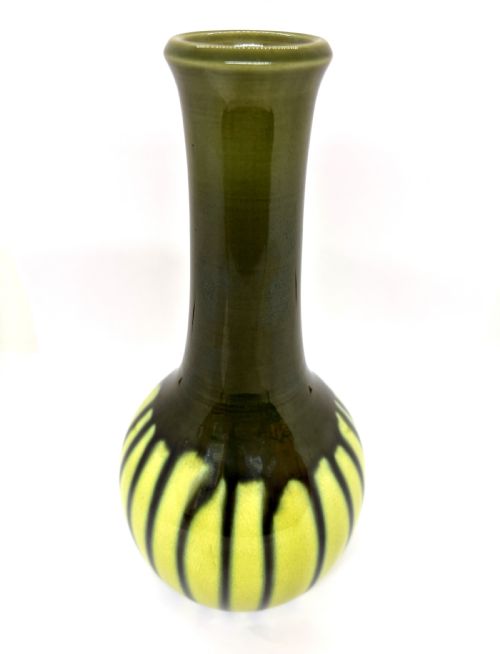
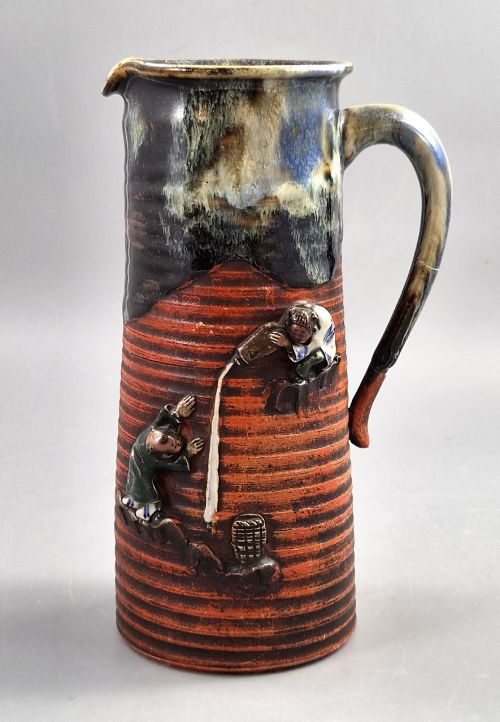
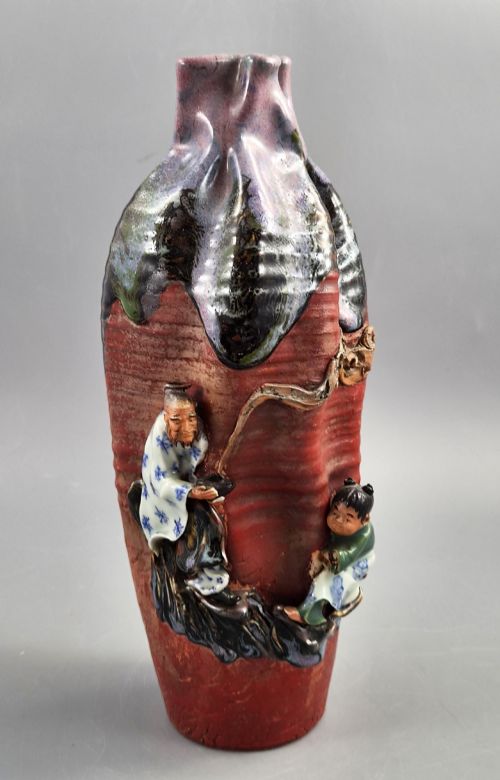
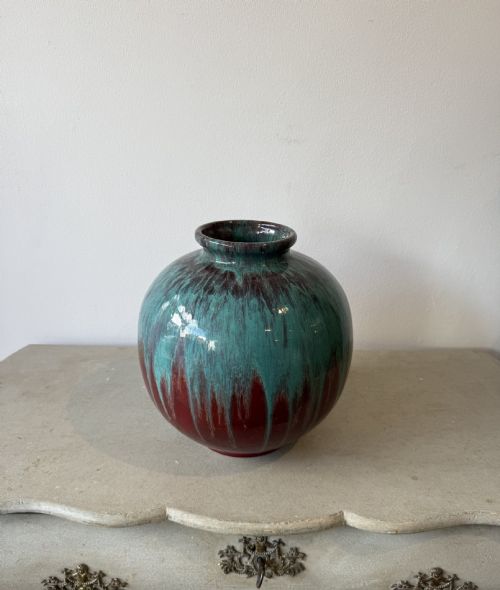
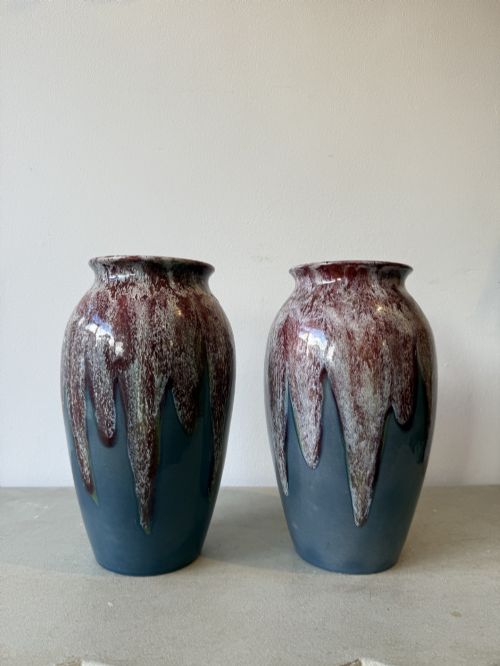
A drip glaze ceramic vase displays the deliberate downward run of molten surface colour across earthenware, stoneware or terracotta bodies. Buyers exploring this phrase encounter pieces spanning from the late nineteenth century into the twentieth century, originating from English potteries, French kilns and Japanese workshops.
The common form on this page is the art pottery vase, often decorated in styles that cross the Victorian, Edwardian and Art Nouveau periods. These vessels take shapes ranging from twin-handled vessels and bottle vases to jars and pitchers.
Makers in this category often worked within specific regional movements, producing distinctive studio pottery finishes. The resulting objects combine utilitarian ceramic forms with experimental surface treatments developed by period potteries.
How they were made
Potters built these vessels using earthenware, stoneware or terracotta clays, shaped by hand or on the wheel before firing. The defining characteristic involves the application of liquid glaze formulated to run, pool and overlap during intense kiln temperatures.
Makers layered contrasting compounds, such as crystalline, flambé or metallic washes, allowing gravity to dictate the final pattern as the vitreous surface cooled and solidified. This pyrotechnic process ensured that each vessel achieved a completely individual pattern of drips and pooling.
Listings feature earthenware, stoneware and terracotta bodies finished with glossy, flambé and crystalline glazes across periods from eighteen-eighty to nineteen-thirty.
What varies in quality
Quality rests in the intentionality and control of the glaze movement rather than accidental running. Superior examples demonstrate a deliberate balance between the body contour and the arrested motion of the surface vitreous layers.
The depth and complexity of the colour separation also determine the distinction of a piece. Finer vessels show rich interaction between overlapping tones, whereas lesser specimens display flat or muddy pools lacking visual dimension.
Burmantofts Faience·Boch Freres·Doulton·Cranston·Ruskin Pottery·Inoue Ryosai·Ban-ni
The Drip Glaze Ceramic Vase Glossary
- Earthenware
- Porous pottery fired at lower temperatures, commonly used as a base for heavy glazes. It requires an impervious surface coating to hold liquids.
- Stoneware
- Dense, vitreous pottery fired at higher temperatures until the clay body vitrifies and becomes non-porous. This material provides a durable foundation for complex surface finishes.
- Flambé glaze
- A variegated finish characterised by streaked, mottled or pooled colours resulting from reduction firing. The technique creates unpredictable visual depth through metallic oxides.
- Terracotta
- Unglazed or glazed red earthenware fired in a kiln. The reddish clay body often shows beneath transparent or semi-translucent surface treatments.
- Crystalline glaze
- A specialised ceramic finish where distinct zinc-silicate crystals grow during the cooling cycle. This produces star-like patterns suspended within the glassy matrix.
Drip Glaze Ceramic Vase: Frequently Asked Questions
What is a drip glaze ceramic vase?
A drip glaze ceramic vase is a vessel where liquid surface coatings run downward during the firing process. This technique creates overlapping streaks and pools of colour across the clay body.
Such pieces emerged prominently during the art pottery movements of the late nineteenth and early twentieth centuries. Potters valued the unpredictable, painterly results produced by the intense heat of the kiln.
How do I date a drip glaze ceramic vase?
Dating relies on examining the clay body, the style of the form and any impressed or painted factory marks underneath. Pieces from the Victorian and Arts and Crafts eras often feature distinct regional numbering systems.
Stylistic cues such as Art Nouveau curves or Japanese Meiji period motifs also help narrow down the decade of production. Glaze chemistry evolved significantly between eighteen-eighty and nineteen-thirty, offering further chronological clues.
Where were these vases made?
These vases originated in diverse ceramic centres across Europe and East Asia. English potteries, French studios and Japanese kilns all produced distinctive variations of the flowing glaze technique.
Each region applied local clay bodies and glaze recipes, resulting in distinct visual traditions. Japanese makers often combined traditional techniques with dramatic flambé surfaces, while European potteries explored experimental art pottery styles.
How do I display a drip glaze ceramic vase?
Displaying these vessels benefits from placement in natural light where the surface glaze can catch reflections. Their varied colour profiles suit both minimalist settings and traditional interiors.
Because the decoration is often concentrated on the exterior surface, positioning the vase where viewers can examine the pooling and runs enhances its visual impact.