


Dressing Table Hand Mirror
These dressing table hand mirror pieces offer a glimpse into personal grooming habits across centuries, combining practical glass with silver, wood, and enamel artistry.
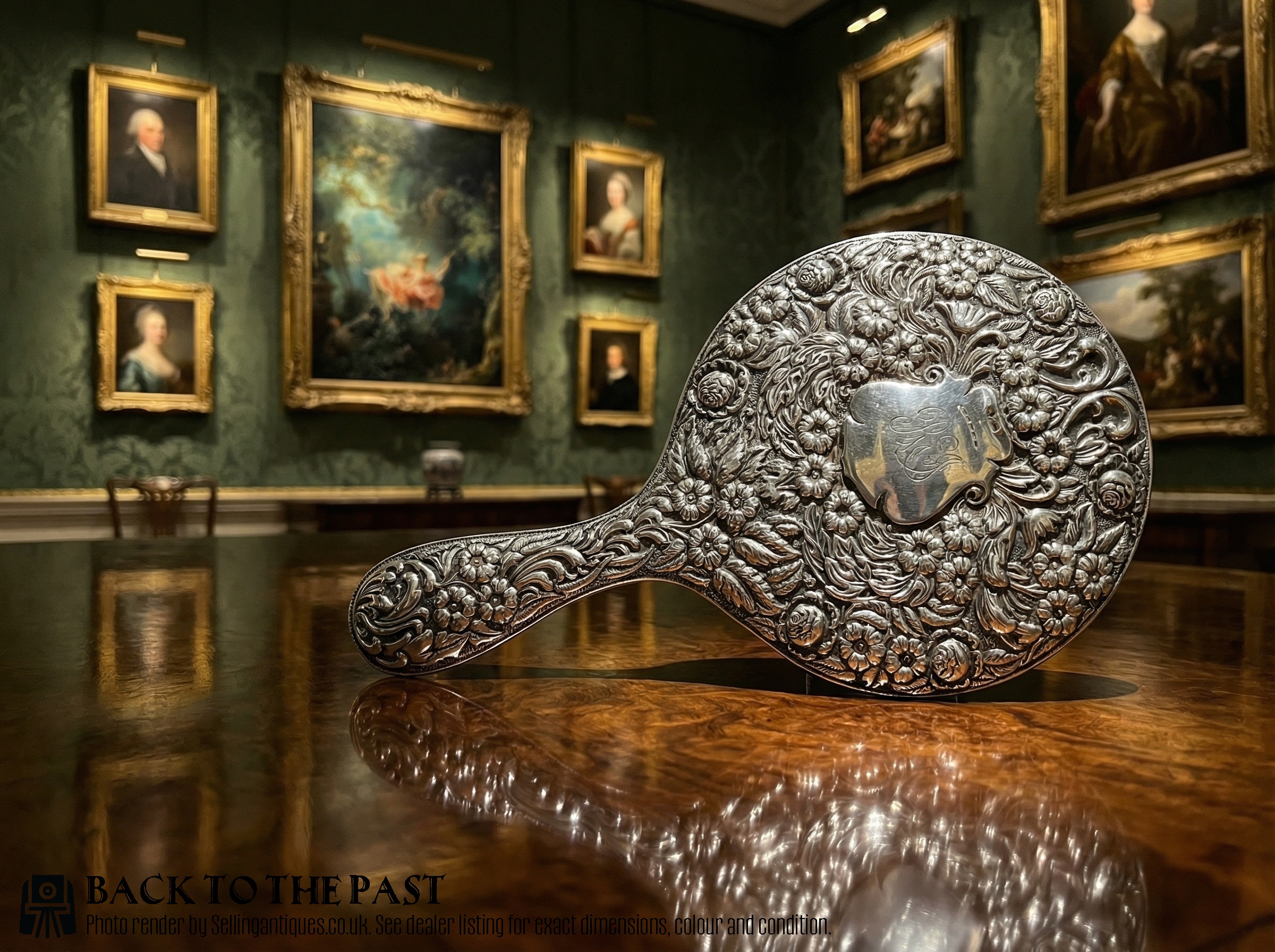
Dressing Table Hand Mirror
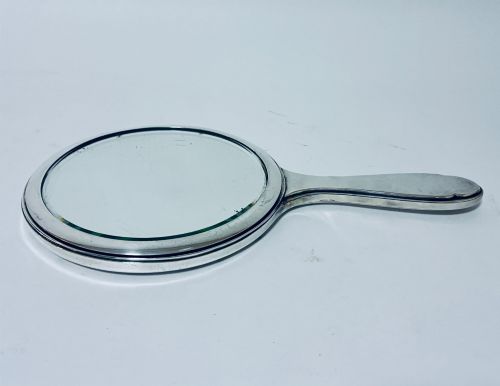
A dressing table hand mirror serves as a portable reflective glass piece, often found alongside larger vanity furnishings and matching brushes. These objects appear in styles ranging from Georgian and Regency forms to Edwardian and Art Deco designs.
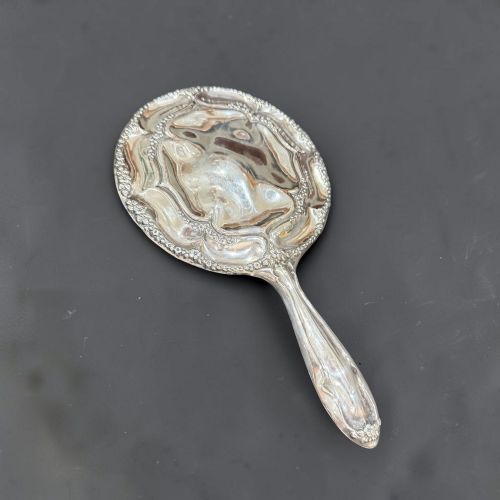
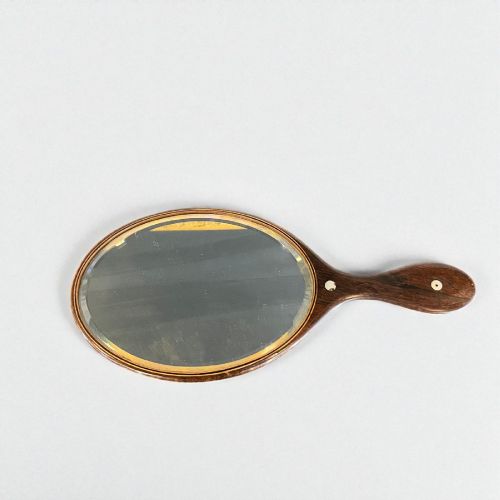
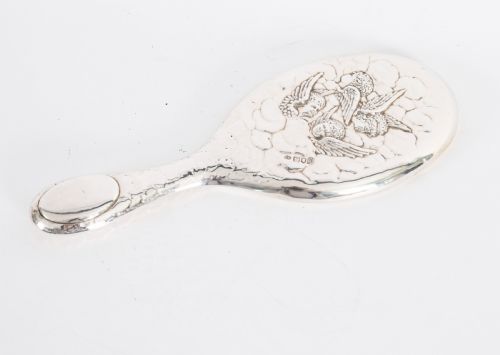
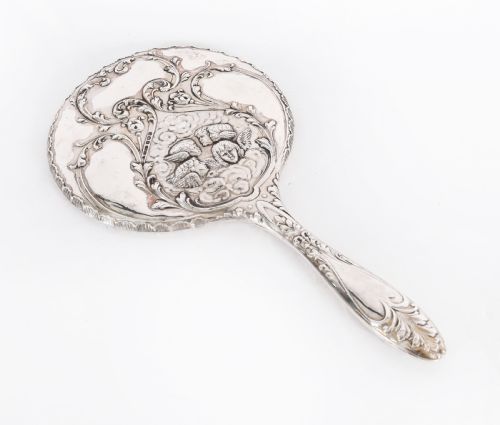
The pieces on this page span several centuries, with Edwardian sterling silver, Art Deco enamel work, and French nineteenth-century gilt bronze forming the core of what is available. Buyers will encounter both simple wooden frames and elaborate metalwork adorned with cherubs or Chinoiserie lacquering.
Materials and construction methods
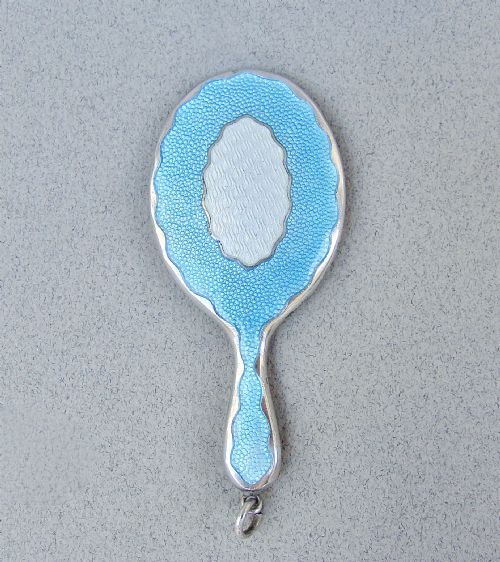
Sterling silver and silver plate provide the structural housing for many mirror plates, often shaped through embossing or fitted with guilloche enamel. Wood varieties such as satinwood, mahogany, and ebony appear alongside brass, ormolu, and champleve enamel.
Makers utilised original glass plates, sometimes double-sided, secured within frames carved from ivory or inlaid with shagreen. Chinoiserie lacquering and hand-painted details frequently embellish the non-reflective reverses.
Listings feature items incorporating sterling silver, glass, wood, brass, and enamel across periods from the eighteenth century to the mid-twentieth century.
Distinguishing finer examples
Quality rests in the crispness of the metal embossing, the preservation of the enamel work, and the clarity of the original mirror glass. Pieces bearing clear hallmarks from established silversmiths demonstrate superior craftsmanship.
The weight of the silver or bronze, the intricacy of carved wooden or ivory details, and the integrity of fitted hinges or plates separate standard production items from finer workshop pieces.
Henry Williamson·Charles Boyton·S Blanckensee and Son·Joseph Meissonnier·William Comyns
The Dressing Table Hand Mirror Glossary
- Guilloche enamel
- A decorative technique involving precise, intricate mechanical patterns engraved beneath translucent enamel layers. This finish appears frequently on Art Deco vanity accessories.
- Ormolu
- Gilded bronze used extensively for decorative mounts and mirror frames during the nineteenth century. The process gives a rich gold appearance to the metal surface.
- Champleve
- An enamelling method where troughs are sunk into a metal surface and filled with vitreous colour before firing. It provides robust, patterned ornamentation on metal frames.
- Superstructure
- An upper shelving or mirrored framework built onto the top of a writing table or dressing surface. It houses smaller mirrors and drawers.
- Valet set
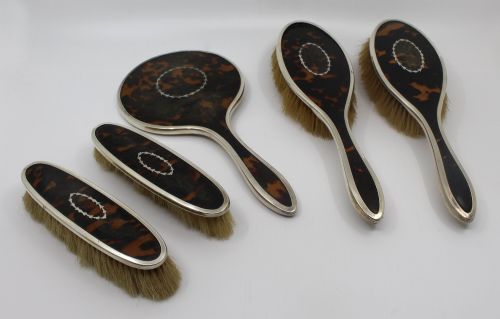
- A matched group of grooming items, typically including a hand mirror, brushes, and clothes fasteners, designed for daily personal care.
Dressing Table Hand Mirror: Frequently Asked Questions
What periods do these mirrors come from?
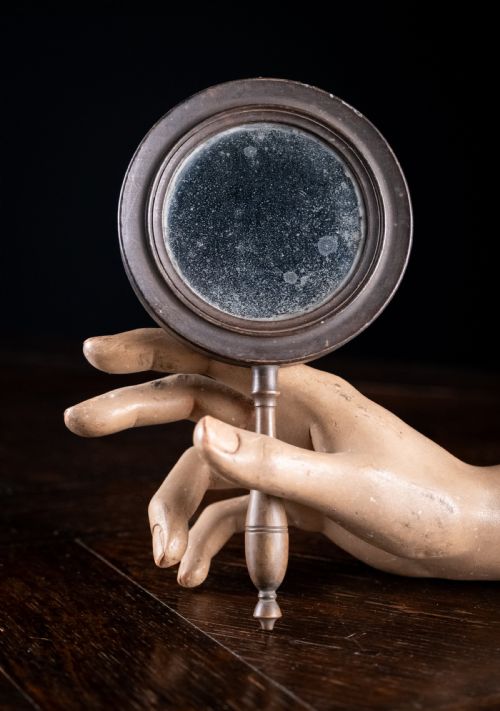
The selection spans from the eighteenth century through the Regency and Victorian eras into Edwardian, Art Deco, and mid-twentieth-century designs. Each period brings distinct decorative traits, from Georgian mahogany to streamlined Art Deco enamel.
Exact dating often relies on silver hallmarks or distinctive styling cues associated with specific decades.
How were these mirrors used originally?
These handheld pieces were standard accessories on bedroom dressing tables for personal grooming and cosmetic application. They were often matched with hairbrushes and trays as part of a complete vanity set.
Portable designs allowed users to check the back of their hair or adjust garments from multiple angles.
Are the mirror plates original?
Many pieces retain their original glass plates, which may show light foxing or age spots appropriate for their age. Some examples feature double-sided glass or bevelled edges held securely within metal or wooden frames.
Examining the back of the glass and its seating helps determine originality.
What materials are most common?
Sterling silver and silver plate dominate the metal category, frequently paired with guilloche enamel or embossed detailing. Wood frames in mahogany, satinwood, and ebony also appear alongside brass, ivory, and ormolu.
Choice of material generally aligns with the prevailing style of the manufacturing period.