

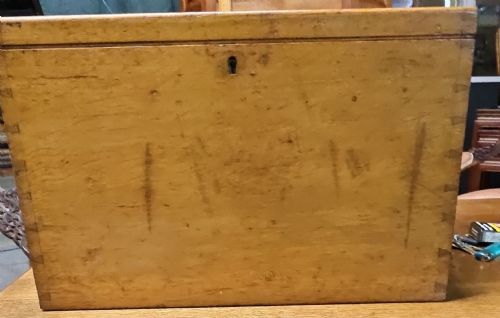
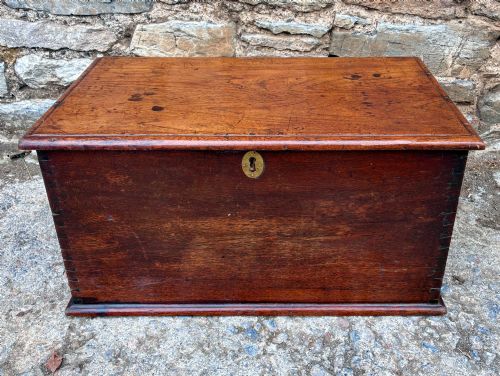
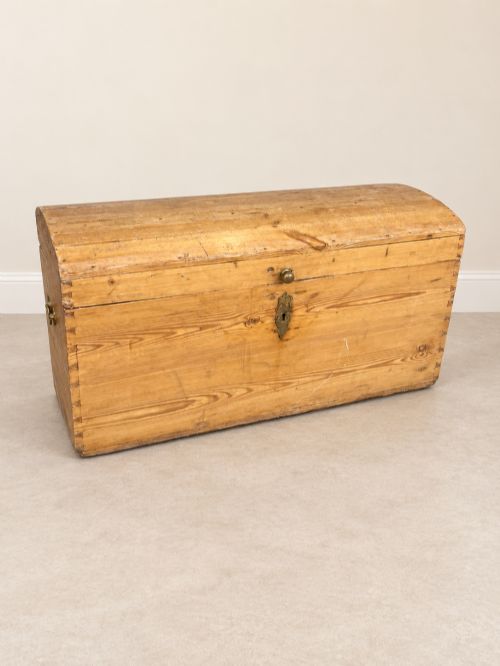
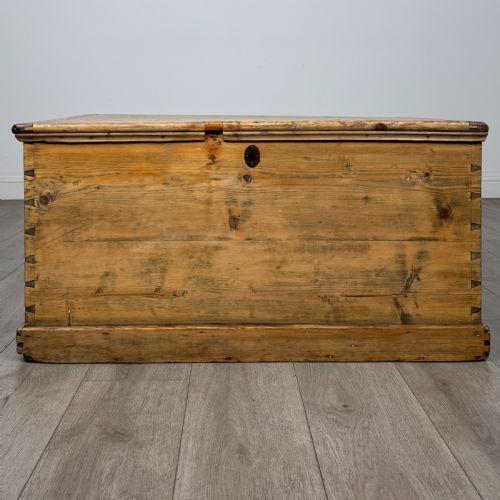
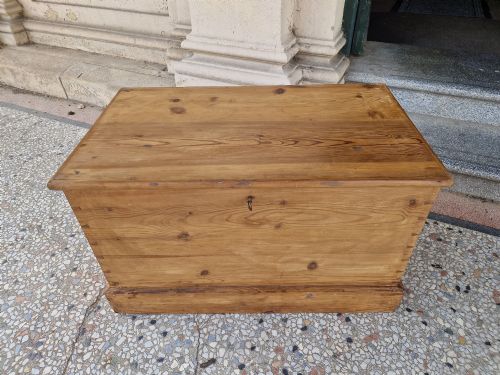


Dovetailed Wooden Box
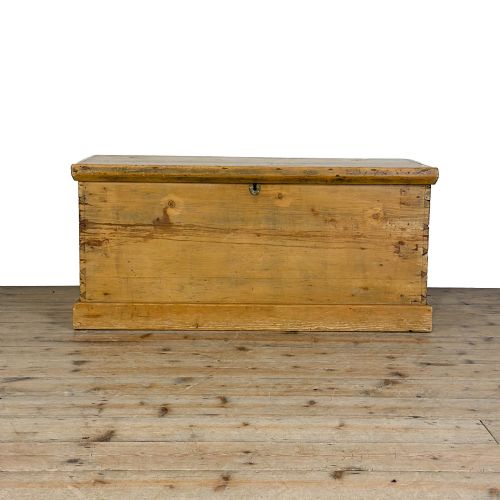
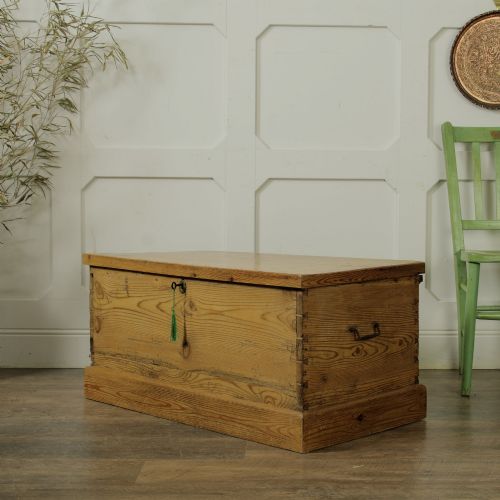
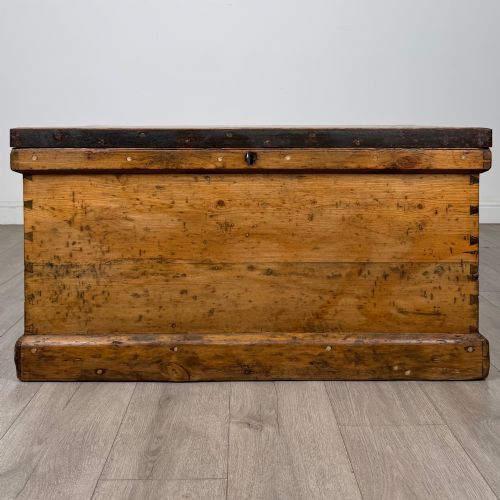
These dovetailed wooden box items are practical storage pieces and utility chests built to last, sought after for their honest construction and warm timber character.
Dovetailed Wooden Box
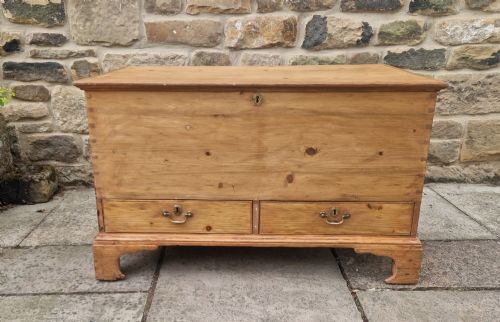
When you search for a dovetailed wooden box, you encounter robust storage vessels designed for utility and travel, spanning periods from the seventeenth century through to the Victorian era. The selection centres heavily upon pine blanket boxes, mule chests, and utility trunks, alongside occasional mahogany and camphor wood campaign pieces.
You meet simple country pine blanket chests alongside fitted tool boxes and brass-bound military trunks. These objects served domestic, travel, and trade purposes, evolving from early joined chests into substantial household storage.
How they were made
Joiners and cabinet makers constructed these pieces using solid timbers such as pine, elm, mahogany, camphor wood, and teak. Boards were joined at the corners with interlocking dovetail joints to ensure structural strength without relying on modern adhesives.
Iron and brass hardware, including carrying handles, strap hinges, and locking plates, were fitted to secure the lids and withstand heavy daily use.
Dovetailed Wooden Box Retail Price Guide 2026
Typical asking prices for dovetailed wooden box among the pieces listed under this phrase on Sellingantiques today, from the lower quarter to the upper quarter. They describe what is for sale here now, not the wider market.
Many nineteenth-century tool chests still retain traces of carpenter's chalk and pencil marks inside the lid, left by the hands that built them.
What varies in quality
Quality rests in the precision of the woodwork and the integrity of the original timber. Tighter, finer dovetail joints and well-figured grain distinguish superior examples from utilitarian crates.
The survival of original brass or iron hardware, internal candle boxes, and fitted drawers elevates a piece above standard domestic containers.
The Dovetailed Wooden Box Glossary
- Dovetail
- A corner joint formed by interlocking wedge-shaped fingers. This method provides immense tensile strength and defines the construction of quality boxes.
- Mule chest
- A storage chest featuring one or more drawers beneath the main compartment. It bridges the design gap between a simple blanket box and a full chest of drawers.
- Campaign chest
- Portable furniture built in sections with recessed brass handles and corner brackets. These pieces were made for military officers on the move.
- Blanket box
- A deep chest traditionally used for storing textiles and bedding. These practical household items were standard in bedrooms before fitted wardrobes.
Dovetailed Wooden Box: Frequently Asked Questions
What is a dovetailed wooden box used for?
These boxes serve primarily as functional storage for household linens, blankets, and everyday items. Their sturdy construction allows them to double as occasional seating or coffee tables in a living space.
Historically, specific variations accommodated tools, wine bottles, or military equipment during travel. Today, they integrate easily into modern interiors to conceal clutter while adding rustic or period character.
How do I date a wooden chest?
Dating relies on observing timber choices, construction techniques, and hardware styles across different eras. Early examples utilise heavy solid boards and hand-cut joinery, while later Victorian versions often incorporate machine-cut precision and internal partitions.
Examining the type of nails, hinges, and locks provides further clues to the period of manufacture. Regional styles and secondary woods also help narrow down the decade or century.
What is the difference between pine and camphor wood?
Pine is a domestic softwood commonly used for utilitarian country furniture, blanket boxes, and tool chests throughout the Georgian and Victorian periods. It takes wax or polish well and yields a warm, honeyed appearance over time.
Camphor wood is an exotic hardwood prized for its distinct aromatic scent and natural insect-repellent properties. It was frequently selected for campaign chests and trunks destined for tropical climates.
How do I care for antique timber boxes?
Maintain these pieces by keeping them away from direct heat sources and dramatic humidity fluctuations, which can cause timber to split. Regular applications of a suitable beeswax polish help nourish the wood and preserve the surface sheen.
Avoid harsh chemical cleaners on the exterior finish or metal mounts. Gentle dusting with a dry cloth is sufficient for routine upkeep.