

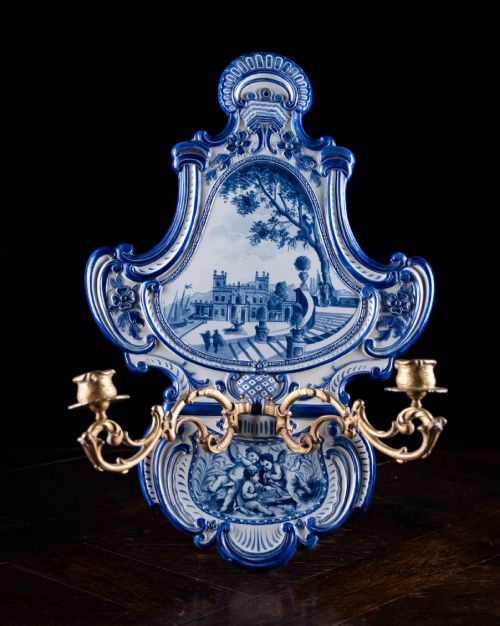
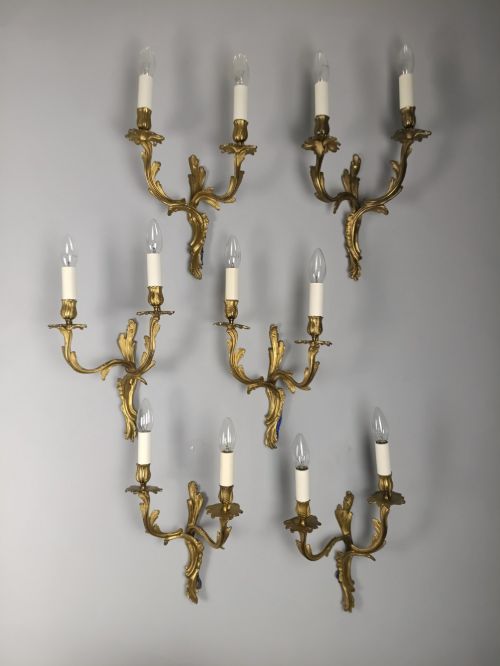
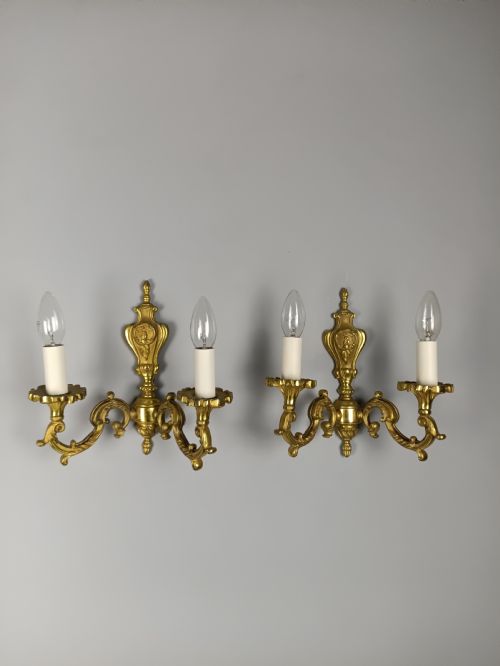
Double Light Wall Sconces
Double light wall sconces bring layered illumination to a room, mounted directly to a vertical surface with two branching arms.
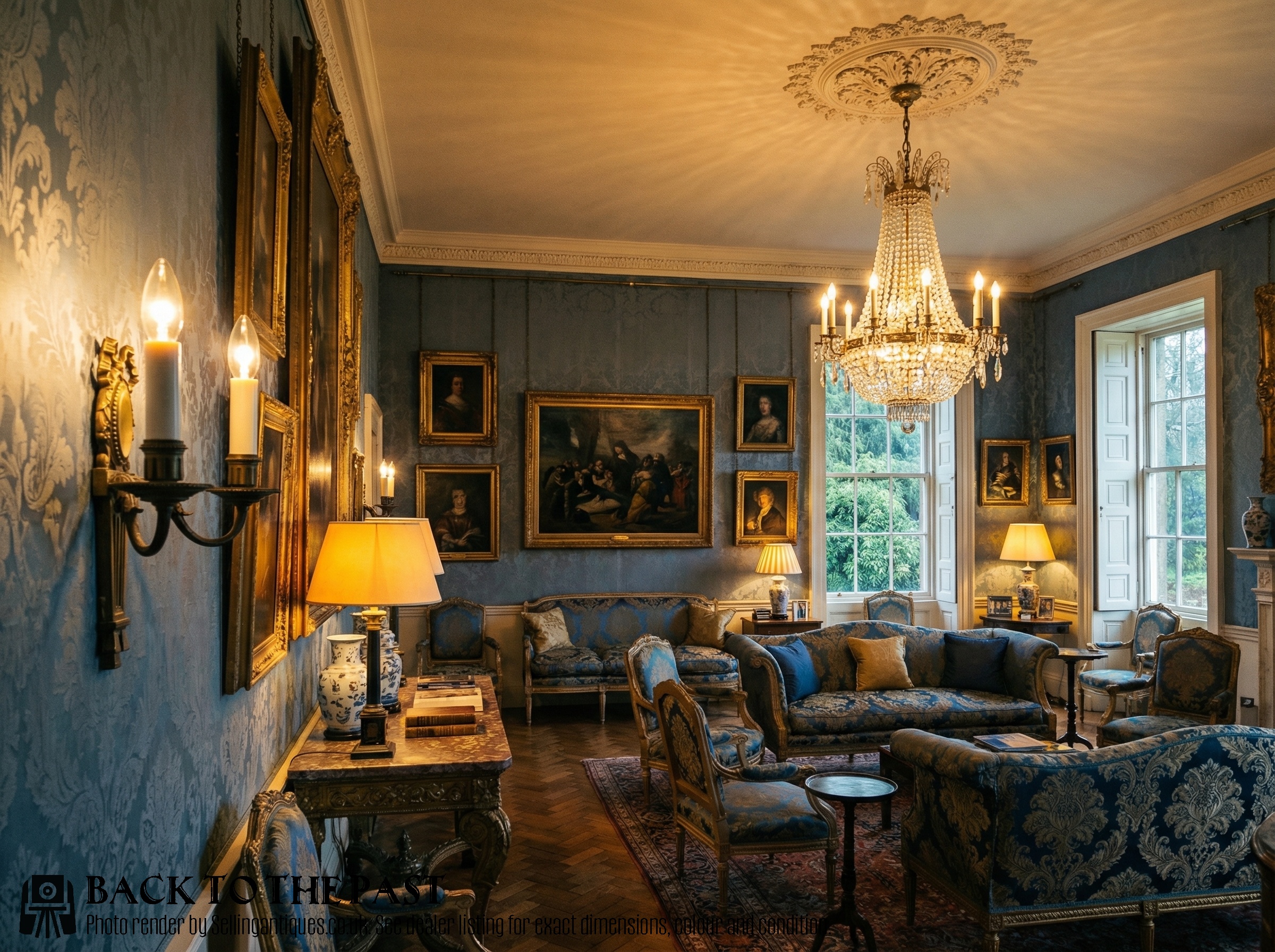
Double Light Wall Sconces
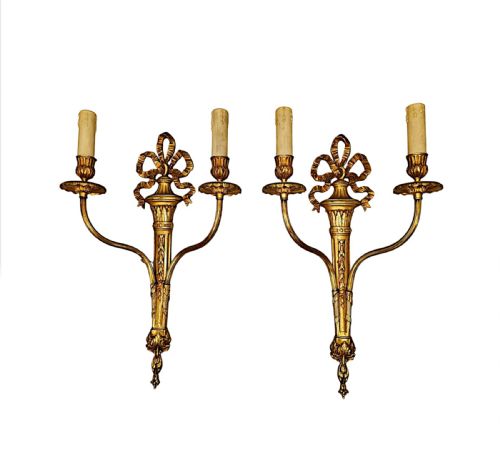
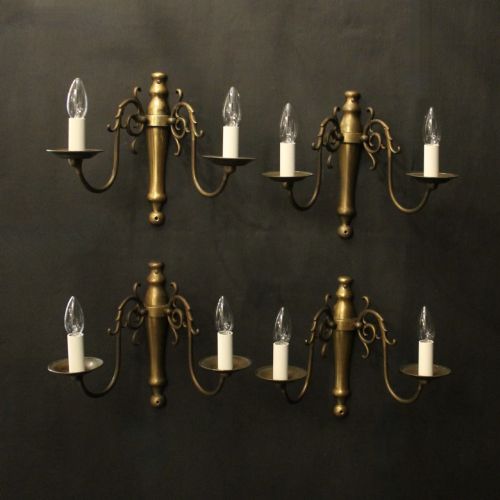
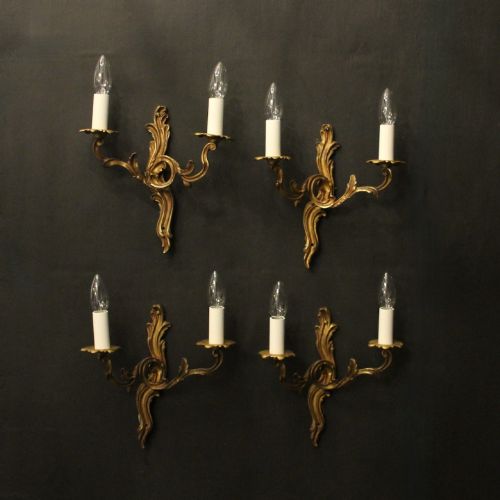
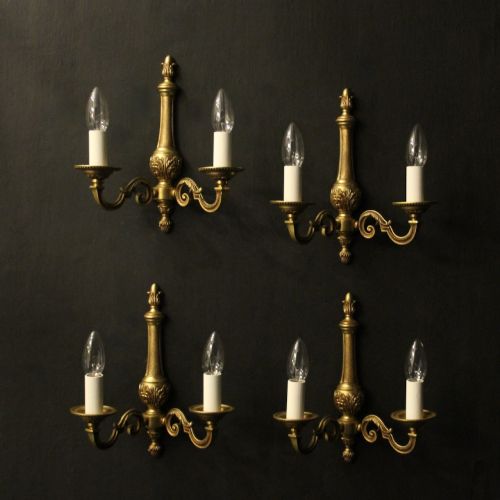
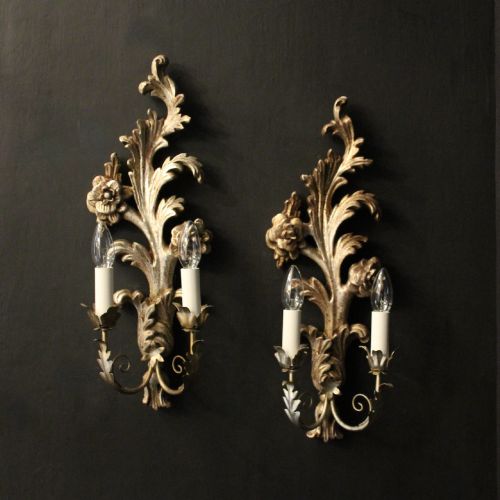
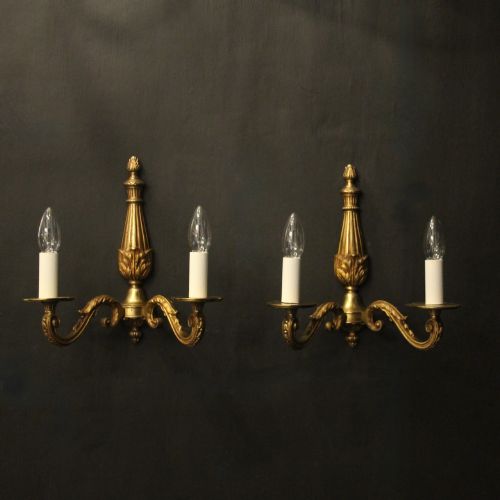
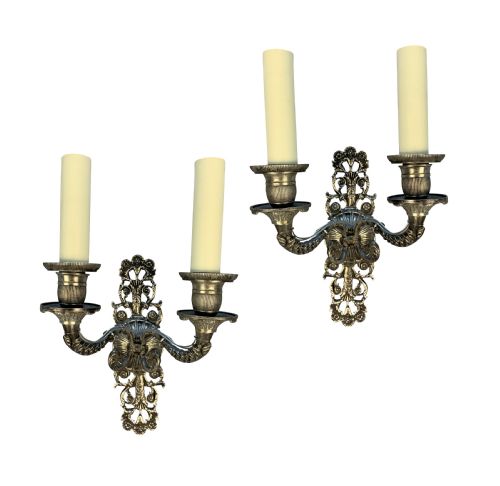
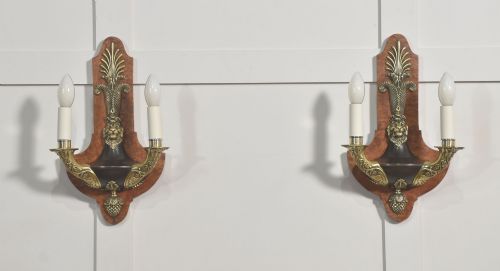
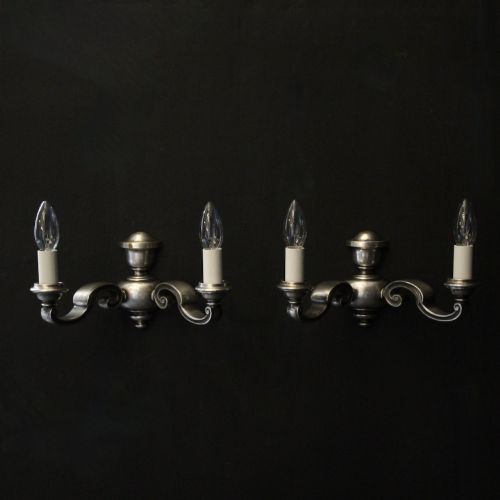
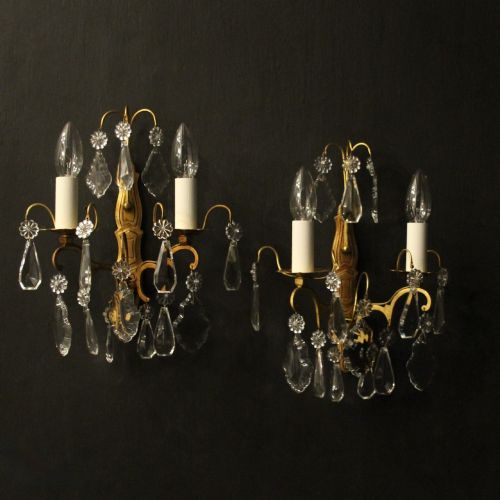
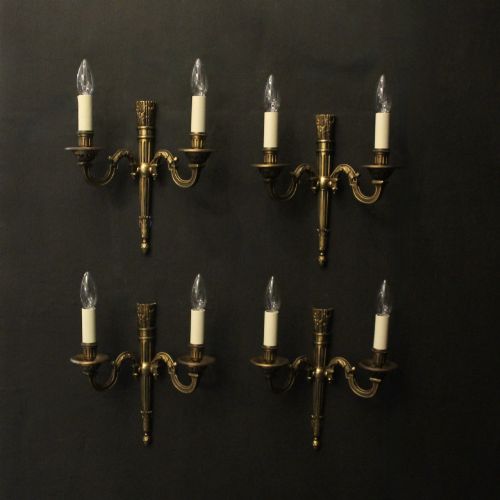
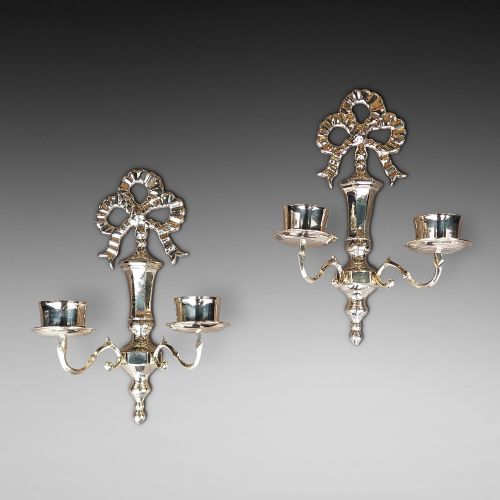
The most common form on this page is the paired wall light with twin arms, frequently styled in French Rococo, Empire, or Neoclassical revivals. These objects serve both practical lighting and decorative functions, appearing as sets of matching pairs or larger groupings across various domestic spaces.
Materials and construction methods
Metalwork dominates the construction of these fixtures, with brass, bronze, and gilt metal forming the primary structural bodies. Many pieces utilise gilding techniques, applying layers of gold leaf or ormolu to brass and bronze surfaces to achieve a rich metallic sheen. Silver plating and crystal elements also appear in specific examples from the period.
Casting and chasing are evident in the formation of detailed scrollwork, ribbons, and vegetal motifs typical of French and English revival styles. Assembly involves securing twin arms to a central backplate designed to mount flush against a wall.
Materials span brass, bronze, ormolu, silver plate, and crystal across Victorian, Edwardian, and twentieth-century periods.
Distinctions in craftsmanship
Quality in these wall fixtures rests upon the depth of the casting and the crispness of the chased detail in the metalwork. Superior examples display sharply defined ornamentation on the arms and backplate, whereas simpler items exhibit softer edges and more generic contours.
The choice of base metal and the application of surface treatments further differentiate the tier of the object. Heavier cast bronzes with carefully preserved ormolu or gilding represent a higher standard of manufacture compared to lighter brass or plated alternatives.
Casier·F. & C. Osler·Villeroy & Boch
The Double Light Wall Sconces Glossary
- Ormolu
- Gilded bronze, where a finely ground gold-mercury amalgam is applied to a bronze base and heated until the mercury vaporises, leaving a durable gold coating. This finish was widely employed on fine French light fittings.
- Girandole
- An ornamental bracket wall light featuring a reflecting mirror attached to the backplate. The mirror surface multiplies the light cast by the candles or bulbs.
- Rococo
- An ornate design style characterised by asymmetrical scrollwork, C-scrolls, and naturalistic plant motifs. It heavily influences many nineteenth-century French wall lights.
- Twin Arm
- A configuration where two branching candle holders or lamp holders extend from a single central backplate. This layout defines the majority of the sconces seen here.
Double Light Wall Sconces: Frequently Asked Questions
How do I install double light wall sconces?
These fixtures mount directly to wall junctions where electrical wiring or structural support is provided. Professional installation by an electrician ensures secure attachment to the wall surface.
Positioning depends on the height of the room and the intended purpose, often flanking mirrors, fireplaces, or doorways for balanced illumination.
Were these fixtures originally wired for electricity?
Many nineteenth and early twentieth-century examples were originally designed for candles before later conversion to electricity. Some mid-century pieces were manufactured specifically for electric lamps.
Wiring methods vary, so checking the internal fittings helps determine how the fixture connects to modern domestic circuits.
How do I clean gilded brass wall sconces?
Maintenance requires gentle dusting with a soft, dry cloth to prevent the accumulation of debris in the chased details. Abrasive cleaners and harsh chemical polishes must be avoided to protect delicate gilt surfaces.
Water and liquid cleaners can damage older metallic finishes and should only be used if specifically formulated for antique metals.
How do I date an antique wall sconce?
Dating relies on stylistic indicators such as revival motifs, the weight of the metal, and the construction methods used on the backplate. Examining screw types, casting seams, and mounting hardware provides further clues to the period of manufacture.
Comparative analysis with documented designs from makers or known historical periods helps narrow down the decade.