

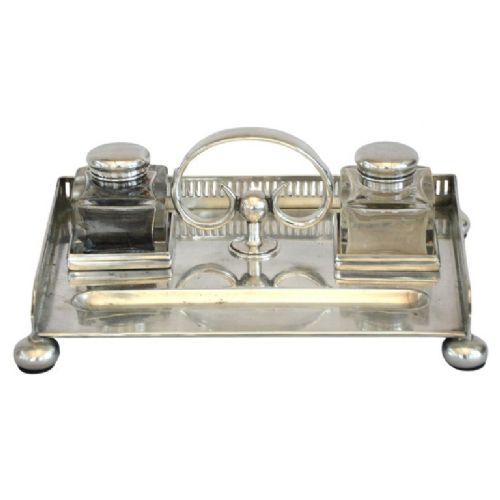


Double Inkwell Set
A double inkwell set organises the writer's desk, holding two glass or ceramic ink pots within a fitted stand of brass, silver, marble or carved wood.
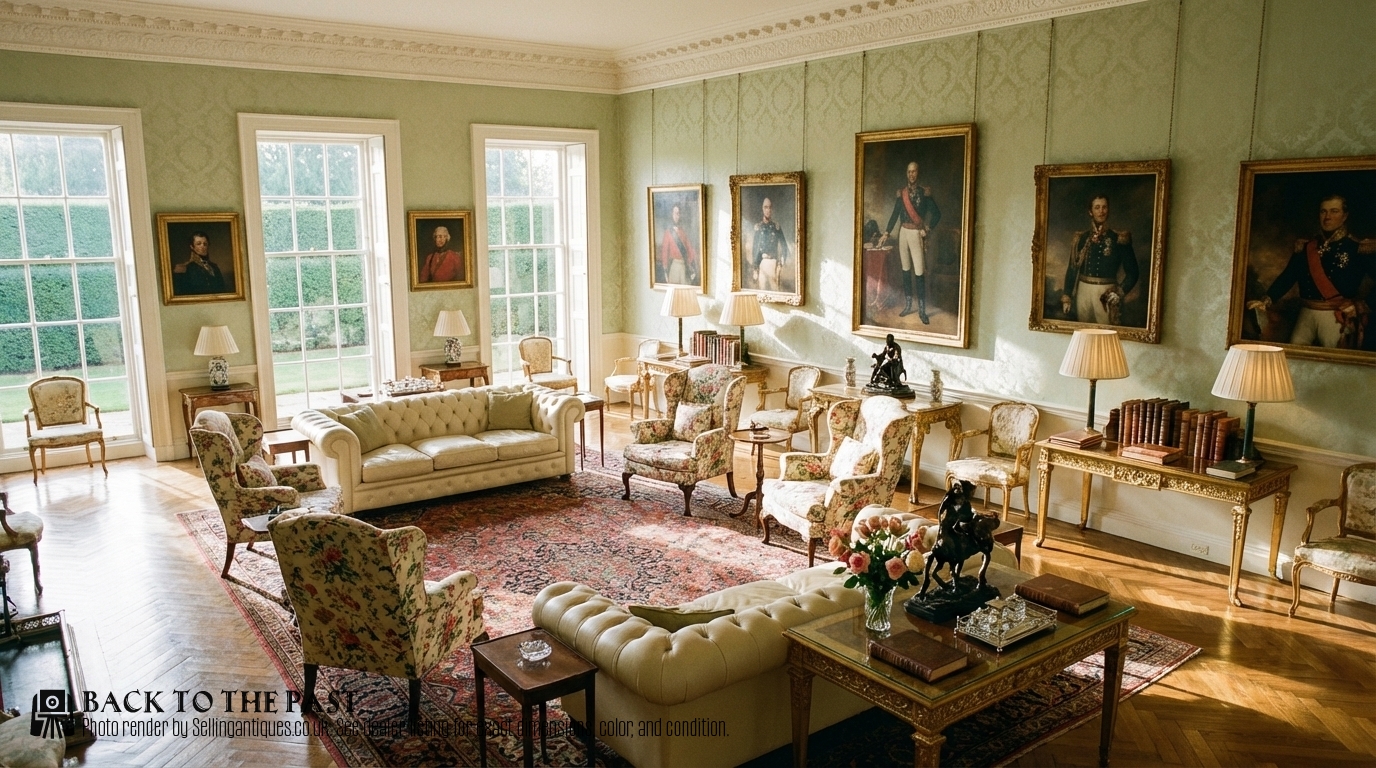
Double Inkwell Set
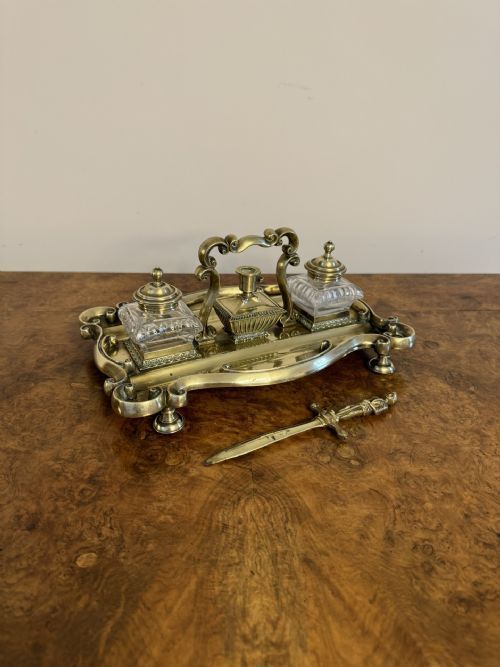
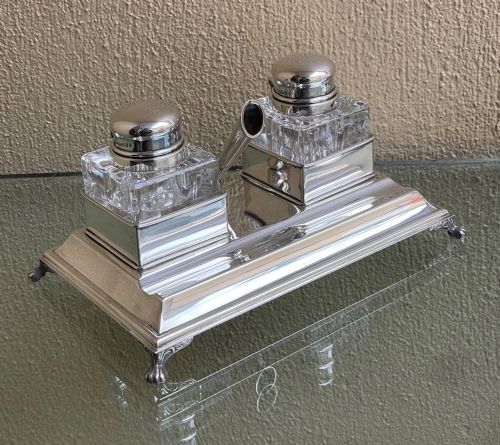
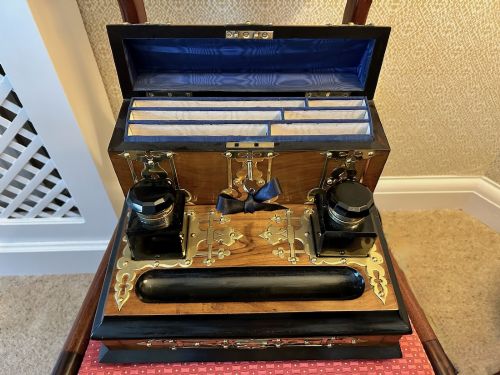
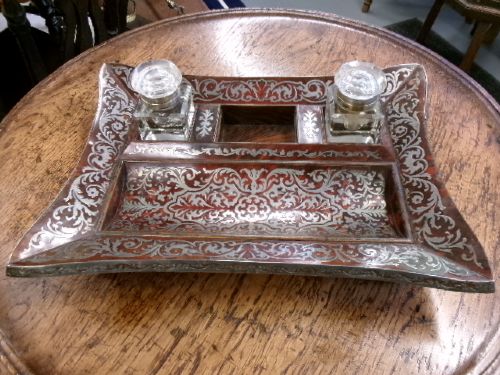
A double inkwell set serves as a desk accessory designed to hold dual writing fluids, most commonly encountered here in Victorian, Edwardian and nineteenth-century brass, silver-plated, wooden and marble configurations. These inkstands incorporate fitted wells alongside trays for pens, stamps and sealing wax, forming the centrepiece of period writing furniture. The selection ranges from ornate French ormolu and Boulle work to carved Black Forest wooden figures and solid sterling silver stands.
The objects span Georgian, Victorian, Edwardian and mid-twentieth-century periods, showing how domestic correspondence required dedicated desk equipment before the widespread adoption of the fountain pen. Many examples integrate additional desk accessories, such as chambersticks, drawers, clocks or candlestands, transforming a simple ink reservoir into a substantial desk tidy.
How they were made
Maker's workshops utilised traditional metalworking techniques including cast brass, gilt ormolu, silver plating and solid sterling silver, frequently pairing metals with cut glass ink bottles. Cabinetmakers constructed stands from walnut, mahogany, oak and ebony, sometimes incorporating brass mounts, marquetry inlay or intricate hand-carved wood elements.
Ceramic and stone versions employ materials such as Dutch Delft blue and white faience, French faience and marble bases. Metal components often display chased or cast ornamentation, while carved wooden pieces utilise detailed regional craftsmanship like Black Forest animal figures.
Listings feature brass, cut glass, sterling silver, silver plate, ormolu, marble and various woods across the nineteenth and twentieth centuries.
What varies in quality
The distinction between standard utility items and superior examples lies in the weight of the metal castings, the crispness of hand-chased or carved details, and the integrity of the materials. Fine pieces feature heavy cast brass, thick silver plating or solid silver, alongside genuine cut glass bottles that match the exact contours of the fitted stand.
Construction methods determine durability, with superior wooden stands showing precise joinery, well-fitted drawers and high-grade veneers such as burr walnut or Boulle marquetry. Original components, including matching ink pots and fitted lids, preserve the integrity of the piece.
Walker And Hall·James Cartland And Sons·Daniel Holy·Moser·Jules Dalou
The Double Inkwell Set Glossary
- Standish
- A portable desk stand containing inkwells, pen holders and accessory compartments for writing materials. This term frequently applies to Georgian and Victorian examples.
- Boulle work
- A form of marquetry using tortoiseshell and brass inlay developed in France and popular on nineteenth-century French desk sets. It creates a striking contrast of dark surfaces and golden metallic patterns.
- Ormolu
- Gilt bronze mounted onto decorative objects and furniture, widely utilised in French nineteenth-century desk accessories to provide a rich golden finish.
- Faience
- Tinned-glazed earthenware produced in regions such as Delft and France, seen in ceramic inkstand bases and pots. It displays painted blue and white or multicoloured surface designs.
- Sheffield plate
- An early fused metal technique involving a thin sheet of sterling silver fused to a copper base, characteristic of eighteenth and early nineteenth-century desk stands.
Double Inkwell Set: Frequently Asked Questions
What is a double inkwell set?
A double inkwell set is a desk accessory featuring a base or stand holding two separate ink pots, allowing a writer access to different coloured inks or a backup supply.
These pieces typically date from the nineteenth and early twentieth centuries, incorporating materials like brass, silver, glass and wood.
How were double inkwell sets used?
They sat upon a desk or writing table to provide a stable reservoir of ink for dip pens during the era of handwritten correspondence.
Many designs also included channels for resting pens, compartments for postage stamps, and small drawers for nibs and sealing wax.
How do I identify Victorian pieces?
Victorian desk sets often display heavy brass casting, ornate floral or scroll decoration, and rich wooden bases like walnut or mahogany.
English examples from this period may also bear hallmarks on silver components or registration marks stamped into the metal.
Are original ink bottles common?
While many stands survive, finding the exact original glass ink inserts can be challenging because glass easily chips or breaks over time.
Listings that specify original bottles or ink pots indicate a higher degree of completeness for the desk set.
How do I care for antique metal stands?
Brass, bronze and silver-plated stands benefit from gentle dusting and minimal cleaning to preserve their historic patination and surface finishes.
Harsh chemical polishes should be avoided, particularly on silver-plated items or delicate ormolu and gilt surfaces.