

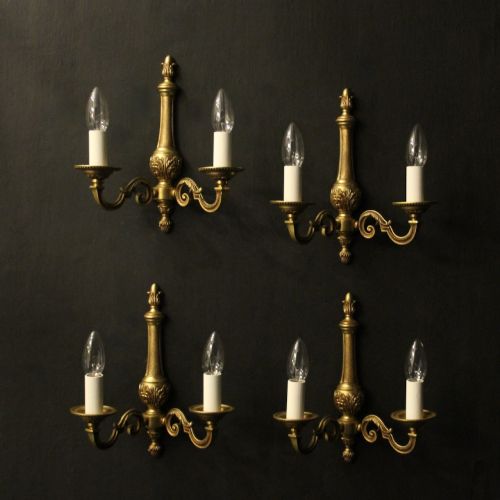
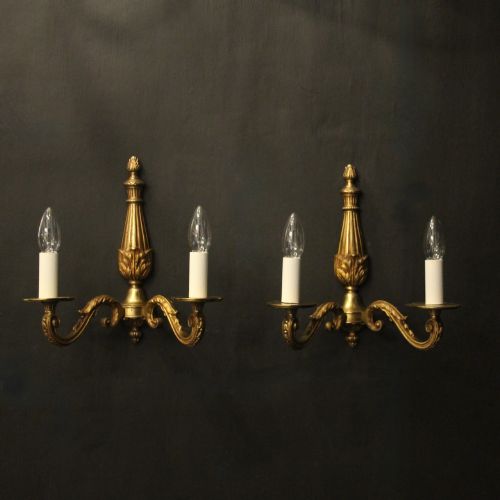
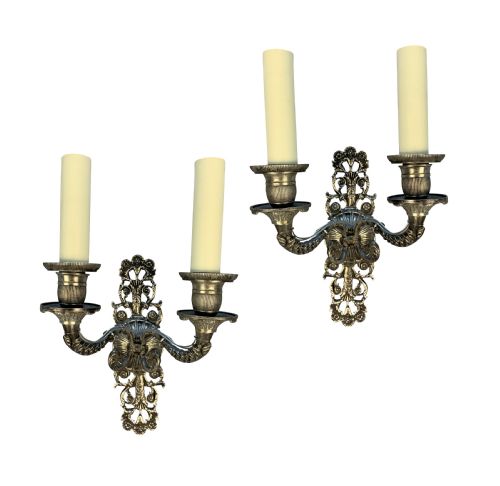
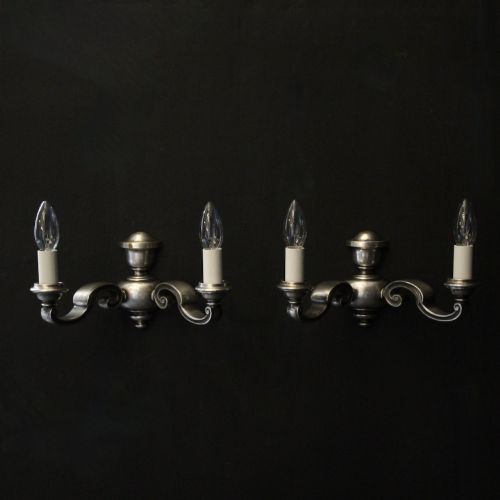
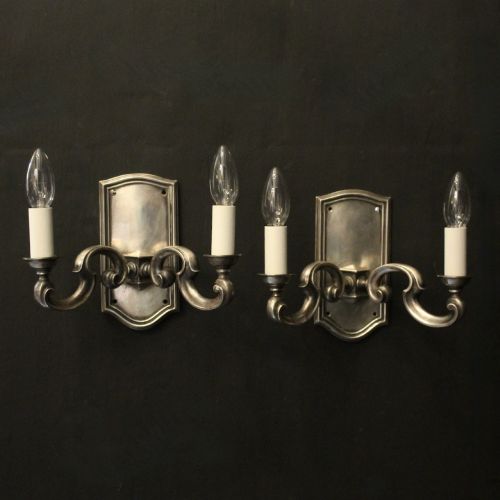
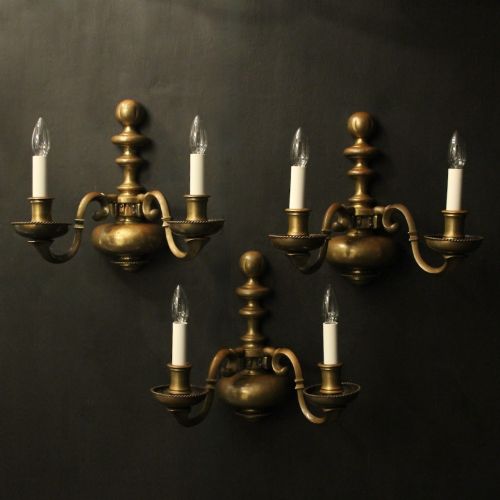
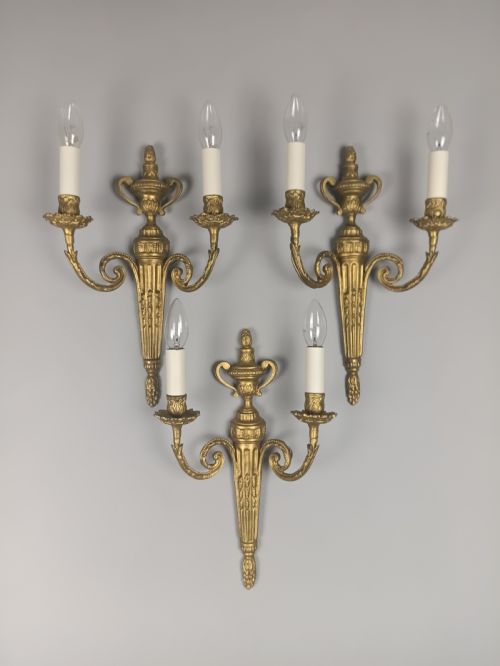
Double Candle Wall Sconces
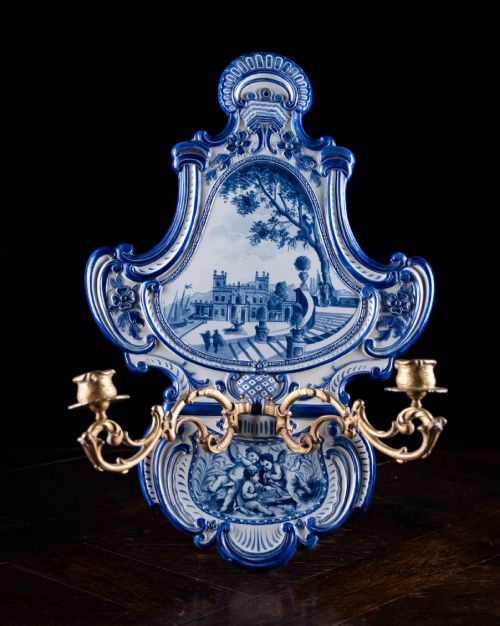
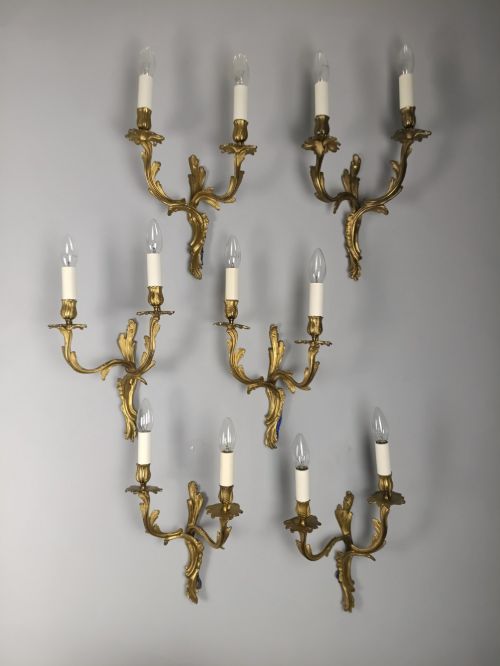
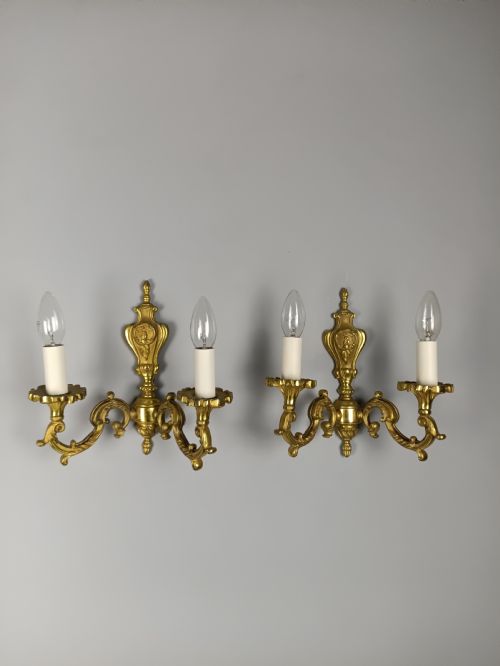
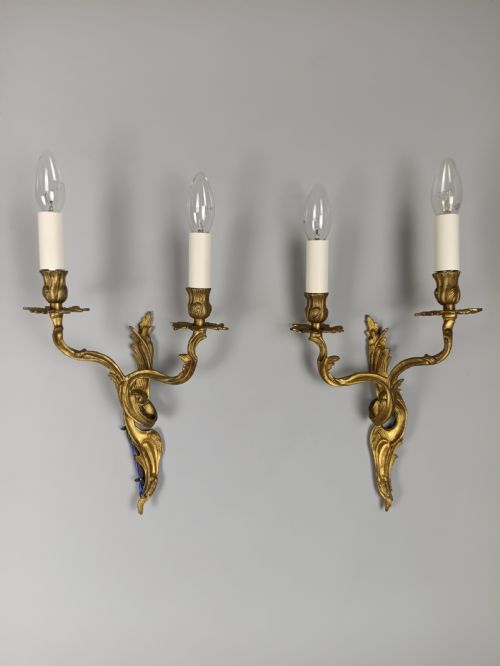
Double candle wall sconces bring warmth and character to a room, casting gentle light from pairs of arms mounted directly to the masonry.
Double Candle Wall Sconces
Double candle wall sconces deliver paired illumination along hallways, reception rooms and intimate spaces, utilising twin arms designed to hold two candles or their electrical equivalents. These fixtures emerge in forms ranging from compact pairs to expansive sets spanning multiple matched pieces.
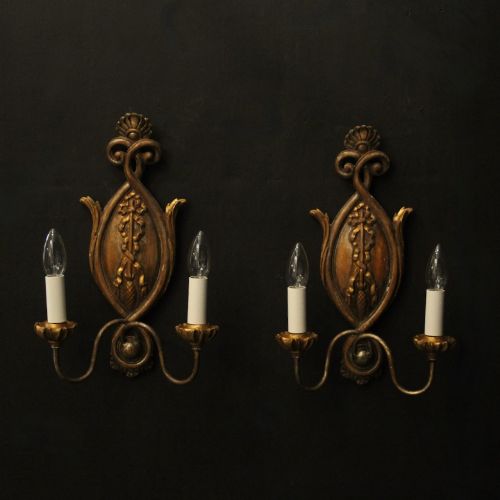
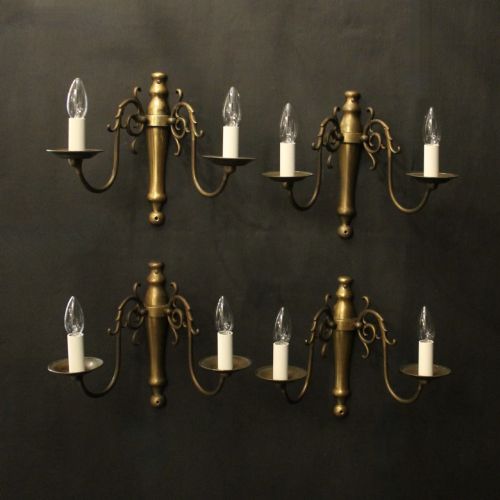
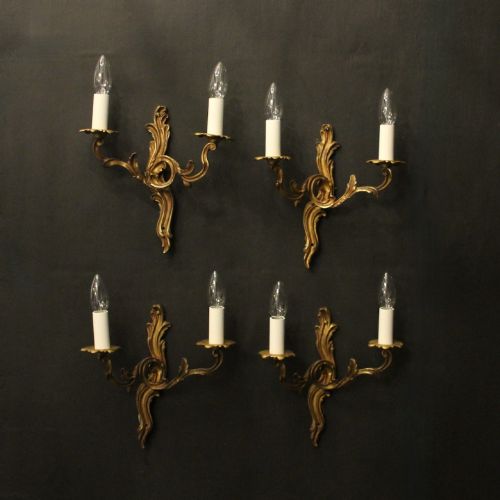
The selections encountered here span periods from the nineteenth century through the 1930s, encompassing English craft and continental workshops. French designs frequently display ornate Rococo scrolls or Neoclassical symmetry, while English interpretations often favour restrained brass or silver-plated compositions.
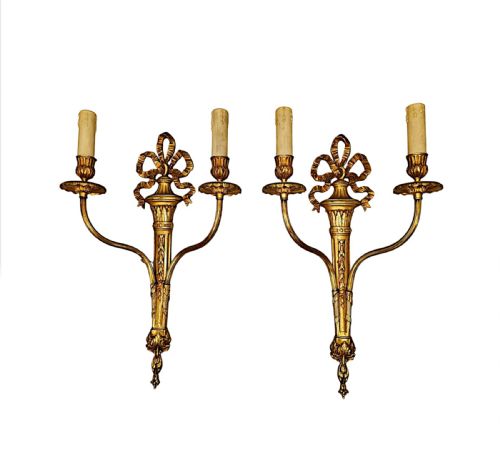
Buyers seeking double candle wall sconces will encounter distinct stylistic revivals, including Adam, Louis XV and Empire motifs. These historicist revivals draw upon earlier centuries to supply decorative wall lighting for period interiors.
How they were made
Makers utilised cast bronze, brass and ormolu to form the rigid backplates and branching arms of these wall lights. Gaining rigidity from metal casting, the components were frequently finished with surface gilding or silver plating to enhance reflectivity against panelled walls.
Ornamental details such as ribbon bows, floral garlands and acanthus leaves were cast separately or chased by hand before assembly. These decorative elements were then soldered or mechanically joined to the main structural arms and backplates.
Several pairs preserve the gentle lean of arms shaped by decades of faithful candle tending in high-ceilinged rooms.
What varies in quality
The standard of a sconce rests on the crispness of its casting and the depth of its surface finish. Finer examples exhibit sharply defined foliage and drapery without the softening of detail often seen in secondary castings.
Proportion and balance dictate the visual weight of the fixture against the wall. Superior pieces maintain harmonious symmetry between the twin arms and the backplate, ensuring the mounted light sits plumb and integrated within its architectural setting.
F. & C. Osler·Liberty·Villeroy & Boch
The Double Candle Wall Sconces Glossary
- Ormolu
- Finely ground high-carat gold applied to a bronze base using a mercury amalgamation technique. This historic process yields a durable, warm metallic lustre characteristic of quality French decorative metalwork.
- Girandole
- An ornamental branched wall light or sconce, frequently incorporating a mirror backplate to reflect and multiply the candlelight. These pieces combine reflective glass with structural armatures for heightened illumination.
- Rococo
- A decorative style originating in eighteenth-century France, defined by asymmetrical scrolling forms, C-scrolls and naturalistic plant motifs. Revived in later centuries, it produces fluid, organic wall light designs.
- Neoclassical
- An artistic movement drawing inspiration from the classical art and architecture of ancient Greece and Rome. Pieces in this style display geometric symmetry, urn motifs and disciplined classical restraint.
- Twin Arm
- A configuration featuring two branching supports extending from a single central backplate. This arrangement accommodates a pair of light sources on one unified mounting.
Double Candle Wall Sconces: Frequently Asked Questions
Where should double candle wall sconces be placed?
These fixtures suit placement flanking mirrors, fireplaces or architectural entryways where balanced, paired illumination enhances the surrounding space. They function effectively at eye level in hallways or dining rooms to provide ambient secondary lighting.
Spacing requires consideration of proportion relative to adjacent furniture or wall panels. Mounting them at a consistent height ensures visual harmony across a room.
Are these sconces wired for electricity?
Many surviving examples have been converted from their original candle-holding format to accept electrical wiring. This adaptation allows them to function safely with modern electrical standards while retaining their historic metalwork.
Converters or electricians can install small candle-style bulbs that mimic the original flame appearance. Examination of the backplate reveals the wiring channels added during conversion.
How do I identify French styles?
French fixtures frequently display distinct decorative vocabularies such as Louis XV curves, Empire military trophies or Neoclassical urns. The casting quality and use of fire-gilded ormolu on bronze typically point to continental workshops.
Backplates on French pieces often incorporate mounting fixings characteristic of nineteenth-century foundry practices. Stylistic markers like ribbon crestings or cast acanthus leaves further aid attribution.
What is the difference between brass and bronze?
Brass is an alloy of copper and zinc, yielding a brighter golden tone when polished. Bronze is an alloy of copper and tin, producing a heavier, denser metal with a darker natural patina.
In wall lighting, bronze was frequently selected for finer chased work and subsequent gilding. Brass appeared widely in both cast and sheet forms for domestic English and continental fixtures.