

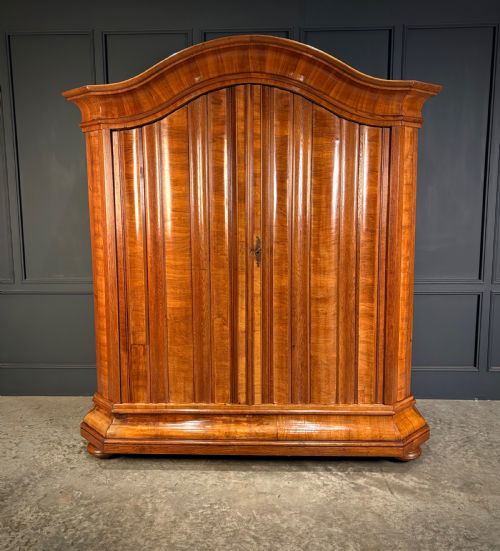
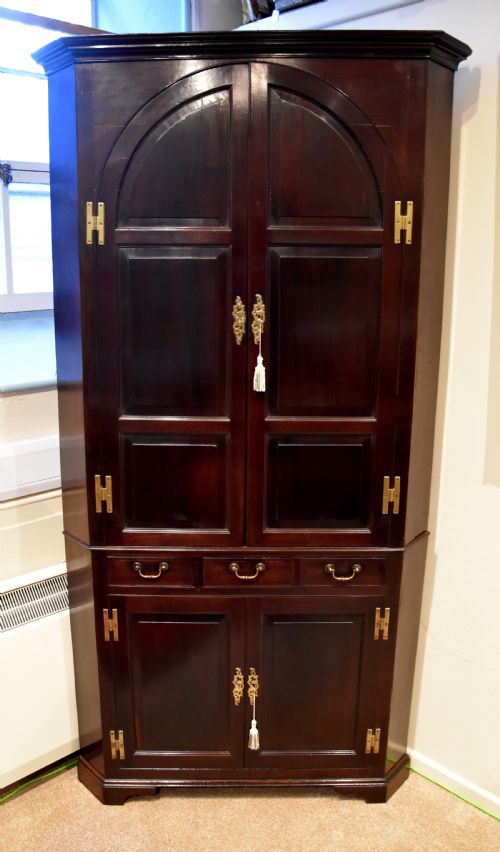


Double Arched Cabinet
A double arched cabinet brings striking architectural form and rich timber to a room, offering both generous storage and display space.
Double Arched Cabinet
A double arched cabinet takes several forms across the centuries, appearing as bureau bookcases, corner cupboards, display cabinets, and large wardrobes. When you search for a double arched cabinet, you encounter pieces designed to make a formal architectural statement through their distinctive twin-curved top profile.
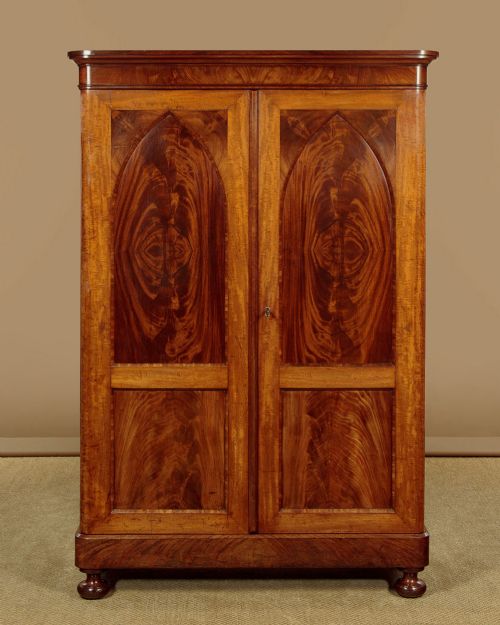
The pieces seen here stretch from the late seventeenth century through the Victorian era up to the nineteen-twenties, drawing on Queen Anne, Georgian, and William and Mary styles. Walnut and mahogany predominate, often featuring burr figuring or flame veneer, alongside oak, pine, and painted or japanned surfaces.
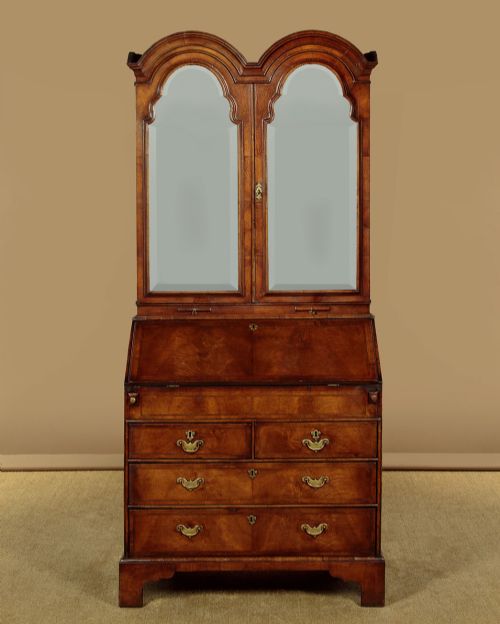
Bureau bookcases and bureau cabinets represent the most intricate examples of the form, combining a sloping writing desk below with glazed or panelled double doors above. Simpler corner cupboards and wardrobes offer the same signature arched silhouette on a scale suited to different rooms.
Materials and construction
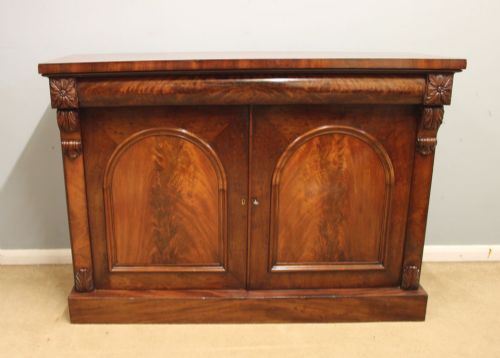
Cabinet makers utilised dense hardwoods like mahogany and walnut, frequently applying burr walnut or flame mahogany veneer to create rich visual movement across broad surfaces. Solid timbers such as oak and pine provide the underlying structural carcase for these substantial pieces.
Glazing bars divide the glass in the upper display sections, while brass hardware, including keyplates and handles, provides functional and decorative accents. Surface treatments range from clear polished wood to red lacquer and black japanning, reflecting the decorative tastes of different periods.
Double Arched Cabinet Retail Price Guide 2026
Typical asking prices for double arched cabinet among the pieces listed under this phrase on Sellingantiques today, from the lower quarter to the upper quarter. They describe what is for sale here now, not the wider market.
Some bureau bookcases hide tiny secret drawers behind pigeonholes, designed for letters and coins.
Distinctions in quality
The refinement of the timber selection dictates much of the visual distinction, separating cabinets faced with highly figured burr walnut or symmetrical flame mahogany from those built with plain grain. The precision of the joinery around the complex double arch reveals the competence of the cabinet maker.
Decorative finishes such as hand-applied japanning or red lacquer require exceptional skill to execute successfully, adding depth that distinguishes superior examples from standard production.
The Double Arched Cabinet Glossary
- Bureau bookcase
- A combination of a sloping writing desk and a shelved upper cabinet enclosed by doors. This form provides both workspace and enclosed storage for books or porcelain.
- Japanning
- A European imitation of East Asian lacquerwork involving layered varnishes and often raised gold decoration. It enjoyed great popularity during the William and Mary and Queen Anne periods.
- Flame mahogany veneer
- A slice of timber cut from the point where a branch joins the main trunk, producing a rippling flame-like pattern. Cabinet makers laid this symmetrical pattern across drawer fronts and large doors.
Double Arched Cabinet: Frequently Asked Questions
Where should I place a double arched cabinet?
These tall pieces demand a wall with adequate height to let the double arched top profile draw the eye without feeling cramped. They function well in living rooms, studies, or hallways where their substantial presence anchors the room.
Keep them away from direct sunlight and radiators to protect sensitive wood veneers and antique glass from drying out or warping over time.
How do I care for walnut and mahogany finishes?
Dust the timber regularly with a soft, dry cloth to prevent grit accumulation on the polished surface. Avoid silicone-based sprays and instead apply a traditional beeswax sparingly when the wood appears dry.
Maintain a stable room temperature and humidity level to ensure the solid wood and veneers do not expand or contract excessively.
Can these cabinets hold heavy books?
Bureau bookcases and display cabinets generally feature sturdy internal shelving designed to support volumes or heavy ceramics. Check the thickness of the shelves and the strength of their supports before loading them with dense folios.
Distribute weight evenly across the shelf span to prevent sagging in older timber.
How do I distinguish an earlier period piece from a later revival?
Examine the construction methods, timber movement, and secondary woods used inside the carcase, as nineteenth-century revival pieces often reveal machine-sawn marks and different interior boards. Stylistic proportions and hardware fixings also offer clues to whether a cabinet dates from the original William and Mary era or a later nineteenth-century revival.
Consulting the specific details of the grain and joinery helps clarify the exact period of manufacture.