



Dome Top Travel Trunk
A dome top travel trunk is a robust piece of antique luggage designed to shed water and withstand the rigours of historic journeys.
Dome Top Travel Trunk
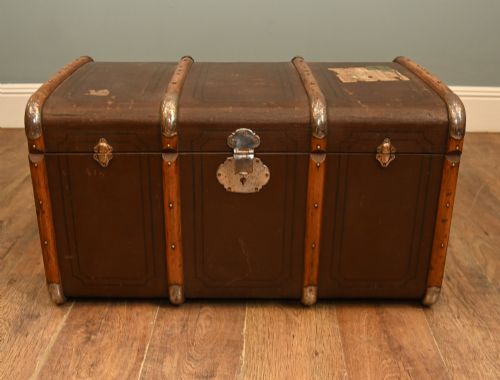
A dome top travel trunk is a historic storage piece or piece of luggage featuring an arched lid, designed historically to prevent rainwater from pooling on top during transit. When you search for a dome top travel trunk, you encounter items intended to protect contents from the elements, whether on carriages, ships, or early railways.
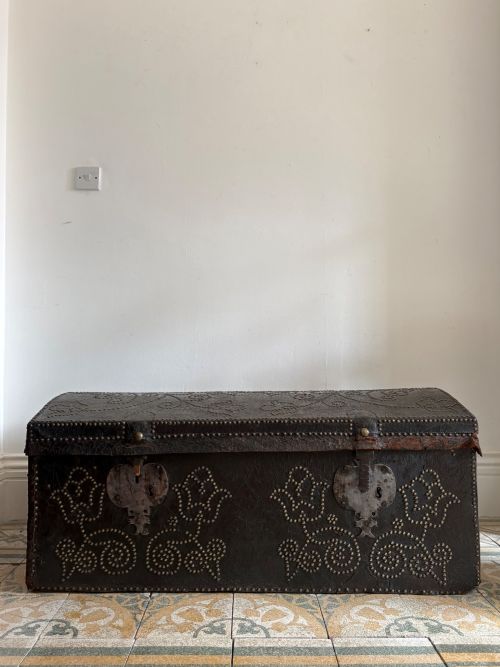
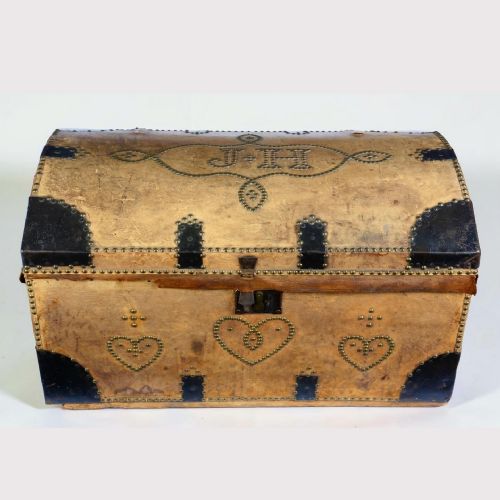
The pieces on this page span several centuries, reaching back as far as the seventeenth century with studded leather bound chests on stands. You also find eighteenth century Dutch and Spanish leather examples alongside nineteenth century Victorian and Edwardian iterations.
Formally, these objects are categorized across the listings as trunks, coffers, and campaign cases. The most common form met here is the nineteenth century Victorian leather or canvas covered trunk, frequently reinforced with brass or iron studwork.
Materials and construction methods
Makers built the core structure of a dome top travel trunk using timber such as pine or oak, forming the curved lid with internal ribs. Over this wooden framework, artisans applied exterior coverings of leather, hide, canvas, or sheet metal.
Durability was paramount, so workshops reinforced the joints and edges with iron straps, brass studwork, and heavy metal hardware. Carrying handles fashioned from leather or metal were fitted to the sides to aid transport during travel.
Dome Top Travel Trunk Retail Price Guide 2026
Typical asking prices for dome top travel trunk among the pieces listed under this phrase on Sellingantiques today, from the lower quarter to the upper quarter. They describe what is for sale here now, not the wider market.
Listings feature dome top travel trunks from the seventeenth, eighteenth, and nineteenth centuries, constructed in leather, wood, iron, brass, canvas, and paint.
Indicators of quality and distinction
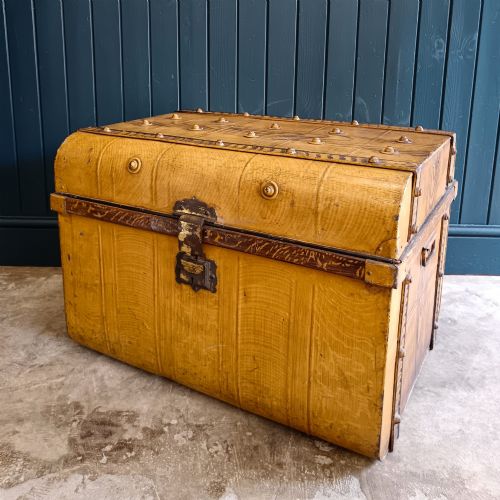
Quality in a dome top travel trunk rests upon the integrity of the core structure and the preservation of its original outer skin. Examples retaining their initial leather, canvas, or painted faux-wood surfaces command greater interest than those heavily restored or stripped.
The sophistication of the hardware elevates certain pieces, such as intricate brass studwork patterns or robust iron bindings. Maker attribution, through stamps or brass plates like those from Arthur Wannop or Chapple and Sons, further distinguishes the finer examples in the range.
Arthur Wannop·Chapple and Sons·Lion Brand
The Dome Top Travel Trunk Glossary
- Dome top
- A trunk or chest featuring a rounded, arched lid. This curved design ensured that water drained off the sides during carriage travel.
- Studwork
- Decorative and structural metal pins hammered into the exterior leather or wood. Rows of brass or iron studs frequently outline the panels and edges of earlier trunks.
- Campaign case
- Portable furniture and luggage built for travelling officers and gentlemen. These pieces often feature integrated carrying handles and robust reinforcement.
- Cofer
- A heavy wooden chest, often leather covered and domed, used for storing valuables or clothing. The term describes earlier forms of storage predating standard modern luggage.
- Hide
- Untanned or tanned animal skin used as a durable exterior covering. It provides a tough, weather resistant shield for the timber framework underneath.
Dome Top Travel Trunk: Frequently Asked Questions
What is a dome top travel trunk?
A dome top travel trunk is a historic piece of luggage or storage chest featuring a curved lid designed to shed water during transit. These pieces were constructed from wood and covered in materials like leather, canvas, or metal.
They appear in various styles across the seventeenth, eighteenth, and nineteenth centuries, serving travellers on coaches, ships, and early railways before flat-topped luggage became standard.
How were dome top travel trunks used?
These trunks served primarily for transporting clothing and personal belongings during journeys. Their arched lids allowed travellers to pack items higher and ensured rain rolled off easily when strapped to the exterior of carriages.
Inside the home, they functioned as durable storage chests for household textiles, blankets, and valuables, keeping contents safe from dust and moisture.
How do I date a dome top travel trunk?
Dating relies on observing construction techniques, materials, and hardware styles across different periods. Seventeenth and eighteenth-century examples often display heavy iron mounts, hand-stitched hide, and simple wooden frames.
Nineteenth-century Victorian pieces frequently incorporate stamped brass studwork, canvas coverings, painted faux-wood finishes, and occasionally maker stamps or maker labels.
How do I care for an antique leather trunk?
Keep the trunk out of direct sunlight and away from heat sources to prevent the historic leather or canvas from drying out and cracking. Maintain a stable indoor humidity level to protect both the wooden core and the metal fittings.
Dust the surface gently with a dry, soft cloth and avoid using modern chemical cleaners or saddle soaps that might strip original patination or painted finishes.