

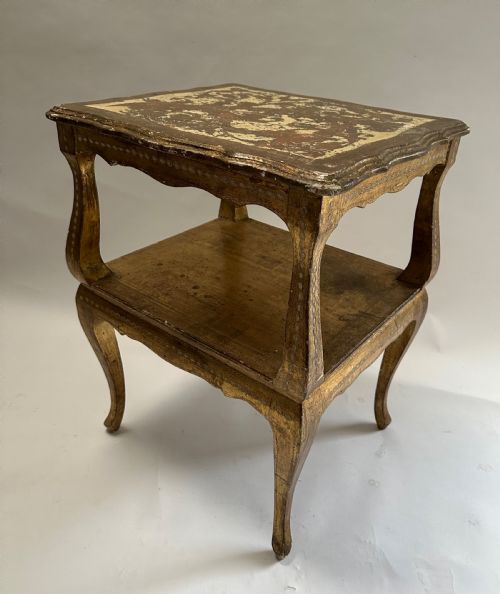
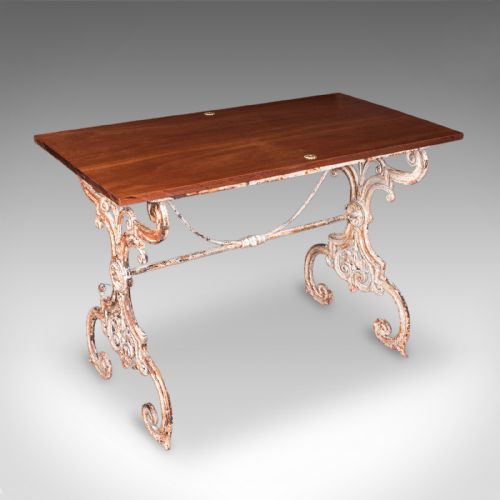
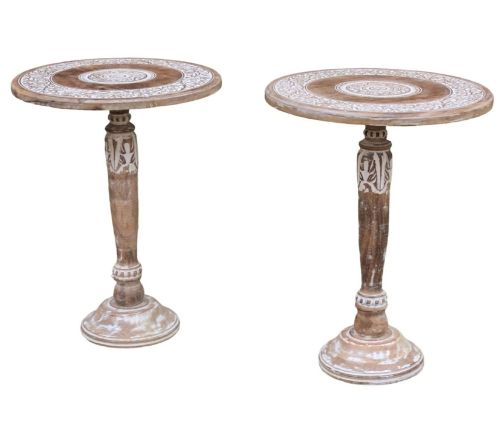
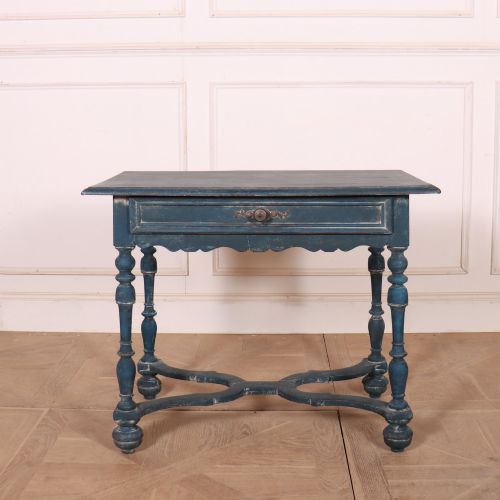
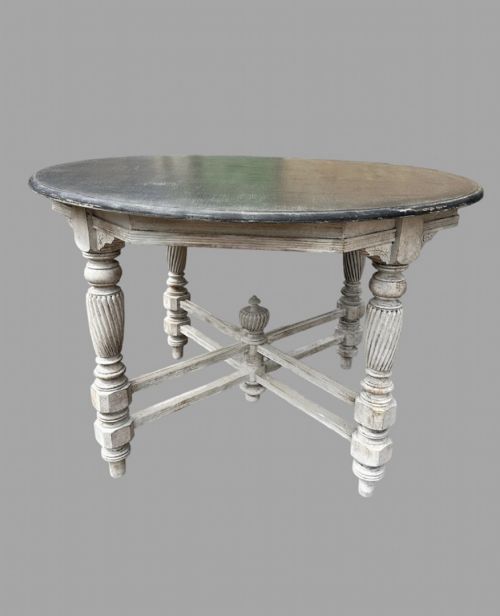
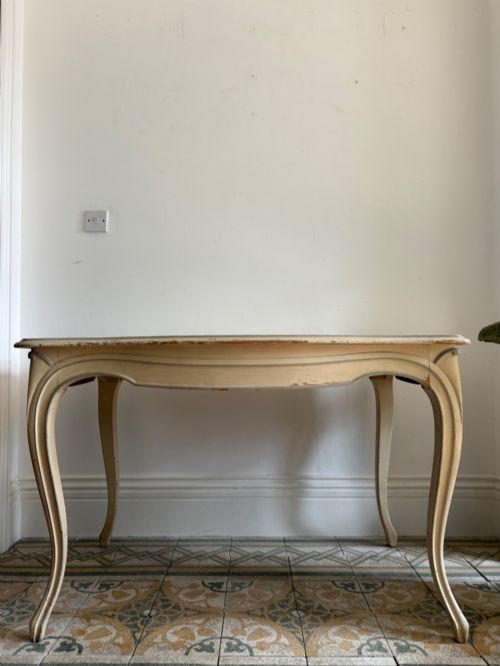

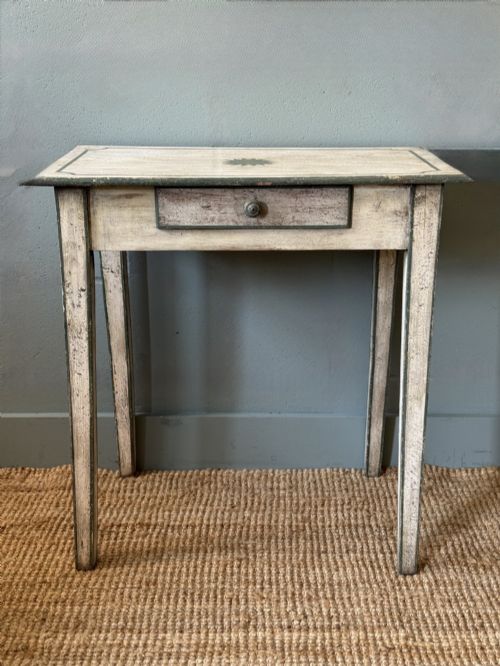
Distressed Side Table
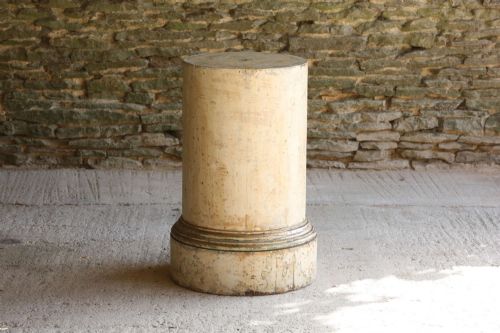
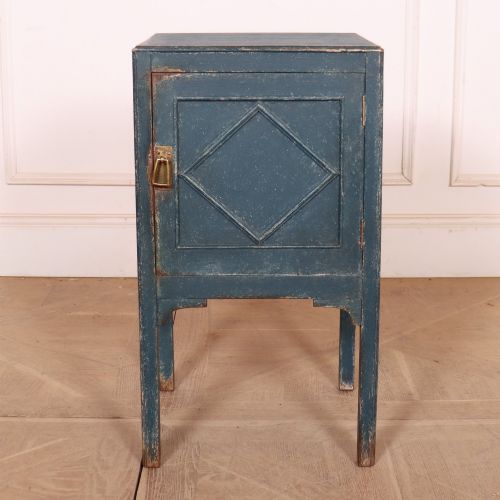
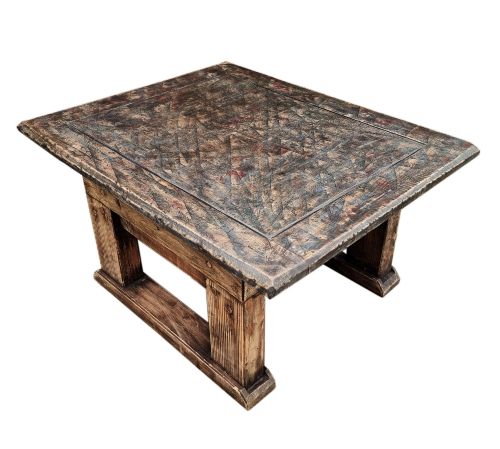
These distressed side table examples span centuries of regional styles, bringing painted wood and timeworn character into modern rooms.
Distressed Side Table
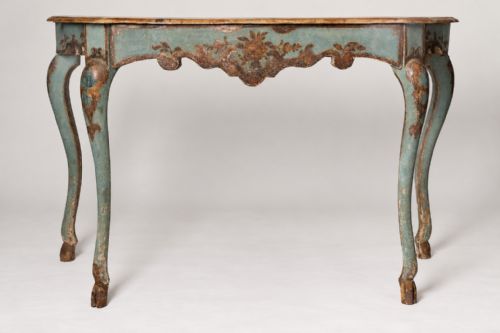
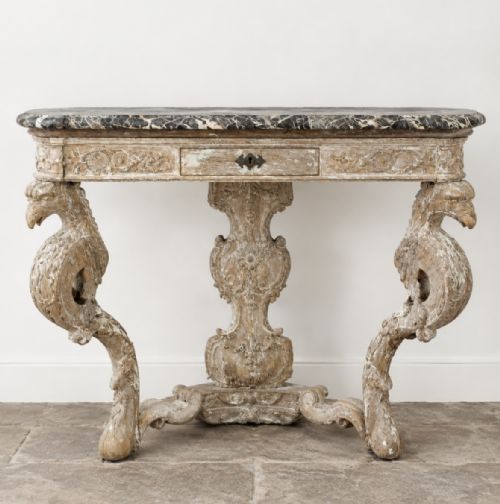
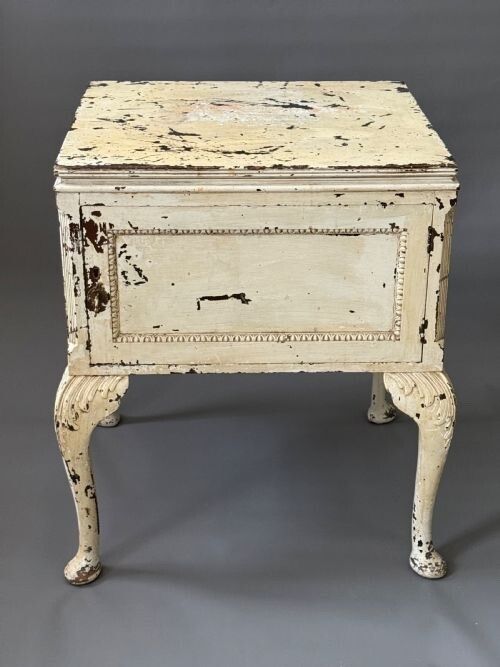
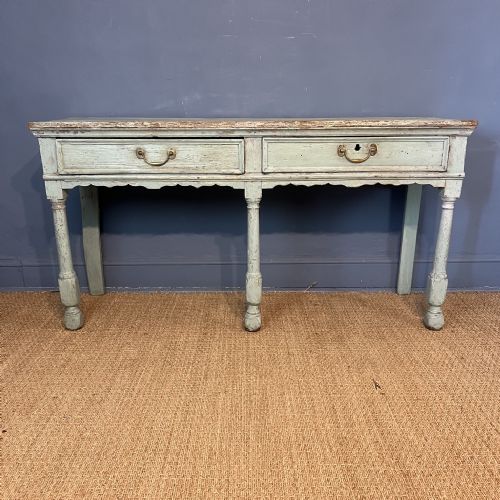
A distressed side table groups various small support surfaces finished with painted, aged, or weathered surfaces rather than pristine polishes. When searching for a distressed side table, buyers encounter formats ranging from Swedish and French country pieces to English pine lamp tables and Italian consoles.
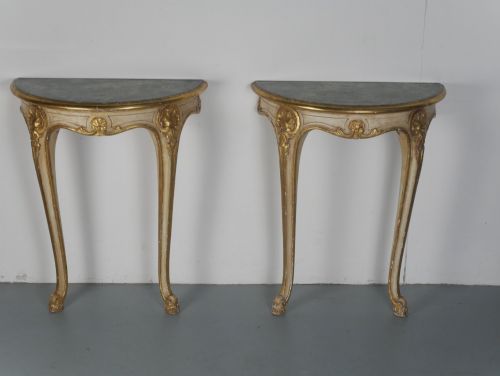
The domestic role of these objects varies across centuries, appearing as bedside cabinets, demi-lune console tables, lamp stands, and occasional tables. Many reflect regional European vernacular traditions, notably Scandinavian country styles, French provincial designs, and English farmhouse furniture.
Construction forms include drop-leaf tables, tilt-top mechanisms, and dresser bases alongside slender bedside tables. The surface treatment defines the category, uniting items that share deliberate paint distressing, original or aged patination, and visible wood grains.
Materials and construction methods
Makers utilised available timbers such as pine, oak, elm, fruitwood, and general softwood beneath coats of paint, gesso, and occasional marble insertions. Structural framing relied on traditional joinery suited to domestic tables, cabinets, and occasional stands.
Surface finishes involved layered paint applications, often developing natural wear over decades or centuries of domestic service. Secondary materials like brass hardware and suede insets supplement the primary wood and painted structures.
Distressed Side Table Retail Price Guide 2026
Typical asking prices for distressed side table among the pieces listed under this phrase on Sellingantiques today, from the lower quarter to the upper quarter. They describe what is for sale here now, not the wider market.
Current listings feature pieces spanning the 18th, 19th, and early 20th centuries, utilising materials like pine, painted wood, marble, and brass.
Evaluating quality and authenticity
Quality rests in the integrity of the underlying timber framework and the authenticity of the surface patination. Pieces retain greater interest when the painted finish shows genuine age-related wear rather than simulated distressing.
Proportion, regional character, and the subtlety of decorative details such as carved elements or turned legs separate standard utility pieces from finer country house or continental examples.
The Distressed Side Table Glossary
- Console table
- A table designed to stand against a wall, frequently supported by wall brackets or distinct cabriole legs. These pieces often feature decorative painted surfaces.
- Demi-lune
- A half-moon shape common in console and side tables designed to fit flush against a wall. This form appears frequently in 19th-century painted furniture.
- Gesso
- A plaster-based mixture applied to wood surfaces as a smooth base for paint or gilding. It provides the foundation for decorative finishes on period furnishings.
- Tilt top
- A table top hinged to tilt vertically when not in use, allowing the piece to be stored against a wall. This mechanism appears on various 19th-century occasional tables.
Distressed Side Table: Frequently Asked Questions
How do I date an older painted table?
Dating relies on examining the underlying timber construction, joinery techniques, and the composition of the painted surface.
Secondary materials, tool marks, and historical wear patterns help place the object within periods like the 18th century, Victorian era, or early 20th century.
Are these tables suitable for daily use?
Most of these tables were built for practical domestic tasks, functioning as bedside storage, lamp stands, or serving surfaces.
Their sturdy pine, oak, or fruitwood frames allow them to handle everyday placement in modern rooms while retaining their historic character.
What is the difference between a console and a side table?
Console tables traditionally stood against a wall, sometimes fixed in place, often serving decorative functions in hallways or principal rooms.
Side tables generally offer more freestanding utility as lamp or occasional tables, though historical naming conventions frequently overlap.