
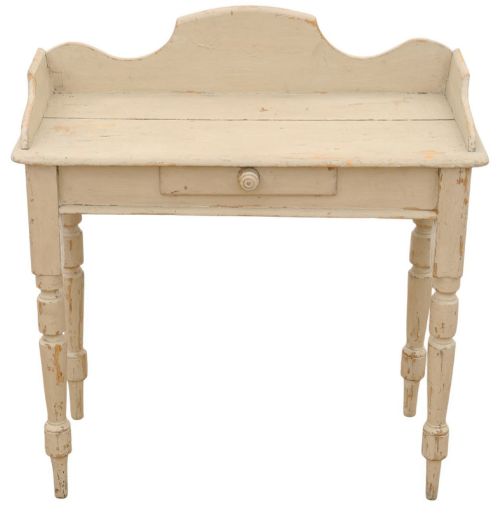
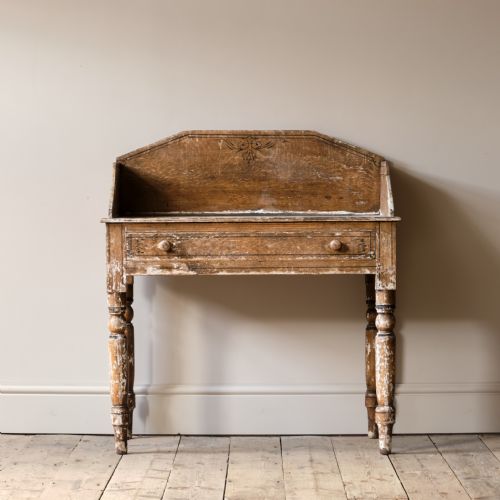
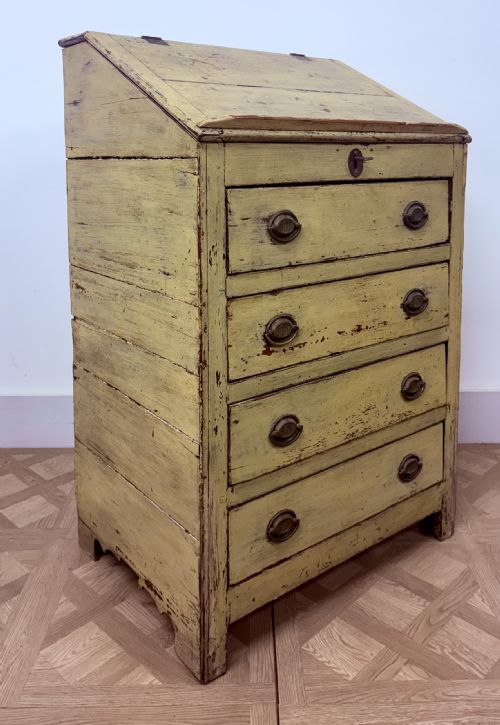
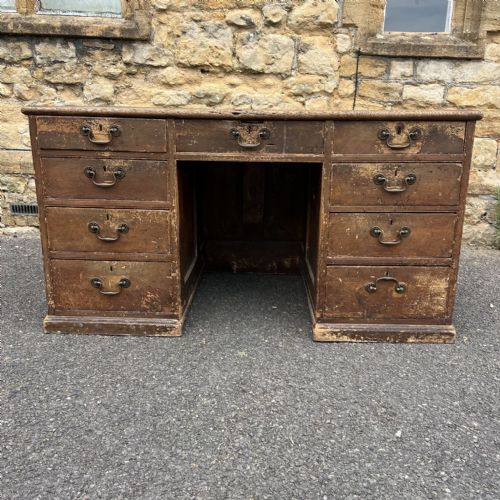



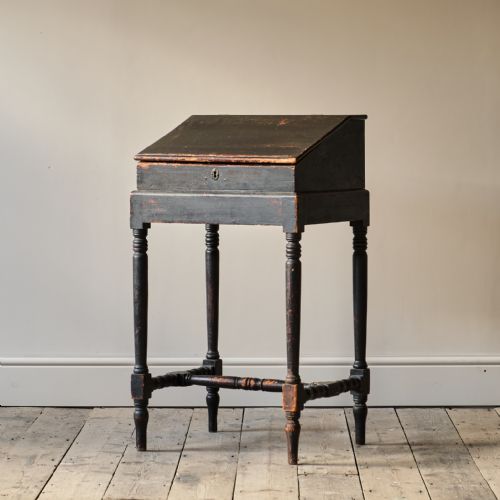

Distressed Pine Desk
A distressed pine desk brings working-class utility and aged surface character into a modern study.
Distressed Pine Desk
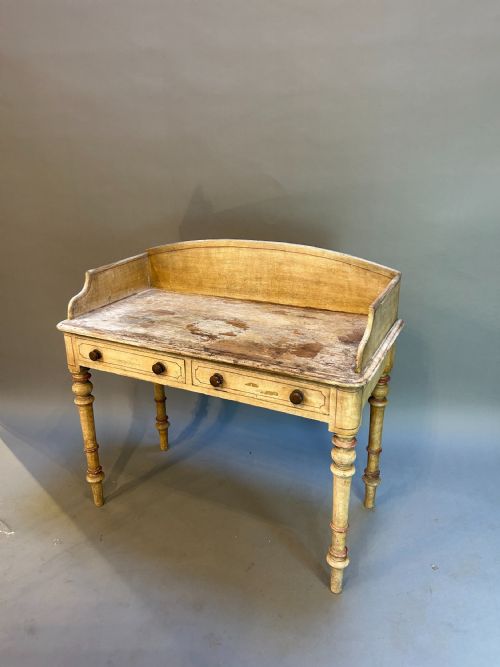
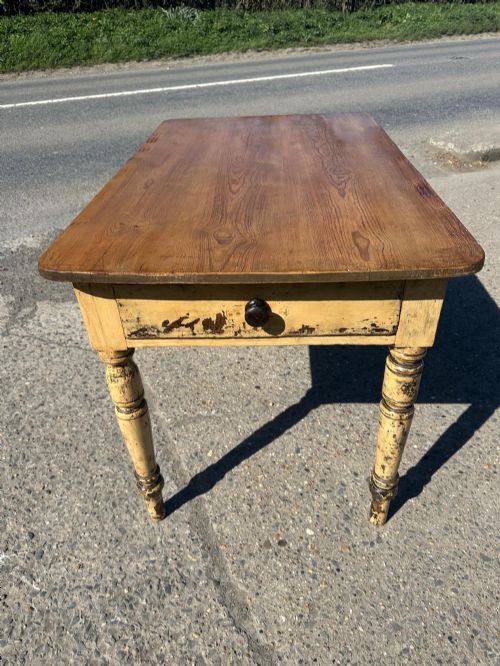
When you search for a distressed pine desk, you encounter pieces originating from the nineteenth and early twentieth centuries, alongside occasional Georgian and Regency examples. The selection spans utilitarian writing tables, clerk desks, and estate desks built from solid timber.
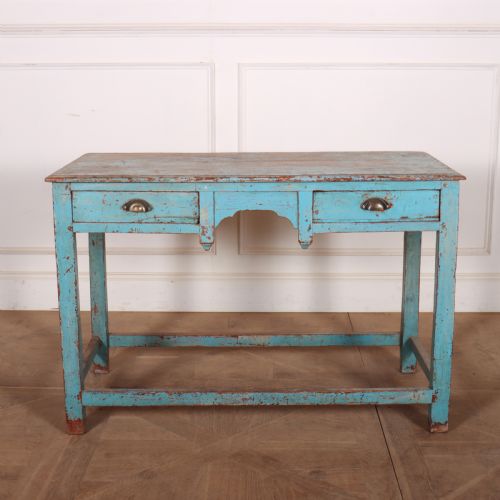
Most entries showcase regional styles such as rustic farmhouse, Victorian country, and Scandinavian country. These work tables and writing surfaces often display original paint finishes in muted or distressed tones.
Materials and construction
Makers utilised pine as the primary structural timber, frequently pairing it with oak or incorporating iron and brass hardware for handles and fittings. Construction methods relied on robust joinery suited to heavy daily use in estate offices and kitchens.
Surfaces received treatments of paint or ebonisation, which wore down naturally over decades of service to create the characteristic distressed patina seen today.
Many a nineteenth-century clerk spilled ink upon these very boards.
What separates the grades
Quality rests in the integrity of the original timber frame and the authenticity of the surface wear. Pieces retaining their initial painted finish or honest working patination hold greater character than later interventions.
The balance of proportions and the survival of period hardware, such as brass pulls or iron brackets, distinguish standard utility furniture from finer provincial examples.
The Distressed Pine Desk Glossary
- Pine
- A softwood commonly used for furniture carcasses and tables throughout the nineteenth century. It accepts paint finishes readily and develops a soft texture with age.
- Ebonised
- Wood treated with a stain or chemical process to imitate ebony. This finish appears on nineteenth century clerk desks for a formal appearance.
- Patina
- The surface sheen and wear accumulated through age and use. It reveals the history of the timber and its previous layers of paint.
- Trestle
- A table construction method using two or more supports connected by a horizontal beam. This design provides sturdy legroom for writing and work tasks.
- Drop leaf
- A table top configuration featuring hinged flaps that fold down to save space. This mechanism appears on versatile nineteenth century side and work tables.
Distressed Pine Desk: Frequently Asked Questions
What is a distressed pine desk?
A distressed pine desk is a period writing surface made from softwood, typically featuring aged paint finishes and signs of heavy use.
These pieces range from simple clerks' desks to Swedish writing tables dating from the nineteenth and early twentieth centuries.
How do I date a pine desk?
Dating relies on examining construction methods, timber selection, and iron or brass hardware components. Nineteenth century examples often display hand-planed surfaces and original painted layers.
Stylistic cues such as Regency or Victorian vernacular forms also help place the piece within a specific decade or century.
Are these desks suitable for daily work?
These historical tables and writing desks function well for contemporary home offices when matched with comfortable seating. Their sturdy pine and oak construction handles regular laptop and paperwork use.
Care should be taken to protect vulnerable historic painted surfaces from moisture and heavy impacts.
What finishes do these desks have?
Surfaces generally feature original painted schemes, ranging from rustic green to ebonised black or Scandinavian country hues. Over time, these finishes have worn down organically through practical service.
Unpainted pine versions also appear, showing the natural grain and warmth of the aged softwood timber.