

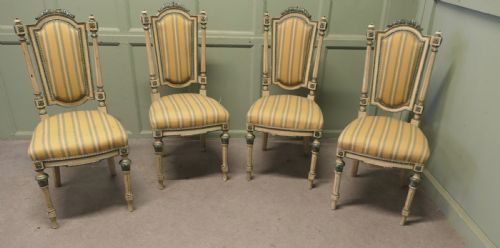
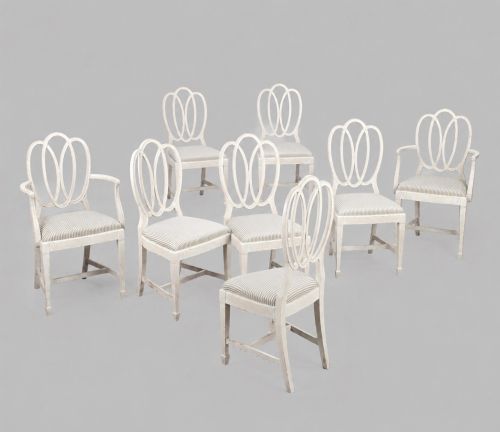


Distressed Painted Side Chairs
These distressed painted side chairs bring character and time-worn surface texture to a room, offering versatile seating grounded in centuries of decorative tradition.
Distressed Painted Side Chairs
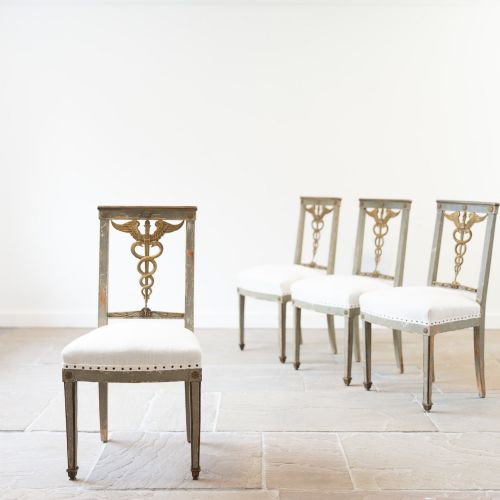
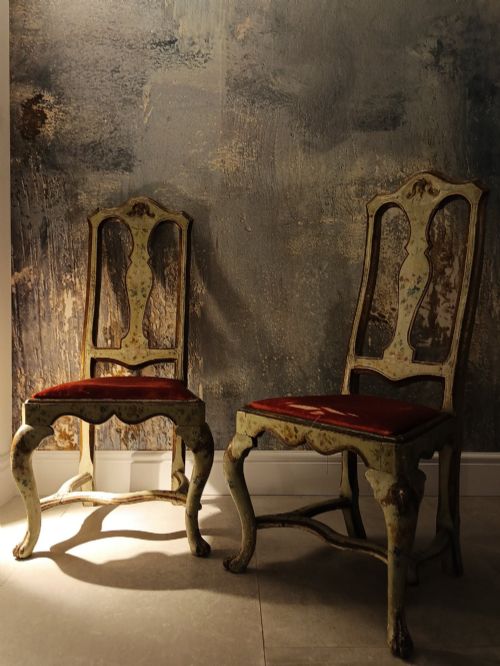
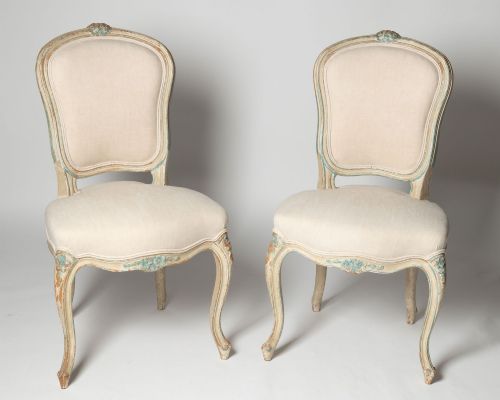
Distressed painted side chairs encompass seating designed for dining, salon, or occasional use, typically finished with surface paint that shows age and wear. Buyers searching for these pieces often encounter French, Italian, Swedish Gustavian, and English vernacular examples spanning the eighteenth, nineteenth, and early twentieth centuries.
The form is defined by a lack of arms and a compact footprint, making these chairs practical for dining tables or decorative placement around a room. The listings show a prevalence of French salon and dining variants alongside Scandinavian and Italian regional styles.
Surfaces range from original weathered finishes to later decorative applications of paint, lacquer, and faux treatments such as faux bois or faux bamboo. This variety allows collectors to choose between rustic vernacular charm and formal continental styling.
How they were made
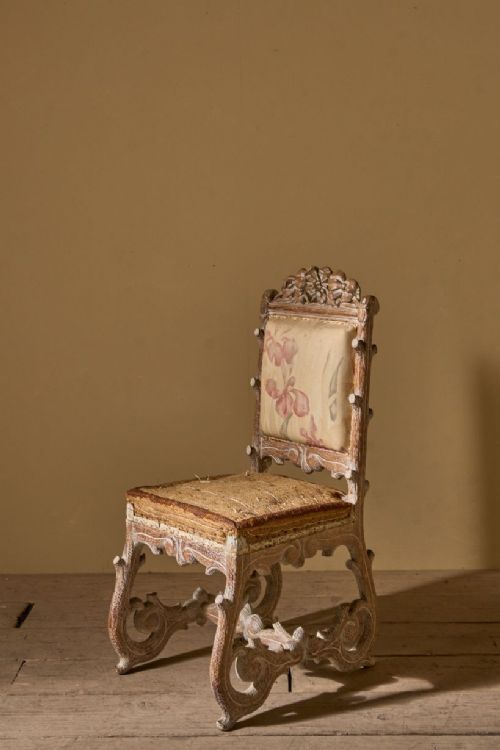
Makers utilised timber frames constructed from beech, ash, or carved wood, often shaping components with traditional joinery before applying surface decoration. Rush, plaited straw, or textile and fabric upholstery provided the seating bases across both rustic and formal workshops.
Finishes involved layers of paint, lacquer, or specialised techniques like faux bamboo moulding and faux bois graining. Over decades and centuries, this paint weathered naturally or received later overpainting, creating the characteristic distressed appearance collectors value today.
Distressed Painted Side Chairs Retail Price Guide 2026
Typical asking prices for distressed painted side chairs among the pieces listed under this phrase on Sellingantiques today, from the lower quarter to the upper quarter. They describe what is for sale here now, not the wider market.
Materials across these listings include paint, fabric, painted wood, carved wood, rush, beech, and textile.
What varies in quality
Quality rests upon the integrity of the underlying timber frame and the authenticity of the surface finish. Pieces retaining early or original paint schemes demonstrate a higher degree of historical survival than those with heavy later interventions.
The refinement of the carving, the balance of proportions, and the quality of regional vernacular construction set finer examples apart. Coarser rustic pieces offer charm, whilst structured regional styles show greater precision in joinery and silhouette.
The Distressed Painted Side Chairs Glossary
- Gustavian style
- The Swedish interpretation of French neoclassical design, characterised by restrained carving and pale painted finishes. It emerged in the late eighteenth century and remains popular in modern interiors.
- Faux bois
- An artistic imitation of wood grain applied to a painted surface. Makers utilised this technique in the nineteenth century to give simpler timbers the appearance of rarer woods.
- Súgán chair
- A traditional Irish chair featuring a seat made from plaited straw or hay rope. These vernacular pieces rely on sturdy ash frames and honest rural craftsmanship.
- Yoke-back
- A distinctive chair top rail shaped to resemble an ox yoke, frequently seen in Chinese seating. This curved form provides ergonomic comfort and structural strength.
- Side chair
- An upright chair without arms, designed primarily for dining or auxiliary seating. They are compact enough to be tucked around a table or placed against a wall.
Distressed Painted Side Chairs: Frequently Asked Questions
How do I clean a painted chair?
Dust gently with a dry, soft cloth to protect the weathered surface from moisture damage. Avoid modern chemical solvents that might strip delicate layers of historic paint.
Test any cleaning method on a hidden underside first. Keeping the room humidity stable prevents the underlying wood from expanding and cracking the paint.
Are these chairs suitable for daily dining?
Most antique side chairs are sturdy enough for regular use if the joinery remains sound. Checking the frame stability ensures they withstand daily sitting without loosening.
Lighter salon or decorative chairs benefit from slightly more careful treatment than heavy dining sets. Pairing them with protective felt pads on the feet prevents unnecessary scraping.
What does later paint mean?
Later paint indicates that a chair received a fresh coat of decorative colour long after its initial manufacture. This was often done to update furniture for changing interior fashions during the nineteenth or twentieth centuries.
Many collectors appreciate these successive layers because they contribute to the distressed texture. It represents the ongoing history and adaptation of the piece over time.
How can I tell French from Swedish chairs?
French chairs from periods like Louis XV or Rococo typically feature exuberant carved curves and ornate flourishes. They emphasise theatrical elegance and rich decorative detail.
Swedish Gustavian chairs display a much more restrained, neoclassical geometry with pale, subtle paintwork. Their lines are cleaner and focus on understated proportion rather than lavish carving.