

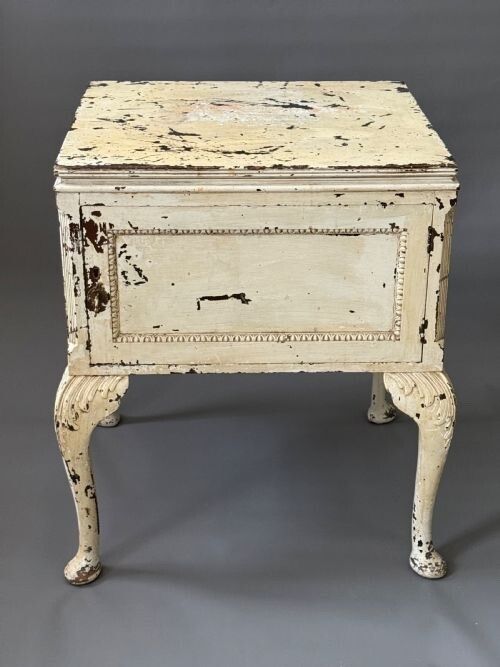
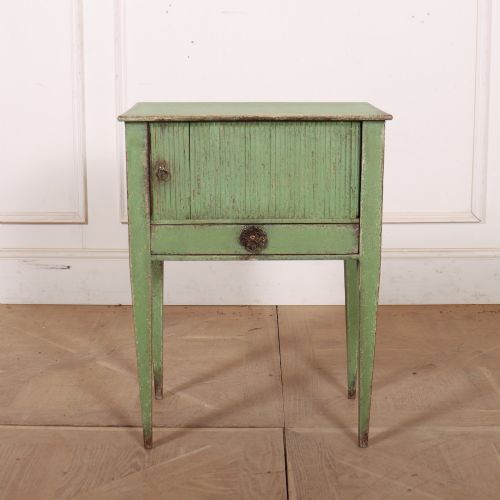
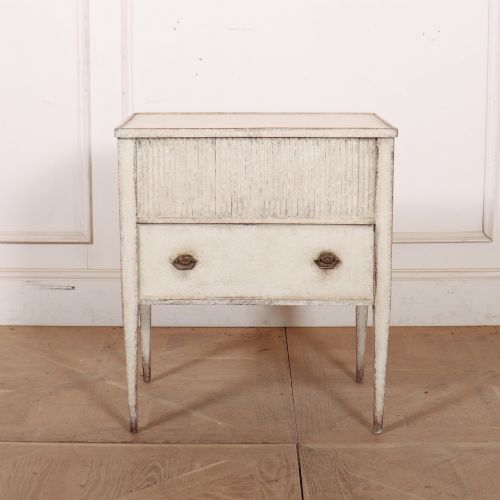
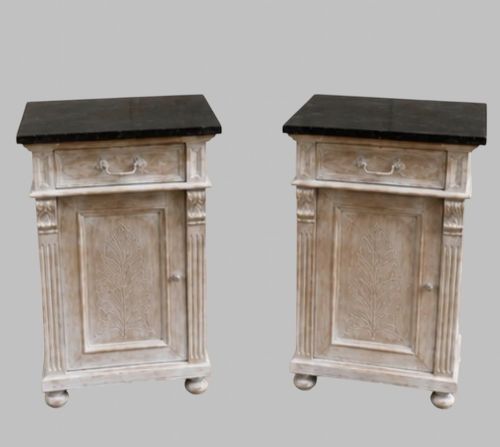


Distressed Painted Pot Cupboard
A distressed painted pot cupboard offers practical bedside storage with the character of age.
Distressed Painted Pot Cupboard
A distressed painted pot cupboard is a compact bedside cabinet or table designed to hold chamber pots or washware, now repurposed for modern bedrooms. When you search for a distressed painted pot cupboard, you are looking at nineteenth-century and early twentieth-century pieces spanning Victorian, Gustavian, French Chateau, and Dutch Provincial styles.
The most common forms on this page are bedside cabinets and bedside tables fashioned from pine, mahogany, and softwood. These items originate from British, Dutch, Swedish, French, and Hungarian workshops, bringing regional European cabinet-making traditions into the domestic sleeping quarter.
Beyond the standard bedside formats, the inventory includes allied low storage such as sideboards topped with zinc. Each piece carries painted finishes that show decades of wear, offering an aged surface texture suited to traditional and country interiors.
How they were made
Cabinet-makers constructed these cupboards primarily using solid timbers like pine, softwood, and mahogany, occasionally incorporating oak and durable metal components such as brass hardware. Surfaces were treated with layers of paint, often accumulating distress through decades of domestic use.
Selected pieces integrate contrasting elements such as black marble tops or zinc surfaces to handle moisture and daily wear. Joinery methods of the nineteenth and early twentieth centuries relied on traditional framing and panel construction suited to heavy everyday service.
Distressed Painted Pot Cupboard Retail Price Guide 2026
Typical asking prices for distressed painted pot cupboard among the pieces listed under this phrase on Sellingantiques today, from the lower quarter to the upper quarter. They describe what is for sale here now, not the wider market.
Some nineteenth-century cupboards hide tiny internal shelves specifically designed to keep midnight candles away from sleepy elbows.
What varies in quality
Quality rests in the integrity of the timber frame and the authenticity of the painted surface rather than applied modern distressing. Pieces retaining their original structural joinery and genuine historic paint layers stand apart from later decorative alterations.
Material selection dictates the upper tier of the range, particularly items featuring dense hardwoods like mahogany or fitted stone and metal tops like marble and zinc. Regional detailing, such as carved woodwork or specific continental proportions, elevates a simple utility box into a refined example of period craft.
The Distressed Painted Pot Cupboard Glossary
- Pot cupboard
- A small bedside cabinet originally built to conceal a chamber pot behind a single door or within a drawer. These items now function as compact bed-side storage units.
- Gustavian
- The Swedish interpretation of French neoclassical design characterised by restrained ornamentation and pale painted finishes. This style emerged during the reign of Gustav III.
- Softwood
- Timber derived from conifers such as pine, frequently utilised for painted furniture due to its availability and workability. It forms the structural core of many country pieces.
- Marble
- A hard metamorphic rock utilised for tabletop surfaces on Victorian and continental cabinets. It provides a cool, durable working area resistant to liquids.
Distressed Painted Pot Cupboard: Frequently Asked Questions
What is a pot cupboard?
A pot cupboard is a small cabinet historically designed to hold a chamber pot inside its enclosed lower section. They sit beside the bed and provide concealed storage.
Today, buyers use them as standard bedside tables to store books, lamps, and personal items while adding period character to a bedroom.
How do I date these cupboards?
Dating relies on examining the timber construction, joinery techniques, and the underlying material layers beneath the paint. Nineteenth-century pieces typically show hand-cut joints and older hardware.
Stylistic markers like neoclassical proportions or Victorian mass-production methods further help narrow the decade of manufacture between eighteen-sixty and nineteen-twenty.
Are the painted finishes original?
Paint history varies significantly across these items, with some retaining early layers while others display decorative surfaces applied during later periods. Genuine age shows through natural craquelure and worn edges.
Distinguishing between historic surface wear and recent decorative painting requires inspecting the depth of the pigment and the condition of the underlying wood.
How do I use one in a modern bedroom?
These cupboards fit easily beside contemporary beds due to their compact footprints and enclosed storage spaces. They keep reading materials and charging cables out of sight.
The weathered painted surfaces also provide a visual contrast against modern walls and textiles, grounding the room with historic texture.