

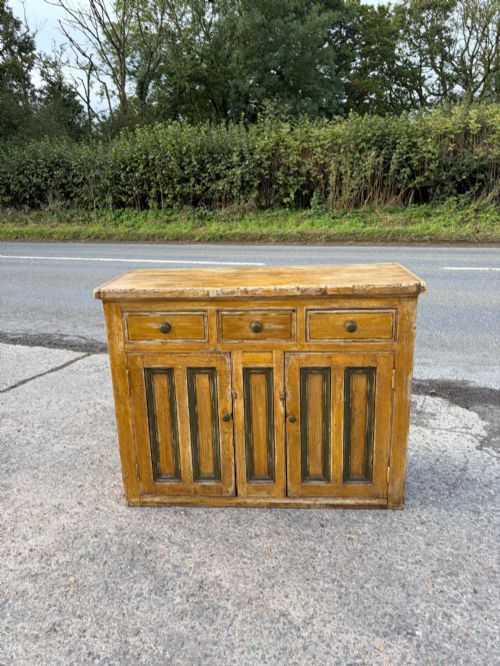
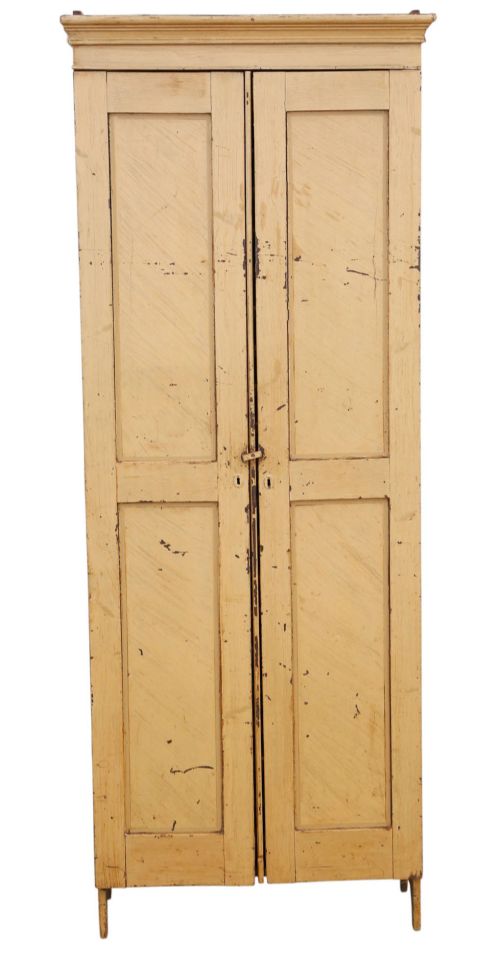
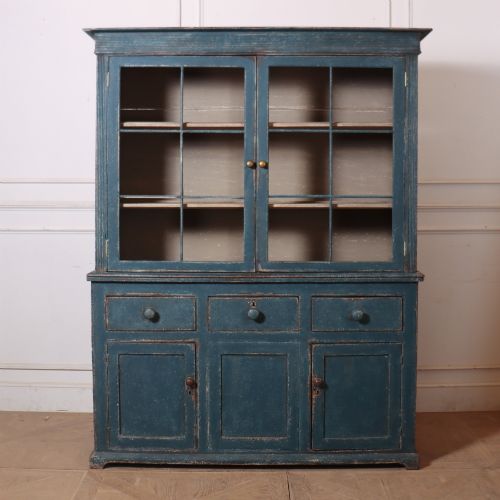

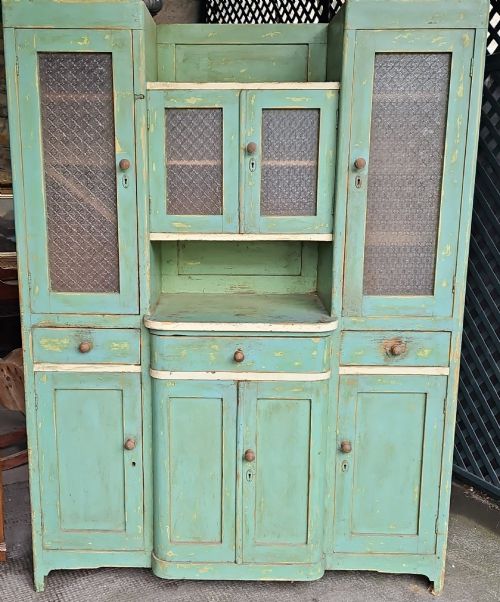


Distressed Painted Kitchen Dresser
A distressed painted kitchen dresser brings functional country utility and timeworn character to any room.
Distressed Painted Kitchen Dresser
A distressed painted kitchen dresser provides utilitarian storage through cupboards, drawers, and open shelving originating largely from domestic working spaces. These items appear across various styles including English Country, Victorian Country, French Provincial, and West Country Vernacular.
Origins stretch across English, French, Hungarian, and Scottish traditions, with construction rooted in regional workshops of the eighteenth and nineteenth centuries. Pine, oak, and painted wood dominate the selection, often carrying layers of historic cream, teal, or neutral pigment.
How they were made
Makers constructed these carcasses primarily from solid pine and oak, joining structural timbers with pegged mortise and tenon joints. Backboards typically consist of tongue and groove planks fixed with handmade nails.
Surfaces received layers of oil or water-based pigments, frequently applied directly over earlier coats during periodic maintenance. Hardware comprises cast iron pulls, brass handles, and simple metal hinges secured to heavy doors.
Distressed Painted Kitchen Dresser Retail Price Guide 2026
Typical asking prices for distressed painted kitchen dresser among the pieces listed under this phrase on Sellingantiques today, from the lower quarter to the upper quarter. They describe what is for sale here now, not the wider market.
Pine and painted wood dominate the material palette, accompanied by brass and iron hardware across English, French, and Scottish origins.
What varies in quality
Quality rests in the integrity of the original timber frame, the survival of early or untouched painted surfaces, and the proportion of the piece. Superior examples retain their initial layout without major timber replacement or unsympathetic alterations.
The distinction between top examples and simpler utility pieces lies in regional joinery finesse, depth of moulding profiles, and the presence of historic hardware. Original backing boards and uncompromised internal shelving elevate the standing of any functional base or cupboard.
The Distressed Painted Kitchen Dresser Glossary
- Dresser base
- The lower portion of a kitchen dresser featuring drawers and cupboards without the upper plate rack.
- Housekeeper's cupboard
- A tall, large storage cabinet traditionally used for linens and dry goods in large domestic properties.
- Buffet de corps
- A substantial French storage cabinet combining lower doors with an upper section, often used for dining provisions.
- Breakfront
- A piece of furniture where the central section projects forward beyond the flanking cabinets.
- Vernacular
- Objects designed and built by local tradesmen for everyday use rather than following strict high-style architectural rules.
Distressed Painted Kitchen Dresser: Frequently Asked Questions
What is a distressed painted kitchen dresser?
A distressed painted kitchen dresser is a practical storage unit featuring drawers, cupboards, and sometimes upper shelving, finished with historic paint layers.
These pieces originate from domestic utility rooms and farmhouses, showcasing the wear of daily use over centuries.
How were these dressers used historically?
Households utilised these items to store tableware, dry foods, linens, and kitchen utensils in daily domestic life.
Lower bases served as work surfaces while upper cupboards and shelves kept provisions accessible yet secure.
How do I identify the period of a dresser?
Dating relies on construction methods, timber selection, fastener types, and regional joinery characteristics.
Eighteenth-century examples often display hand-sawn boards and pegged frames, while Victorian pieces incorporate machine-cut elements and distinct moulding profiles.
Are painted finishes original?
Many items retain layers of early or original paint applied during their working life in country houses and farm kitchens.
Examining the interface between the pigment and the timber reveals whether the surface accumulated naturally over generations.
How do I care for antique painted wood?
Maintenance requires stable indoor humidity away from direct heat sources to prevent timber movement and flaking pigment.
Dusting with a dry, soft cloth preserves the delicate surface without introducing moisture that harms historic finishes.