



Diamond Twist Engagement Ring
A diamond twist engagement ring brings together sweeping lines and brilliant stones, offering a distinctive historical design that suits modern wear.
Diamond Twist Engagement Ring
A diamond twist engagement ring is defined by its curving shank, which wraps around the finger to hold one or more stones in a dynamic embrace. Buyers searching this phrase will find pieces spanning the Victorian, Edwardian, and Art Deco periods, alongside later mid-century examples.
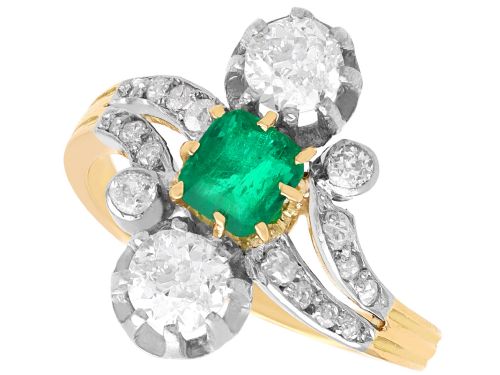
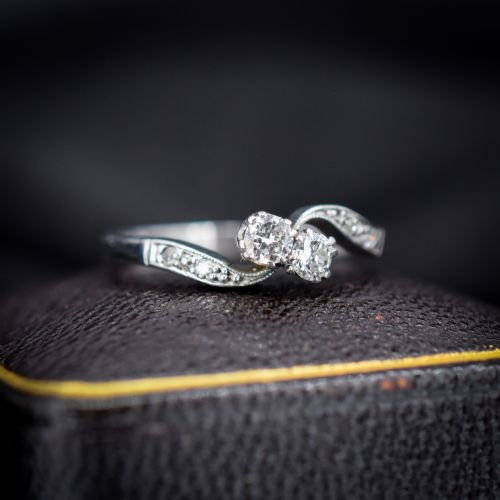
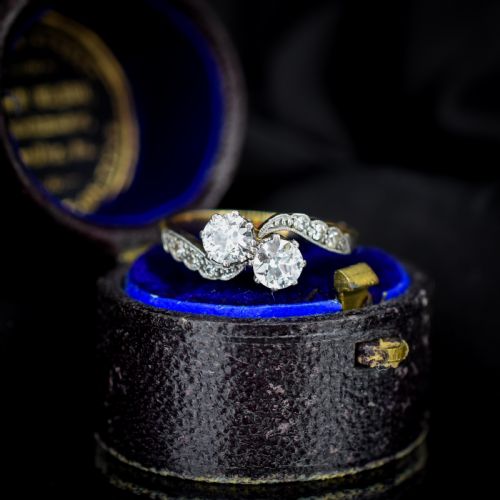
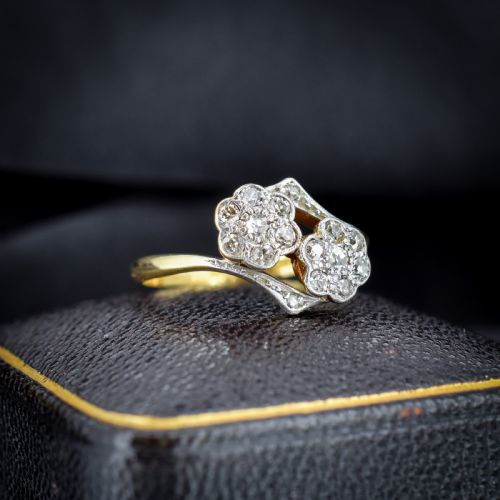
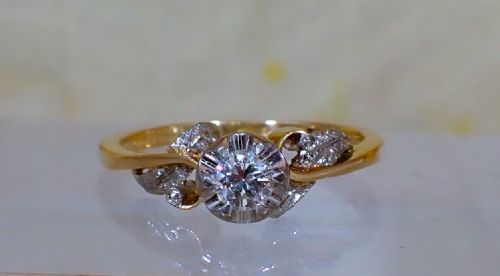
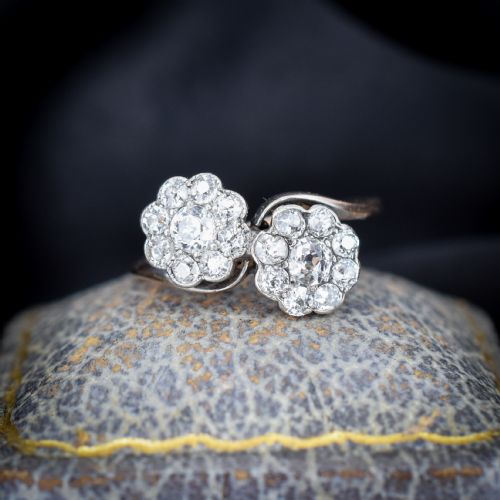
The most common versions met on this page are two-stone toi et moi designs and single-stone crossover settings from the early twentieth century. These rings often combine bright diamonds with contrasting yellow gold shanks and platinum settings that accentuate the curves.
Makers utilised various geometric and floral configurations, from simple bypassed shoulders to cluster-accented twists incorporating sapphires, rubies, or opals. Each ring reflects the prevailing stylistic shifts of its decade, moving from ornate Edwardian motifs to streamlined Art Deco geometry.
How they were made
Goldsmiths constructed these rings using combinations of yellow gold, white gold, and platinum, frequently pairing an eighteen-carat gold band with platinum-topped settings to securely hold the stones. This method provided the necessary strength for delicate crossover shoulders while maintaining a bright white backdrop for old-cut or brilliant-cut diamonds.
Techniques relied heavily on hand fabrication and early casting methods, allowing artisans to shape flowing metal ribbons that mimic movement. Stones were secured using meticulous prong, bezel, or millegrain settings that required steady handwork to follow the asymmetric curves of the twist.
Listings feature pieces spanning from the nineteenth century through the 1960s, executed in platinum, gold, and white gold.
What varies in quality
Quality in these rings rests upon the fluidity of the metalwork and the precision with which the stones are integrated into the sweeping shoulders. Superior examples display seamless curves where the band transitions naturally into the setting without awkward thickness or stiff angles.
The choice and matching of gemstones also determine the upper tier of the range, particularly in two-stone or multi-stone configurations where proportion and stone symmetry dictate the visual balance. Finer pieces maintain crisp millegrain edges and robust shank thickness even after decades of wear.
The Diamond Twist Engagement Ring Glossary
- Toi et moi
- A French term meaning you and me, describing a two-stone ring design where two gems sit side by side in a twist or crossover fashion. This style gained significant popularity during the Edwardian era.
- Crossover
- A ring setting where the shoulders of the band cross over one another at the centre point of the design. It creates an overlapping visual effect that cradles the main stone.
- Old cut
- A diamond facet style popular before the development of the modern brilliant cut, characterised by a smaller table, higher crown, and open culet. These stones produce a softer, candlelight sparkle.
- Millegrain
- A decorative technique featuring a border of tiny raised metal beads along the edges of a setting. It adds a refined, textural finish typical of Edwardian and Art Deco jewellery.
- Bypass
- A ring style where the ends of the band pass each other rather than meeting centrally under the stone. This creates an asymmetric flow akin to a twist.
Diamond Twist Engagement Ring: Frequently Asked Questions
How do I care for an antique twist ring?
Antique rings require gentle handling due to their age and delicate settings. Regular cleaning with warm soapy water and a soft brush helps maintain the sparkle of the diamonds.
It is advisable to remove the ring during heavy manual work to protect the gold or platinum band. Periodic checks by a jeweller ensure the stones remain secure in their mounts.
Are these rings suitable for daily wear?
Most eighteen-carat gold and platinum twist rings are durable enough for everyday wear if constructed solidly. However, very fine Edwardian examples benefit from mindful usage to preserve their intricate metalwork.
Checking the claws and shoulders annually prevents accidental stone loss. Pairing them with flat wedding bands reduces friction against the crossover shoulders.
How can I tell an Edwardian twist ring apart from an Art Deco one?
Edwardian rings typically showcase softer, organic motifs with intricate millegrain work and flowing lines. They frequently utilise yellow gold paired with platinum-topped settings.
Art Deco pieces favour geometric precision, stark symmetry, and streamlined platinum constructions. The twist becomes sharper and more architectural in character during the 1920s and 1930s.