


Diamond Tie Pin
A diamond tie pin is a refined fastening born from the nineteenth and twentieth centuries, sought after for bringing discreet brilliance to formal attire.
Diamond Tie Pin
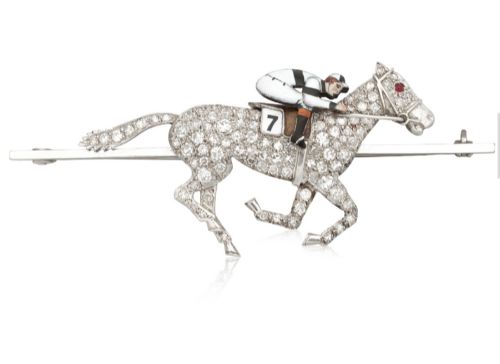
When you search for a diamond tie pin, you are looking at small pins designed to secure a cravat or necktie, often overlapping with stick pins and bar brooches in the historical record. The versions you are most likely to meet on this page span from Victorian and Edwardian iterations through to Art Deco and mid-century designs.
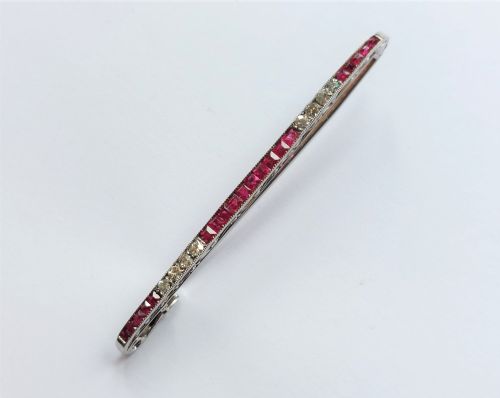
The materials recorded across these pieces combine precious metals such as yellow gold, white gold, and platinum with diamonds, pearls, rubies, and garnets. Forms range from simple bar pins and jockey caps to arrows and bows, reflecting changing fashions from the nineteenth century into the mid-twentieth century.
How they were made
Maker workshops utilised durable precious metals, mounting diamonds in combinations of platinum, 18ct gold, and 14ct gold to provide secure settings for stones. Platinum emerged strongly in the Edwardian and Art Deco eras, allowing for finer, lighter wirework and delicate piercing.
Gems were cut by hand in periods spanning the Victorian era up to the 1960s, featuring rose cuts, old brilliant cuts, and heart cuts alongside natural pearls and rubies. Pins were forged to balance structural strength with ornamental lightness, ensuring the stem remained firm while the face displayed the stones.
Listings span periods from the Victorian era and 1860 through Edwardian, Art Deco, and 1960 styles, using platinum, gold, pearls, and diamonds.
What varies in quality
The distinction between ordinary and exceptional pieces lies in the precision of the metalwork and the integration of the stones. Finer examples display meticulous setting techniques where platinum or gold work is crisp, balanced, and sympathetic to the shape of the diamonds.
Quality also rests in the selection of materials, such as the matching of natural pearls or the clarity and cut of old brilliant diamonds. Superior items maintain integrity in the pin stem and catch, showing minimal wear to the underlying structure.
Cartier Paris
The Diamond Tie Pin Glossary
- Stick pin
- A long pin with an ornamental head used to secure a necktie or lapel. These pieces often double as tie pins in historical classifications.
- Bar brooch
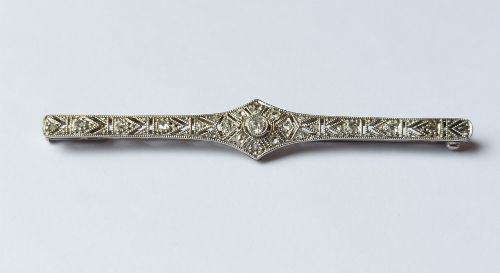
- A narrow horizontal pin featuring central gems. Many items matching this search take this linear form.
- Rose cut
- A gemstone cut with a flat base and a domed, faceted top resembling an unopened rosebud. This cut is common in nineteenth-century pieces.
- Belle Epoque
- A period of decorative arts spanning the late nineteenth century to the First World War, known for light garland motifs.
Diamond Tie Pin: Frequently Asked Questions
How were diamond tie pins worn?
These pins were traditionally pushed through the knot of a cravat or necktie to anchor the fabric in place against the shirt. Gentlemen wore them with morning dress and evening wear.
They also served ornamental functions on lapels and waistcoats as small brooches.
What is the difference between a tie pin and a stick pin?
A tie pin often refers specifically to fastenings meant for neckwear, while a stick pin is a broader term for a pin with a long stem and decorative head.
In historical inventories, the two terms frequently overlap because the same items served multiple wardrobe purposes.
How do I identify an Art Deco pin?
Art Deco pieces from the 1920s and 1930s display geometric patterns, sharp lines, and frequent use of platinum paired with diamonds.
They often incorporate symmetrical motifs like arrows, bows, or clean bar shapes rather than organic Victorian flourishes.
Can these pins be worn on modern clothing?
Modern wearers often place them on lapels, collars, or hats rather than traditional cravats. The sturdy pin stems make them adaptable accessories for jackets and coats.
Care should be taken with delicate modern fabrics to avoid stretching the weave.