

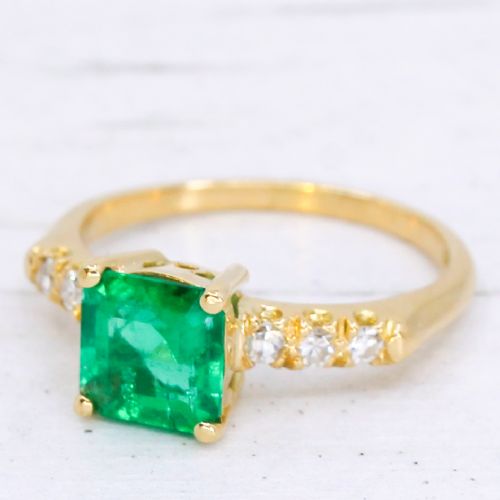
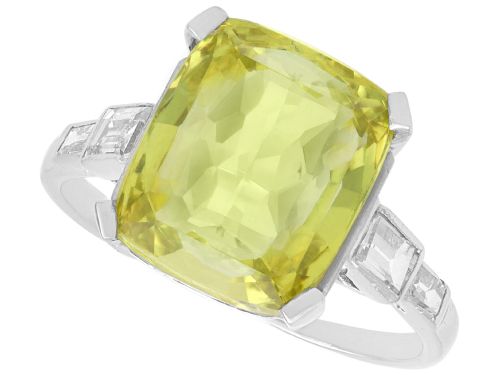
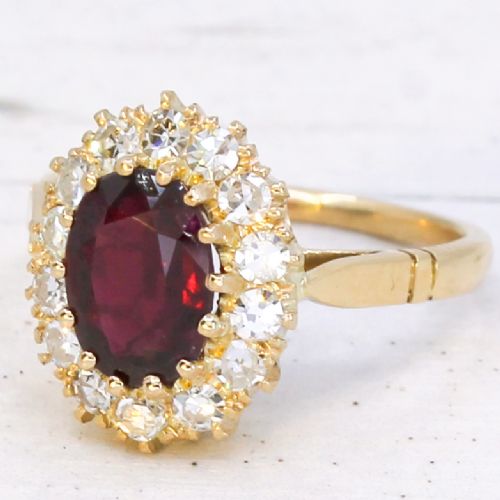
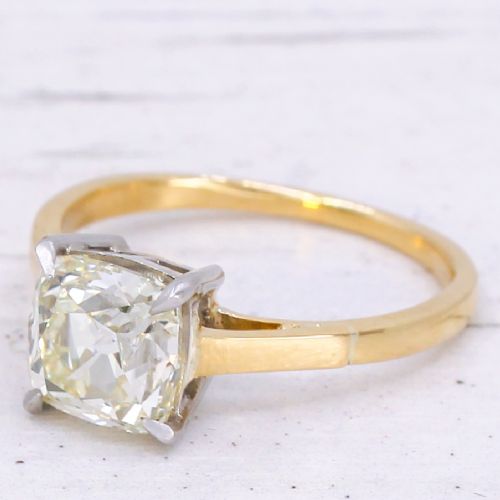
Diamond Solitaire Jewellery
Diamond solitaire jewellery brings together single stones and precious metals across periods from the Victorian era to the mid-century, offering enduring focus for collectors.
Diamond Solitaire Jewellery
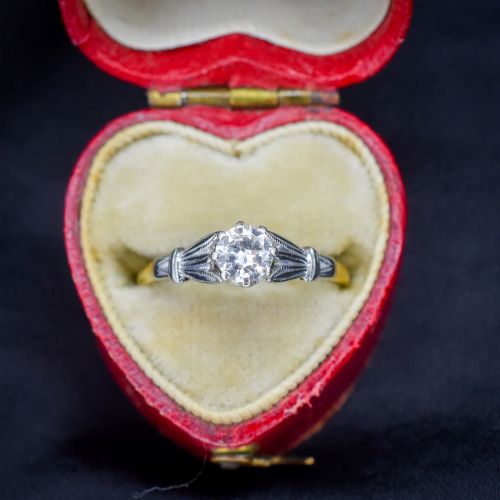
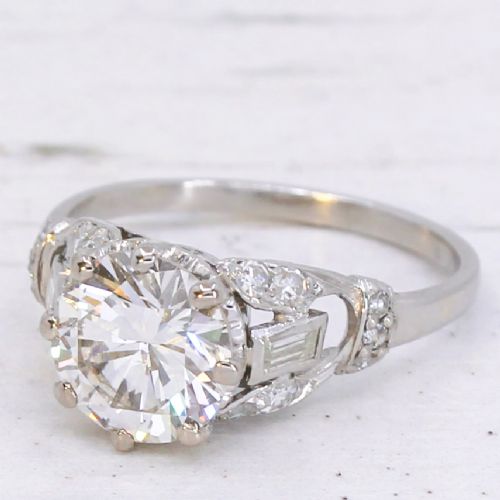
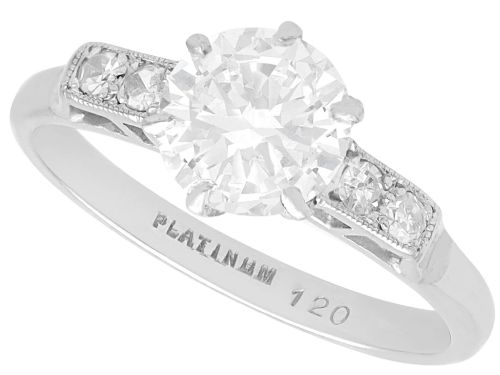
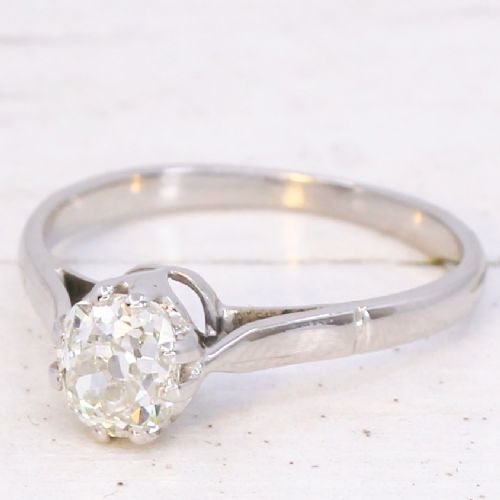
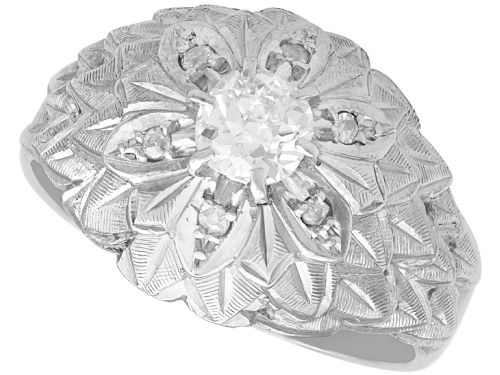
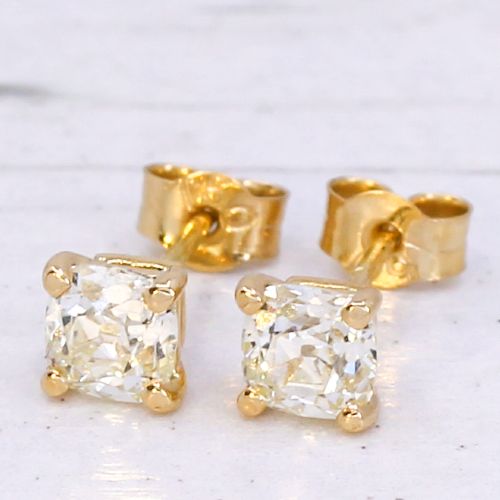
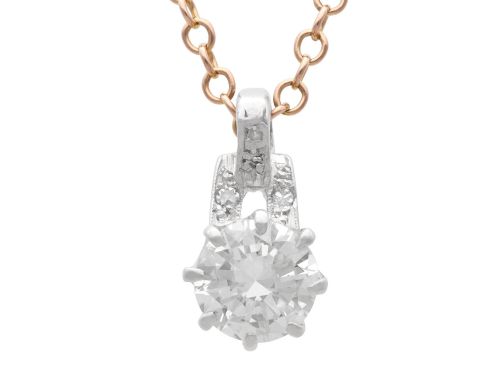
Diamond solitaire jewellery centres on single stones mounted in rings, engagement rings, pendants, necklaces and stud earrings. The forms span Victorian and Edwardian items, through Art Deco designs and 1940s vintage pieces, up to mid-century examples.
The selections encountered most frequently on this page are engagement rings and dress rings holding single diamonds, alongside simple drop earrings and pendant necklaces. These items showcase stones ranging from conservative weights under half a carat to substantial old cut diamonds exceeding two carats.
Materials and construction methods
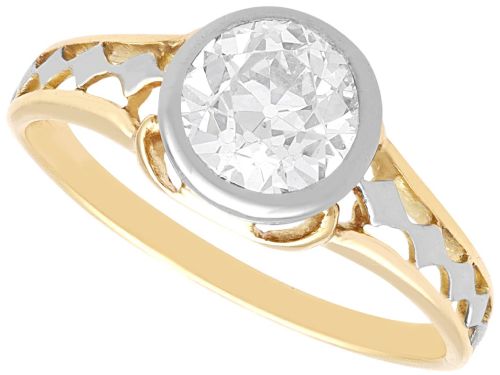
Metals used across these pieces include platinum, white gold, yellow gold, and 18ct white or yellow gold, paired directly with diamonds. Certain items incorporate bezel settings, rubover settings, or platinum mountings designed to secure the centre stone firmly.
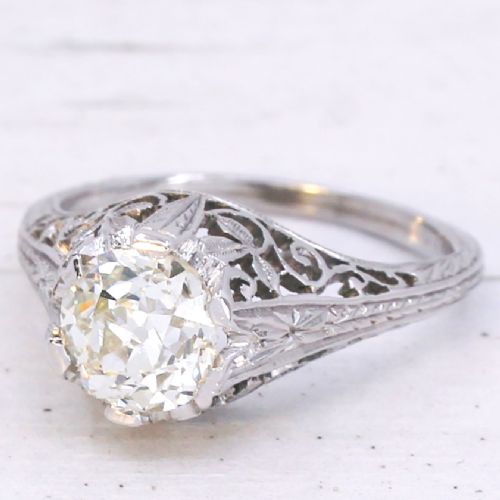
Casting and hand-working techniques from different decades dictate the physical structure of the mount. Edwardian and Art Deco pieces often utilise delicate platinum work, whereas mid-century and Victorian items rely on heavier gold bands and claw settings.
Diamond Solitaire Jewellery Retail Price Guide 2026
Typical asking prices for diamond solitaire jewellery among the pieces listed under this phrase on Sellingantiques today, from the lower quarter to the upper quarter. They describe what is for sale here now, not the wider market.
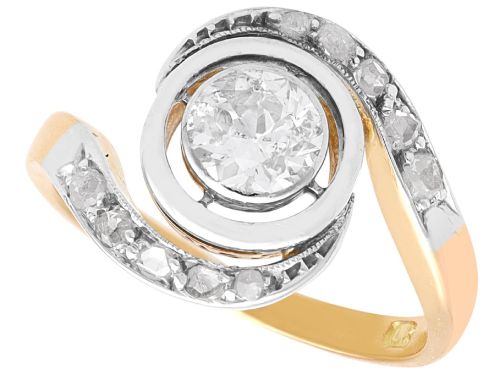
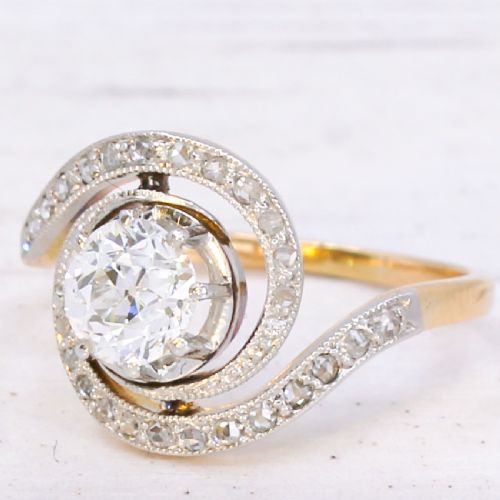
Early twentieth-century makers occasionally gave twist rings a tourbillon setting, letting the metal swirl around the diamond like a startled ribbon.
Distinctions in quality
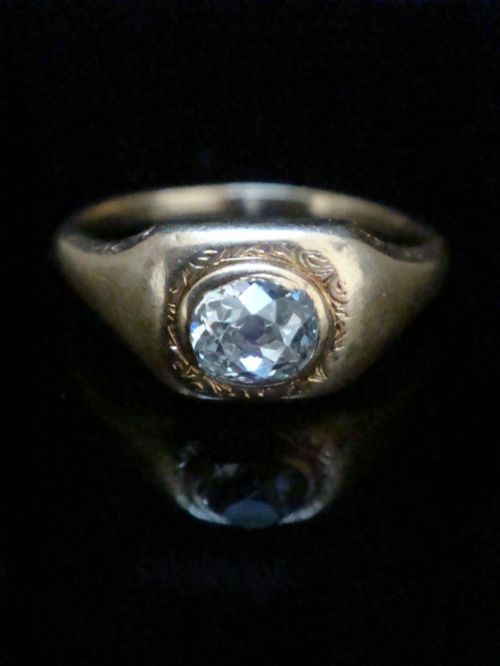
Quality rests in the relationship between the diamond's cut and the integrity of its metal setting. Older pieces with old mine cuts or old European cuts display unique hand-faceted patterns that differ from modern brilliant cuts.
The precision of the metalwork, whether platinum or 18ct gold, and the security of the mounting distinguish standard production from finer craftsmanship. Preservation of the original prongs and minimal wear to the shank indicate superior survival over time.
The Diamond Solitaire Jewellery Glossary
- Old cut
- A diamond cutting style prevalent in antique and vintage stones, featuring a smaller table, higher crown, and larger culet that produce a softer candlelit shimmer.
- Solitaire
- A piece of jewellery designed to showcase a single gemstone, most commonly a diamond, without competing accent stones.
- Bezel set
- A method of securing a diamond where a thin collar of metal wraps entirely around the girdle of the stone to hold it in place.
- Tourbillon
- A specialised ring design style seen in early twentieth-century pieces, characterised by swirling or twisting metalwork that frames the central diamond.
- Rubover set
- Similar to a bezel setting, this technique surrounds the stone with a smooth, flush rim of precious metal that creates a clean, snag-free outline.
Diamond Solitaire Jewellery: Frequently Asked Questions
How do I care for antique diamond rings?
Clean these pieces gently with warm soapy water and a soft brush, avoiding harsh ultrasonic cleaners that might dislodge older stones.
Store them separately in lined boxes to prevent the metal and diamonds from scratching other items in your collection.
Are old cut diamonds different from modern ones?
Older cutting styles involve hand-shaped facets that produce broader flashes of light rather than the precise brilliance of modern machinery.
This gives antique stones a distinct character suited to vintage platinum and yellow gold mountings.
What periods do these pieces come from?
The inventory spans the Victorian era, Edwardian period, Art Deco years, 1940s vintage, and mid-century modern designs.
Each era brings distinct metal choices, such as platinum for Edwardian work and yellow gold for Victorian rings.
Can I wear a solitaire ring every day?
Solid platinum and 18ct gold settings offer the durability needed for daily wear, provided the prongs or bezels remain secure.
Regular checks by a professional jeweller help ensure the central diamond stays firmly anchored in its vintage mounting.