
Diamond Halo Cocktail Ring
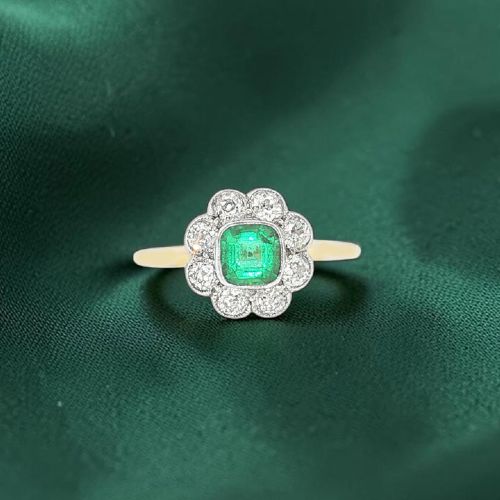
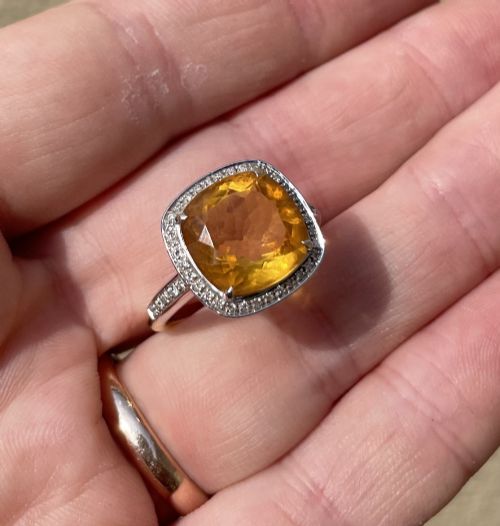
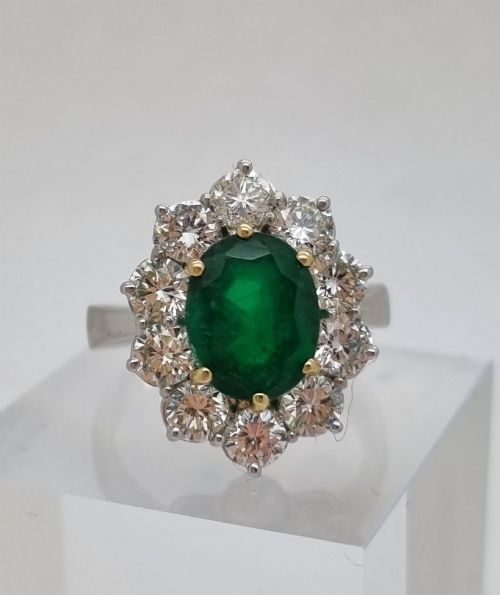
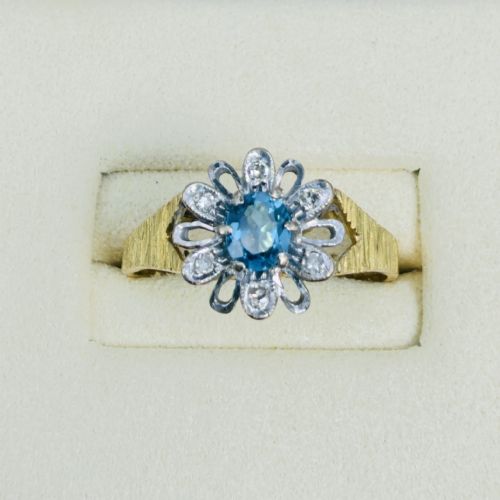
A diamond halo cocktail ring is a statement piece built around a central gem framed by smaller stones, designed to catch every light.
Diamond Halo Cocktail Ring
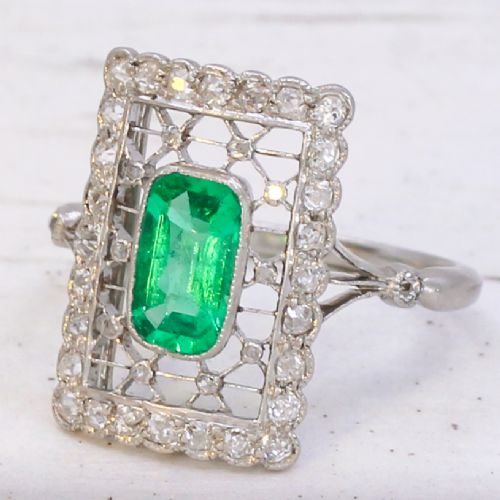
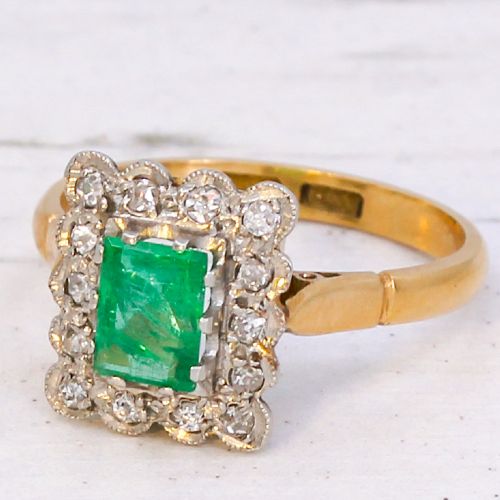
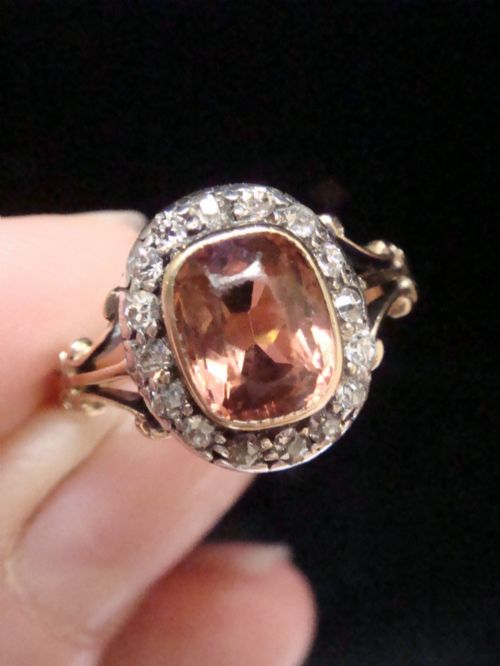
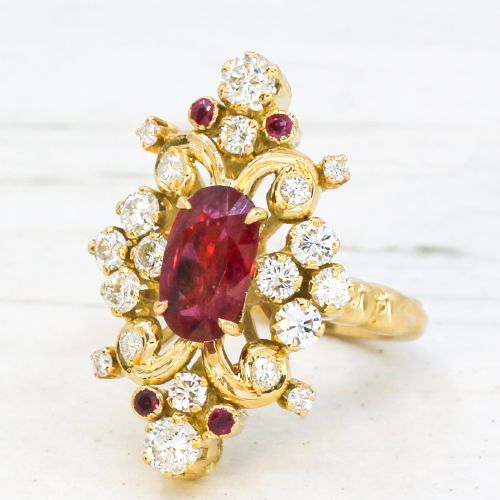
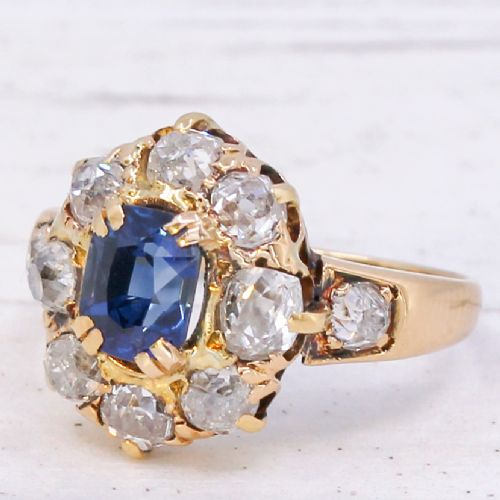
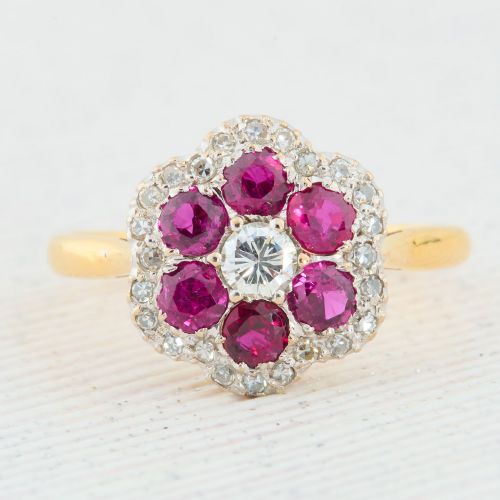
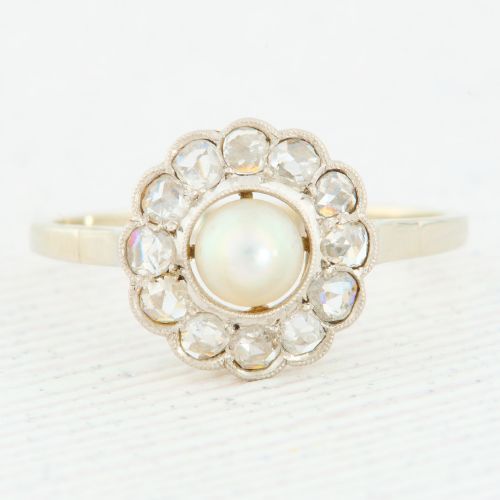
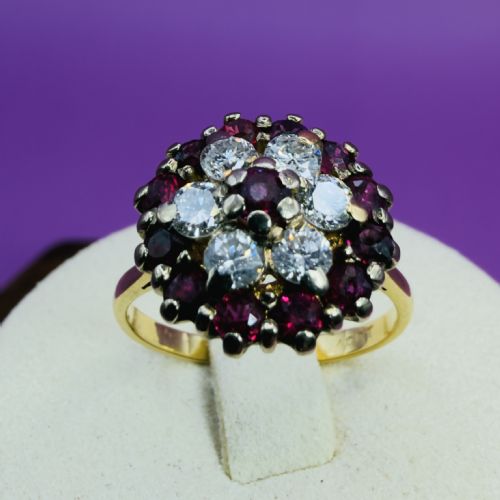
When a buyer searches for a diamond halo cocktail ring, they find cluster configurations designed for maximum finger coverage and visual impact. These pieces span from Victorian and Edwardian origins through Art Deco designs to mid-century modern examples.
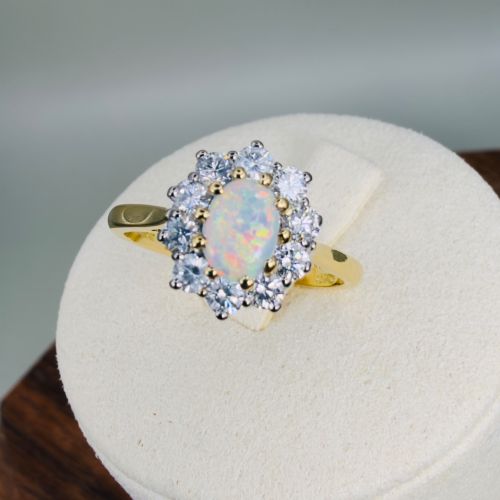
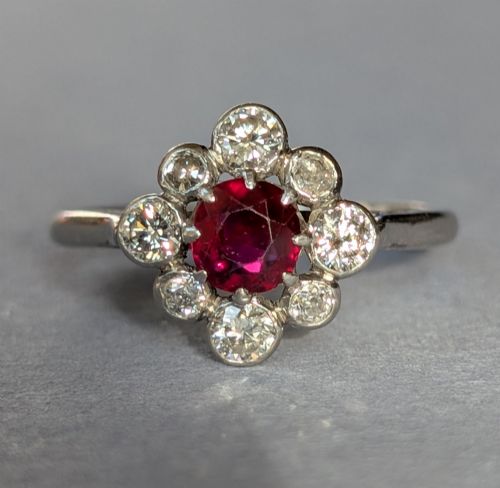
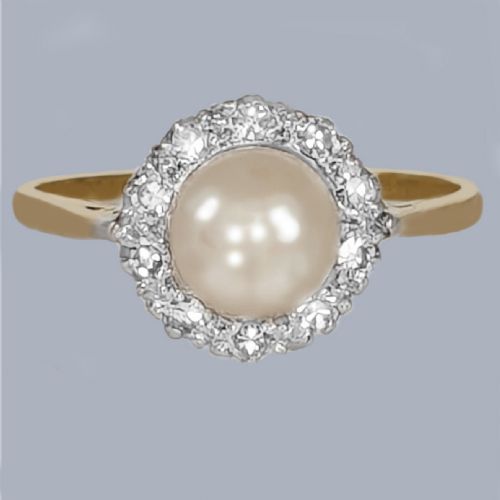
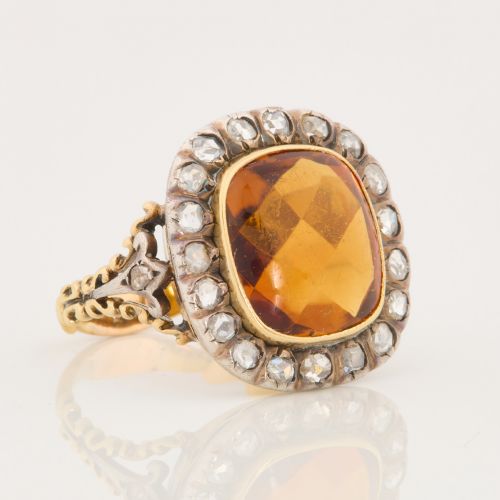
The version most commonly met on this page pairs a central coloured gemstone such as emerald, ruby, sapphire, aquamarine, or opal with a bright surround of diamonds. Forms range from traditional circular clusters to navette, floral, and elongated oval shapes.
Originating as bold evening wear ornaments, these rings showcase the distinctive lapidary cuts and metalwork of their respective decades. The inventory draws heavily upon platinum and various tones of gold to support these stone arrangements.
How They Were Made
Goldsmiths utilised platinum and 18ct gold, both yellow and white, to construct the robust settings required to hold multiple stones securely. Platinum offered the strength needed for delicate Edwardian and Art Deco filigree work without adding excessive weight to the hand.
Central stones typically feature old cut, cushion, oval, pear, or cabochon cuts, surrounded by meticulously matched brilliant or old mined diamonds. Gemstones such as rubies, sapphires, and emeralds are secured with precise claws or bezel settings that emphasise their individual colour profiles.
Materials utilised across the collection include platinum, 18ct yellow and white gold, alongside 9ct gold.
What Varies in Quality
The upper tier of these rings relies on superior gemological pedigree, evidenced by certified origin reports for emeralds, rubies, and sapphires showing minimal or no oil and heat treatments. Craftsmanship at this level demonstrates exceptional symmetry in the stone layout and seamless integration of the metalwork.
Lesser examples display uneven stone matching, heavier or less refined metal casting, and lower clarity diamonds that diminish the overall brilliance of the halo effect. The distinction lies in the precision of the setting and the natural vibrancy of the central coloured stone.
Le Vian
The Diamond Halo Cocktail Ring Glossary
- Cluster ring
- A ring design featuring a central gemstone surrounded by a border of smaller stones, typically diamonds.
- Old cut
- A vintage diamond cutting style characterised by a small table, high crown, and large culet, designed to sparkle under candlelight.
- Cabochon
- A gemstone shaped and polished with a smooth, rounded convex surface rather than faceted planes.
- Navette
- An elongated, boat-shaped ring setting that tapers to points at both ends, also known as a marquise shape.
- Calibre cut
- Gemstones specifically cut and fitted closely together in geometric rows to form a continuous line of colour without visible metal.
Diamond Halo Cocktail Ring: Frequently Asked Questions
What is a cocktail ring?
A cocktail ring is a large, statement-making piece of jewellery traditionally worn to evening parties and social gatherings.
These rings are intentionally oversized to draw attention and usually feature a prominent central gemstone accented by diamonds.
How do I style a diamond halo ring?
Wear your ring as a standalone piece on the hand to let the central cluster and surrounding diamonds take centre stage.
Because of their substantial proportions and distinct historical styles, these rings pair well with simple evening attire or tailored daytime outfits.
How can I tell the period of a ring?
Dating relies on examining the metal choices, gemstone cuts, and structural techniques specific to eras like Edwardian, Art Deco, or mid-century design.
For instance, delicate platinum wirework often points to the Edwardian period, while geometric calibration suggests Art Deco origins.
Are these rings suitable for daily wear?
Many buyers wear these pieces regularly, provided the settings are checked periodically by a professional jeweller for security.
Consider the hardness of the central stone, such as sapphires or rubies, which handle daily wear better than softer materials like opals.