

Diamond Engagement Band
A diamond engagement band brings together historical craftsmanship and enduring stone settings across Victorian, Edwardian, and mid-century periods.
Diamond Engagement Band
A diamond engagement band spans multiple eras, including Victorian, Edwardian, Art Deco, and mid-century periods, showcasing various traditional forms. Buyers exploring this category encounter rings designed for commitment and daily wear, utilising precious metals alongside treasured gems.
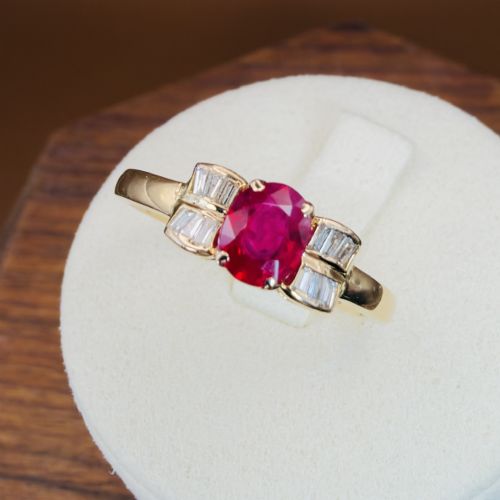
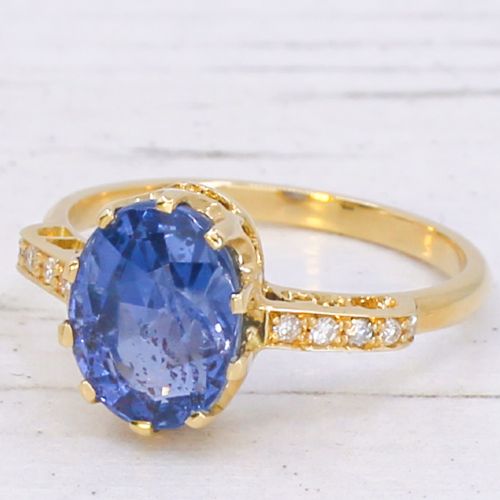
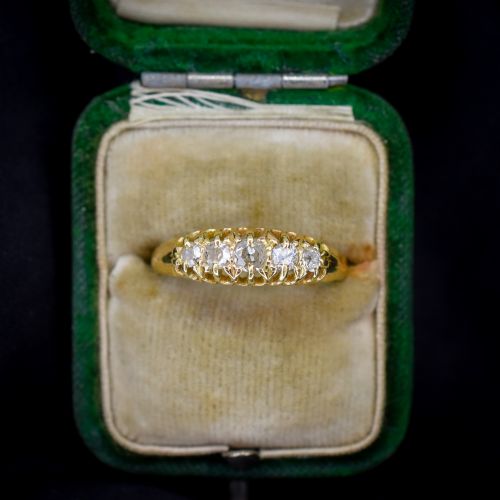
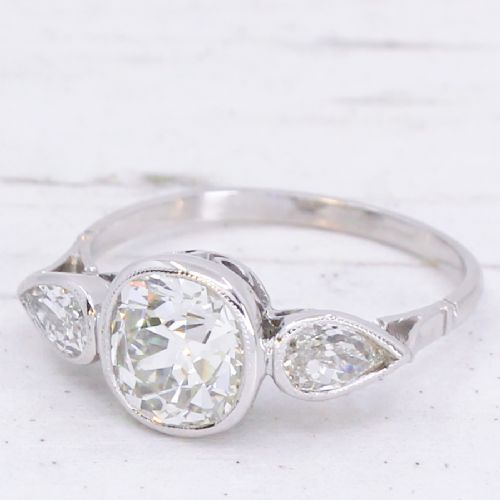
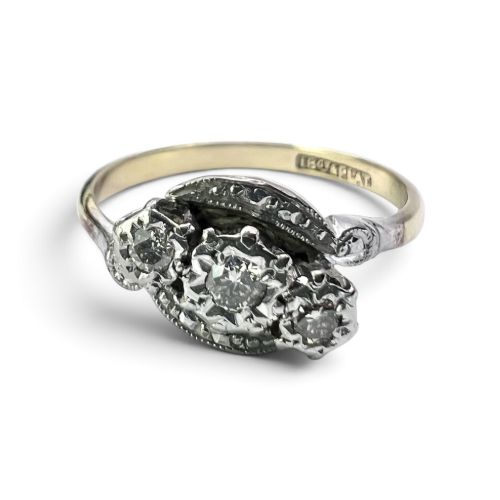
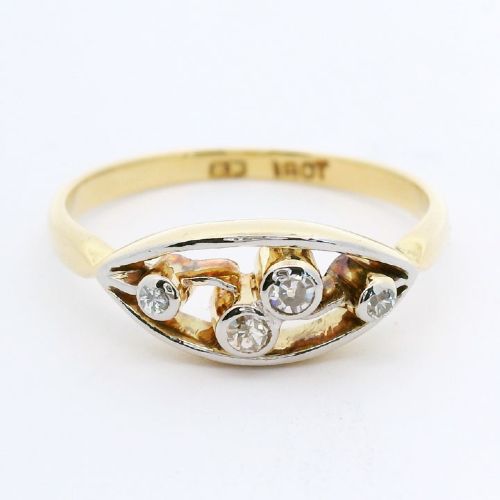
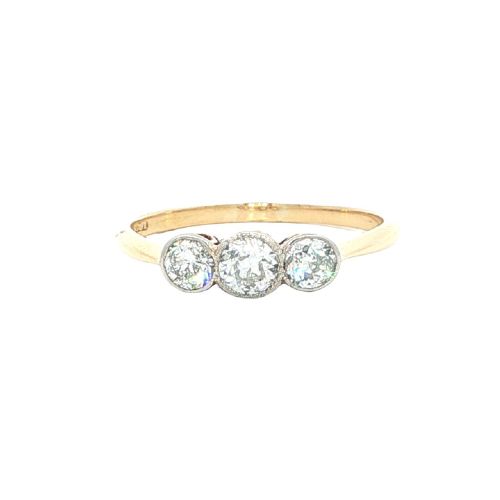
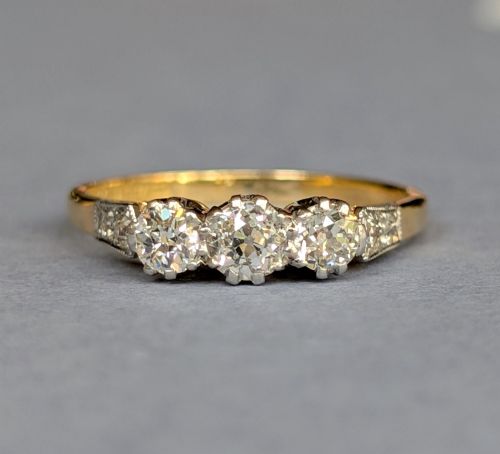
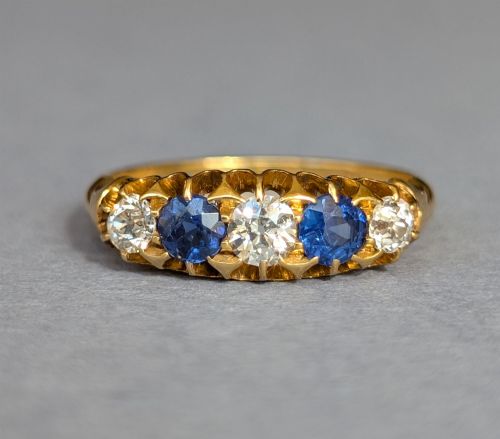
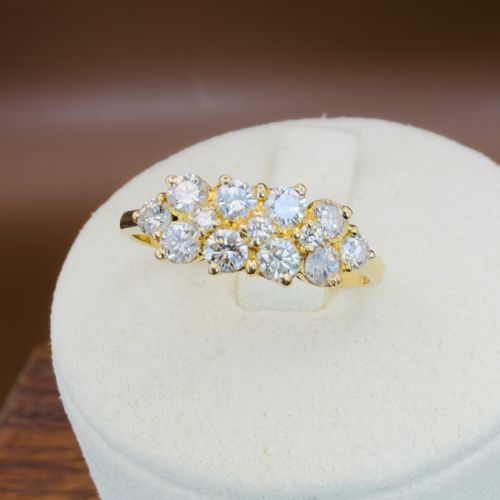
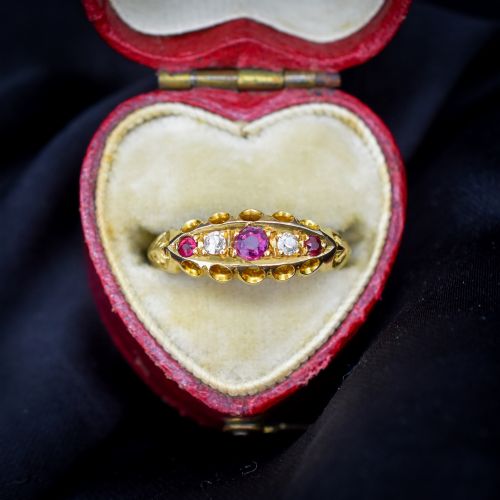
The most common pieces on this page comprise multi-stone settings, such as three-stone trilogy rings, five-stone half hoops, and cluster designs. These incorporate historical diamond cuts paired with sapphires, rubies, or opals set in yellow gold, white gold, or platinum.
How they were made
Goldsmiths utilised 18ct gold, white gold, and platinum to fabricate durable settings that secure precious gems safely. Platinum gained popularity in combination with gold during the Edwardian and Art Deco eras to highlight intricate metalwork.
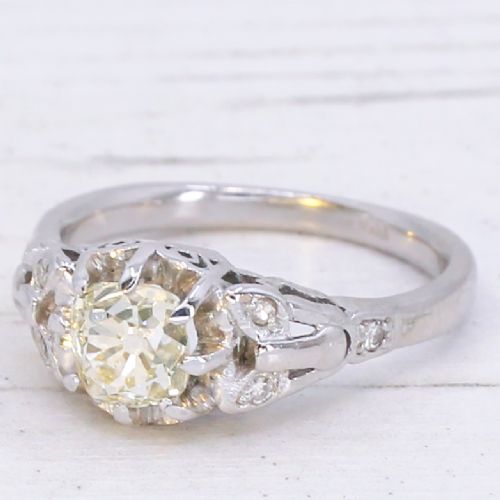
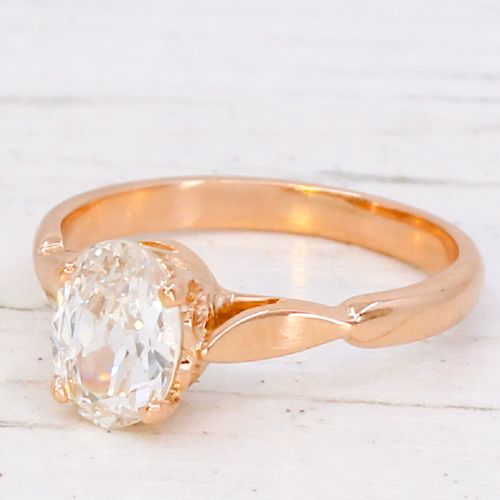
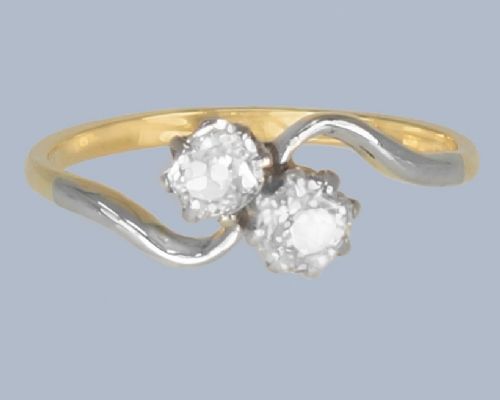
Gemstones feature historical cuts such as old cut, old mine cut, and old European cut diamonds, alongside cushion, oval, and pear shapes. Settings incorporate claw, bezel, gypsy, and starburst techniques to anchor diamonds and coloured stones like rubies, sapphires, and opals.
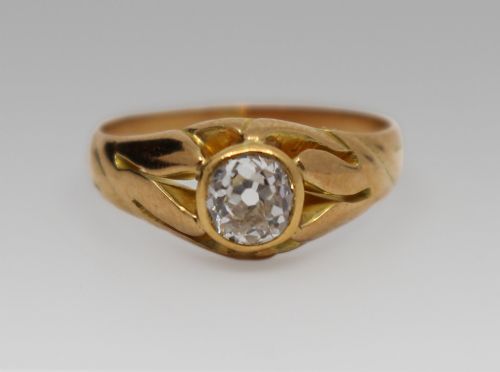
Some Victorian gypsy-set rings were built so smoothly that wearers could sleep without catching their diamond on the bedsheets.
What varies in quality
The distinction between tiers rests upon the precision of the stone cutting and the integrity of the original metal settings. Hand-finished details in Edwardian platinum work or precise symmetry in Art Deco geometry elevate a piece.
Quality also depends on the matching and condition of the central diamonds and accompanying coloured stones, such as unheated sapphires or Burmese rubies. Original settings that retain their structural depth without excessive past resizing represent higher craftsmanship.
The Diamond Engagement Band Glossary
- Old cut
- A diamond cutting style from the late nineteenth and early twentieth centuries featuring a smaller table, higher crown, and open culet. These stones display a distinctive soft scintillation under candlelight.
- Trilogy ring
- A ring set with three stones, traditionally representing the past, present, and future. This form frequently pairs a central diamond with smaller side diamonds or coloured stones.
- Gypsy set
- A setting style where the gemstone is flush with the metal surface, secured by pushing the surrounding gold over the stone edge. This technique protects the girdle during daily wear.
- Half hoop
- A ring design where gemstones span the upper half of the band in a continuous line. Five-stone configurations of this type appear frequently in Victorian and Edwardian jewellery.
Diamond Engagement Band: Frequently Asked Questions
What is an old cut diamond?
An old cut diamond is a historical gemstone faceted by hand before modern machinery standardised proportions. These stones typically exhibit smaller tables and deeper pavilions.
Such cuts produce a warmer, chunkier pattern of light reflection compared to contemporary brilliant cuts. They appear frequently in Victorian, Edwardian, and Art Deco jewellery.
How do I care for antique rings?
Antique rings require gentle handling to preserve delicate settings, thin shanks, and historical claw work. Regular professional checks ensure stones remain secure within the metal.
Owners should remove such rings during heavy physical tasks or swimming. Cleaning is best done with warm soapy water and a soft brush, avoiding harsh chemical dips.
What metals were used in vintage bands?
Victorian and Edwardian jewellers primarily worked with 18ct yellow gold for band construction. Platinum emerged extensively around the turn of the twentieth century for fine white metal settings.
Mid-century pieces frequently incorporated white gold or platinum alongside yellow gold. These metal choices influence both the weight and the colour profile of the ring.
Are coloured stones common in engagement bands?
Coloured gemstones appear regularly alongside diamonds in historical engagement bands. Rubies, sapphires, opals, and pearls form significant components of Victorian and Edwardian multi-stone layouts.
These stones were often integrated into cluster, trilogy, or boat ring configurations. Their presence reflects historical preferences before the diamond solitaire became dominant.