

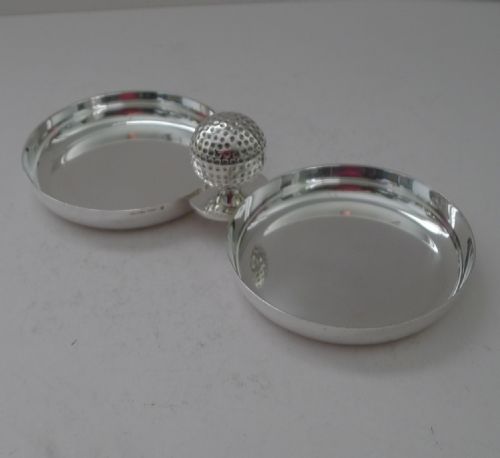
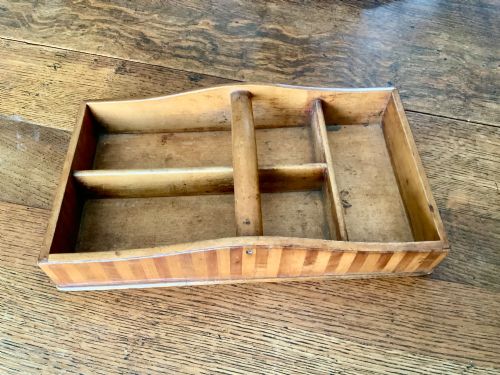


Desk Organiser Tray
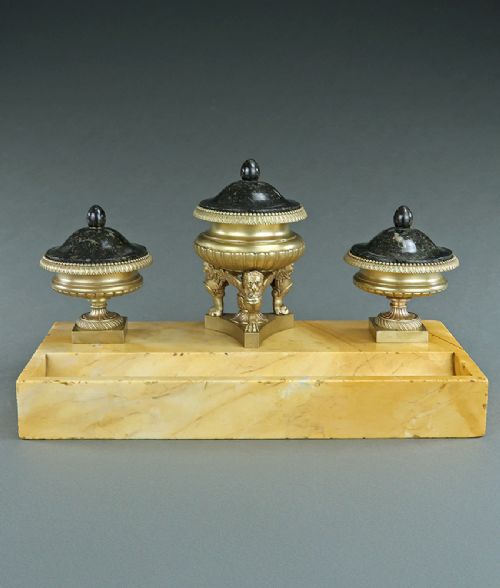
A desk organiser tray keeps the working surface orderly, bringing heavy metals, carved woods and fitted inkwells to hand.
Desk Organiser Tray
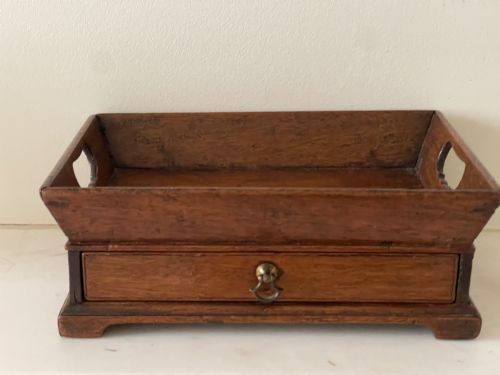
A desk organiser tray gathers small writing equipment, letters and ink accessories into a single designated place on a tabletop. Pieces meeting this description range from simple wooden troughs and valet trays to elaborate multi-piece sets with fitted inkwells and pen rests.
Victorian examples in oak, coromandel and papier-mâché appear frequently alongside heavy brass and bronze pieces from the Edwardian period and the Art Deco years. These items served administrative life in studies and offices, holding items close during correspondence.
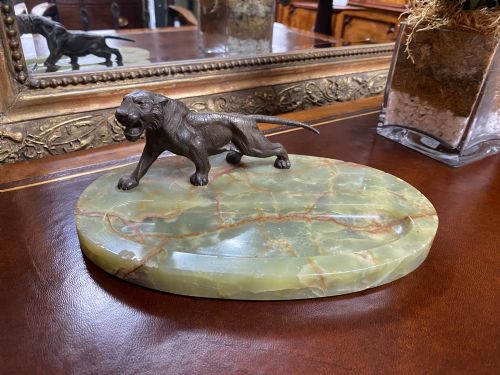
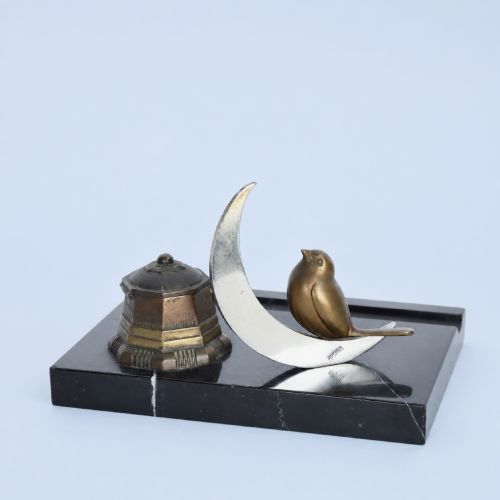
Makers and retailers such as Asprey and Hermes produced these desk accessories in various scales, utilising marble bases, inlaid brass and hand-carved animal figures. The form adapts from simple coin trays to tiered letter racks and integrated inkstands.
Materials and construction
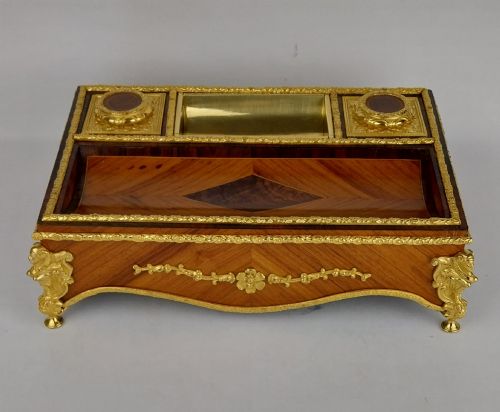
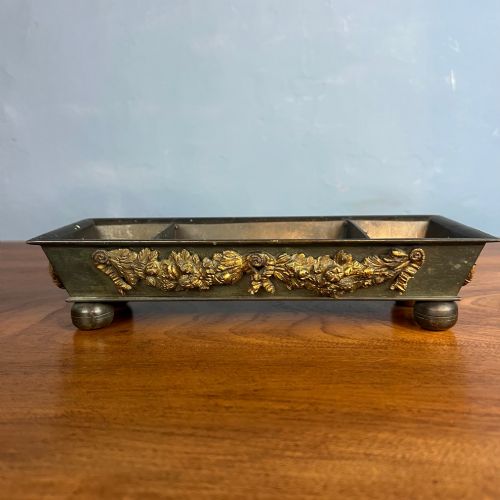
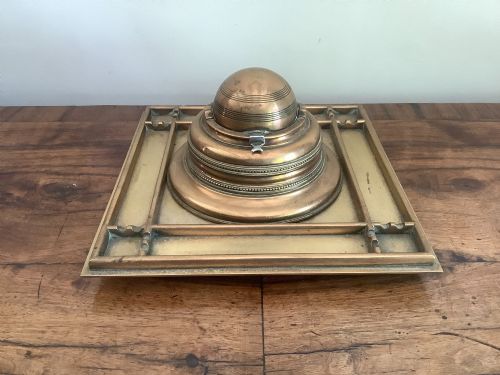
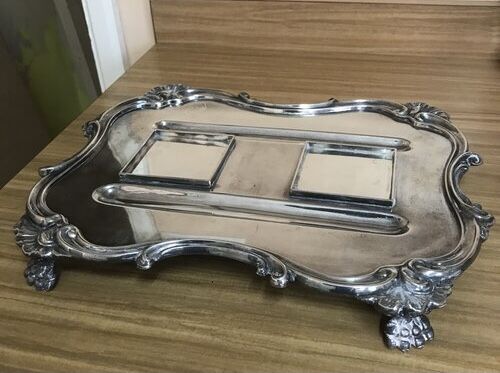
Metal elements rely on casting and chasing, utilising bronze, brass, ormolu and silver plate to form rigid pen rests, animal figures and inkwell mounts. Cold-painted bronze and gilt finishes provide decorative surfaces that catch the light on a partner desk.
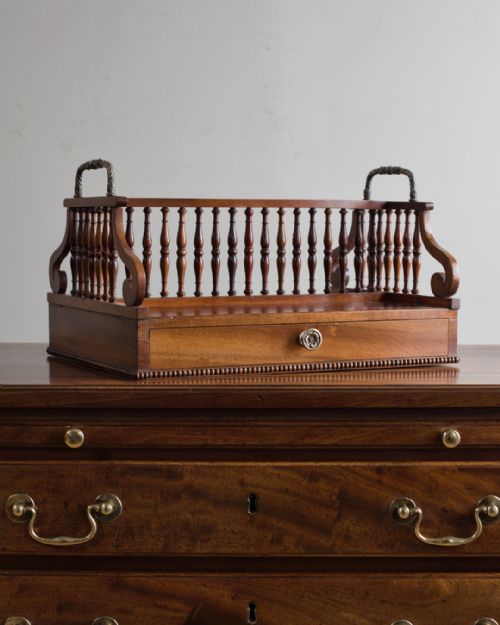
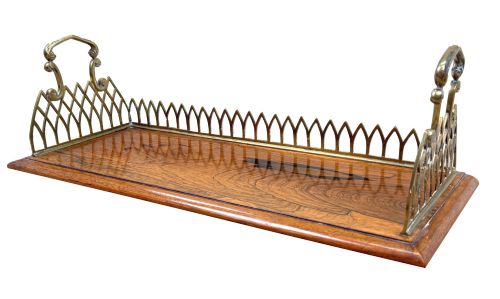
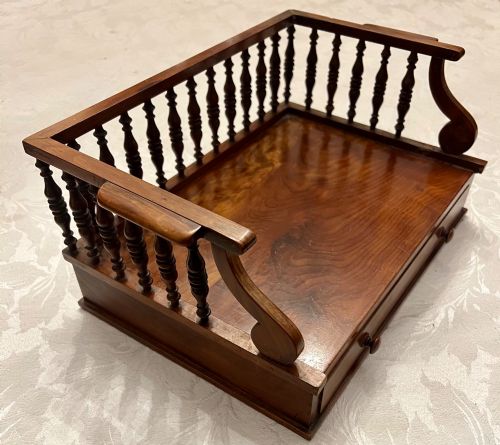
Woodworking techniques involve dense timbers such as oak, walnut, coromandel and yew, frequently enhanced with mother-of-pearl inlay, tortoiseshell or carved Black Forest motifs. Papier-mâché components utilise layered paper pulp pressed into moulds and finished with deep lacquers.
Desk Organiser Tray Retail Price Guide 2026
Typical asking prices for desk organiser tray among the pieces listed under this phrase on Sellingantiques today, from the lower quarter to the upper quarter. They describe what is for sale here now, not the wider market.
Desk accessories frequently take the form of playful animals, including carved Black Forest bears, playing kittens and cold-painted bronze horses.
Assessing craftsmanship
Quality reveals itself in the integration of materials, such as the precision of brass stringing into tortoiseshell or the crispness of chased detail on a bronze mount. Heavy castings and substantial hardwood foundations indicate superior workshop standards.
The degree of fitted utility distinguishes standard trays from exceptional desk sets, particularly where glass inkwells, secret drawers and hinged letter compartments retain their original matching components.
Gorham·Hermes Paris·Harrods·Asprey Of London
The Desk Organiser Tray Glossary
- Encrier
- A French inkstand or desk tray incorporating one or more inkwells and pen rests. These items often feature marble bases and ormolu mounts.
- Vide poche
- Literally an empty pocket, this small tray holds loose pocket items or desk accessories. Examples include bronze and leather interpretations.
- Ormolu
- Gilded bronze mounted upon furniture and decorative metalwork. This technique creates a rich golden finish on desk stands.
- Papier-mâché
- A composite material made from paper pulp or reinforced sheets mixed with binding agents. Victorian makers moulded this substance into deep desk trays and letter holders.
Desk Organiser Tray: Frequently Asked Questions
What fits on a desk organiser tray?
These trays accommodate everyday writing tools, stamps, envelopes and sealing wax. Many include dedicated slots for pens and glass inkwells.
Larger versions incorporate letter racks or tiered shelves to separate incoming correspondence from outgoing papers.
How do I date a wooden desk tidy?
Timbers and construction methods provide clear chronological markers. Victorian pieces frequently employ coromandel, papier-mâché or ebonised wood with brass inlay.
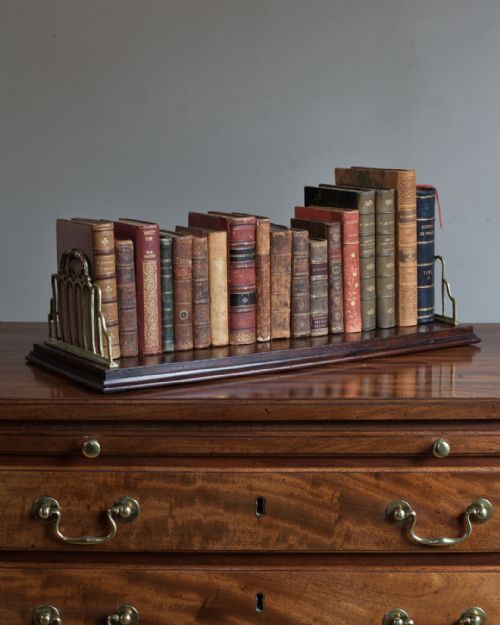
Earlier Georgian and Regency examples favour solid mahogany, oak or rosewood without the ornate embellishments seen in later nineteenth-century revivals.
Were inkwells always included?
Many desk trays and tidies were manufactured with matching glass or ceramic inkwells set directly into the wooden or metal base. Simple pen trays and coin trays omitted inkwells entirely, focusing solely on holding writing implements or small pocket items.
Where should I place an antique desk tidy?
These pieces suit partner desks, library tables and writing surfaces where small accessories tend to scatter. Their enclosed compartments protect delicate fountain pens and keep stationery within reach.
They also function effectively on entrance hall tables as valet trays for coins and keys.