





Desk Ink Stand
When choosing a desk ink stand, you select a functional writing accessory designed to hold inkwells and pens upon a desktop.
Desk Ink Stand
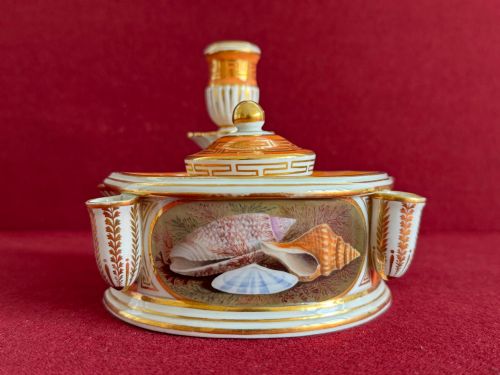
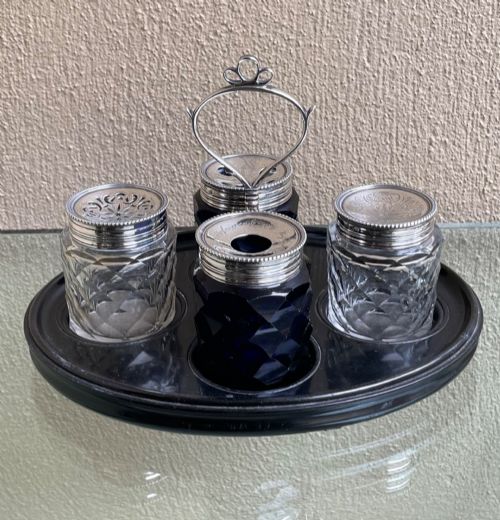
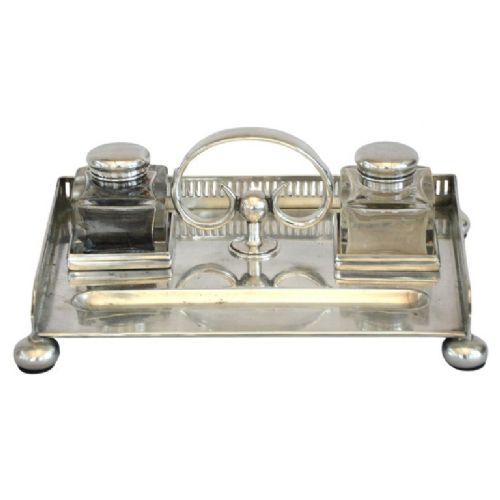
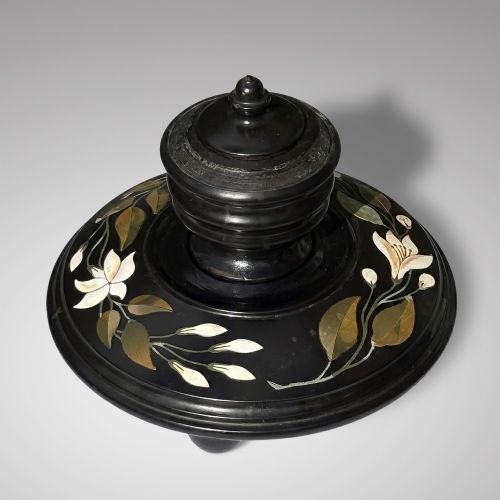
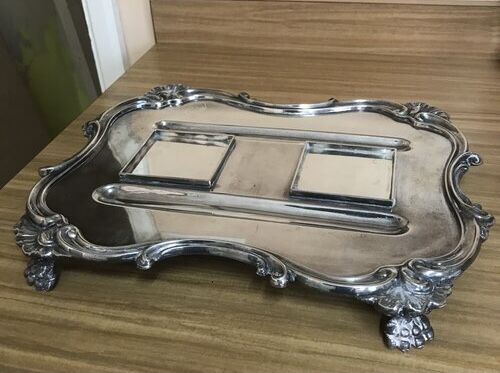
A desk ink stand serves as an organised desktop station for writing implements, incorporating one or more receptacles for ink alongside trays for pens and paper accessories. The pieces found here span the Victorian, Edwardian and Art Deco periods, encompassing both compact single-well formats and substantial partners' desk models.
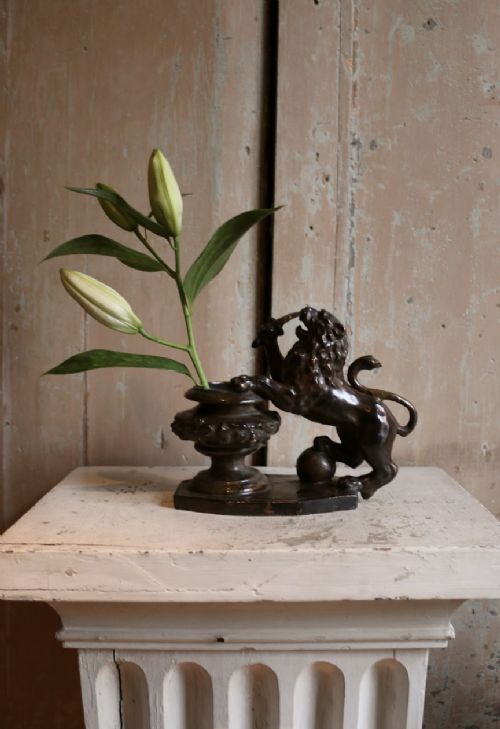
Most examples encountered on this page originate from nineteenth-century and early twentieth-century British and Continental workshops, reflecting the prevalence of handwritten correspondence during those eras. Formats range from simple wooden trays to elaborate architectural arrangements fitted with letter racks, candlesticks and perpetual calendars.
How They Were Made
Materials span sturdy hardwoods such as oak, walnut and coromandel, often combined with metals including brass, bronze, silver plate and sterling silver. Cut glass and porcelain feature heavily in the formation of the ink inserts themselves, while exotic additions like marble, malachite, tortoiseshell and papier-mâché elevate decorative impact.
Construction techniques rely heavily on secure metal mounts, hinges and fitted channels to hold heavy glass bottles and pen rests in place. Artisans applied specialised methods including champlevé enamel, hand painting, marquetry and silver soldering to finish these functional writing companions.
Listings feature extensive examples from the Victorian and Edwardian eras, utilising materials such as sterling silver, brass, oak, and cut glass.
What Varies In Quality
Material selection dictates the baseline tier of a piece, distinguishing simple turned wood from intricately carved Black Forest woodwork or heavy cast bronze and sterling silver. The inclusion of matching original glass liners and intact fitted components significantly elevates the integrity of an ink stand.
Execution of detail defines the upper echelon of examples, visible in the precision of brass inlays, the crispness of cast ornamentation, and the presence of fully documented maker marks. Finer stands integrate supplementary desk accessories like matching stamp boxes, tapersticks and calendars into a cohesive composition.
Walker And Hall·James Cartland And Sons·Zimmermann·Wilmot Manufacturing Co·Goldsmiths And Silversmiths·William Hutton
The Desk Ink Stand Glossary
- Inkstand
- A desktop tray or stand specifically designed to hold one or more inkwells and pens. These units often incorporate extra compartments for wafers, sanders or sealing wax.
- Capstan inkwell
- A low, wide inkwell shaped like a ship's capstan, usually featuring a heavy silver or metal collar and a hinged lid. This form provides stability against tipping during use.
- Champlevé
- An enamelling technique where troughs or cells are carved into a metal surface and filled with vitreous enamel before firing. It frequently appears on Continental brass and bronze stands.
- Coromandel
- A dense, dark cabinet wood with contrasting light stripes, highly prized for luxury nineteenth-century boxes and writing trays. It provides a rich, polished surface for executive desk accessories.
- Ormolu
- Gilded bronze used extensively for decorative mounts and decorative trim on French nineteenth-century furniture and desk items. The technique imparts a bright golden finish to cast metal details.
Desk Ink Stand: Frequently Asked Questions
What is a desk ink stand used for?
A desk ink stand provides a centralised station for holding liquid ink, pens, and related writing tools on a library or writing table.
By keeping the ink supply stable and pens within reach, these stands protected fine wooden surfaces from spills while keeping correspondence tools organised.
How do I care for a metal and glass ink stand?
Maintenance involves gentle dusting of the base materials and careful washing of the removable glass ink inserts to prevent dried ink build-up.
Harsh chemical polishes should be avoided on antique silver plate, bronze, and delicate wood surfaces to preserve the original patina.
How do I date a Victorian ink stand?
Dating relies on stylistic markers such as ornate Gothic Revival or heavy Aesthetic movement motifs, alongside any registered design numbers or hallmarks present on metal mounts.
Silver components often feature town marks and date letters that pinpoint the exact year of manufacture.
Why do some ink stands have two inkwells?
Double inkwells allowed a writer to keep both black and red ink ready for immediate use during bookkeeping or formal correspondence.
They also provided balance and symmetry to larger desk stands intended for shared use on partner desks.