




Derby Bocage Figures
Derby bocage figures are ornate porcelain sculptures entwined with leafy arbours, sought after for their delicate pastoral charm and rich eighteenth-century heritage.
Derby Bocage Figures
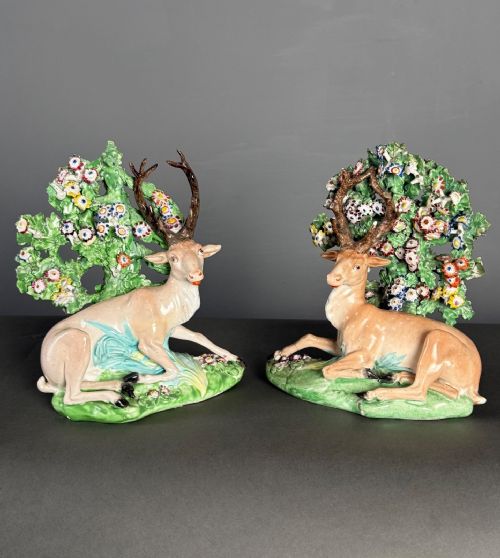
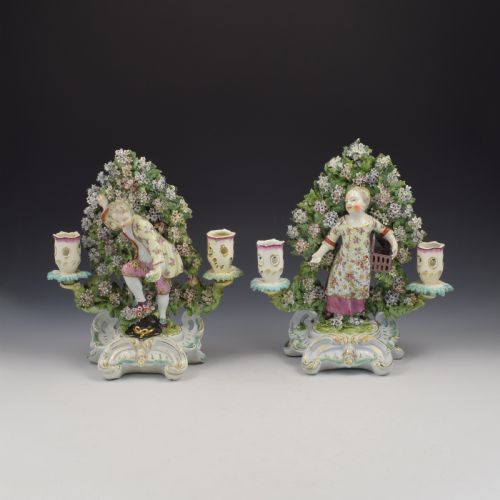
When you search for derby bocage figures, you encounter a specialised form of decorative porcelain sculpture that typically depicts animals, musicians, children or pastoral pairs framed by dense foliage. These sculptural works often double as functional candlesticks, integrating candle sockets into the leafy background or beside the central figures.
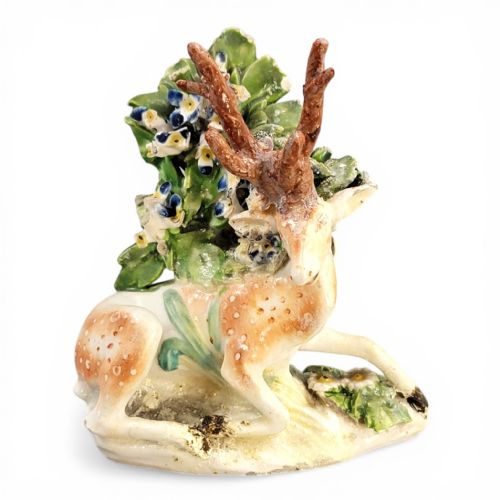
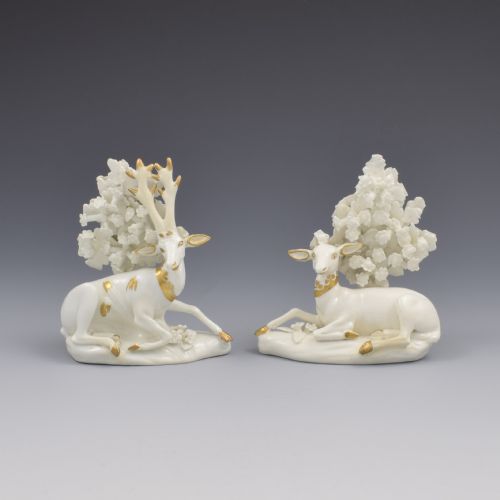
The pieces available span the Georgian period, including examples from the patch-mark era of the mid to late eighteenth century, alongside later nineteenth-century revivals and continental tributes. Animal subjects such as recumbent stags, sheep, rams and dogs frequently appear alongside human figures like bagpipers, gardeners and court hairdressers.
Most entries belong to the eighteenth century, showcasing the soft-paste porcelain body characteristic of early Derby production. Buyers meet both single decorative figurines and balanced pairs designed to sit symmetrically on a mantelpiece or side table.
Materials and manufacture
The earliest pieces rely on soft-paste porcelain, a ceramic body that yields a warm, slightly translucent ground beneath the glaze. Artisans modelled the human and animal subjects by hand or press-moulding before assembling the complex compositions.
The signature bocage element consists of applied clay leaves and flowers built up around branches, requiring immense skill to prevent collapse during firing. Painters then applied polychrome enamels and gilding, sometimes incorporating gold leaf to highlight details on the garments and bases.
Listings feature soft-paste porcelain and enamel materials applied across Georgian and nineteenth-century periods, spanning Rococo and Regency styles.
Assessing quality and finish
Quality rests heavily on the crispness of the modelled foliage and the preservation of the delicate porcelain flowers that form the arbour. Dense, deeply undercut bocage work requires greater technical mastery than flatter, more stylised leaf backgrounds.
The refinement of the hand-painted polychrome enamel work and the sparing, precise use of gilding distinguish superior examples. Surface finish also depends on the clarity of the soft-paste body and the minimal presence of firing cracks within the complex branched structures.
The Derby Bocage Figures Glossary
- Bocage
- An ornamental background of applied porcelain leaves, branches and flowers framing a central figure or group. This foliage is built up separately and attached before firing.
- Soft-paste porcelain
- An artificial ceramic paste used in early English factories before the widespread adoption of bone china. It produces a softer texture and a warm glaze.
- Patch mark
- A small, square unglazed scar on the underside of a porcelain piece left by the kiln furniture during firing. This trait helps date eighteenth-century Derby items.
- Polychrome
- Decoration employing multiple distinct enamel colours on the surface of the ceramic. These pigments are fixed in a second kiln firing.
- Recumbent
- A sculptural pose showing an animal lying down with its head raised. Stags and sheep frequently appear in this relaxed posture.
Derby Bocage Figures: Frequently Asked Questions
What is a bocage figure?
A bocage figure is a porcelain sculpture framed by an intricate background of applied ceramic leaves and flowering branches. These pieces often incorporate animal or human subjects within a pastoral setting.
Many examples double as functional candlesticks, blending decorative figural art with lighting accessories intended for Georgian interiors.
How do I date an antique Derby piece?
Dating relies on identifying specific manufacturing traits such as the ceramic body type, glaze characteristics and kiln marks. Eighteenth-century pieces frequently exhibit patch marks on the base from early support methods.
Style also offers strong clues, with rococo curves and soft-paste bodies pointing to the mid-Georgian era, while later nineteenth-century items show different paste composition and colour palettes.
Are these figures functional or decorative?
Most pieces serve primarily as decorative objects or mantel ornaments designed to catch the eye in a reception room. A significant portion also function as candlesticks, featuring sockets integrated directly into the leafy arbour.
Pairs were commonly manufactured to sit symmetrically on either end of a fireplace or piece of furniture.
Why do some figures have animals?
Animal subjects like stags, sheep, rams and dogs were popular motifs in eighteenth-century pastoral art, reflecting a romanticised view of rural life. These creatures were frequently paired with bocage foliage to create naturalistic woodland vignettes.
Makers combined animal models with human figures such as shepherds, gardeners and musicians to complete these narrative scenes.