


Delftware Pottery
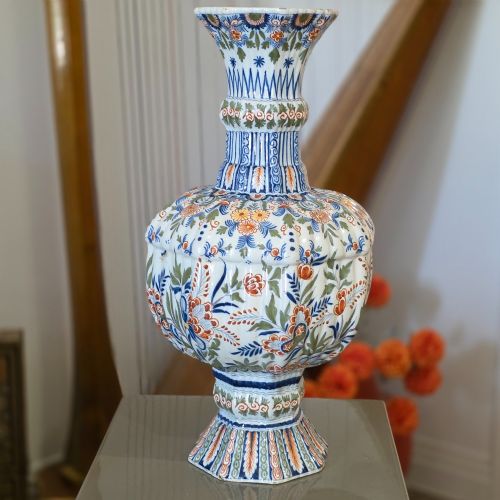
Delftware pottery brings tin-glazed earthenware into interiors through chargers, vases, and apothecary jars decorated in blue, white, and polychrome pigments.
Delftware Pottery
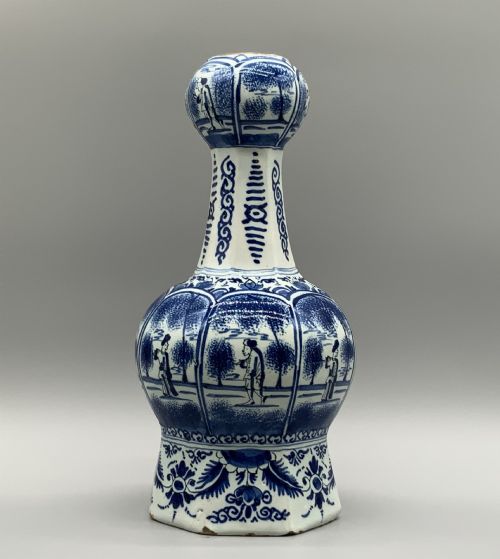
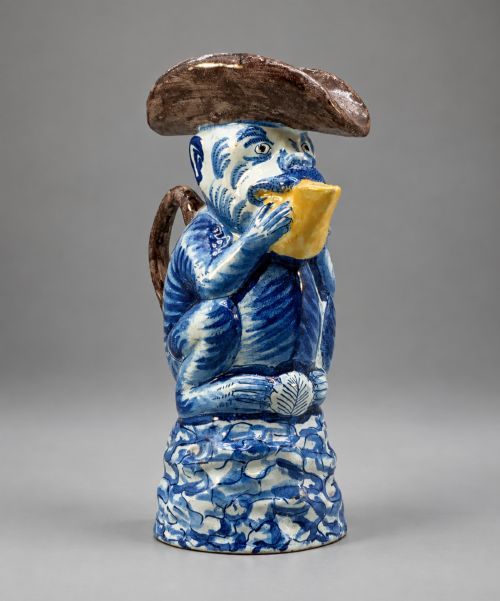
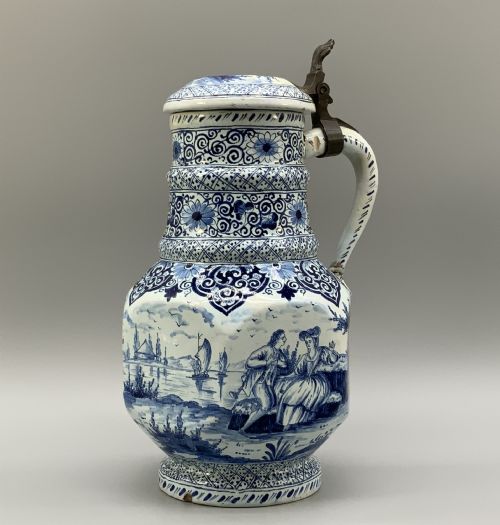
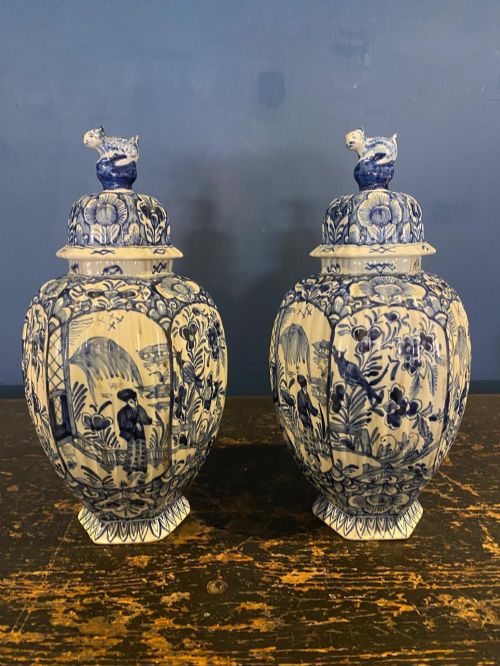
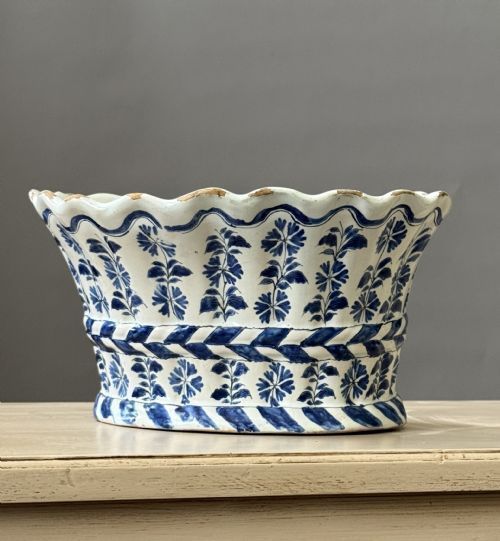
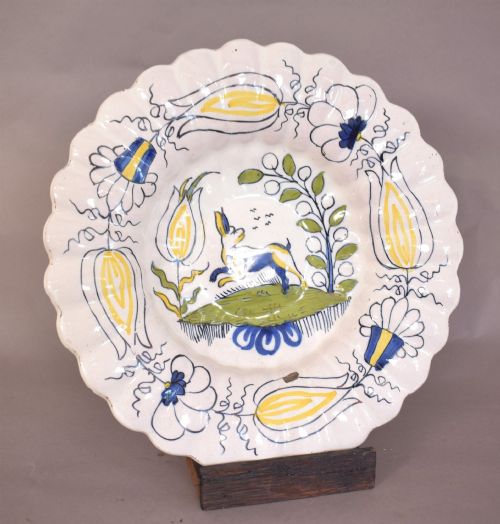
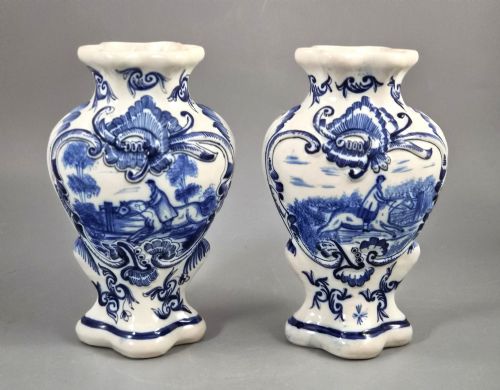
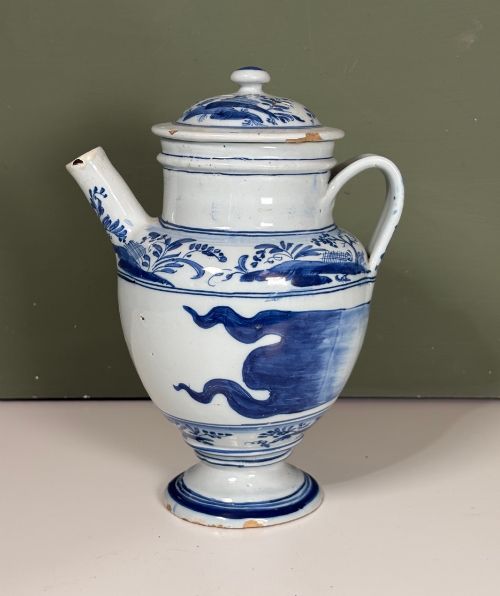
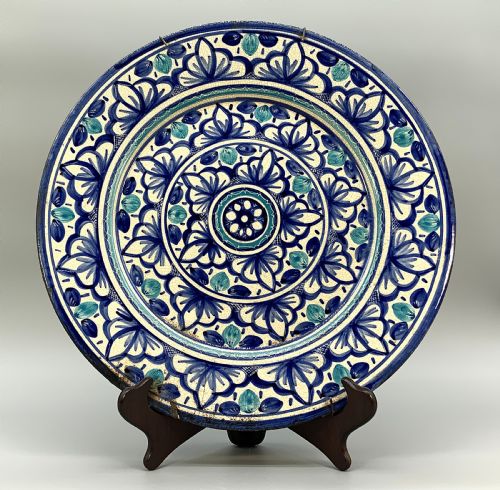
Delftware pottery encompasses chargers, plates, vases, and apothecary jars produced across the seventeenth, eighteenth, and nineteenth centuries. Buyers encountering this selection typically discover blue and white Dutch plates alongside ornamental vessels and figural pieces.
The objects stem predominantly from Dutch centres, with additional examples originating from English kilns and French workshops. Forms range from utilitarian posset pots and barber's bowls to large decorative urns and chargers.
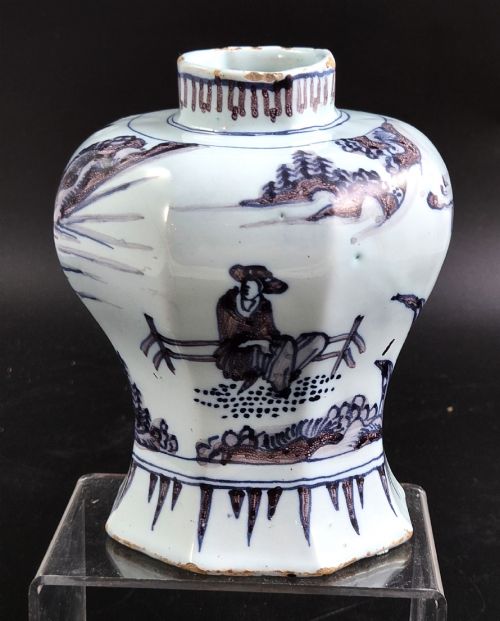
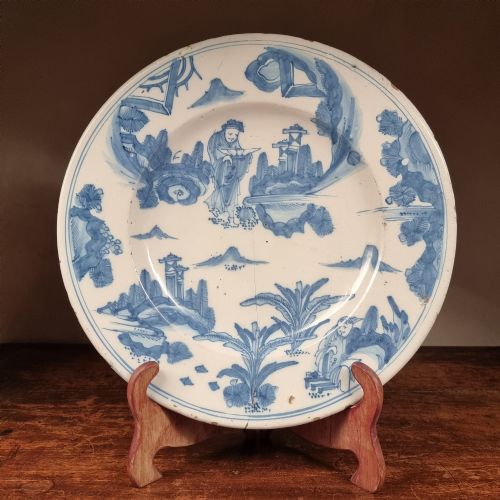
Domestic and apothecary pieces dominate the selection, spanning simple blue and white floral designs to chinoiserie motifs and manganese painting. Each piece reflects the historic tin-glazing traditions of European potteries.
How they were made
Potters shaped earthenware bodies and coated them in an opaque tin glaze that created a smooth white surface for painting. Cobalt oxide and manganese pigment were then applied directly onto the unfired glaze.
The painted pieces underwent high-temperature firing, causing the pigments to fuse into the liquid tin glaze. This technique yielded characteristic blue and white designs, alongside occasional polychrome colour palettes.
Among the ceramic menagerie, a pair of painted pottery cows stands ready to graze on an eighteenth-century mantelpiece.
What varies in quality
Quality rests upon the precision of the hand-painted brushwork and the clarity of the cobalt pigment against the white tin glaze. Finer examples display crisp chinoiserie details or botanical motifs executed with confident, fluid lines.
The sophistication of the ceramic form itself distinguishes standard vessels from ambitious creations such as lobbed dishes or lidded baluster vases. Balance in proportion and evenness of the glaze application indicate superior workshop production.
Pieter Verburg·Fourmaintraux-Courquin
The Delftware Pottery Glossary
- Tin-Glazed Earthenware
- Pottery covered in a lead glaze rendered opaque by the addition of tin oxide. This white surface served as the canvas for painted decoration.
- Charger
- A large decorative plate intended for display on a wall or sideboard rather than for dining use. These pieces often feature elaborate painted scenes.
- Chinoiserie
- European artistic style reflecting Chinese aesthetic influences, commonly seen in blue and white painted ceramics. Artisans interpreted Asian motifs through domestic production methods.
- Posset Pot
- A multi-handled vessel used historically for serving a hot spiced milk drink curdled with wine or ale. Surviving examples often include lids and spouts.
- Manganese
- A brownish-purple metallic pigment utilised by potters for drawing outlines or creating secondary tones alongside cobalt blue. It produces a distinct warm violet hue.
Delftware Pottery: Frequently Asked Questions
What is delftware pottery?
Delftware pottery refers to tin-glazed earthenware produced primarily in the Netherlands, England, and France during the seventeenth and eighteenth centuries. These items are recognised by their opaque white glaze and painted blue or polychrome decoration.
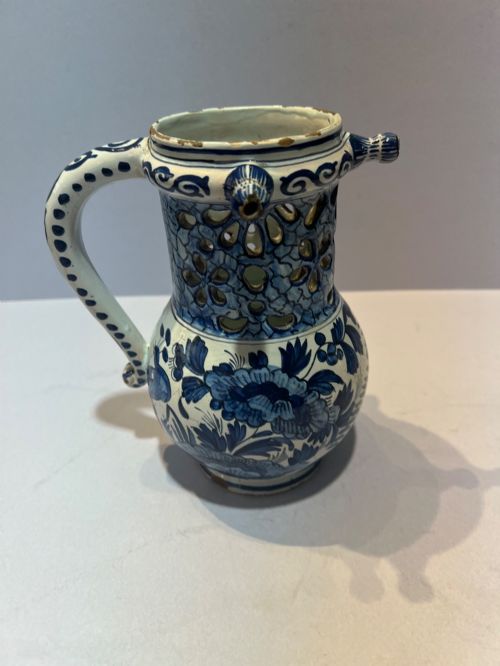
Peculiarities in form range from flat wall chargers to three-dimensional animals, apothecary jars, and puzzle jugs designed for domestic display and daily use.
How were these ceramics used?
Many large plates and chargers served as decorative wall hangings or table ornaments in prosperous European households. Other forms fulfilled specific domestic and medical functions, such as posset pots for celebratory drinks and wet drug jars for apothecary supplies.
Specialist vessels like puzzle jugs and barber's bowls point to social customs and hygiene practices of the period, combining utility with artistic display.
How do you date delftware pottery?
Dating relies on stylistic shifts in painting, shape evolution, and changes in the composition of the tin glaze over time. Seventeenth-century pieces often display Chinese-inspired chinoiserie motifs, while later eighteenth-century items incorporate European floral patterns and manganese detailing.
Markings, when present, point towards specific potteries or regions, though many historic pieces remain unmarked. Physical characteristics of the earthenware body help distinguish earlier periods from nineteenth-century revivals.
Where was delftware made?
Production centred on the Dutch town of Delft, which gave the ceramic its enduring name. Similar tin-glazing techniques flourished concurrently across England, notably in London potteries like Lambeth, and at French and Spanish centres.
Each region developed local variations in clay bodies and pigment mixtures while adhering to the core tradition of tin-glazed earthenware.