


Delft Blue Pottery Urns
These delft blue pottery urns bring hand-painted earthenware presence into a room, valued for their rich cobalt tones and historic forms.
Delft Blue Pottery Urns
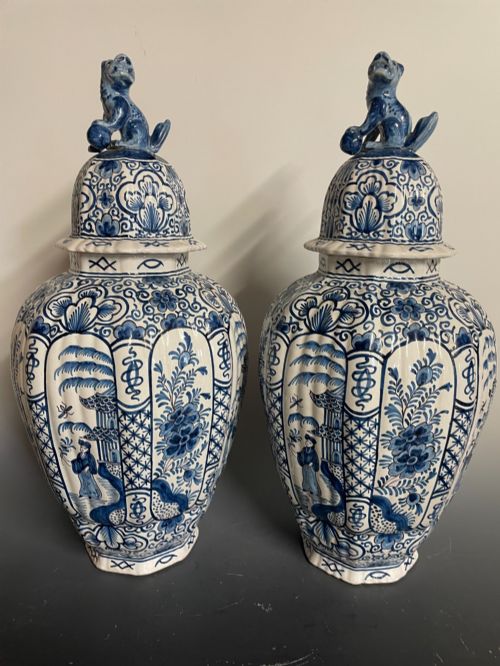
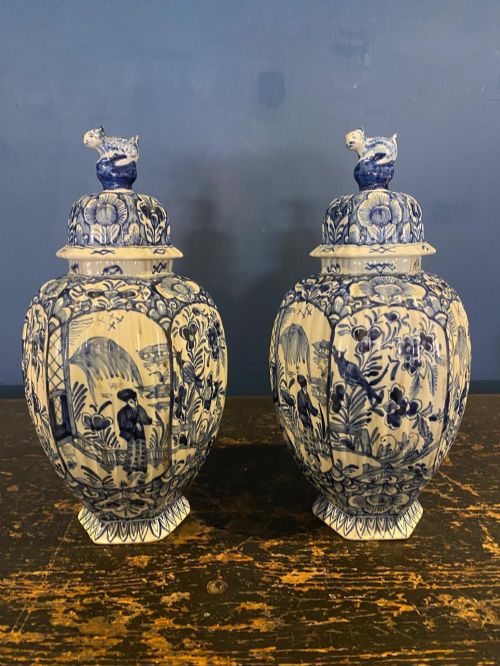
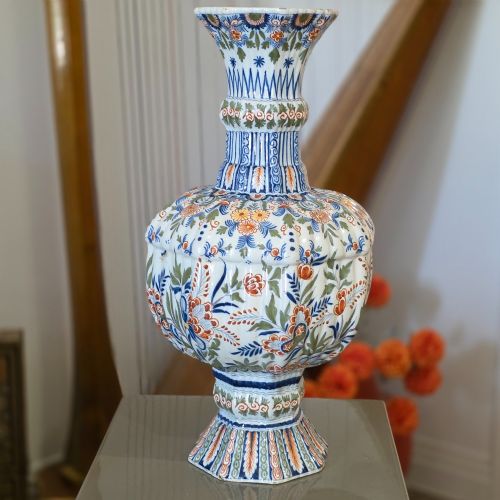
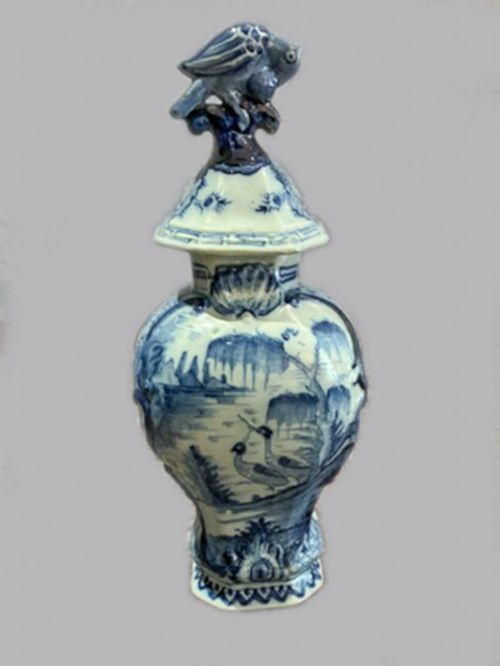
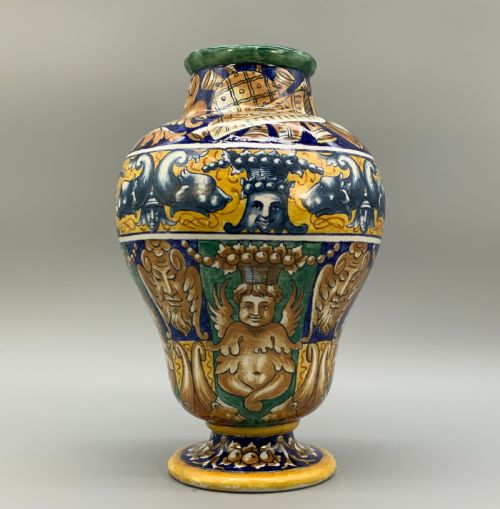
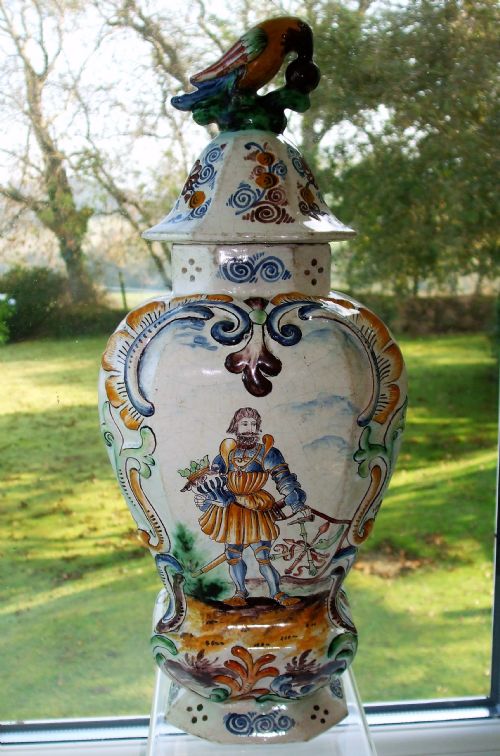
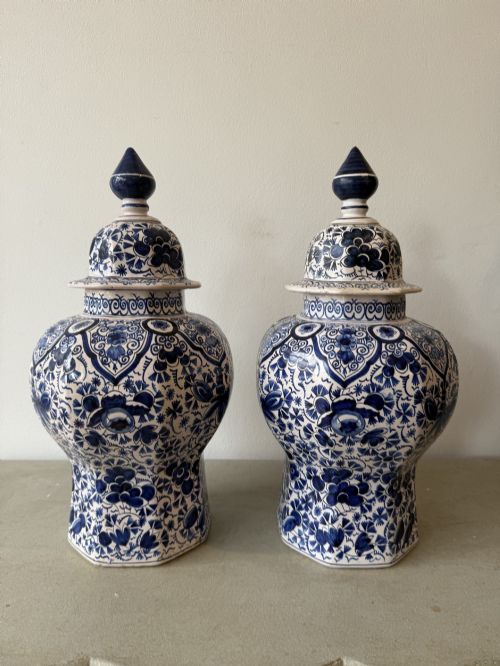
These delft blue pottery urns encompass lidded jars, baluster vessels, and decorative vases originating across the seventeenth, eighteenth, and nineteenth centuries. You will most frequently encounter pairs of lidded jars and single large baluster vases decorated in traditional blue and white schemes.
The aesthetic draws heavily from Dutch Delftware traditions, incorporating floral motifs, avian subjects, and Chinoiserie scenes rendered in cobalt pigment upon a tin glaze. Forms range from classical ribbed beaker shapes to substantial handled urns intended for prominent display.
While many examples originate from Dutch workshops, the selection also includes nineteenth-century French faience interpretations and revival pieces that mirror earlier Baroque styles.
Materials and construction methods
Makers shaped these pieces from local clay bodies, forming earthenware vessels that required careful firing before decoration could take place. The unfired clay was coated in a tin-opacified glaze to create an opaque white surface suitable for painting.
Artists applied cobalt pigment directly onto the porous tin glaze by hand, allowing the metallic oxide to absorb into the surface prior to a final transparent protective firing. Certain heavier vessels incorporate brass components or gilt bases added during later nineteenth-century adaptations.
Several seventeenth-century style birds and flowers stare intently from these vases, supervising every room they inhabit.
Evaluating craftsmanship and detail
The standard of a piece rests upon the dexterity of the brushwork and the depth of the cobalt pigment against the tin glaze. Superior examples display crisp, confident hand-painted motifs with sharp contrasts, whereas simpler productions show hurried linework and pooling glaze.
Proportion and scale also dictate the distinction between ordinary vessels and exceptional urns, particularly where lids, handles, and ribbed body forms maintain balanced symmetry and clean contours.
The Delft Blue Pottery Urns Glossary
- Tin-Glazed Earthenware
- Pottery covered with a lead glaze made opaque by the addition of tin oxide. This white surface serves as the canvas for blue pigment.
- Cobalt Pigment
- A metallic oxide used to achieve the deep blue colour characteristic of traditional delftware painting. It reacts with the glaze during firing to produce varied tones.
- Chinoiserie
- European decorative motifs imitating Chinese artistic styles. These designs frequently feature imaginary landscapes, birds, and floral arrangements.
- Baluster Vase
- A vessel form characterised by a swollen body tapering towards a narrow neck and standing on a broadened base. Such shapes provide stability and generous surface area for decoration.
- Faience
- European tin-glazed earthenware produced in France and other regions outside the Netherlands. The technique parallels traditional Dutch delft production methods.
Delft Blue Pottery Urns: Frequently Asked Questions
How were delft urns used historically?
These vessels functioned primarily as decorative garnitures on mantelpieces and cabinets within affluent homes. Lidded variants often held dry goods, potpourri, or simply served as ornamental display pieces.
Over time, larger examples transitioned into standalone floor vases, while others were later converted into table lamps during the nineteenth and twentieth centuries.
How do I distinguish eighteenth-century pieces from later revivals?
Examination of the glaze texture, pigment saturation, and base wear helps separate period pieces from nineteenth-century revivals. Eighteenth-century examples generally exhibit softer tin glazes and subtle irregularities inherent to historic kiln firings.
Revival pieces often display brighter, more uniform cobalt applications and heavier clay bodies associated with later European potteries.
Can I use these urns for fresh flowers?
Historic tin-glazed earthenware remains porous and prone to moisture damage, meaning direct use with water is discouraged. Using a discreet internal glass liner protects the antique ceramic body from dampness.
Displaying them dry avoids compromising the historic glaze and underlying earthenware structure.
How do I clean delft pottery safely?
Dusting with a soft, dry cloth is the safest method for routine maintenance. Avoid chemical cleaners, abrasive sponges, and immersion in water.
Careful handling prevents chipping the fragile tin glaze along the rims and handles.