
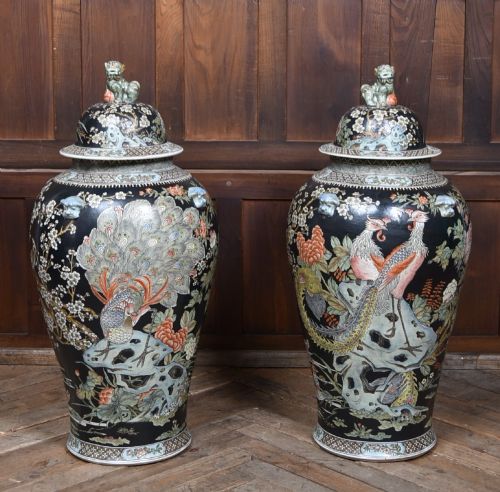
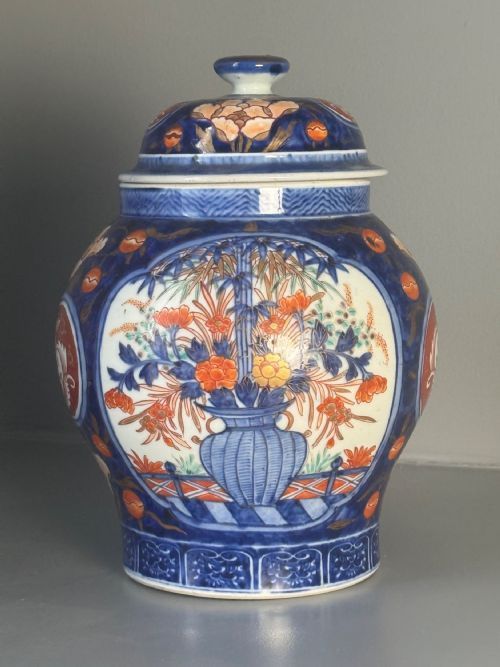


Covered Porcelain Baluster Jar
These covered porcelain baluster jar pieces are substantial vessels shaped for display, sought after for their striking painted surfaces and sculptural presence in a room.
Covered Porcelain Baluster Jar
A covered porcelain baluster jar is a swelling, curvaceous vessel topped by a matching lid, designed for prominent placement on tables, floors or mantelpieces. When you search for this phrase, you meet forms spanning the seventeenth, eighteenth and nineteenth centuries.
The selections on this page encompass various global traditions and interpretations, including Chinese Qing Dynasty wares, Japanese Imari and Arita pieces, alongside English ironstone and European Delft productions. You will encounter grand floor jars and lidded vases alongside smaller cabinet examples.
Many items display traditional blue and white painting, while others exhibit polychrome enamels, gilding or powder blue grounds. Some seventeenth and eighteenth-century examples feature nineteenth-century ormolu mounts added for European display.
How they were made
Potters shaped fine clay or ironstone into the characteristic sweeping baluster silhouette before applying glaze and mineral pigments. Artisans then fired these bodies at high temperatures to vitrify the material and fix the underglaze cobalt blue designs.
Overglaze enamel colours and gold leaf were frequently added in subsequent decorative stages, requiring a lower-temperature secondary firing. Certain European and Asian workshops incorporated cast ormolu mounts to secure and elevate the porcelain bodies.
Powder blue Chinese vases wear French ormolu hats, proving that historical interior design loved a cross-cultural costume change.
What varies in quality
Quality rests upon the crispness of the painted detail and the balance of the baluster proportions, from freely brushed cobalt scenes to meticulously rendered polychrome enamels. The weight and purity of the porcelain body also dictate the standing of the vessel.
The survival of the original matching lid and the integration of any metal mounts influence how intact the piece remains. Strong definition in the glaze and precision in the potting separate standard production wares from monumental or exceptional examples.
The Covered Porcelain Baluster Jar Glossary
- Baluster
- A architectural form characterised by a swelling lower body tapering towards a neck, which defines the silhouette of these jars. It provides the central vertical rhythm for many large decorative vases.
- Imari
- A style of Japanese export porcelain typically decorated in underglaze blue, iron red and gold. Originating from the Arita area, it became widely imitated across Europe.
- Ormolu
- Gilded bronze used for decorative mounts, feet and rims on porcelain vessels. It reflects French taste, particularly during the eighteenth and nineteenth centuries.
- Ironstone
- A heavy, durable type of earthenware developed in England as a robust alternative to true porcelain. It accepted transfer printing and rich enamel palettes effectively.
- Delft
- Tin-glazed earthenware produced in the Netherlands, often emulating Chinese blue and white porcelain imports. It is recognised by its opaque white surface and dark blue painting.
Covered Porcelain Baluster Jar: Frequently Asked Questions
How were covered porcelain baluster jars used?
These vessels served primarily as decorative ornaments in grand interiors, often displayed on mantelpieces, consoles or floor stands.
Some larger lidded jars functioned as storage containers for dried herbs, spices or potpourri before becoming purely ornamental objects.
How do I date a covered porcelain baluster jar?
Dating relies on examining the characteristics of the paste, the composition of the glaze, and the style of the hand-painted decoration. Reference points include distinct period palettes, reign marks where present, and associated mounts.
European factories often copied Asian motifs during specific revivals, meaning stylistic analysis must be combined with an inspection of the material body itself.
Can I use these jars for fresh flowers?
While the glazed porcelain interiors can hold water, many collectors avoid using antique jars for fresh arrangements to protect fragile enamel decoration and historical surfaces.
Lidded jars are generally treated as dry display pieces rather than functional vases, preserving both the vessel and its matching cover.
Why do some jars have ormolu mounts?
European owners frequently added gilt-bronze mounts to imported Asian porcelain to elevate their status and blend them with contemporary interior furnishings.
These mounts also served a practical purpose by repairing or reinforcing chips and fractures sustained during long maritime journeys.