


Antique Delft Urns
Antique delft urns bring tin-glazed earthenware into a room, offering classic blue and white forms that anchor traditional interiors.
Antique Delft Urns
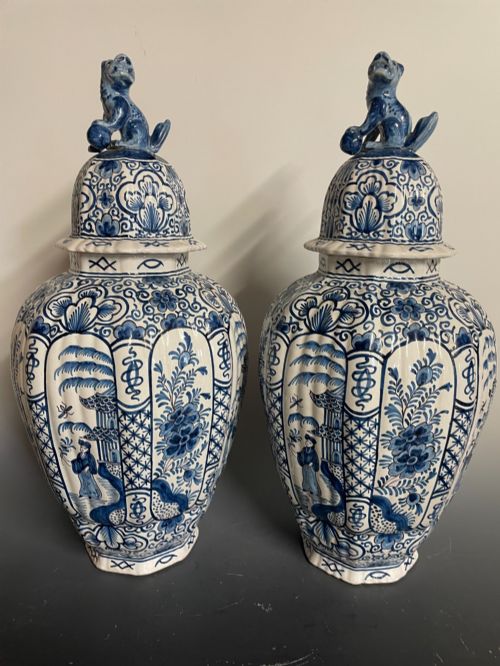
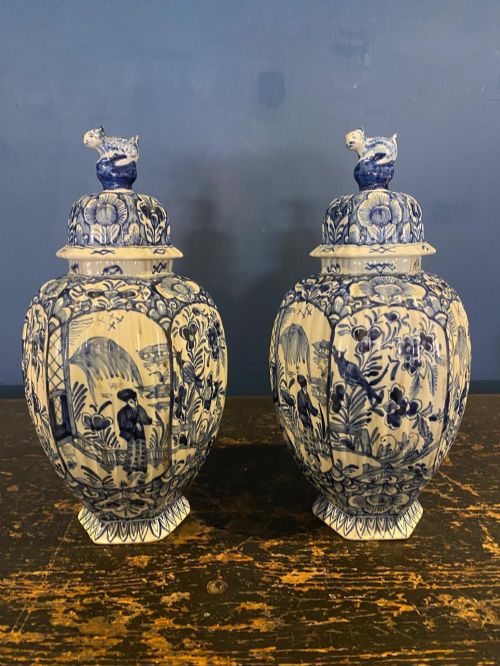
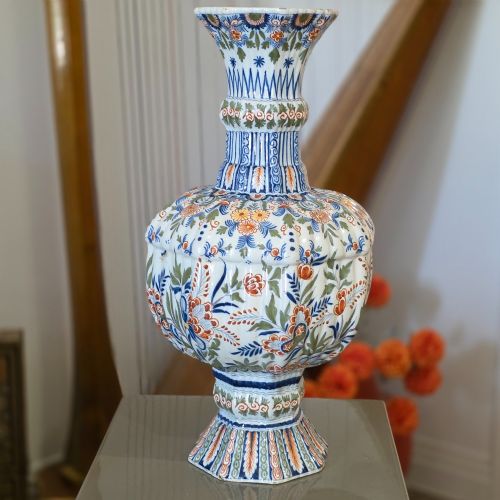
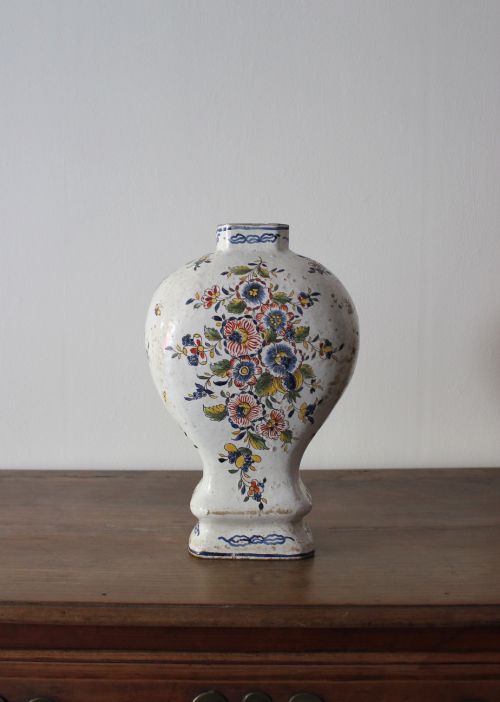
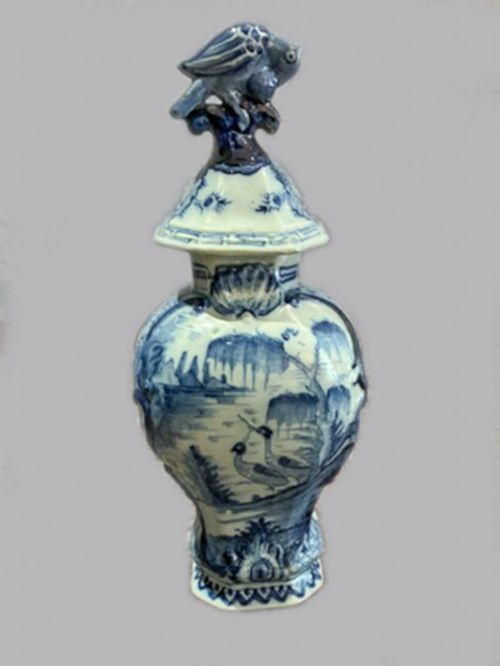
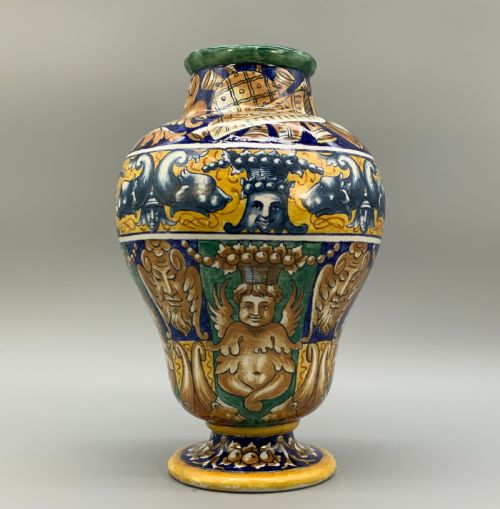
When you search for antique delft urns, you encounter lidded jars, baluster vases, and garden urns spanning several centuries of ceramic production. The pieces seen here range from seventeenth-century vessels to later nineteenth-century revivals.
Most examples take the form of jars with covers or tall decorative vases designed for display on tables or mantels. You also find specialised forms such as tobacco jars and converted table lamps mounted on bases.
The aesthetic leans heavily toward Dutch traditions, with cobalt pigment painting on a tin glaze. Chinoiserie motifs and botanical patterns dominate the visual language of these ceramic objects.
Materials and construction methods
Makers shaped these vessels from ordinary clay, firing the earthenware body before applying an opaque white tin glaze. This absorbent surface received hand-painted designs in cobalt pigment or manganese before a final protective glaze firing.
Many larger vessels required separate lids or covers turned to fit the neck of the jar. Certain later pieces incorporate added elements such as brass components or altered electrical fittings for modern use.
Several centuries ago, someone decided that painted blue birds sitting among flowers on a jar would improve human happiness.
Assessing quality in tin-glazed ceramics
The refinement of the painted brushwork dictates much of the visual success in these pieces. Crisp botanical details and carefully rendered birds separate superior examples from rushed commercial production.
The integrity of the tin glaze itself remains central to the physical condition of the object. Even glaze coverage without extensive chipping along the rim indicates careful handling over centuries.
The Antique Delft Urns Glossary
- Tin-Glazed Earthenware
- Pottery coated in a white glaze containing tin oxide to create an opaque surface for painting. This technique forms the foundation of all authentic delftware.
- Baluster Vase
- A tall vessel characterised by a curved body swelling near the bottom and tapering toward the top. This silhouette appears frequently among larger lidded jars.
- Chinoiserie
- European interpretations of Chinese artistic motifs, popular in seventeenth and eighteenth-century ceramic decoration. These designs often feature imaginary landscapes, birds, and figures.
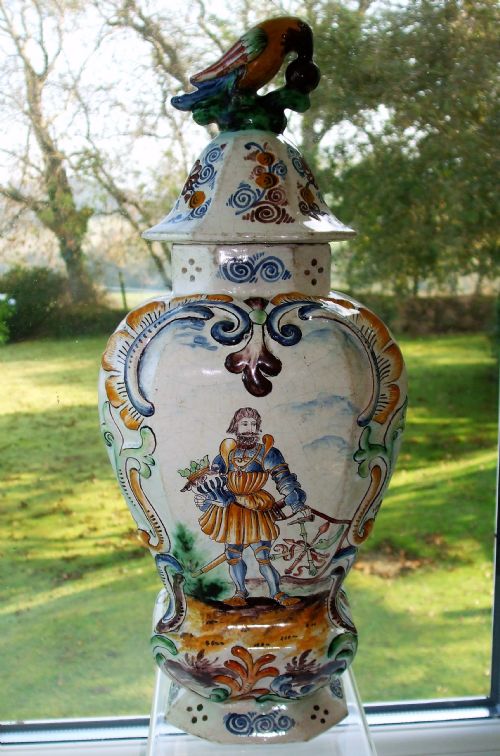
- Polychrome
- Decoration utilising multiple colours rather than the traditional blue and white palette. Green, yellow, and manganese pigments frequently appear alongside cobalt.
- Faience
- European tin-glazed earthenware produced in France and other regions outside the primary Dutch centres. Pieces from these traditions often parallel the forms found in delftware.
Antique Delft Urns: Frequently Asked Questions
How do I clean an antique delft urn?
Dust the surface gently with a soft, dry brush to prevent accumulation in the crevices of the glaze. Avoid running water or liquid cleaners, as porous earthenware and historic tin glaze react poorly to moisture.
Keep these vessels away from direct sunlight and damp environments to protect the integrity of the ceramic body and the pigments.
Are these urns waterproof?
Historic earthenware bodies and tin glazes can develop hairline fractures that permit water to seep through the ceramic wall. Using these vessels for fresh flowers risks damaging the interior and staining the glaze.
Display them as decorative objects or insert a discreet inner glass container if you wish to hold botanical arrangements safely.
How can I tell an older piece from a revival?
Examine the weight of the ceramic body, the consistency of the glaze application, and the character of the hand-painted blue pigment. Earlier pieces often display subtle irregularities in the potting and hand-mixed cobalt.
Nineteenth-century revivals tend to feature brighter, more uniform glazes and precise brushwork that reflect the industrial techniques of later potteries.
Why do some urns have covers?
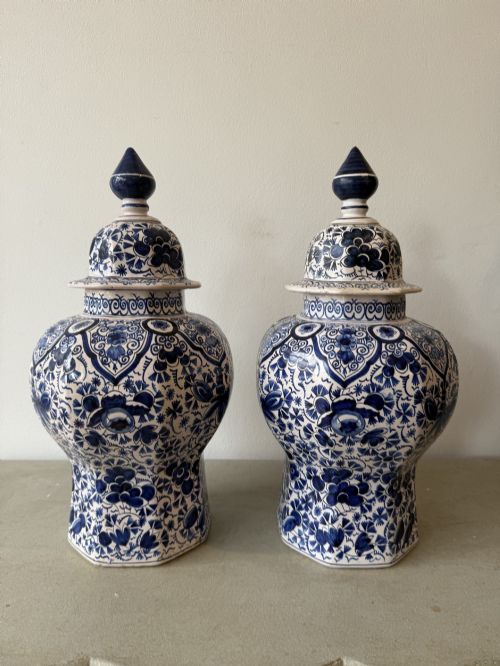
Lidded jars originally served to store dry goods, spices, or tobacco in domestic settings. The covers protected the contents from moisture and air before the vessels transitioned purely to decorative roles.
Pairs of lidded jars were intended to create symmetrical displays on mantelpieces or architectural furniture in period interiors.