

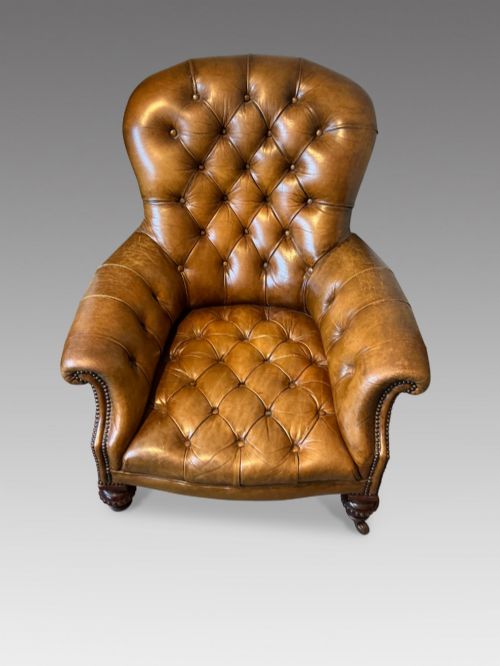
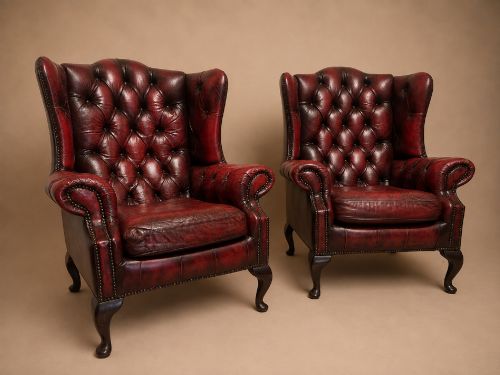
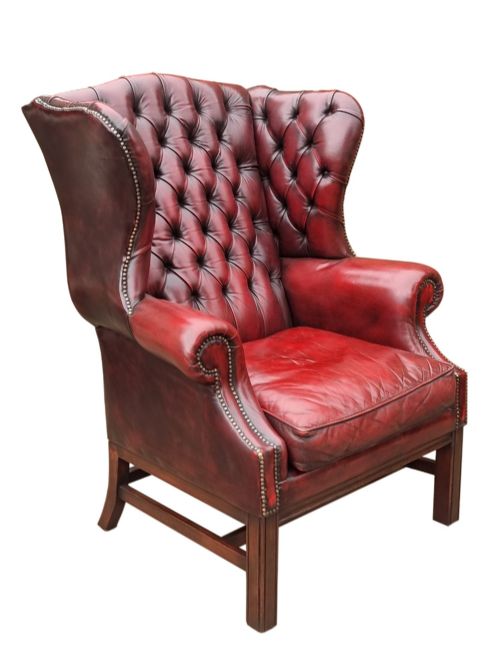
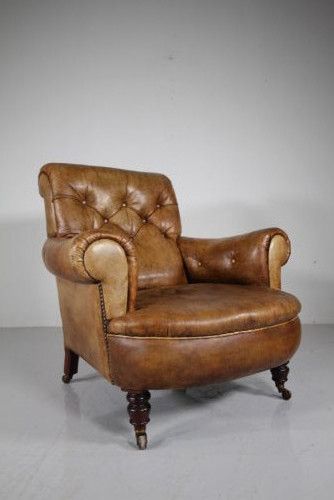
Deep Buttoned Leather Armchair
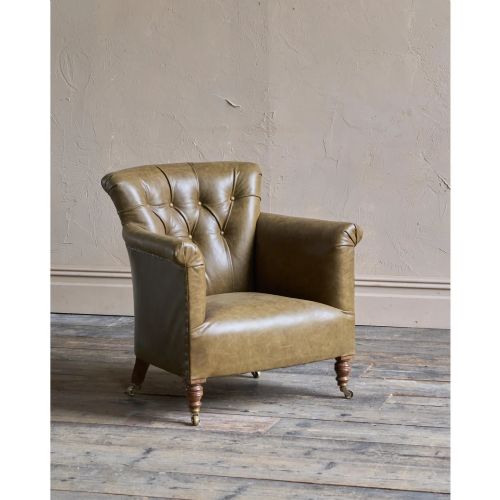
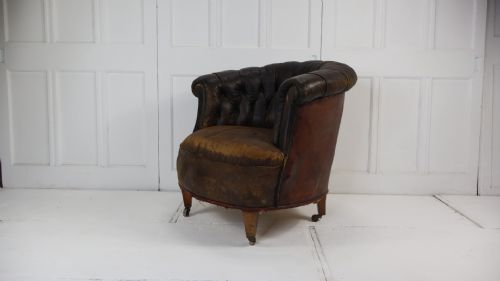
A deep buttoned leather armchair offers a sturdy frame and padded seating designed for long hours of reading or conversation.
Deep Buttoned Leather Armchair
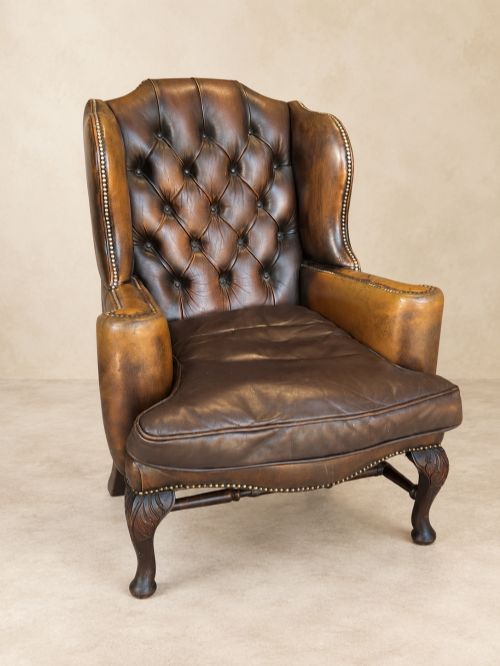
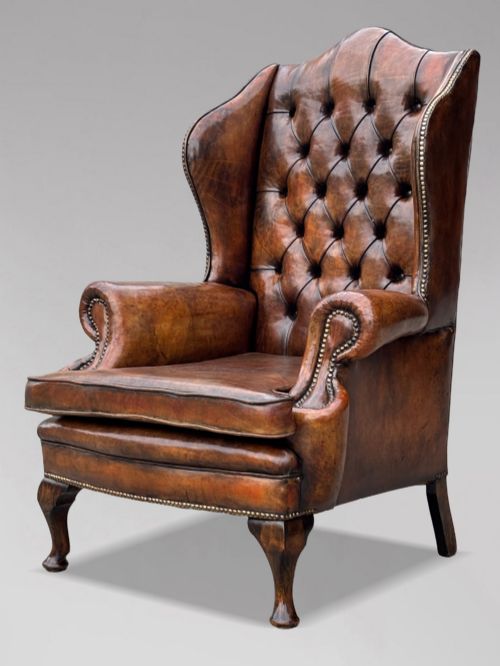
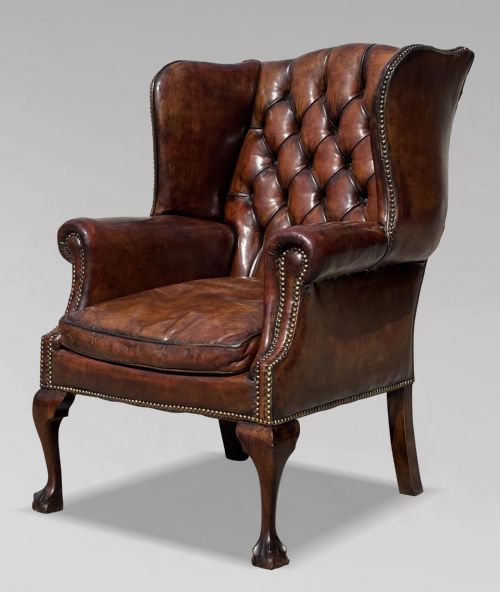
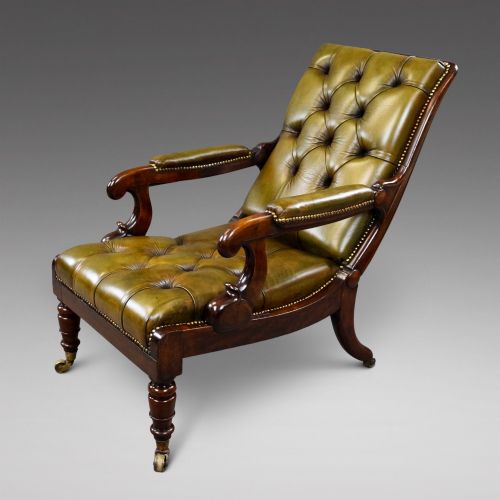
A deep buttoned leather armchair is a robust seating form originating in periods spanning the Georgian era through to the early twentieth century. These pieces appear as large wing chairs, library armchairs, club chairs, and revolving desk chairs designed for studies, libraries, and drawing rooms.
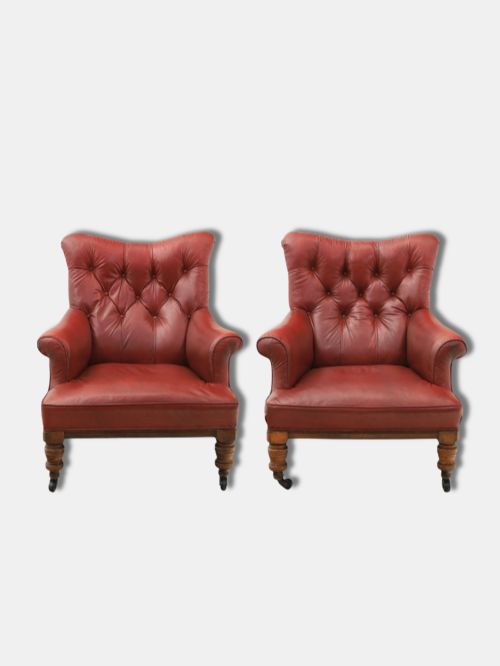
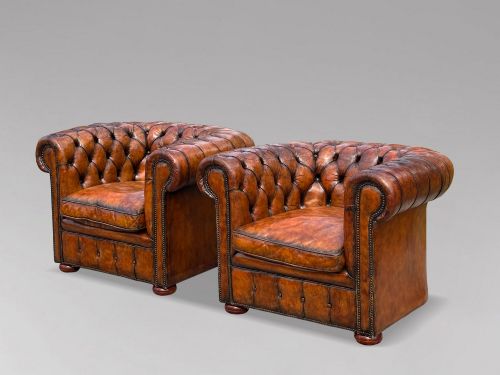
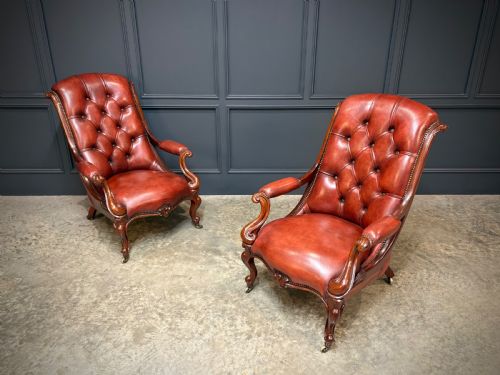
The most common examples on this page date from the Victorian period and the 1920s, constructed with generous proportions and sprung seats. Makers fashioned them as heavy gentleman's chairs or low club chairs meant for sustained comfort.
Frames take multiple forms, including high-backed wing chairs intended to block draughts and open library armchairs with padded arms. Many feature structural woodwork in mahogany, oak, or walnut supporting the deep upholstery.
How They Were Made
Craftsmen built the internal framework using hardwoods like mahogany, oak, walnut, and general timber to ensure structural longevity. Upholsterers then secured horsehair and natural stuffing over coil springs before covering the frame in cattle hide.
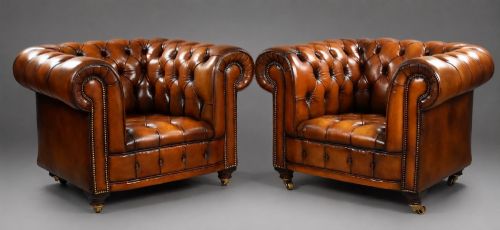
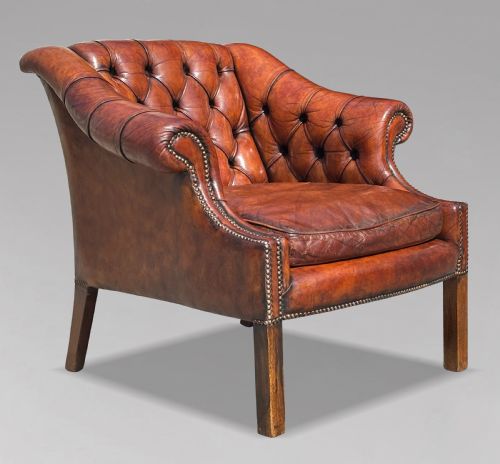
The characteristic tufting is achieved by pulling twine tightly through the padding to secure the leather in recessed folds, often finished with individual brass nailheads bordering the arms and wings.
The available seating spans the Regency, Victorian, and Edwardian periods alongside Georgian Revival styles.
What Varies in Quality
Quality rests on the integrity of the internal wooden frame and the original density of the sprung support. Heavier, dense timbers prevent the structural shifting common in lighter secondary woods.
The grade and tanning method of the leather determine the surface texture and how gracefully the hide ages. Thick, supple leather holds the deep tufting firmly without splitting at the tension points.
Howard and Sons
The Deep Buttoned Leather Armchair Glossary
- Wing armchair
- A high-backed seat featuring side panels designed to shield the occupant from draughts. These chairs typically include deep buttoning along the backrest.
- Chesterfield
- A heavily upholstered seating style characterised by rolled arms and a back of the same height. These forms use button tufting across the interior.
- Bergere
- An enclosed armchair with a wooden frame where the sides incorporate woven cane or upholstered panels. They appear alongside solid leather library forms.
- Rexine
- A brand of artificial leather cloth utilised as an upholstery substitute on twentieth-century seating. It mimics the appearance of natural hide.
- Captain's desk chair
- A revolving or fixed seating option featuring a low, curved back designed for office use. These incorporate timber frames paired with leather seats.
Deep Buttoned Leather Armchair: Frequently Asked Questions
What is a deep buttoned leather armchair?
A deep buttoned leather armchair is a traditional seat featuring recessed tufting secured by twine through leather upholstery. These chairs range from high-backed wing designs to low club chairs.
They emerged in various forms across the Georgian, Victorian, and Edwardian periods, utilising sturdy timber frames beneath sprung padding.
How do I identify a Victorian leather armchair?
Victorian examples typically feature dense mahogany or oak frames combined with hand-stitched leather upholstery. They often display turned wooden legs and heavy brass castors.
Looking beneath the chair reveals traditional webbing and framing methods common to nineteenth-century workshop production.
Where were leather club chairs used?
Leather club chairs originally populated private gentlemen's clubs, libraries, and studies where durable seating was required. Their low profiles and deep seats suited relaxed reading and conversation.
Over time, they transitioned into domestic drawing rooms and offices as general household seating.
How do I care for antique leather?
Antique leather benefits from regular dusting and occasional treatment with appropriate conservation balms to maintain the hide's flexibility. Keeping the leather away from direct heat sources prevents drying and cracking.
Allowing the material to breathe helps preserve the original hand-dyed or patinated surface texture accumulated over decades of use.