


Deep Blue Armchair
A deep blue armchair brings rich colour and comfortable seating into a room, drawing on Victorian, Edwardian, and Art Deco traditions.
Deep Blue Armchair
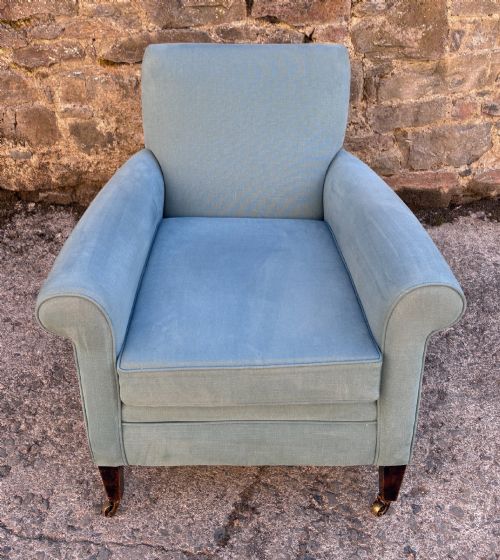
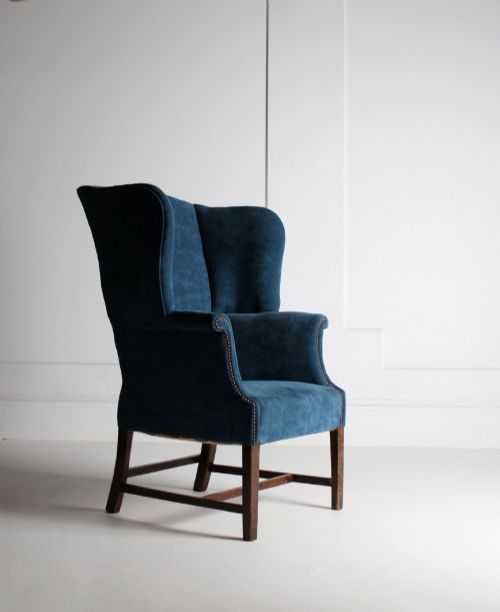
A deep blue armchair is a substantial seating piece found in forms such as club chairs, wingbacks, library armchairs, and slipper chairs. These pieces emerge from the nineteenth century, the Victorian and Edwardian eras, and the early twentieth century.
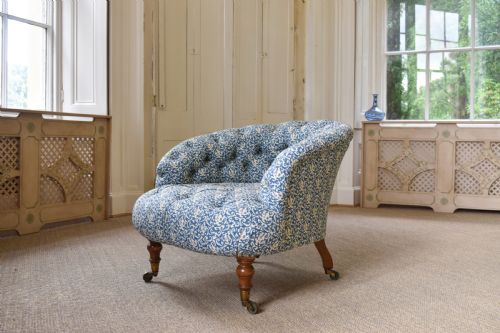
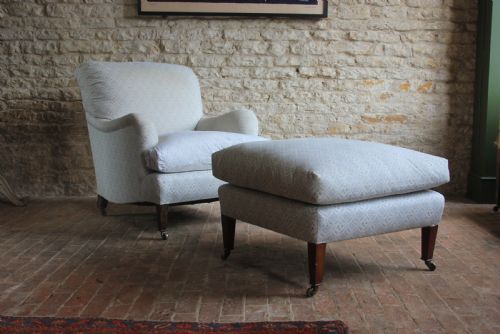
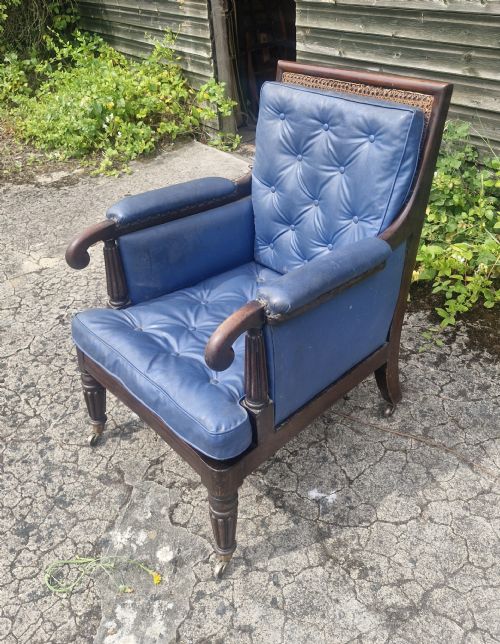
You will frequently meet comfortable country house styles alongside buttoned fireside chairs and library seating. The selection includes deep-seated examples designed for relaxed lounging as well as upright gentleman's chairs.
Origins span standard domestic seating to maker-attributed pieces, bringing rich upholstery and traditional timber frames together.
How they were made
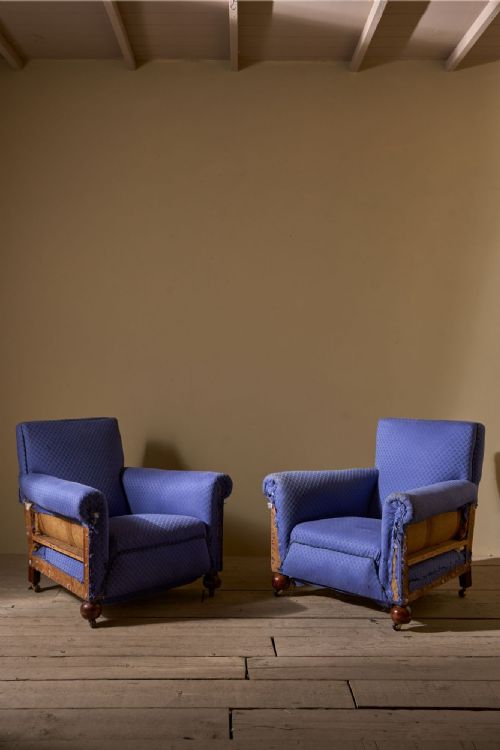
Frames rely on solid timber foundations utilising mahogany, walnut, rosewood, and hardwood, often supported by brass castors or iron components. Structural joinery provides the sturdy bones needed for heavy daily use.
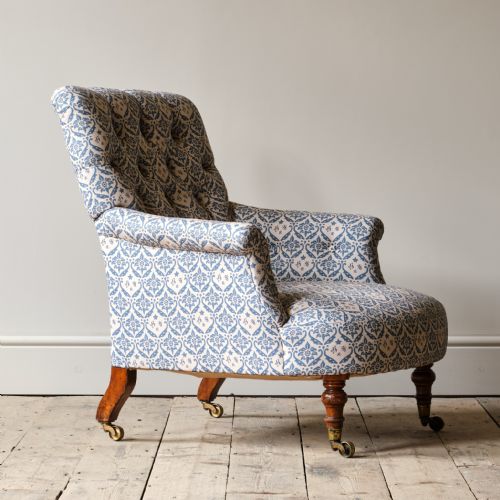
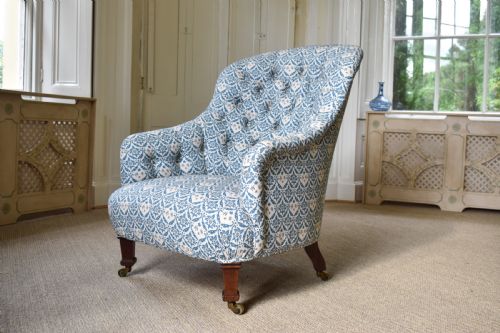
Upholstery techniques involve traditional stuffing enclosed in fabric, cotton, or leather, sometimes retaining original ticking or finished with decorative buttoning. Wood surfaces receive polish or retain natural grains suited to each period.
Periods represented span from the mid nineteenth century through Victorian and Edwardian eras to the Art Deco period.
What varies in quality
The standard of upholstery work and the integrity of the underlying timber frame separate everyday seating from exceptional examples. Original materials, such as early ticking or period fabric choices, elevate the authenticity of a piece.
Proportion and comfort define the upper tier, where deep seating and supportive button backs meet balanced proportions. Maker attribution and documented provenance further distinguish the most accomplished examples.
Howard and Sons·Gillows
The Deep Blue Armchair Glossary
- Bergere
- An upholstered armchair with a wooden frame and woven cane panels on the back or arms. This French-inspired form appeared frequently in nineteenth-century libraries.
- Bridgewater armchair
- A traditional British easy chair style featuring low arms and a deeply sprung seat. These pieces are often associated with country house comfort.
- Ticking
- A tightly woven cotton or linen fabric traditionally used to cover mattress springs and upholstery stuffing. Surviving examples with original branded ticking are particularly valued.
- Button back
- An upholstery method where depressions are formed in the padding by stitches pulled tight and secured with buttons. This creates a tufted surface seen on Victorian fireside chairs.
- Wingback
- An armchair with high sides attached to the back, designed to shield the sitter from drafts. They are staples of traditional English interior decoration.
Deep Blue Armchair: Frequently Asked Questions
What is a deep blue armchair?
A deep blue armchair is a comfortable seat upholstered in navy, indigo, or dark blue fabrics, ranging from Victorian buttoned firesides to Edwardian club chairs.
These pieces combine functional seating with strong colour, suiting both traditional country houses and formal libraries.
How do I identify a Victorian armchair?
Victorian armchairs often feature dark hardwood frames, button-tufted upholstery, and turned wooden legs fitted with brass castors. They prioritize deep cushioning and substantial forms.
Looking closely at the timber species and upholstery technique helps confirm the nineteenth-century origin.
What are country house armchairs?
Country house armchairs are relaxed, deep-seated upholstered chairs designed for comfort rather than formal display. They frequently appear in Edwardian and nineteenth-century settings.
Their generous proportions make them ideal for everyday lounging in domestic living spaces.
How should I care for vintage upholstery?
Protect vintage fabric and leather upholstery from direct sunlight to prevent fading and keep the deep blue tones rich. Regular gentle dusting preserves the surface condition of both the textile and the wooden frame.
Professional cleaning is recommended for delicate fabrics or antique leather finishes to avoid damaging original materials.