

Decorative Wooden Boxes
These decorative wooden boxes range from Georgian tea caddies to Victorian writing slopes, shaped by centuries of craftsmanship and utility.
Decorative Wooden Boxes
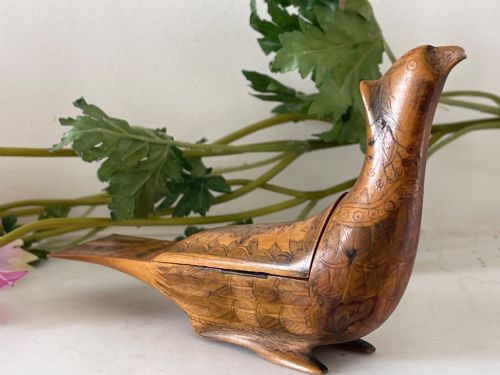
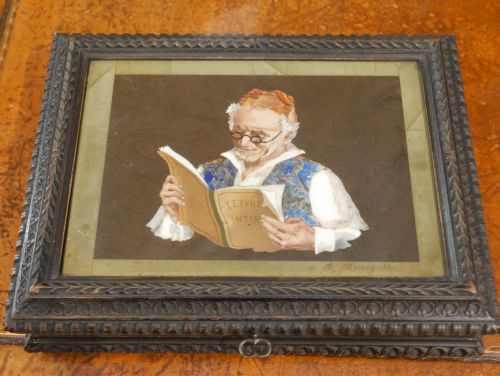
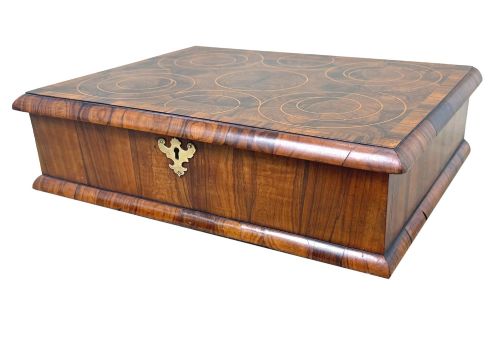
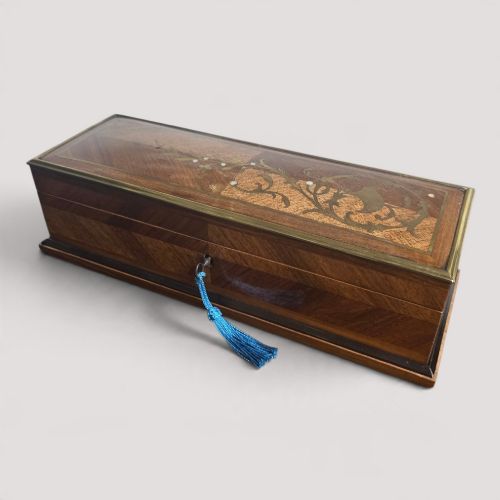
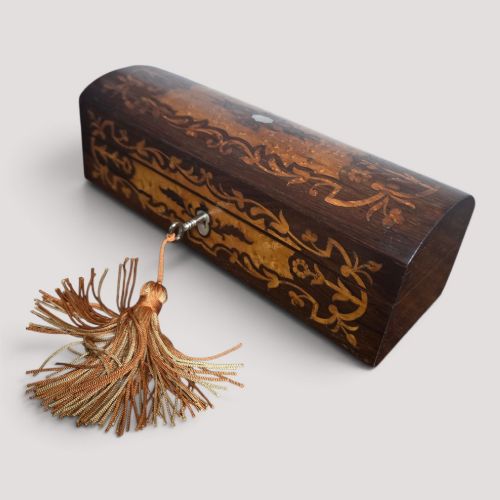
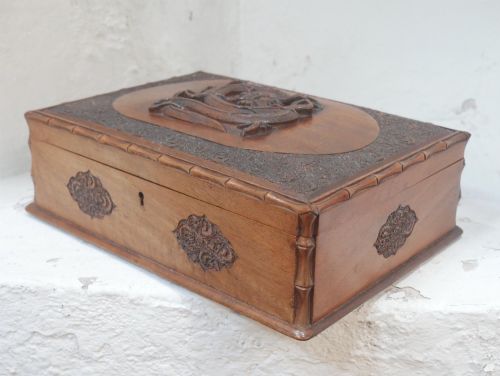
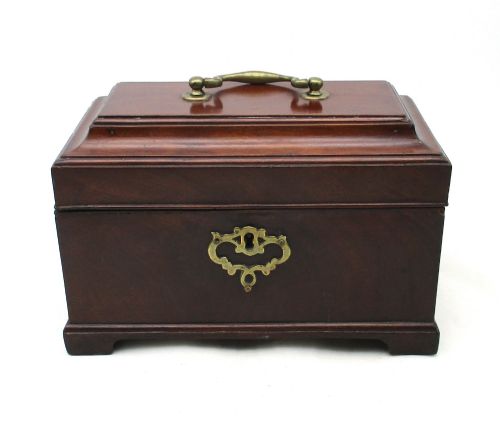
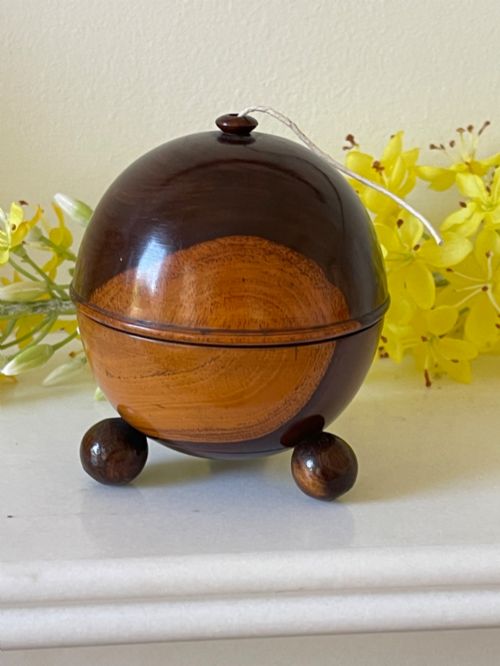
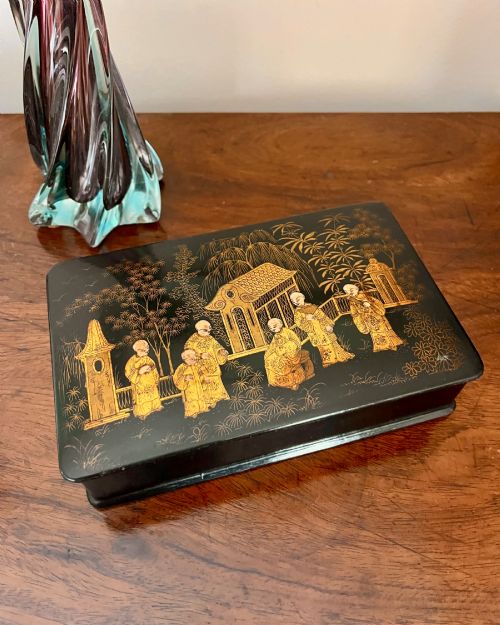
Decorative wooden boxes encompass utilitarian receptacles designed to store tea, letters, jewellery, and personal valuables. The selection spans tea caddies, writing slopes, glove boxes, and caskets originating from English, French, Italian, and Asian workshops.
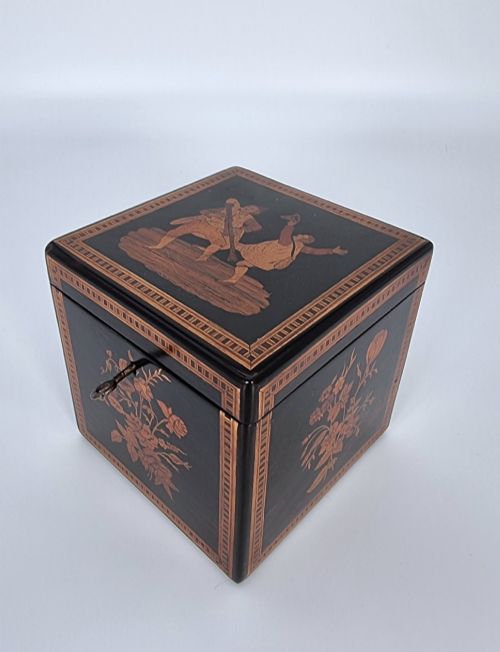
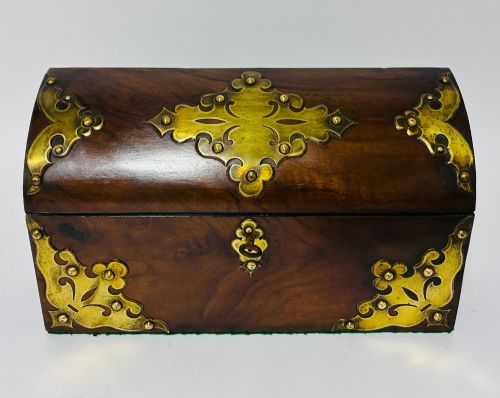
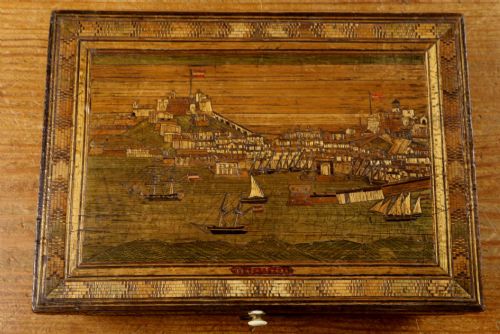
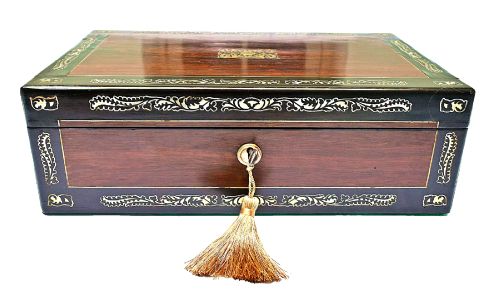
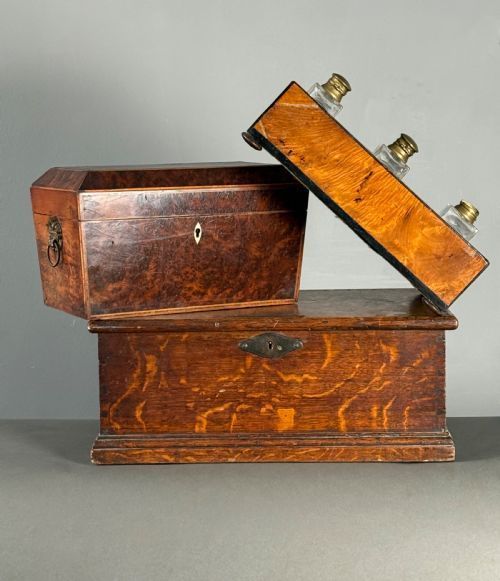
Buyers will most frequently encounter nineteenth-century examples in walnut, mahogany, and rosewood. These range from modest Victorian brass-bound caskets to intricate Regency parquetry boxes and inlaid Sorrento marquetry pieces.
Materials and Technique
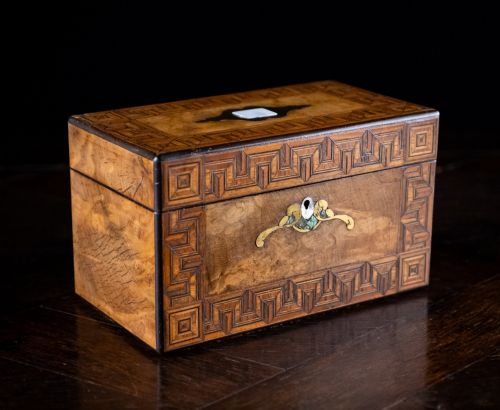
Construction relies on dense timbers such as walnut, mahogany, oak, yew, and rosewood, often formed into carcasses to receive decorative veneers. Cabinetmakers employed precision sawing to create parquetry patterns and geometric marquetry arrangements.
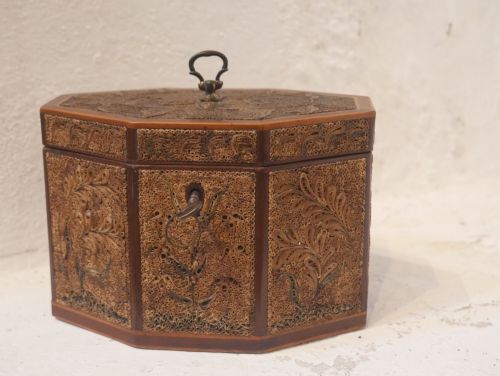
Surface ornamentation integrates natural materials including mother of pearl, bone, and tortoiseshell, alongside engraved brass stringing and hardware. Specialised techniques like Tunbridge ware mosaic work and paper scroll filigree decorate specialised compartments.
Decorative Wooden Boxes Retail Price Guide 2026
Typical asking prices for decorative wooden boxes among the pieces listed under this phrase on Sellingantiques today, from the lower quarter to the upper quarter. They describe what is for sale here now, not the wider market.
Napoleonic prisoners of war carved intricate straw work boxes from discarded bone and rations while confined.
Standards of Execution
Quality rests upon the precision of the cabinetwork, particularly the alignment of mitred joints and the tightness of inlaid brass and exotic woods. Superior pieces retain integrated locks, functional keys, and complete internal fittings such as mixing bowls or velvet-lined trays.
Artisanal execution distinguishes standard utility containers from exceptional specimens. Hand-carved elements, intricate Sorrento micro-mosaics, and well-preserved surface patination separate finer workshop output from simpler production.
Erhard and Sohne
The Decorative Wooden Boxes Glossary
- Tea caddy
- A small lidded box or chest originally constructed to store loose tea leaves securely. They frequently feature internal compartments and glass mixing bowls.
- Marquetry
- The art of applying decorative veneer pieces of different woods, metals, or shells to a wooden structure to form pictorial or geometric designs.
- Writing slope
- A portable slant-topped desk opening to reveal a sloping writing surface, inkwells, and storage space for stationery.
- Tunbridge ware
- A form of mosaic woodwork produced in Kent, created by gluing thousands of tinted wood blocks together to form geometric or pictorial motifs.
Decorative Wooden Boxes: Frequently Asked Questions
What were tea caddies used for?
Tea caddies stored valuable tea leaves under lock and key in the domestic household. They protected the dry leaves from moisture and light.
Locked lids ensured household staff could not pilfer the expensive commodity during the Georgian and Victorian eras.
How do I identify a writing slope?
Writing slopes feature hinged lids that fold down to create an angled writing surface. They typically contain internal slots for pens and inkwells.
Lift-out trays often conceal hidden compartments for private documents and correspondence.
What is Sorrento marquetry?
Sorrento marquetry originates from the Italian town of Sorrento and employs delicate wood veneers to depict musical instruments or landscapes. Craftsmen cut and fitted tinted timber pieces by hand.
Grand tourists brought these decorative boxes home as souvenirs during the nineteenth century.
How should I clean a wooden box?
Dust wooden boxes gently with a soft, dry cloth to preserve the finish and patina. Avoid chemical polishes that degrade historic wax surfaces.
Keep them away from direct sunlight and radiators to prevent timber splitting and veneer lifting.