


Decorative Timber Box
A decorative timber box brings tactile warmth and history to a room, offering a functional vessel crafted from fine woods for keepsakes, tea, or letters.
Decorative Timber Box
When you search for a decorative timber box, you encounter a diverse array of wooden receptacles spanning centuries of craftsmanship. These objects served practical domestic purposes, functioning as tea caddies, snuff boxes, spice containers, and secure caskets for keepsakes.
The pieces on this page range from compact Georgian and Regency examples to substantial Victorian caskets, incorporating regional forms like Afghan boxes and Qajar carved caskets. They demonstrate how utilitarian storage was elevated through decorative woodwork.
Most items you meet here are executed in dense hardwoods and exotic veneers, reflecting the material tastes of the eighteenth and nineteenth centuries. Their survival intact speaks to the enduring appeal of small-scale cabinet making.
How they were made
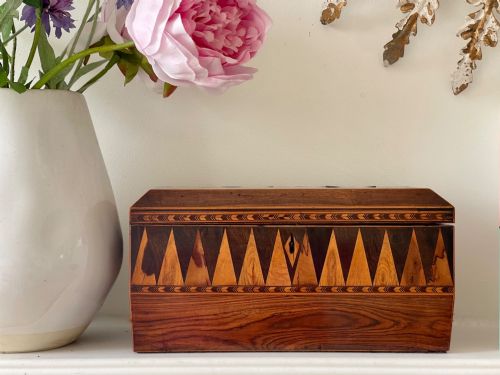
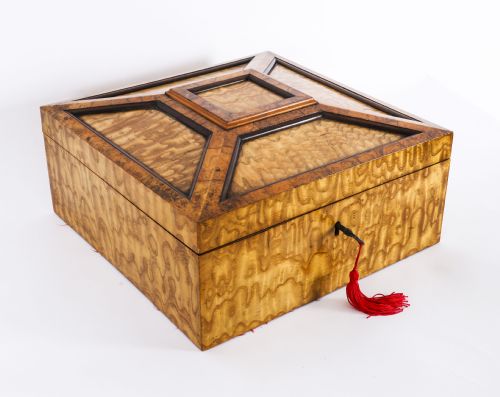
Cabinet makers utilised a rich palette of timbers, combining structural woods like mahogany and walnut with decorative veneers of amboyna, burr maple, coromandel, and partridge wood. Surfaces were frequently enriched with intricate inlays including Tunbridge ware, parquetry, marquetry, and shell motifs.
Construction techniques varied from solid carved hardwoods to precise veneering over a stable base, complemented by functional brass hinges, bindings, and fitted interiors. Detail work extended to delicate penwork, bone embellishments, and turned elements such as tier spice towers.
The selection includes specialised forms such as four-tier spice towers and double-sided snuff boxes.
What varies in quality
The distinction between standard examples and superior pieces rests upon the choice of timber and the precision of the decorative surface. Finely figured grains, complex geometric parquetry, and detailed marquetry elevate a box from simple storage to an accomplished work of art.
Internal arrangement and hardware further define the caliber of a piece, particularly where fitted compartments, original brass mounts, and delicate bone or shell inlays survive. The harmony between exterior ornamentation and structural integrity dictates the standing of the work.
The Decorative Timber Box Glossary
- Tunbridge ware
- A form of woodwork characterised by minute mosaic patterns made from many different coloured woods. It reached a high point of popularity in the nineteenth century in the spa town of Tunbridge Wells.
- Parquetry
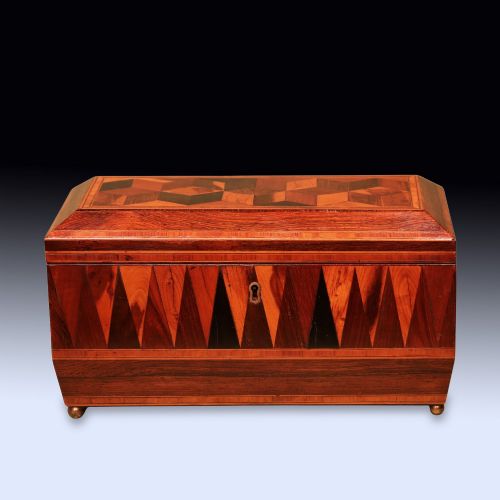
- A geometric mosaic of wood pieces used for decorative surfaces on floors and furniture. In boxes, it creates striking repeating patterns across the lid and sides.
- Marquetry
- The art and craft of applying pieces of veneer to a structure to form decorative designs and pictures. Artisans used various tinted woods to achieve pictorial depth.
- Casket
- A small decorative box or chest used for holding valuables, jewels, or letters. These often featured secure locks and elaborate internal fittings.
- Tea caddy
- A box designed to store loose tea leaves securely, often featuring internal lidded compartments to keep blends separate. Because tea was an expensive commodity, these boxes were made with considerable care.
- Treen
- Small handmade wooden household objects. The term encompasses items ranging from spice towers to small utilitarian vessels carved from dense timber.
Decorative Timber Box: Frequently Asked Questions
What were tea caddies used for?
Tea caddies served to store precious tea leaves safely under lock and key in the Georgian and Victorian drawing room. Tea was a costly import, so the container protected the contents from damp and pilfering.
Inside, these boxes often contained two lead-lined or wooden compartments for different varieties of tea, alongside a central mixing bowl. The key remained with the mistress of the house.
How do I identify a Regency box?
Regency boxes typically display clean classical proportions, sharp brass inlay, and geometric parquetry patterns influenced by contemporary neoclassical design. Woods like rosewood and mahogany predominate in this era.
Look for Brighton chain pier motifs, fine stringing, and Campaign-style brass bracket feet or drop handles. The interiors often retain original French-polished surfaces and maker paper labels.
What is burr walnut?
Burr walnut is taken from a tree growth or knot where the grain has grown in a deformed, swirling pattern. This produces complex, highly decorative figure lines prized by cabinet makers.
Because of its irregular growth, it is difficult to work with and was typically sliced into thin veneers. It appears frequently on the lids of nineteenth-century caskets to create striking visual impact.
How should I care for timber boxes?
Keep wooden boxes away from direct sunlight and sudden temperature shifts to prevent the dry veneers from lifting or cracking. Maintain a stable indoor environment.
Apply a minimal amount of microcrystalline wax occasionally to nourish the historic polish and protect the timber surface. Avoid using modern silicone polishes which can damage the aged finish.