



Decorative Partition Screen
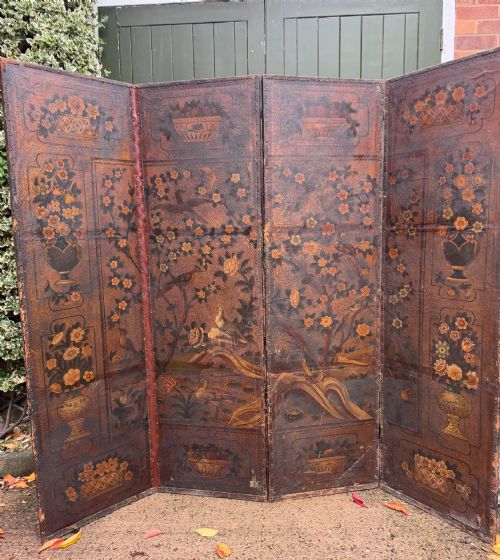
A decorative partition screen divides a room with hand-painted leather or lacquered canvas, creating private corners and shifting the light.
Decorative Partition Screen
A decorative partition screen splits an interior space with hinged panels of wood, leather, or fabric. You encounter folding room dividers, freestanding dressing screens, and small table screens across this selection.
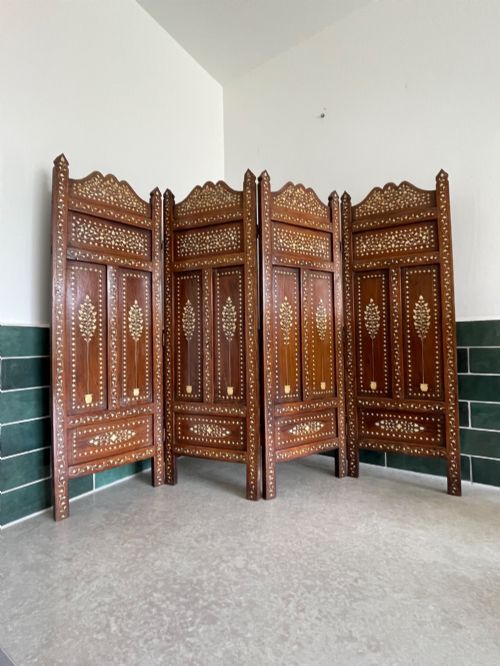
The periods span from the eighteenth century through to the mid-twentieth century, encompassing Victorian creations and mid-century items. Styles range from French Rococo Revival and Continental Baroque to Chinoiserie, Persian Revival, and Anglo-Indian designs.
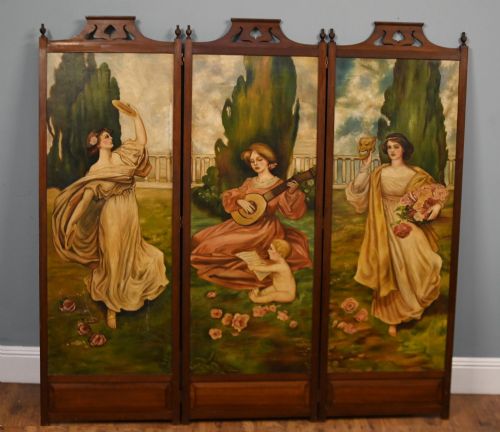
Forms vary from three-panel room dividers covered in velvet or hand-painted canvas to intricate wooden table screens. Each piece serves to section off a room while introducing distinct period craftsmanship into the interior.
How they were made
Maker workshops constructed frames from mahogany, oak, and giltwood, setting up hinged panels designed to fold cleanly. These wooden and brass structures support panels of canvas, silk cotton, and heavy leather.
Surfaces received elaborate decoration using oil paint, lacquer, and gilt embossing. Artisans applied hand-painted designs directly onto leather or stretched fabric, incorporating textiles such as William Morris velvet.
Decorative Partition Screen Retail Price Guide 2026
Typical asking prices for decorative partition screen among the pieces listed under this phrase on Sellingantiques today, from the lower quarter to the upper quarter. They describe what is for sale here now, not the wider market.
The listings here include items featuring oil paint, canvas, mahogany, and brass across periods spanning from the eighteenth century to the mid-twentieth century.
What varies in quality
Quality rests in the execution of the surface artwork and the integrity of the materials. Hand-painted leather and embossed gilt details show the hand of a skilled artisan, whereas simpler items rely on printed or basic finishes.
The construction of the frame and the original hinges dictate the durability and balance of the panels. Sturdy mahogany or carved oak frames supporting heavy canvas or lacquer stand apart from lighter, purely decorative structures.
Paul Sormani
The Decorative Partition Screen Glossary
- Folding screen
- A piece of furniture consisting of two or more panels that are hinged together, allowing them to be folded. These items stand upright to divide a room or block draughts.
- Table screen
- A smaller version of a partition screen designed to sit upon a desk, table, or sideboard. These decorative objects often feature intricate woodwork or painted panels.
- Cordoban leather
- Heavy leather that is hand-painted and gilt-embossed, originating from Spanish traditions. This material appears on eighteenth-century screens.
- Aubusson
- A tapestry weave associated with French workshops, often utilised for upholstered screen panels. These woven textiles display pictorial scenes or floral patterns.
- Lacquer
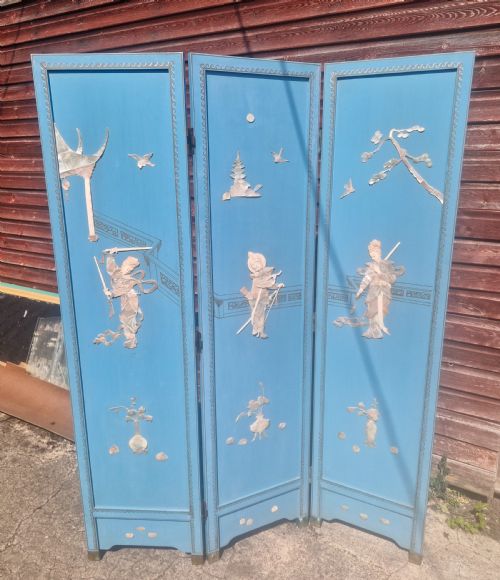
- A durable finish applied in successive layers to wood, creating a smooth and glossy surface. Burmese and Oriental screens frequently employ this technique.
Decorative Partition Screen: Frequently Asked Questions
What is a decorative partition screen?
A decorative partition screen is a hinged furniture piece designed to divide interior spaces, create privacy, or alter the sightlines within a room.
These items use multiple panels made from materials like leather, wood, and fabric, allowing them to fold and adjust to different angles.
How were these screens used historically?
Historically, screens provided privacy in large chambers, blocked draughts from doors and windows, and served as backdrops for dressing.
Smaller table screens were placed on furniture to decorate a room or shield a person from the heat of a fireplace.
How do I live with a room divider?
Place a room divider against a wall as a backdrop, or angle it across a corner to soften the lines of the space.
Keep hinged panels away from direct sunlight and excessive moisture to protect painted leather, lacquer, and delicate fabrics.
How can I tell the periods apart?
Eighteenth-century examples often feature embossed Cordoban leather and ornate framing, while nineteenth-century pieces showcase revival styles like French Rococo or Pre-Raphaelite details.
Mid-twentieth-century items typically display simpler lines, including Burmese lacquer or Oriental dressing screen formats.