
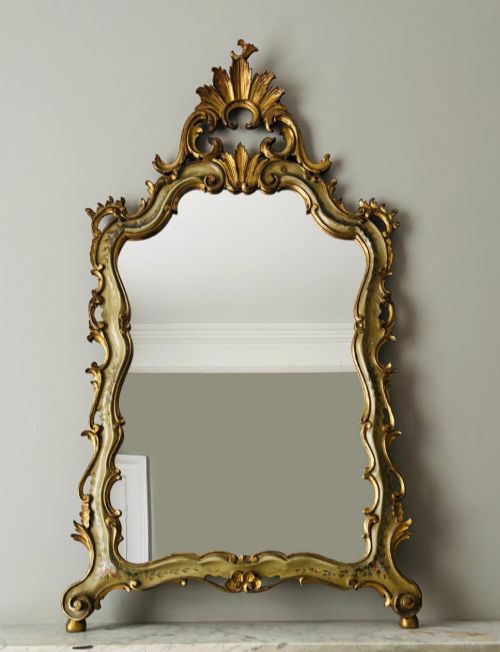
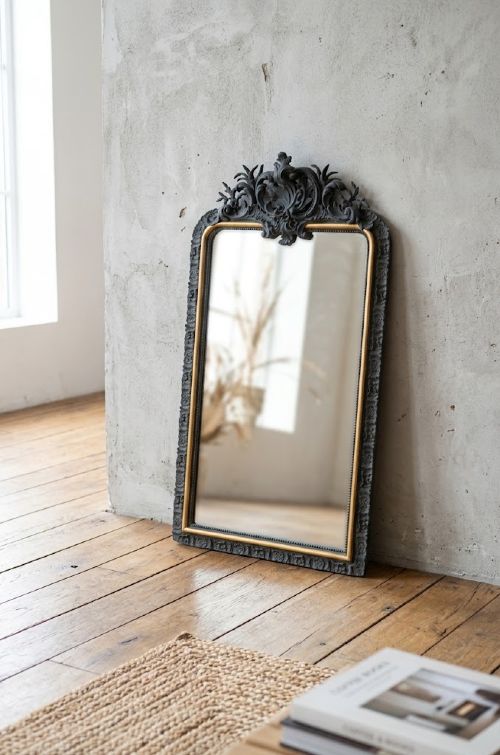


Decorative Painted Crest Mirror
These decorative painted crest mirror examples bring characterful period charm and ornate framing to a room.
Decorative Painted Crest Mirror
A decorative painted crest mirror offers an ornate focal point in a room, defined by its carved upper decoration and painted or gilded wooden frame. When searching for a decorative painted crest mirror, buyers encounter a variety of regional interpretations ranging from French chateau and Italian rococo to English period revivals. The selection spans the eighteenth century through to the early twentieth century, encompassing grand overmantel mirrors alongside more intimate wall and pier mirrors.
Most pieces met on this page date from the nineteenth century, reflecting popular Victorian tastes for continental revival styles such as Louis XVI and French Empire. Forms include arched tops, shaped frames, and rectangular trumeau formats featuring integrated painted panels. Walnut, gesso, and soft cream or white paint finishes with gilding dominate the aesthetic.
How they were made
Craftsmen built these frames primarily from solid wood, frequently utilising walnut or carved timber foundations to support the structure. Applied gesso provided a smooth surface for intricate mouldings and relief work along the crest.
Finishing techniques combined hand-applied paint, often in cream or white tones, with gold leaf or gilding to highlight the carved details. Many pieces integrated glass plates set within these decorated wooden and gesso armatures.
Materials recorded across the inventory include walnut, gesso, gold leaf, and painted wood finishes in cream and white tones.
What varies in quality
The sophistication of the carved crest and the depth of the woodwork set the finer examples apart from simpler production. Superior pieces display crisp hand-carving in the gesso and wood, whereas lower tiers rely on simpler moulded ornament.
The preservation of the original painted and gilded surfaces dictates the visual integrity of a piece. Hand-painted panels, such as foliate motifs, indicate higher craftsmanship compared to uniform factory finishes.
The Decorative Painted Crest Mirror Glossary
- Trumeau mirror
- A decorative wall mirror designed to fit a specific architectural space, frequently incorporating a painted or carved panel above the glass. These were popular in eighteenth and nineteenth century domestic interiors.
- Gesso
- A plaster-like mixture applied to wood frames to create a smooth surface for carving and gilding. It allows for intricate relief ornamentation along the crest.
- Overmantel mirror
- A large mirror designed to hang above a fireplace mantelpiece. They often feature extended proportions and substantial frames.
- Giltwood
- Timber that has been coated with gold leaf or gold paint. This technique accentuates the decorative elements of the frame.
- Pier mirror
- A tall, narrow mirror designed to hang on the wall space between windows. They reflect light into the centre of a room.
Decorative Painted Crest Mirror: Frequently Asked Questions
Where should I hang a decorative painted crest mirror?
These mirrors suit principal reception rooms, hallways, or above a fireplace mantel where the ornate crest can draw the eye. Their scale allows them to function as the primary focal point on a blank wall.
Ensure the wall construction can support the weight of a carved wood and gesso frame, particularly for larger overmantel examples dating from the nineteenth century.
How do I identify a French style mirror?
French styles often feature asymmetric rococo curves, neoclassical symmetry, or trumeau panels with painted pastoral or foliate scenes. The framing frequently combines white or cream paint with delicate gilding.
Pay attention to the crest design, which tends to incorporate floral garlands, ribbons, or scrollwork characteristic of French chateau aesthetics.
Are these mirrors made from solid wood?
Most period frames utilise solid timber construction, such as walnut or pine, overlaid with gesso to build up the intricate relief decorations. This combination provided structural stability while allowing for elaborate sculptural detailing.
Over time, the gesso layer may show minor age-related cracking, which is typical for pieces originating in the eighteenth and nineteenth centuries.
What is the difference between a wall mirror and an overmantel mirror?
Overmantel mirrors are traditionally wider and proportioned to sit comfortably above a fireplace, whereas standard wall mirrors vary in shape from oval to tall pier formats. Overmantel versions often feature landscape orientations to span the width of a mantelpiece.
Both types utilise decorative painted crests, but their intended architectural placement dictates their overall dimensions.