
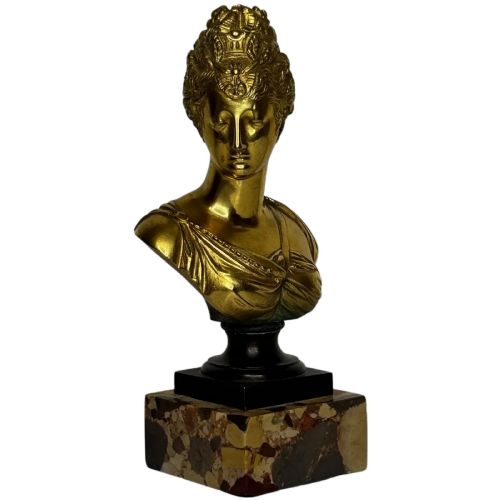
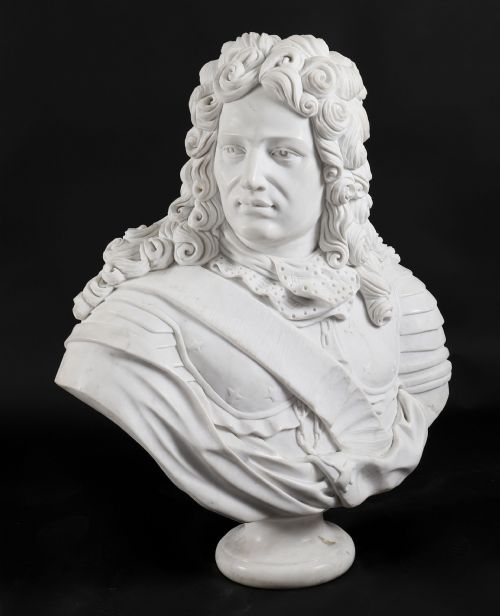
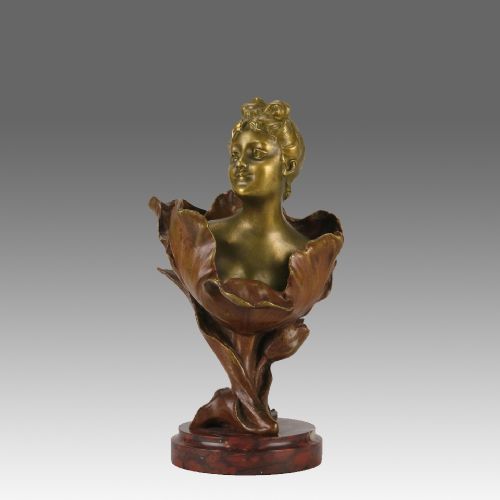


Decorative Marble Bust
These decorative marble bust pieces bring classical presence and carved detail into a room, offering the timeless appeal of sculpted portraiture.
Decorative Marble Bust
A decorative marble bust offers sculptural portraiture carved from stone, capturing historical figures, noblemen, and mythological subjects. These pieces range from Victorian portrayals to early twentieth-century interpretations, bringing solid mass and tactile presence to interior spaces.
The versions most commonly met on this page span the nineteenth century up through the mid-twentieth century, utilising white marble, Carrara marble, and alabaster. Alongside traditional portraiture, variations appear with gilt bronze mounts, Orientalist figures, and figurative subjects.
Forms extend beyond standalone portrait heads to include works combined with inkwells, pedestals, and torcheres, reflecting both French and Italian stylistic influences from the Baroque Revival to Art Nouveau.
Materials and carving techniques
Many sculptures incorporate mixed media, pairing carved stone with cast gilt bronze or ormolu mounts, particularly in French pieces. Parian ware and porcelain also appear as sculptural mediums, offering an alternative finish to natural stone.
Listings feature works in marble, alabaster, stone, and Parian ware, spanning the nineteenth and twentieth centuries.
Distinctions in craftsmanship and material
The standard of carving distinguishes fine examples, visible in the natural drape of fabric, the articulation of hair, and the lifelike expression of the subject. Master carvers achieved subtle depth in the eyes and musculature that lesser workshops left flat and rigid.
The selection of the raw stone itself dictates the upper tier of pieces, where uniform grain and the absence of heavy veining in the face elevate the sculpture. Furthermore, the integration of cast bronze elements or bespoke pedestals adds complexity to the overall construction.
Henri Godet·John Wenlock Rollins·Auguste Moreau
The Decorative Marble Bust Glossary
- Carrara marble
- A fine-grained, white or blue-grey stone quarried in Italy, prized for classical sculpture and portrait busts. Its smooth texture allows carvers to render delicate skin tones and subtle expressions.
- Alabaster
- A softer mineral stone often used for nineteenth-century portraiture, known for its slight translucency. This property gives carved figures a glowing quality when lit.
- Parian ware
- A type of fine biscuit porcelain developed in the nineteenth century to imitate carved marble. It provides a matte, white finish well suited for portrait busts.
- Gilt bronze
- Metal cast and coated in a thin layer of gold, frequently combined with marble bases in French works. It adds decorative contrast and structural support to the stone sculpture.
Decorative Marble Bust: Frequently Asked Questions
How do I clean a marble bust?
Dust the surface regularly with a soft, dry brush to prevent dirt accumulation in carved crevices. Avoid using household cleaners or excess water, which can damage unsealed stone.
For alabaster pieces, use even less moisture, as the stone is softer and more porous than marble. Professional conservation is advised for stubborn marks or older patinated surfaces.
Where should I display a bust?
Place the sculpture on a sturdy surface such as a dedicated pedestal, heavy sideboard, or mantelpiece where its weight is fully supported. Ensure the location is away from direct sunlight and sudden temperature changes.
Pairing stone busts with architectural stands or complementary bronze objects helps integrate them into a room's layout.
How can I tell marble from alabaster?
Marble is a hard metamorphic rock that resists scratching from a steel blade, whereas alabaster is a softer stone that can be marked more easily. Alabaster also tends to exhibit greater translucency when held near a light source.
Visual inspection of the grain and weight will further clarify the material, as alabaster feels slightly lighter and warmer to the touch than dense marble.