

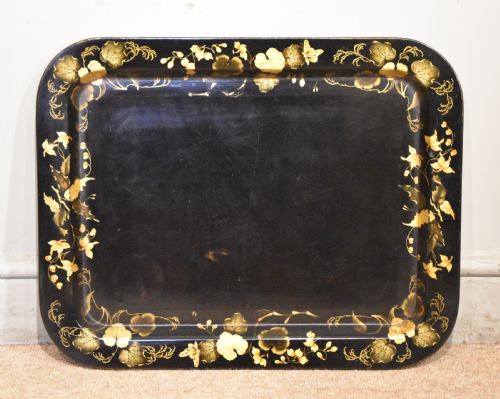
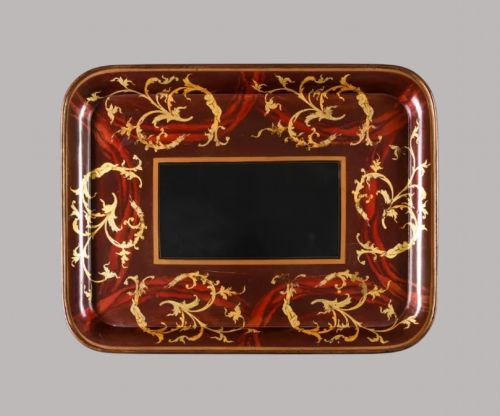
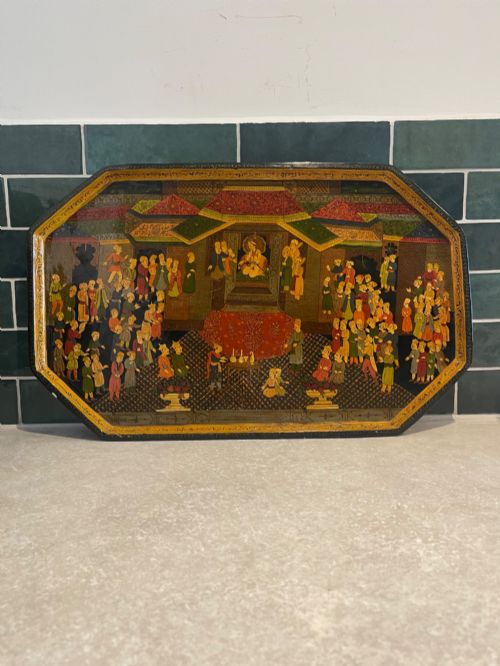
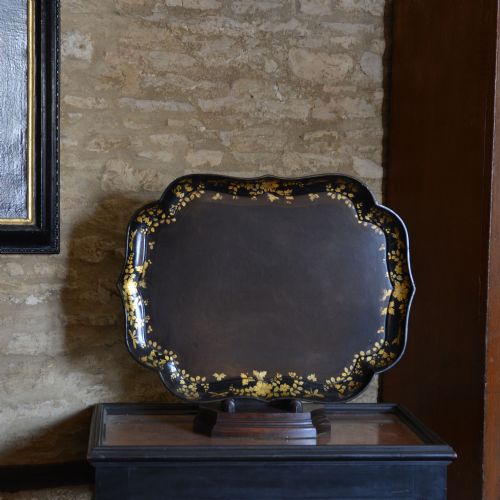


Decorative Lacquered Tray
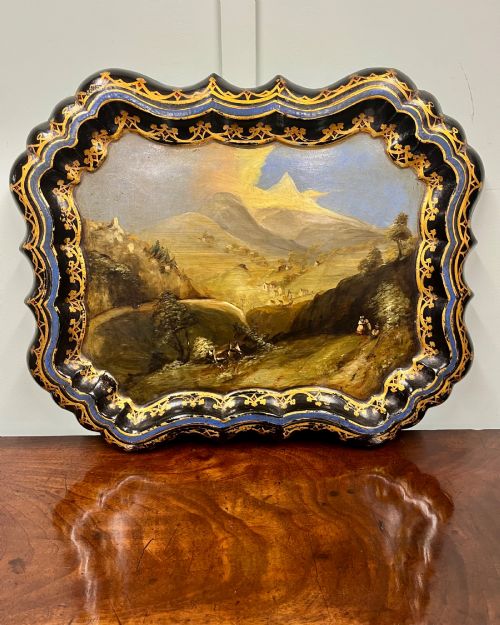
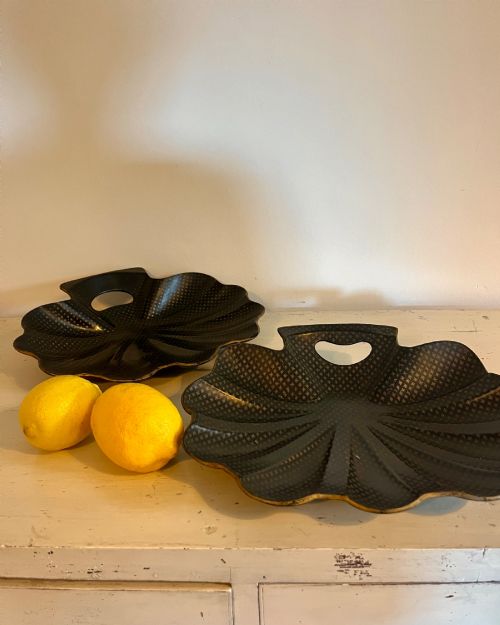
These decorative lacquered tray pieces combine utility with painted artistry, offering painted surfaces and durable papier-mâché that suit both display and serving.
Decorative Lacquered Tray
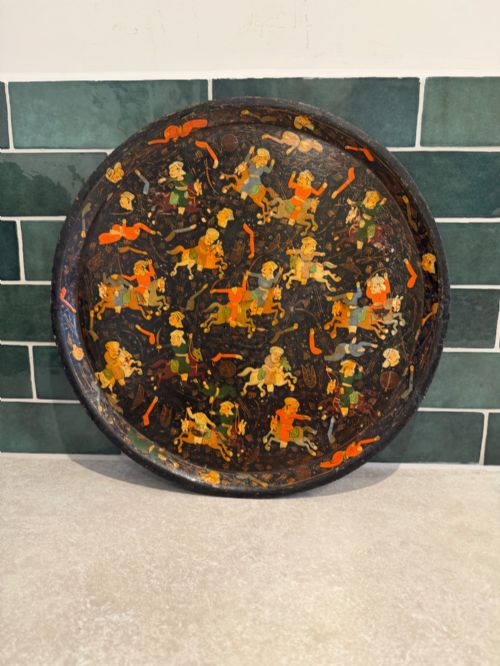
A decorative lacquered tray brings centuries of painted craft into domestic spaces, appearing in forms from small dishes to massive platters and card baskets. Buyers seeking a decorative lacquered tray will encounter oval, octagonal, and rectangular shapes spanning Georgian, Regency, and Victorian periods.
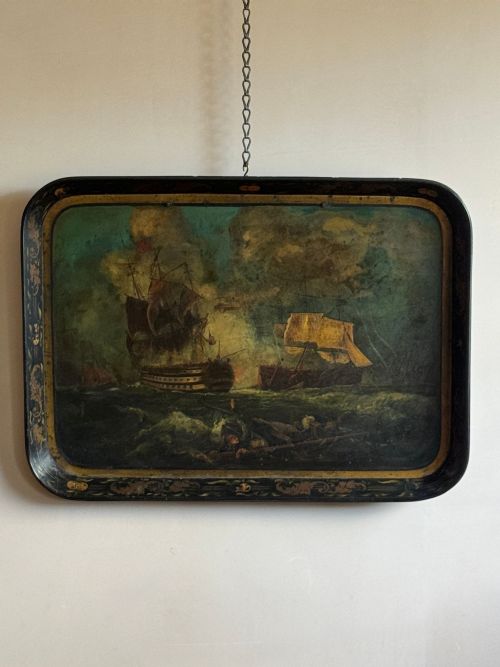
Originating across English, French, Swedish, Kashmiri, Chinese, and Japanese traditions, these objects serve both flat display and practical transport. Many pieces sit upon dedicated stands to function as low tables or retain original hanging fixtures for wall mounting.
How they were made
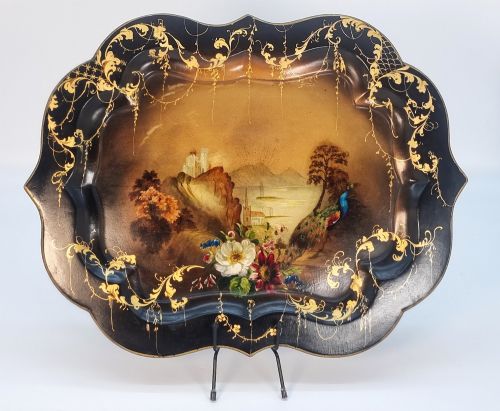
Maker workshops built the core structures using layered papier-mâché or solid wood, forming rigid bases suited for heavy daily use. Artisans applied successive coats of lacquer to seal the surface before embellishing the ground with hand-painted scenes.
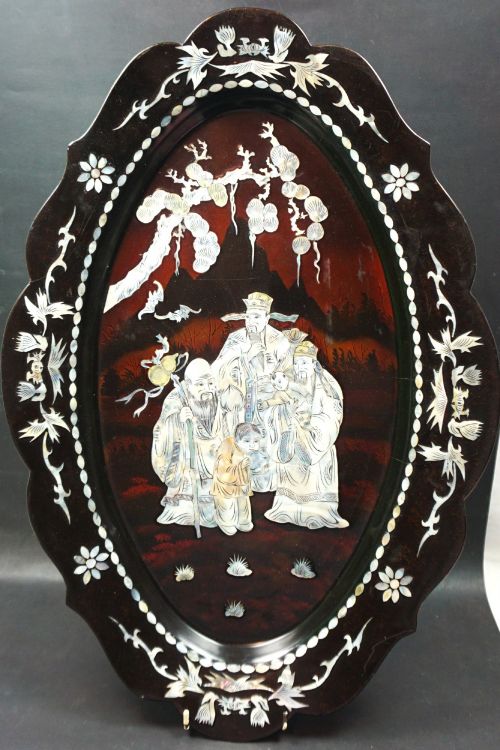
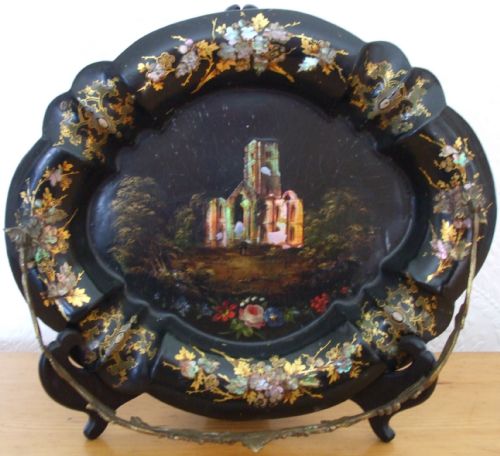
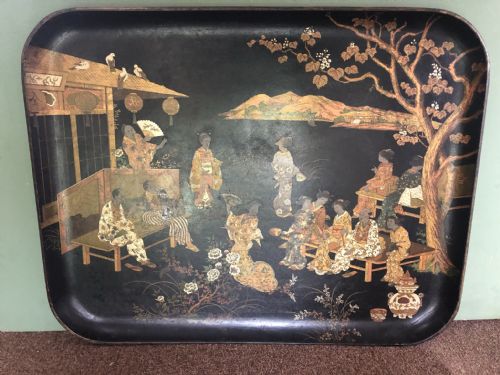
Gilding, gold leaf, and mother of pearl inlay provided tonal contrast against dark lacquer backgrounds. Painters executed detailed landscapes, hunting motifs, fishing subjects, and Chinoiserie patterns directly onto the prepared panels.
Decorative Lacquered Tray Retail Price Guide 2026
Typical asking prices for decorative lacquered tray among the pieces listed under this phrase on Sellingantiques today, from the lower quarter to the upper quarter. They describe what is for sale here now, not the wider market.
What varies in quality
Quality rests upon the execution of the hand-painted decoration and the preservation of the original lacquered finish. Pieces bearing distinct hunting scenes or signed manufacturer marks demonstrate greater artisanal investment than plain service items.
The integrity of the underlying papier-mâché and the retention of original gilding or mother of pearl inlay determine the standing of each piece. Retaining unusual original colour schemes or specific regional motifs elevates the execution above standard production.
Jennens and Bettridge·Clay
The Decorative Lacquered Tray Glossary
- Papier-mâché
- A composite material made from paper pulp or reinforced paper sheets mixed with binding agents, pressed and dried to form rigid trays. This substance provided a lightweight yet remarkably sturdy base for smooth lacquer application.
- Japanned
- A European imitation of East Asian lacquerwork achieved through layered varnishes and heat curing. The technique produced a hard, dark, glossy finish often associated with English and Regency production.
- Toleware
- Painted or enamelled sheet metal items produced in domestic and workshop settings. These pieces parallel papier-mâché trays in their decorative Chinoiserie and floral motifs.
- Chinoiserie
- European interpretations of Chinese and East Asian artistic styles, popular in furniture and tray decoration. The style employs motifs of pavilions, figures, and exotic landscapes rendered in gold and colour.
- Mother of pearl
- The iridescent internal layer of mollusc shells, shaped into thin plaques and embedded directly into lacquer surfaces. Artisans utilised this material to catch the light on pictorial highlights.
Decorative Lacquered Tray: Frequently Asked Questions
How do I clean a decorative lacquered tray?
Dust the surface gently with a soft, dry cloth to protect the delicate lacquer and painted details. Avoid using water, chemical sprays, or abrasive cleaners that can damage the historical finish.
Keep these items away from direct sunlight and excessive heat sources to prevent the lacquer from cracking or warping over time.
Can I use these trays for serving food?
While many historical pieces were originally designed for serving tea or beverages, modern use is best restricted to display or light dry service. Moisture and heat from hot dishes can compromise the aged lacquer and paint layers.
Using them as decorative tabletop centrepieces or mounting them on walls preserves their structural integrity and painted surfaces.
How do I identify a Regency period tray?
Regency examples frequently feature robust papier-mâché construction combined with elaborate gilt embellishments and distinct Chinoiserie or classical landscapes. They often display deep oval or rectangular proportions typical of early nineteenth-century dining customs.
Examining the underside and the wear patterns on the lacquer helps confirm the period of manufacture alongside stylistic cues.
What is the difference between Japanese and English lacquer?
Japanese export pieces often utilise distinct regional woods and specialised lacquer resins combined with mother of pearl inlay or plaque formats. English production during the Georgian and Victorian eras relied heavily on moulded papier-mâché grounds finished with japanning.
Comparing the base material and the specific style of the painted landscape reveals the geographic origin of the workshop.