





Decorative Imari China
Decorative imari china brings together rich palettes of cobalt blue and iron red on porcelain, earthenware and ironstone, built to catch the eye in any room.
Decorative Imari China
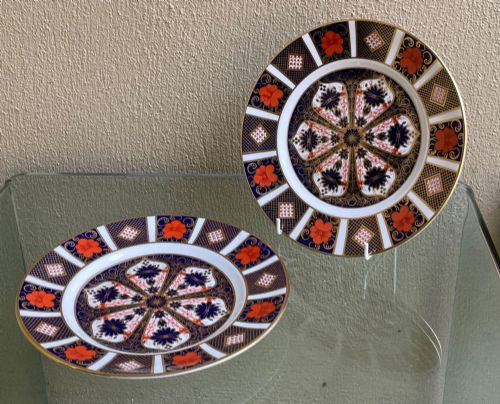
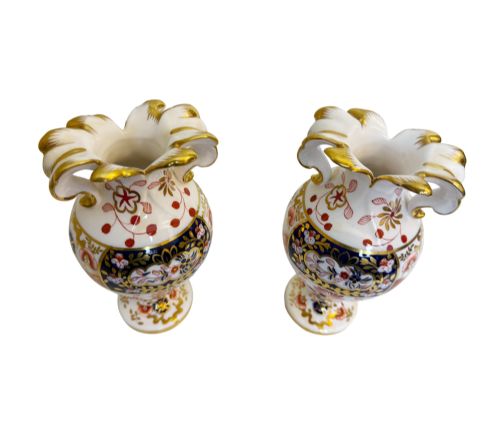
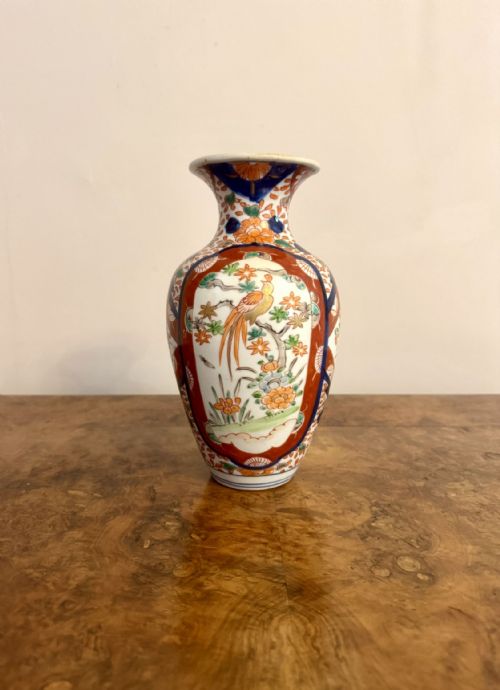
Decorative imari china spans Japanese export wares from the Edo and Meiji periods alongside English adaptations produced by factories such as Royal Crown Derby, Spode and Mason's. The tradition borrows heavily from Japanese imari patterns characterised by heavy iron red, cobalt blue and supplementary gilding.
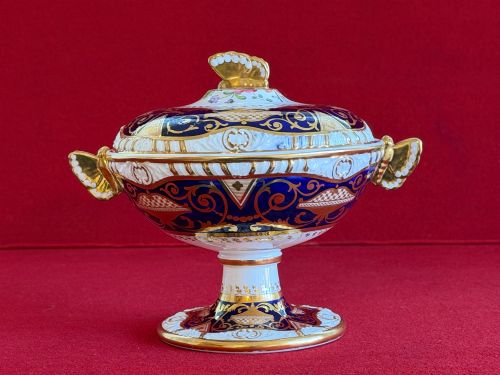
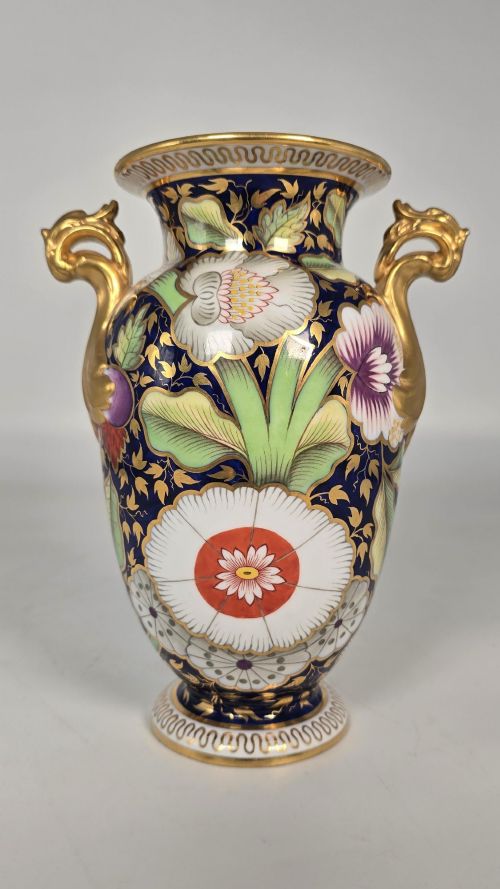
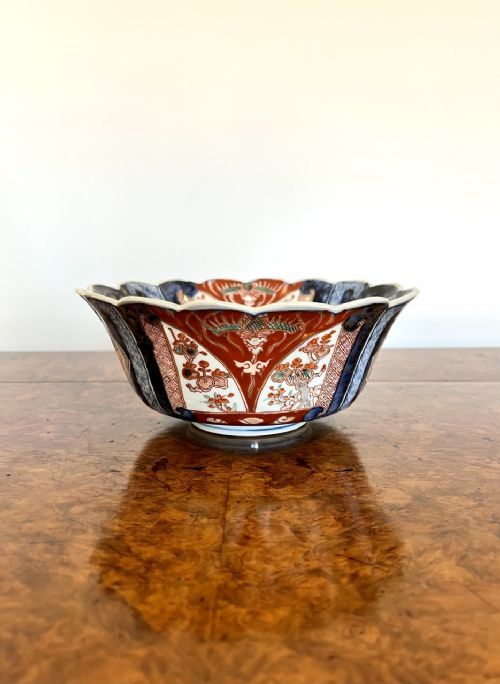
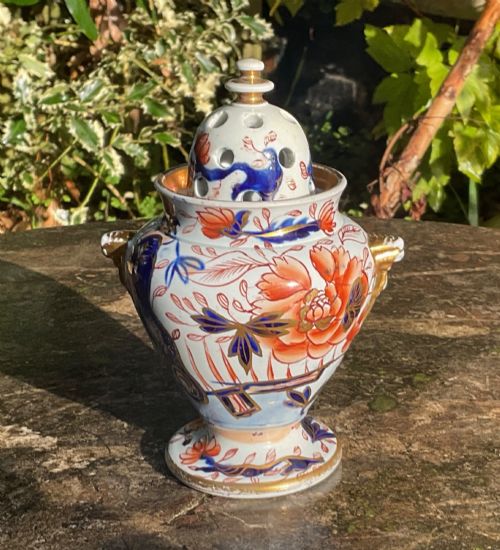
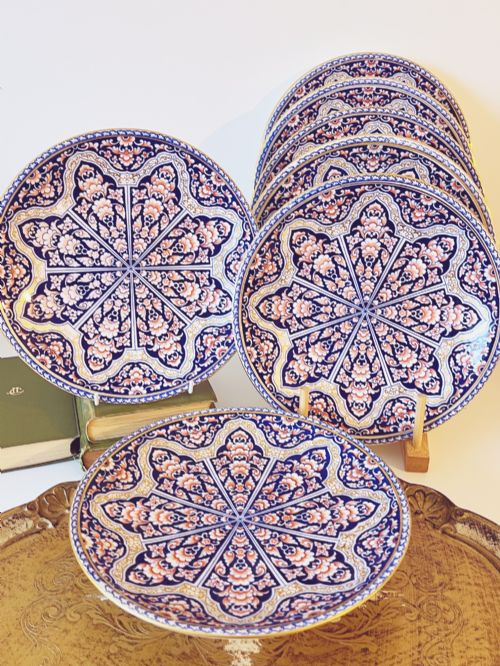
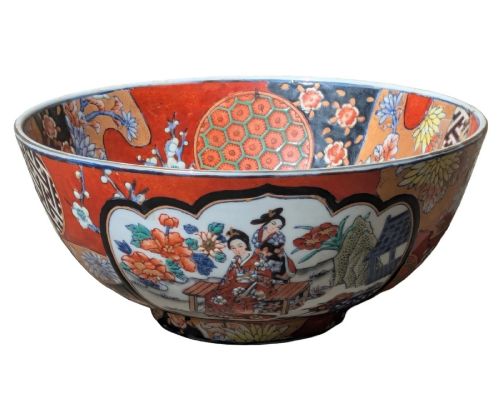
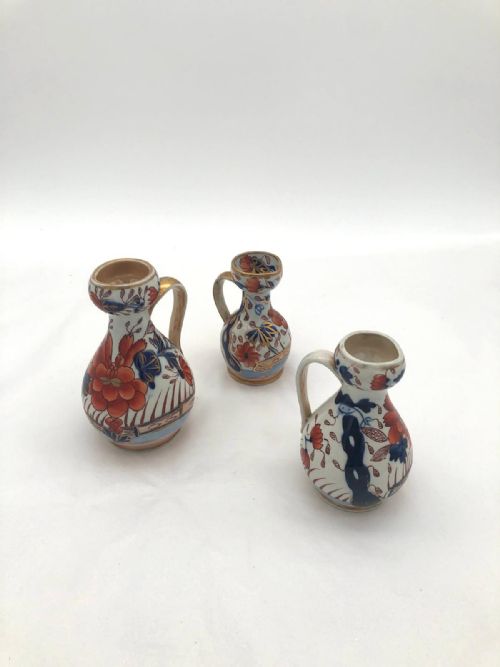
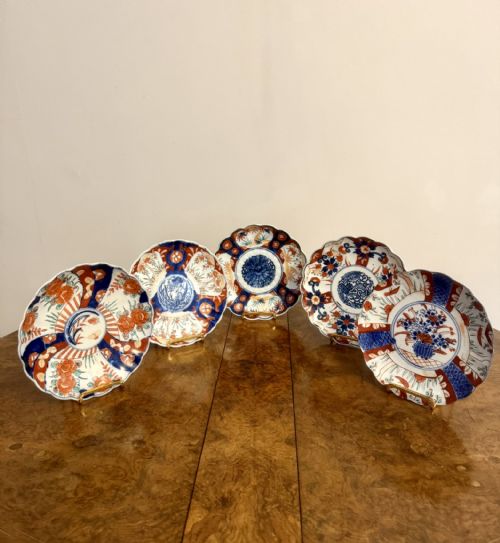
Forms on this page range from large scalloped bowls and ribbon plates to twin-handled vases, dessert services, potpourri jars and deep lobed serving dishes. Japanese originals sit alongside Victorian English interpretations in bone china, porcelain and ironstone.
Buyers meet nineteenth-century English ironstone plates alongside twentieth-century Royal Crown Derby dessert pieces and Showa period Japanese bowls. The style bridges Eastern ceramic traditions with Western domestic display requirements across the Victorian, Edwardian and Georgian eras.
Materials and Techniques
Potters shaped hard-paste porcelain, bone china, earthenware and heavy ironstone before applying underglaze cobalt blue and overglaze enamel colours by hand. Gilding and gold leaf often highlight specific motifs across the surface.
Firing techniques allowed cobalt pigments to fuse beneath the glaze at high temperatures, while enamel colours and gold leaf required subsequent lower-temperature fixings in a kiln.
Decorative Imari China Retail Price Guide 2026
Typical asking prices for decorative imari china among the pieces listed under this phrase on Sellingantiques today, from the lower quarter to the upper quarter. They describe what is for sale here now, not the wider market.
Listings feature hard-paste porcelain, bone china and heavy ironstone across Victorian, Georgian and Japanese Meiji periods.
Judging Quality and Execution
Quality rests on the crispness of the hand-painted brushwork, the precision of the cobalt underglaze details and the generous application of gold leaf or gilt. Finer pieces maintain clean lines and vibrant enamel separation without muddy bleeding between colours.
The weight and purity of the ceramic base matter, distinguishing delicate bone china vessels from heavier utilitarian ironstone services. Intricate moulding, such as pierced serving trays or scalloped and lobed edges, demands greater technical skill from the potter.
Royal Crown Derby·Mason's Ironstone·Spode·John Davenport of Longport·Keeling and Co
The Decorative Imari China Glossary
- Imari style
- A decorative ceramic pattern originating in Japan, defined by a palette dominated by cobalt blue, iron red and gold leaf.
- Ironstone
- A durable type of heavy earthenware patented in the nineteenth century, prized for its strength and resistance to chipping.
- Underglaze
- Pigment applied to a ceramic body before the glaze is fired, protecting the colour beneath a glossy vitrified layer.
- Overglaze enamel
- Coloured glass decoration applied on top of an already fired glaze, fixed during a subsequent low-temperature kiln firing.
- Comport
- A raised dish or bowl traditionally used for serving fruit or small desserts as part of a formal nineteenth-century dining service.
Decorative Imari China: Frequently Asked Questions
How do I spot Japanese imari from English imari?
Japanese examples usually feature lighter porcelain bodies with traditional Edo or Meiji motifs, whereas English versions often utilise ironstone, bone china or heavier earthenware bodies shaped by Staffordshire factories.
English makers such as Spode and Royal Crown Derby adapted the palette to suit Western Victorian tastes, resulting in distinct forms like dessert services and potpourri jars.
Can I use these decorative plates for serving food?
Many nineteenth-century pieces served functional roles in dessert services and dining rooms, though older enamels and gilding benefit from careful hand washing rather than heavy daily use.
Displaying them on walls or in cabinets protects fragile overglaze enamels and gold leaf from wear over time.
What is ironstone china?
Ironstone is a dense, sturdy ceramic material developed in the nineteenth century to provide a durable alternative to porcelain without sacrificing decorative potential.
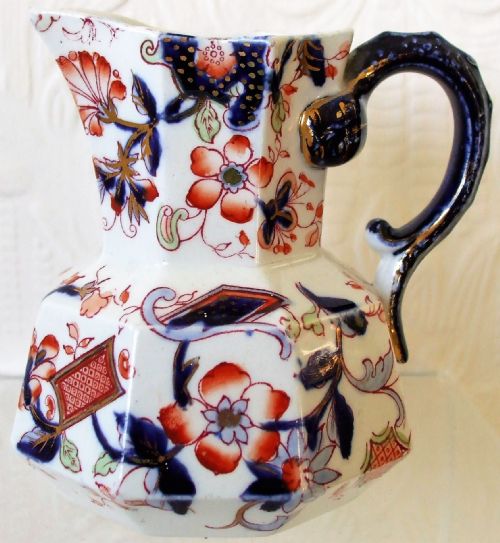
It forms the heavy body behind many nineteenth-century jugs, serving dishes and patterned plates found in this category.
How do I date an imari plate?
Dating relies on factory backstamps, impressed registry marks, pattern numbers and the specific ceramic composition of the piece, such as heavy ironstone versus fine bone china.
Nineteenth-century pieces often display hand-painted pattern numbers or impressed maker marks beneath the glaze.