
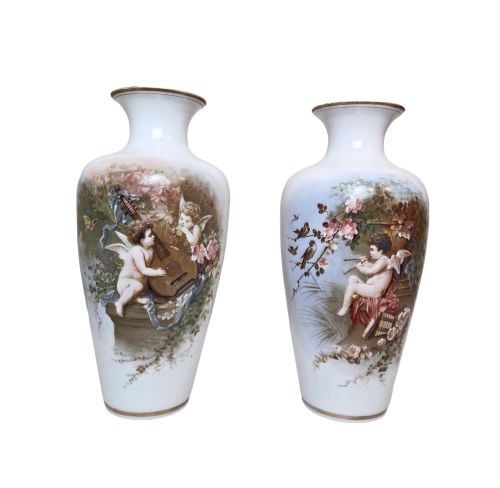
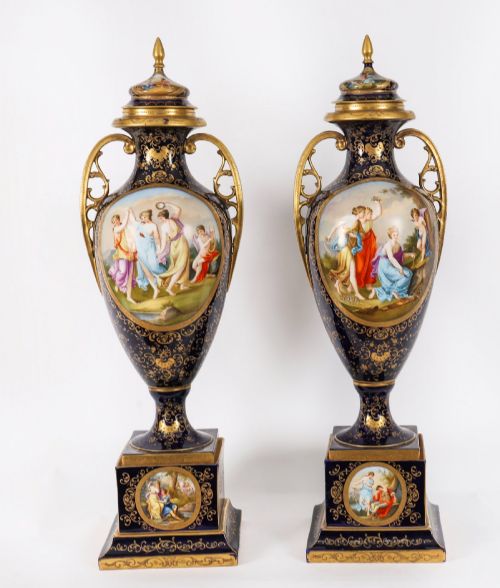
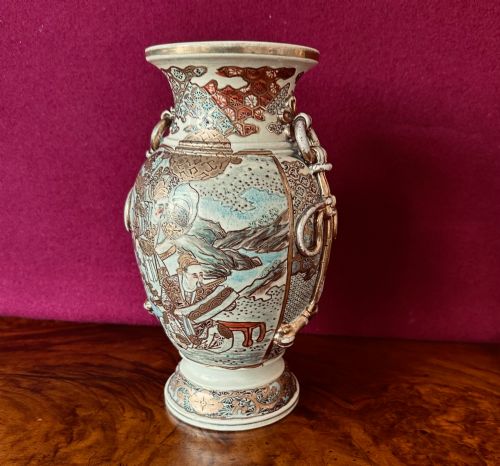
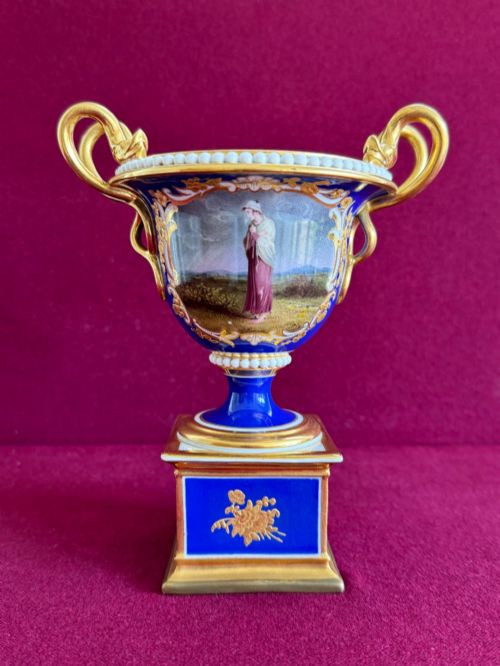
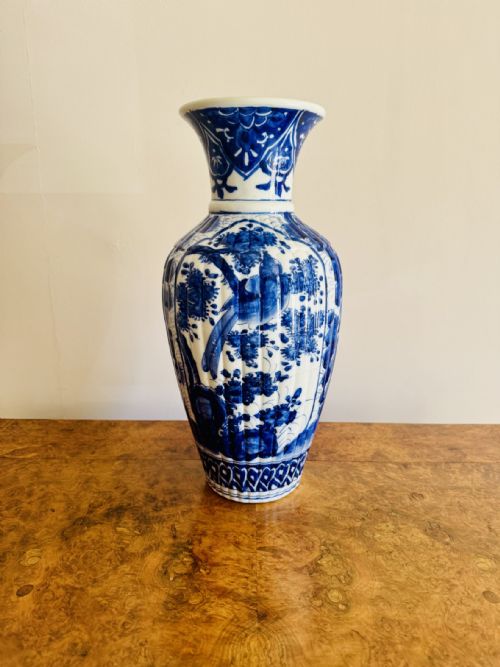
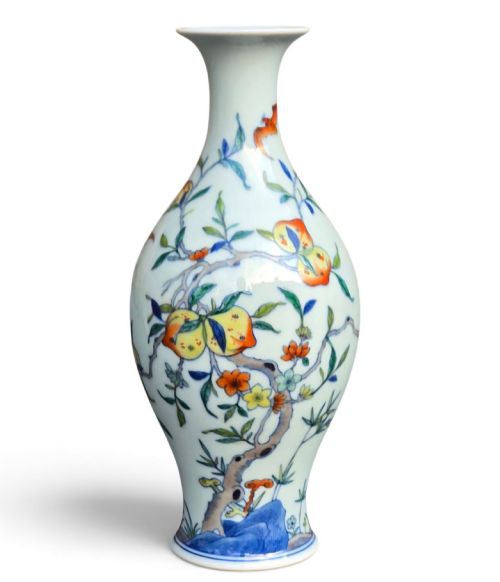
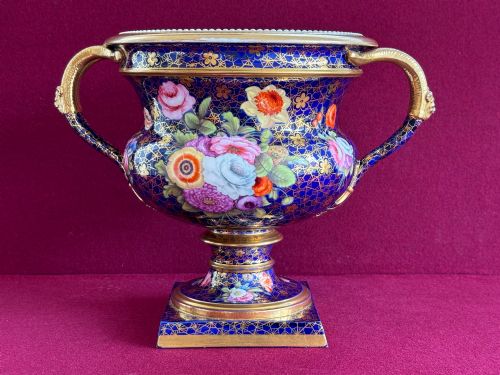
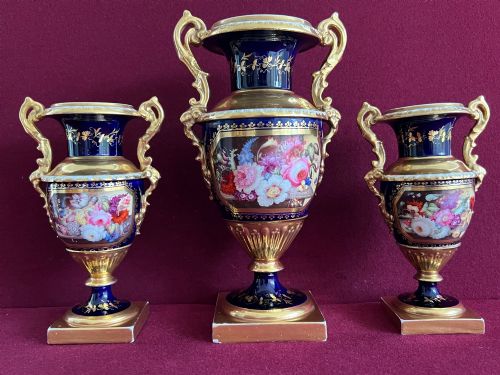
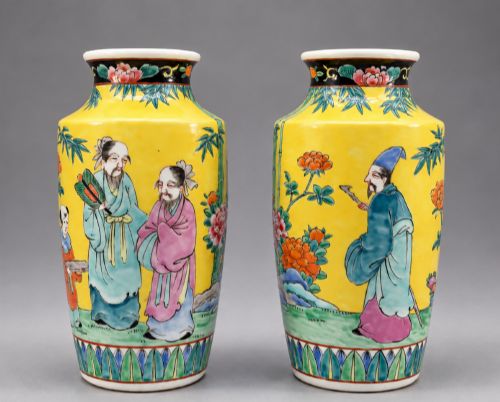
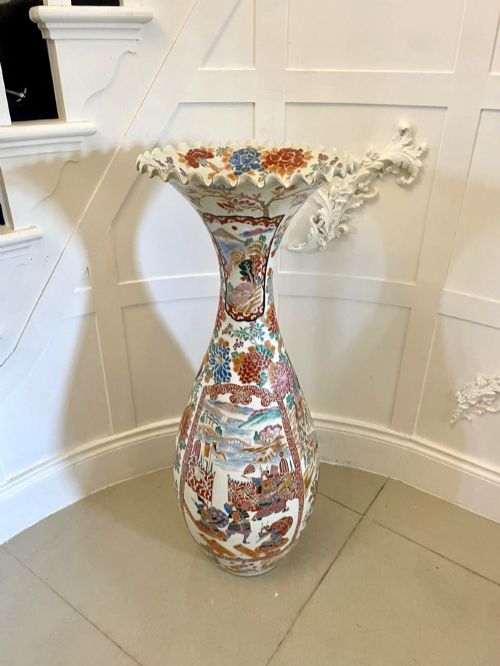
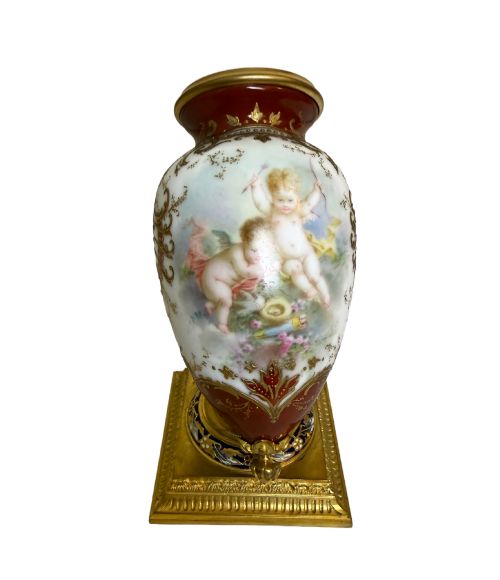
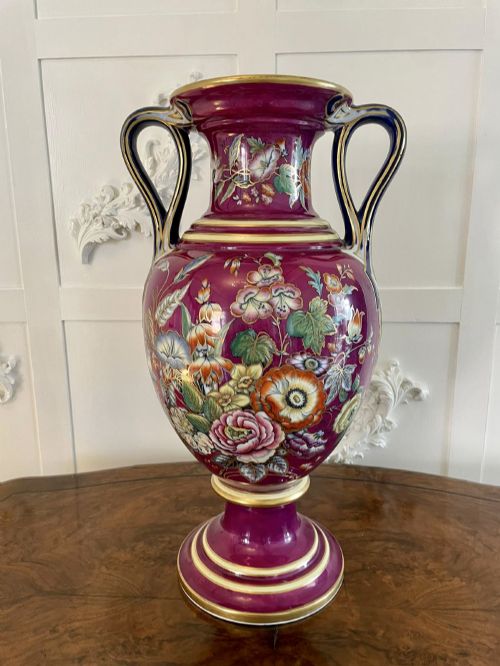
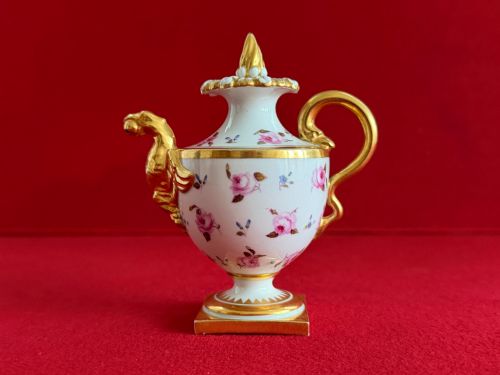
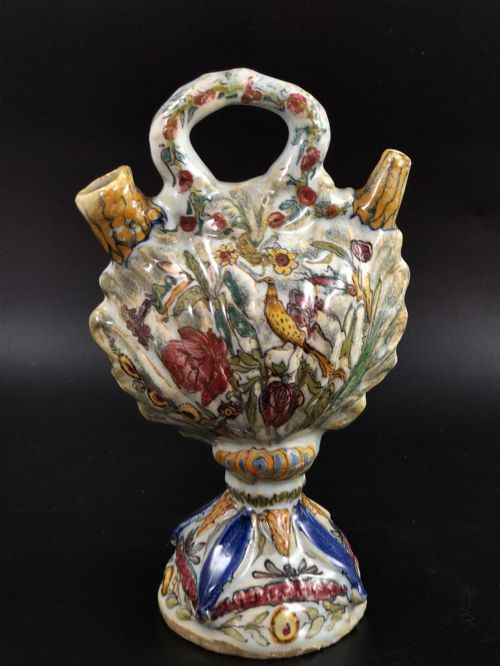
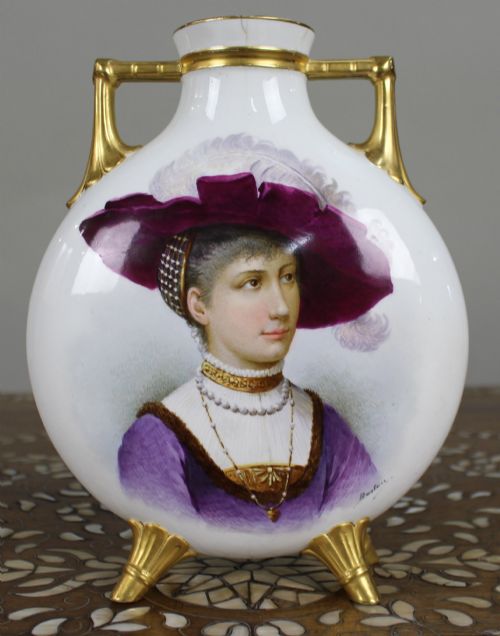
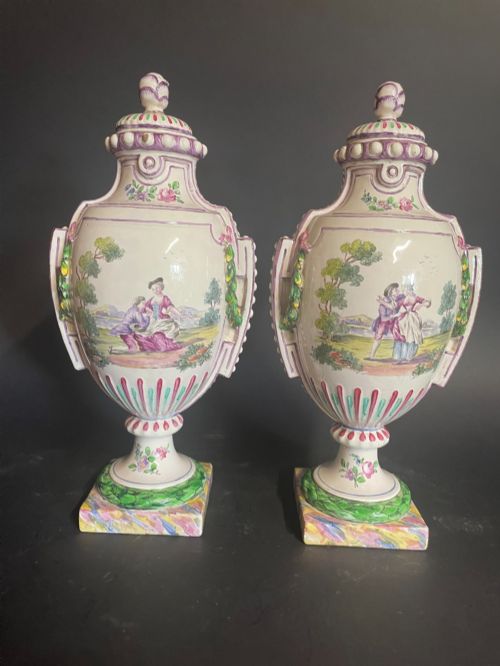
Decorative Hand Painted Urn
These decorative hand painted urn pieces combine painted detail and ceramic form, offering a focal point for interiors.
Decorative Hand Painted Urn
A decorative hand painted urn brings together ceramic bodies and painted surface details, spanning periods from the nineteenth century through to the early twentieth century. These items take the form of traditional urns, vases, ginger jars, and twin-handled vessels originating from English, French, Austrian, and Japanese makers.
The selection on this page relies heavily on nineteenth-century production alongside Edwardian and Meiji period examples. Buyers will frequently encounter porcelain and earthenware bodies decorated with hand-applied pigments and gilding.
Forms range from large floor-standing vessels down to smaller table lamps and garniture sets. Pieces frequently draw on historical styles such as Rococo Revival, Art Nouveau, and Japanese Imari.
How they were made
Potters shaped these vessels from ceramic, porcelain, earthenware, and faience, often utilising moulds or throwing clay on a wheel before firing. Artisans then applied enamel, glaze, and gold leaf by hand to decorate the surfaces.
Metals such as gilt bronze frequently mount or frame porcelain bodies, while glass appears in specific Art Nouveau examples. Kiln firings set the hand-painted pigments and metallic highlights into the glaze.
Listings feature porcelain, earthenware, and glass pieces utilising enamel, glaze, and gold leaf across the nineteenth and early twentieth centuries.
What varies in quality
Quality rests in the precision and depth of the hand painting, where individual brushwork by named artists distinguishes superior items from standard factory decoration. The weight and crispness of the porcelain or ceramic body also separate finer vessels from simpler production.
The application of gilding and enamel plays a major role, with raised gold leaf and complex polychrome palettes indicating higher workshop standards. Furthermore, the integration of cast mounts, such as gilt bronze, demonstrates the original ambition of the piece.
Flight Barr And Barr·Barr Flight And Barr·Doulton Lambeth·Helena Wolfsohn Dresden·Royal Worcester·Coalport·Minton·Spode
The Decorative Hand Painted Urn Glossary
- Urn
- A vessel with a rounded body, often tapering to a base and stem, traditionally used for display. These pieces frequently feature decorative handles and painted scenes.
- Gilt
- A thin layer of gold or gold-like material applied to the surface of ceramic, metal, or wood. This technique highlights rims, handles, and painted motifs.
- Garniture
- A set of matching vases or urns designed to be displayed together on a mantelpiece or sideboard. They typically comprise three or more graduated pieces.
- Imari
- A style of Japanese porcelain decorated in underglaze blue and red, with additions of gold and other enamel colours. It gained significant popularity in European collections during the nineteenth century.
- Faience
- Tin-glazed earthenware produced in various European countries. The technique allows for bright painted designs applied directly to the opaque white glaze before firing.
Decorative Hand Painted Urn: Frequently Asked Questions
What is a decorative hand painted urn?
A decorative hand painted urn is a ceramic or porcelain vessel featuring hand-applied artwork and often metallic gilding. These items were made primarily for display in domestic interiors during the nineteenth and early twentieth centuries.
They take various forms, including handled vessels, lidded jars, and moon flasks. Their surfaces showcase floral scenes, landscapes, or traditional patterns created by skilled ceramic painters.
How were these urns used historically?
Historically, these urns served as ornamental centrepieces on mantelpieces, sideboards, and pedestals. They demonstrated the owner's taste and wealth through their artistic craftsmanship and material quality.
Some function as covered jars or pot pourri containers designed to hold dried flowers or scented materials. Others were created purely for visual impact as part of matched garniture sets.
How do I style an antique urn at home?
Antique urns work well as standalone focal points on sturdy pieces of furniture like side tables or console tables. Their painted details and gilt highlights draw the eye and add texture to a room.
When dealing with garniture sets, you can display them together on a wide mantelpiece or separate them across a room for a coordinated look. Ensure they sit out of heavy traffic areas to protect delicate handles and painted surfaces.
How do I identify the period of an urn?
Identifying the period involves examining the ceramic body, glaze characteristics, and any painted base marks or signatures. Stylistic clues such as Art Nouveau curves or Victorian revival motifs also point towards specific decades of manufacture.
Comparing the painting technique and colour palette to documented examples from factories like Royal Worcester or Minton helps narrow down the production era.