



Decorative Grand Tour Souvenir
These decorative grand tour souvenir pieces bring classical antiquity into the home through reductions of famous ancient monuments and architectural models.
Decorative Grand Tour Souvenir
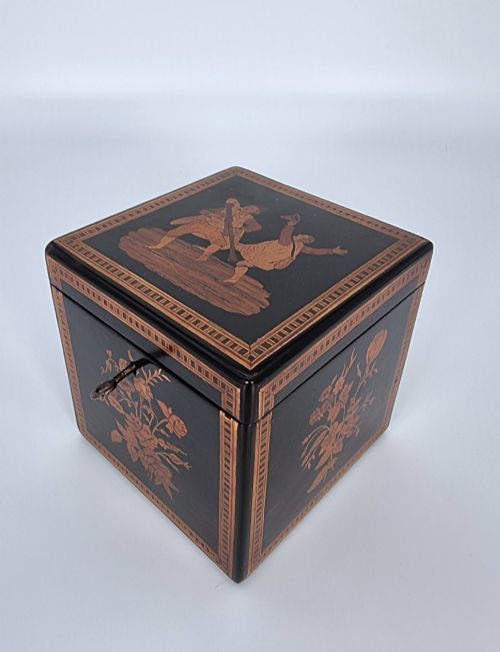
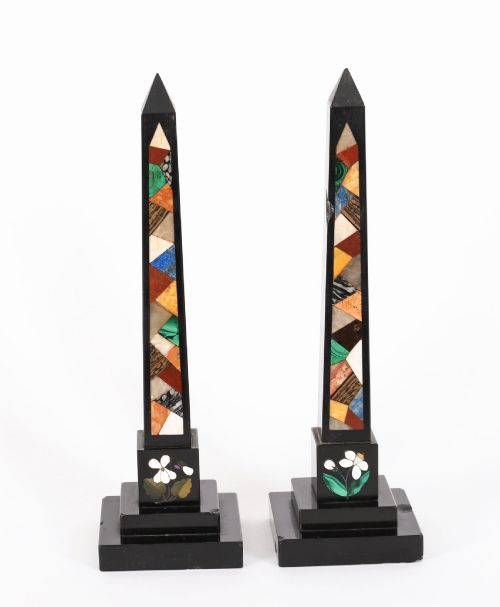
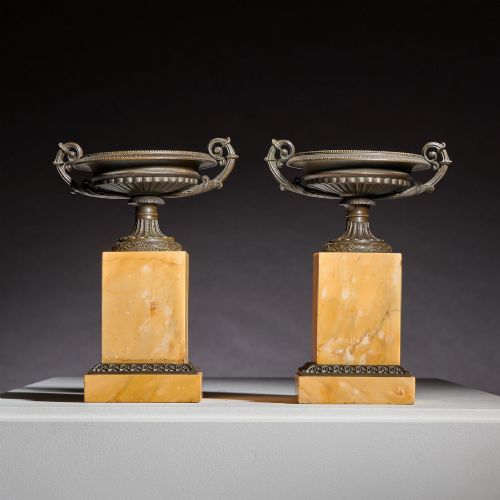
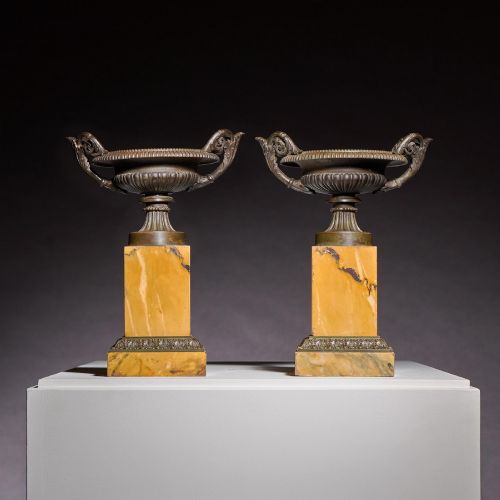
A decorative grand tour souvenir is typically a miniature vessel, tazza, obelisk, or vase modelled after classical antiquities encountered by travellers on European journeys. These objects span the nineteenth and early twentieth centuries, reflecting a sustained fascination with Roman, Greek, and Egyptian forms. Buyers encounter architectural models, twin-handled vessels, and desktop ornaments designed to evoke classical heritage.
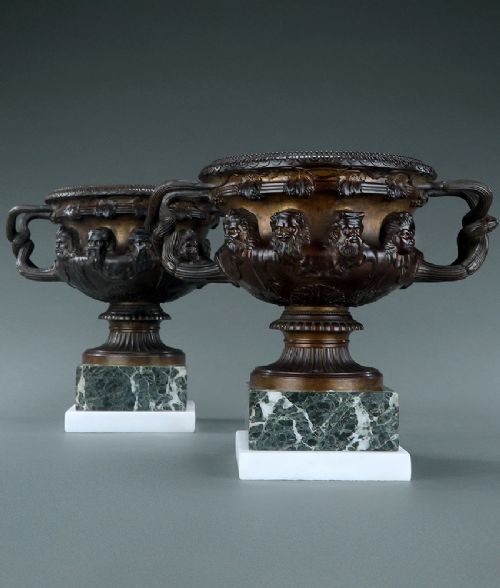
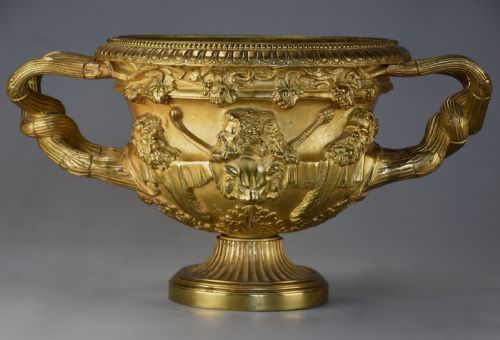
The pieces appearing here include bronze reductions of celebrated antiquities such as the Warwick Vase and the Albani Vase, alongside marble obelisks and alabaster tazze. Many examples pair cast metals with contrasting stones like Siena marble or black marble block bases. Formats range from smaller-scale decorative cups and campana urns to grander pairs of cassolettes and vases.
The aesthetic draws heavily from Neoclassical, French Empire, and Greek Revival styles, adapting ancient proportions for nineteenth-century interiors. Whether taking the shape of a trefoil oinochoe wine jug or a carved alabastro egiziano tazze, each item serves as a tangible record of continental travel. Collectors look for these specific historical forms to anchor classical display schemes in studies, libraries, and drawing rooms.
Materials and construction
Maker workshops utilised durable metals such as bronze, ormolu, silvered bronze, and brass to cast sculptural reductions of ancient statuary and vessels. These metal elements frequently underwent careful chasing and patination to simulate aged antiquity, sometimes combining gilt highlights with dark patinated surfaces.
Natural stones form the structural counterpoint in these pieces, with serpentine marble, Siena marble, alabaster, and solid black marble providing weighty bases and vessel bodies. Artisans turned and carved these stones with precision, highlighting natural figuring and colour variations within the material.
Mixed media construction defines the category, joining cast metal handles and bodies to turned stone plinths and pedestals. Components are often secured with threaded pins or internal fixings, demonstrating nineteenth-century metalworking and stonemasonry capabilities.
Decorative Grand Tour Souvenir Retail Price Guide 2026
Typical asking prices for decorative grand tour souvenir among the pieces listed under this phrase on Sellingantiques today, from the lower quarter to the upper quarter. They describe what is for sale here now, not the wider market.
Travellers brought home miniature architectural models of pagodas and gondolas alongside ancient Roman vessel copies, proving Victorian holiday shopping knew no geographic bounds.
Assessing quality
Quality rests primarily on the crispness of the metal casting and the depth of the chased detail in the foliage, classical figures, and handles. Finer examples capture the precise proportions of their antique prototypes without loss of definition, whereas lesser pieces display soft edges and simplified ornament.
The Decorative Grand Tour Souvenir Glossary
- Tazza
- A shallow saucer-like ornamental cup or vase, typically set upon a stem and foot, frequently utilised as a decorative grand tour souvenir.
- Ormolu
- Gilded bronze, produced by applying a finely ground mercury-gold amalgam to cast bronze, creating a rich golden surface common in nineteenth-century decorative pieces.
- Campana Urn
- A bell-shaped classical vessel with an everted rim and footed base, translated during the nineteenth century into bronze and marble souvenir forms.
- Obelisk
- A tall, four-sided, narrow tapering monument which terminates in a pyramid-like shape at the top, often carved from Italian marble in Egyptian Revival styles.
- Reduction
- A scale copy of a larger sculpture, architectural monument, or antique vase, produced in metal or stone to fit domestic interiors.
- Cassolette
- A decorative vessel featuring a pierced or reversible lid, functioning as an incense burner or standing as a decorative urn in classical interiors.
Decorative Grand Tour Souvenir: Frequently Asked Questions
How were these decorative urns used?
These urns served primarily as decorative ornaments on mantelpieces, library tables, and cabinets, signalling the owner's cultural education and refined taste. Some larger examples functioned as planters or decorative vessels.
Their presence in a nineteenth-century interior reflected a broader fashion for classical antiquity and classical revival decorating schemes.
How do I care for bronze and marble?
Bronze and brass elements require only gentle dusting with a soft, dry cloth to prevent the accumulation of surface dirt. Avoid commercial metal cleaners that can strip historic patination.
Marble and alabaster are porous stones that should be kept away from excessive moisture and acidic liquids. Clean them gently with a dry or barely damp microfiber cloth.
How do I identify nineteenth-century pieces?
Nineteenth-century pieces typically display the hand-chased metalwork, natural stone variations, and heavy casting methods characteristic of period workshops. Inspect the joins and undersides for period fixings and natural wear consistent with age.
Stylistic cues such as Neoclassical motifs, French Empire details, and Victorian interpretations of Roman art help establish the nineteenth-century context.