
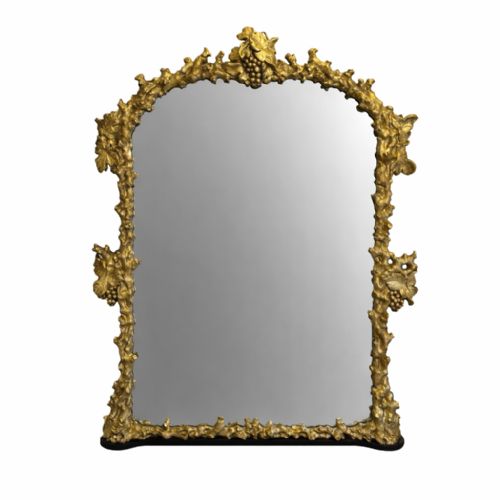
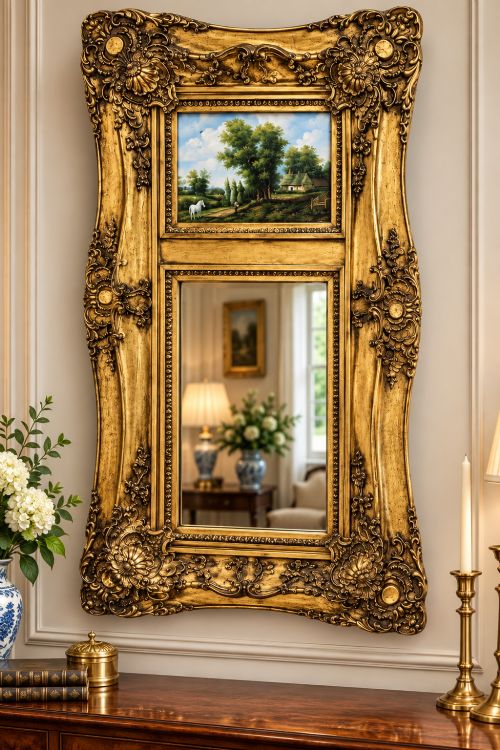
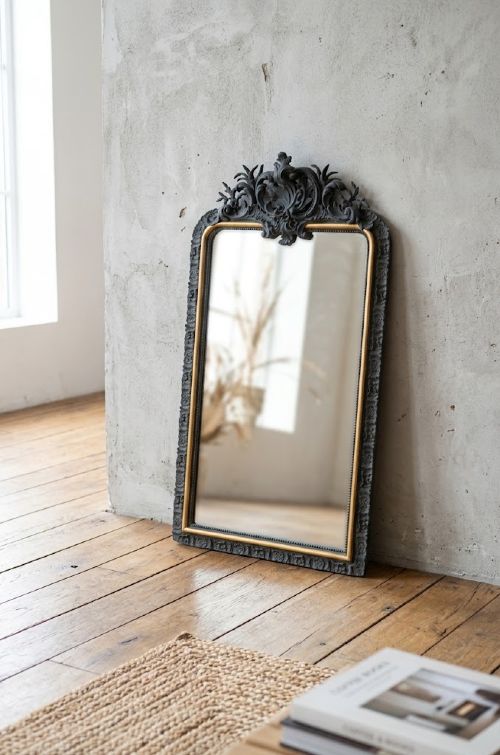
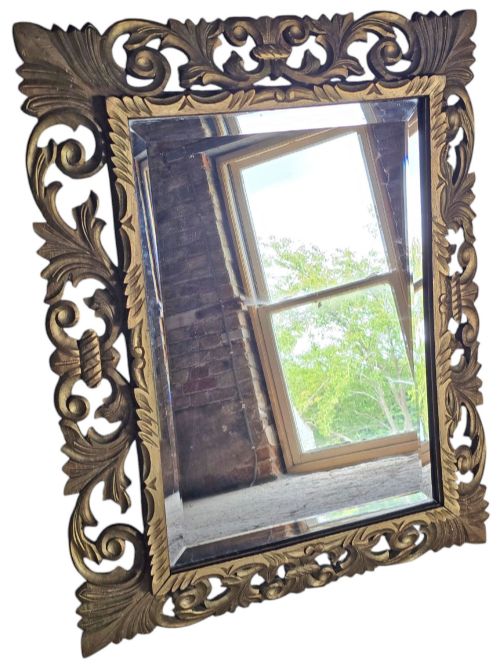
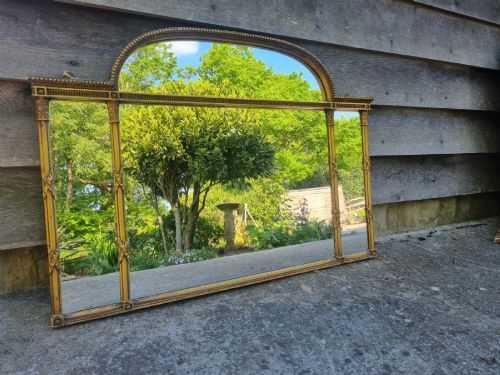
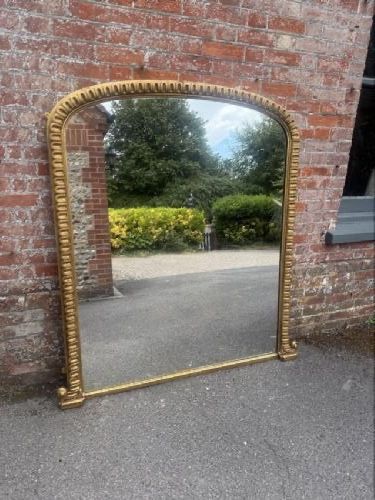
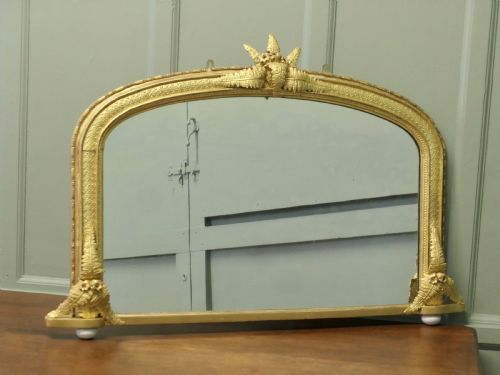
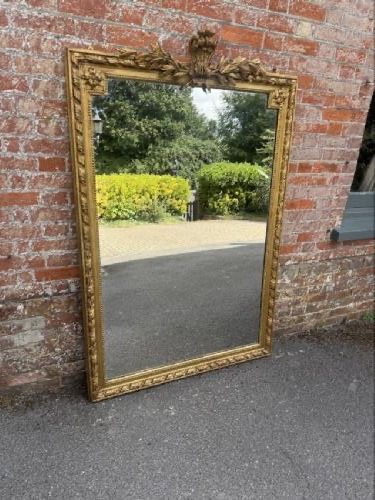

Decorative Gold Overmantel Mirror
These large decorative gold overmantel mirror examples bring warmth and scale to a room, hung traditionally above a fireplace or mounted on a principal wall.
Decorative Gold Overmantel Mirror
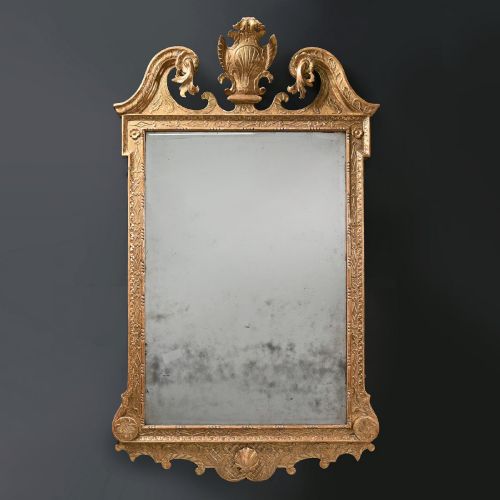
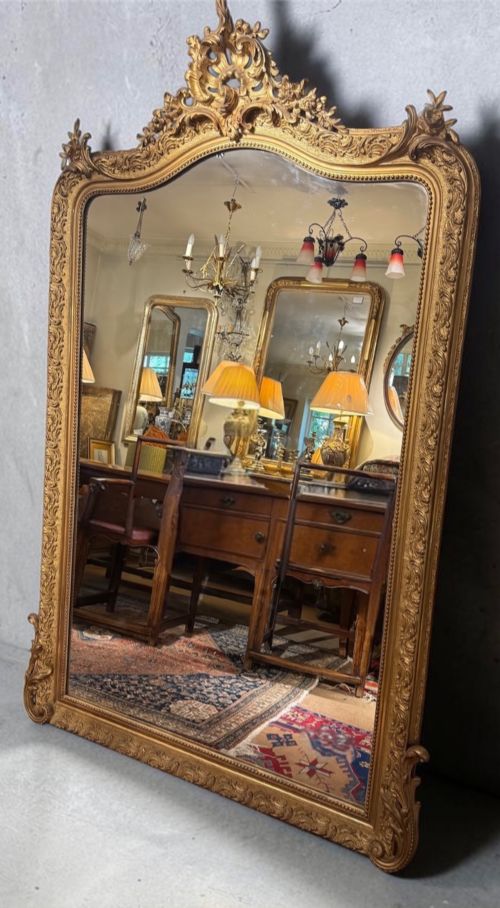
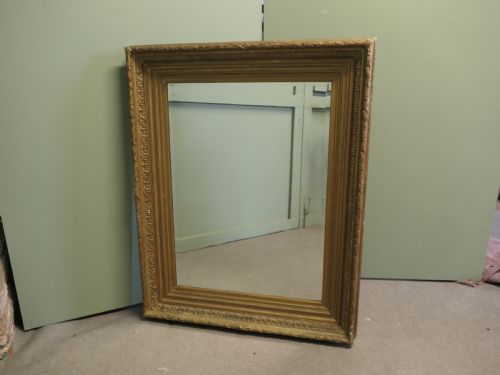
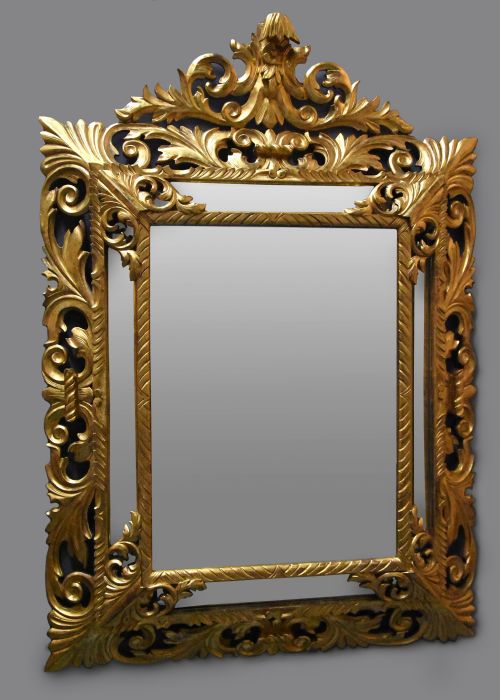
A decorative gold overmantel mirror sits at the heart of period interior design, historically proportioned to span the width of a chimney breast. The selection draws heavily on nineteenth-century examples, including substantial Victorian and French styles with arched tops, rope-twist frames, and detailed gesso enrichments.
Beyond standard overmantel formats, the listings encompass related wall-hung forms such as pier mirrors, trumeau panels, and cushion frames originating across England, France, and Italy. These pieces function primarily to reflect light and expand spatial perception while introducing period character through carved wood and gilded surfaces.
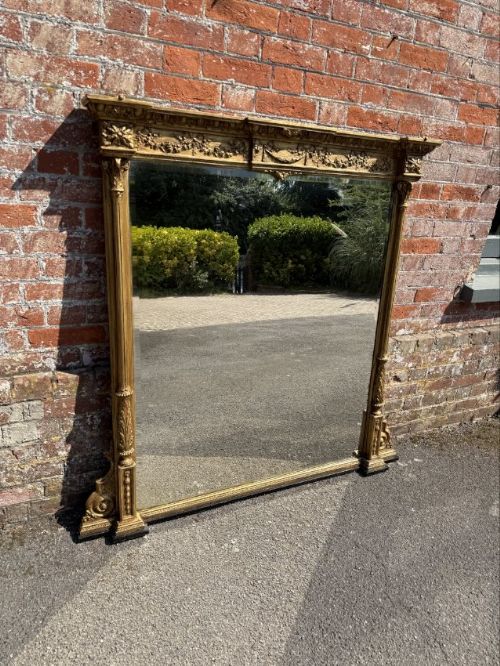
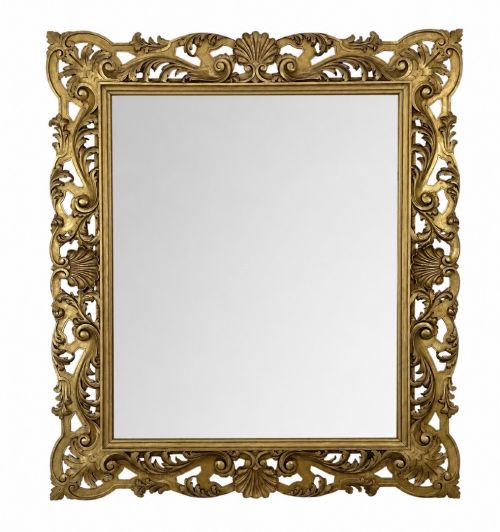
The dominant aesthetic spans nineteenth-century Revival movements, incorporating French Rococo, Regency, and George II influences alongside Edwardian interpretations. Buyers encounter everything from restrained architectural column frames to exuberant Florentine carvings finished in gold leaf and painted accents.
How They Were Made
Carved timber foundations, typically utilising wood, plaster, and gesso, provide the structural relief necessary for intricate ornamental motifs. Craftsmen built up high-relief elements using layers of gesso applied over carved wooden armatures, allowing for deep undercut floral and architectural details.
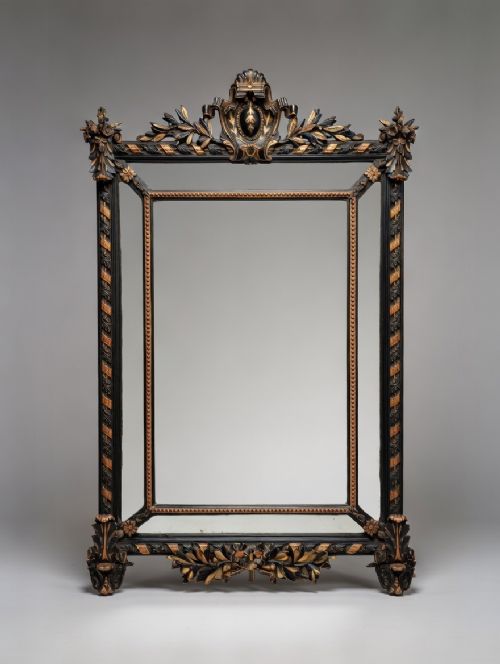
Gilding techniques applied gold leaf directly onto prepared bole grounds, creating the luminous metallic finish characteristic of these frames. Many pieces incorporate painted elements, ebonised sections, or parcel-gilt detailing to contrast the bright gold surfaces against darker or coloured timber grounds.
Reflecting plates of the period frequently exhibit characteristic qualities such as light foxing, indicating original mercury or early silvering processes housed within substantial timber rabbets. Frame construction frequently employs traditional joinery methods suited to supporting heavy glass plates across wide spans.
What Varies in Quality
The crispness and depth of the gesso carving separate mass-produced decorative items from master-carved statement pieces. High-quality mouldings retain sharp undercuts and clear leaf definition, whereas lower grades show softened contours and thick, uniform plaster application.
Surface preservation dictates the visual authority of the piece, particularly the integrity of the original gold leaf relative to later overpainting or heavy restoration. Well-preserved surfaces exhibit natural patination and wear that reveals the reddish bole beneath the gold, whereas unsympathetic re-gilding flattens historical nuance.
Structural scale and architectural proportion distinguish superior frames, notably where original mirror glass plates and heavy backboards remain intact. The sophistication of applied ornamentation, from central cartouches to elaborate floral crests, dictates the overall execution standard.
The Decorative Gold Overmantel Mirror Glossary
- Overmantel mirror
- A large mirror specifically designed or proportioned to be hung on the wall directly above a fireplace mantelpiece. These frames often match the horizontal width of the hearth below.
- Gesso
- A plaster-like mixture applied to wood frames to create a smooth surface for carving or gilding. It allows craftsmen to model intricate high-relief ornamentation before applying gold leaf.
- Trumeau mirror
- A decorative wall mirror combined with a painted panel or carved artwork in the upper section. This French style frequently integrates into wall panelling.
- Foxing
- Small dark spots or cloudy patches that develop within the silvering of antique mirror glass over time. This chemical ageing process is characteristic of authentic period plates.
- Parcel-gilt
- A decorative finish where only specific portions of a wooden or painted object are highlighted with gold leaf. The technique creates contrast against a contrasting painted or ebonised background.
- Pier mirror
- A tall, narrow mirror traditionally hung on the pier wall between two windows. These pieces maximise natural light reflection in period rooms.
Decorative Gold Overmantel Mirror: Frequently Asked Questions
How do I hang a heavy overmantel mirror?
Due to their substantial weight, these large frames require secure fixing directly into masonry walls or substantial timber studs using heavy-duty brackets. Professional installation ensures the structural load distributes safely across the wall fixings.
Many antique frames retain their original iron rings or mounting points on the reverse, though contemporary wall anchors provide the safest support for daily display.
What rooms suit an overmantel mirror?
While traditionally placed above a fireplace in a reception room or drawing room, these large mirrors function effectively on any principal wall to anchor a room layout. Their scale helps bounce natural light deep into darker spaces.
Dining rooms, hallways, and bedrooms also accommodate these statement pieces, provided the wall space allows for their generous vertical or horizontal proportions.
How do I clean antique gold leaf frames?
Dusting gently with a soft, dry ostrich feather brush prevents the accumulation of particulate matter without disturbing fragile gesso or leaf. Avoid using water, liquid cleaners, or chemical solvents on gilded surfaces.
Water can soften historical gesso grounds and permanently damage the delicate metallic finish, making dry maintenance the only safe approach for historic gilding.
How do I identify a Regency overmantel mirror?
Regency frames frequently feature classical architectural motifs such as columns, ball-stud friezes, and gilded convex or rectangular moulding arrangements. The carving tends to reflect a refined neoclassical influence.
Proportions often emphasise horizontal width, and the framing elements display disciplined symmetry compared to the later, more exuberant floral flourishes of the Victorian era.