





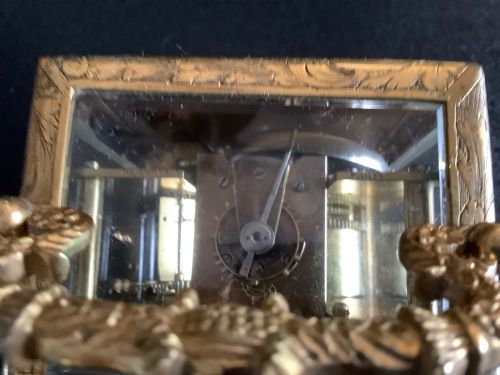

Decorative Gilt Timepiece
A decorative gilt timepiece brings warmth and polished metal sheen to a mantelpiece, combining precise clockwork with elaborate gilded craftsmanship.
Decorative Gilt Timepiece
A decorative gilt timepiece is primarily an ornamental clock driven by mechanical movement, encased in gilded bronze, brass, or ormolu. Buyers seek these pieces for their sculptural presence and the rich golden light they catch in a room. The items found here span the nineteenth century, including Victorian, Edwardian, and Regency periods.
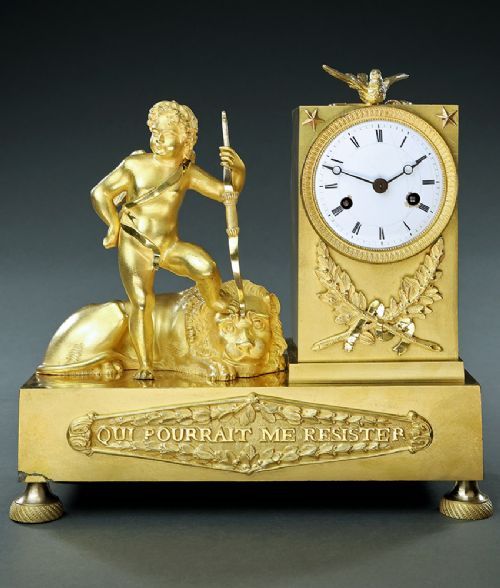
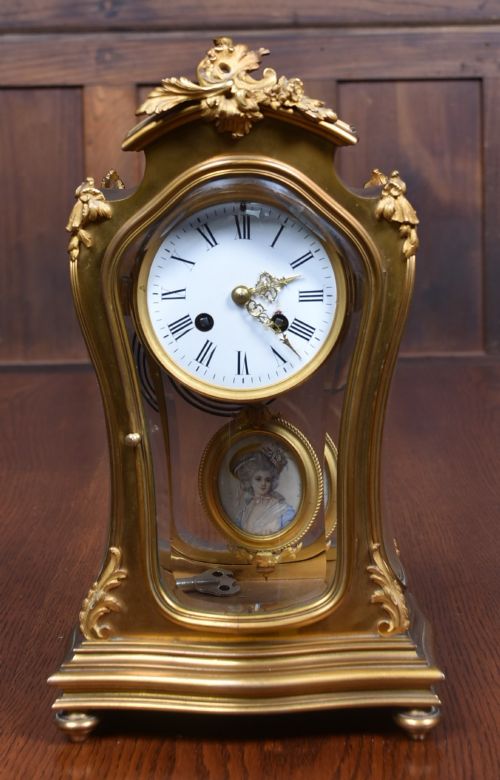
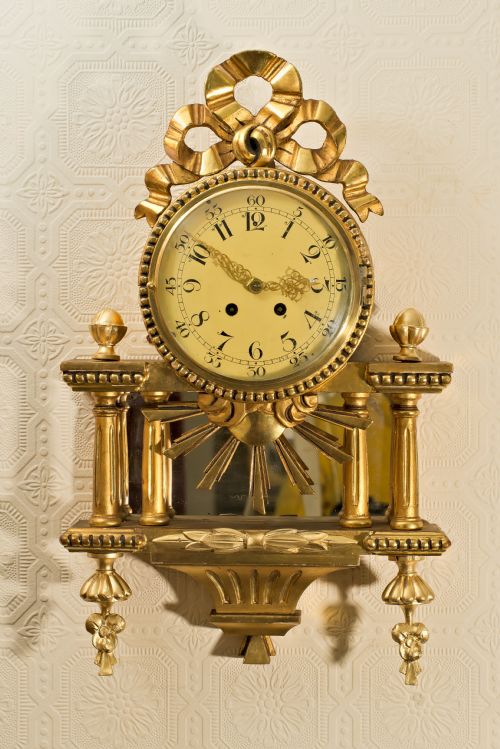
Mantel clocks and carriage clocks dominate the selection, alongside wall-hung cartel clocks, small desk clocks, and pocket watches. Many originate from French workshops, though British makers also appear with fusee movements and architectural cases. Formats range from robust figural sculptures featuring putti and animals to delicate glass-cased regulator clocks.
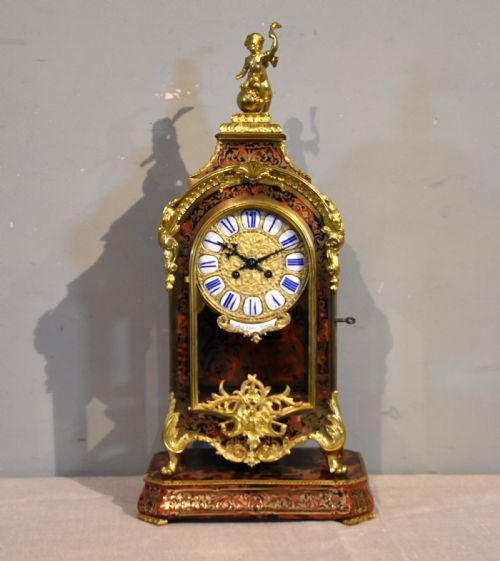
Victorian and nineteenth-century examples often lean into French Rococo, Empire, and Neoclassical revivals. These styles bring theatrical architectural motifs, floral garlands, and classical figures into domestic spaces. A buyer searching this phrase encounters everything from simple brass timepieces on bronze plinths to elaborate champlevé enamel creations.
Materials and construction methods
Makers shaped these cases from cast bronze, brass, and giltwood, applying mercury gilding or modern electroplating to achieve the distinctive golden surface known as ormolu. Surviving pieces frequently combine these metals with contrasting materials like white marble, alabaster, porcelain panels, and clear glass cases.
Enamel dials and hand-painted porcelain components provide the face for the movement, often protected beneath curved glass bezels. Miniature paintings and champlevé enamel work decorate the panels and sides of carriage clocks and strut clocks. Intricate surface engraving finishes the metal panels on higher-tier pieces.
Mechanical movements inside are driven by springs or weights, utilising escapements and pendulum mechanisms. British makers favoured fusee movements to maintain even tension, while French workshops produced eight-day repeating mechanisms and platform escapements for portable carriage clocks.
Listings feature items from the 1850s, 1880s, 1890s, and 1920s, utilising marble, porcelain, glass, and gilt bronze.
Factors determining quality
The integration of the movement with the case signals the standard of production. Makers who signed their dials or movements - such as Henri Jacot, John Bennett, or Le Roy - delivered superior mechanical reliability alongside exceptional cabinet work.
Material selection and secondary decoration elevate certain pieces above standard production. The inclusion of champlevé enamel, signed miniature paintings on porcelain, or fully engraved brass housings separates ordinary clocks from remarkable examples.
Rodier·Le Roy·Wetterstrands·Tiffany·Perivale of England·Hessen Paris·Henri Jacot·John Bennett Cheapside London·Barwise London
The Decorative Gilt Timepiece Glossary
- Ormolu
- Gilded bronze produced through an amalgamation of mercury and gold, or through modern electroplating. This finish gives French mantel clocks their characteristic warm metallic glow.
- Carriage clock
- A portable spring-driven timepiece with a handle, originally designed for travelling. They are housed in brass cases with glass panels to show the internal escapement.
- Cartel clock
- A wall clock enclosed in an ornamental frame made of giltwood or metal. The design typically incorporates scrolling foliage and asymmetrical Rococo elements.
- Fusee
- A conical pulley used in clock movements to equalize the declining power of the mainspring. This mechanism helps the timepiece maintain consistent accuracy over its running cycle.
- Champleve enamel
- A technique where troughs are dug into the metal surface and filled with vitreous enamel before firing. It creates colourful decorative patterns across the clock case.
Decorative Gilt Timepiece: Frequently Asked Questions
What is a decorative gilt timepiece?
A decorative gilt timepiece is an ornamental clock featuring a gilded metal case, designed primarily to enhance a room's interior while keeping accurate time.
These pieces range from small portable carriage clocks to large figural mantel clocks featuring bronze sculptures and marble bases.
How do I wind a mechanical clock?
Mechanical clocks require a specific winding key inserted into the dial holes to tension the internal springs. Care must be taken not to overwind the movement.
Many nineteenth-century examples are eight-day movements, meaning they need attention roughly once a week to run continuously.
Where should I place a mantel clock?
Mantel clocks look best on flat, stable surfaces such as a fireplace mantel, a sideboard, or a dedicated bracket shelf. They need to sit level for the pendulum or escapement to beat evenly.
Keep them away from direct sunlight, damp walls, and heat sources that could dry out delicate wood or crack enamel dials.
How do I tell nineteenth-century styles apart?
Nineteenth-century clocks draw on earlier European movements, with Empire styles showing military and classical Roman motifs, and Rococo revivals featuring asymmetric scrolls and naturalistic foliage.
Victorian pieces often mix these historical references, while Edwardian and later pieces lean towards cleaner architectural lines or novelty desk formats.