




Decorative Garden Urns
These decorative garden urns bring classical form and enduring weight to outdoor spaces, offering structure and historic character.
Decorative Garden Urns
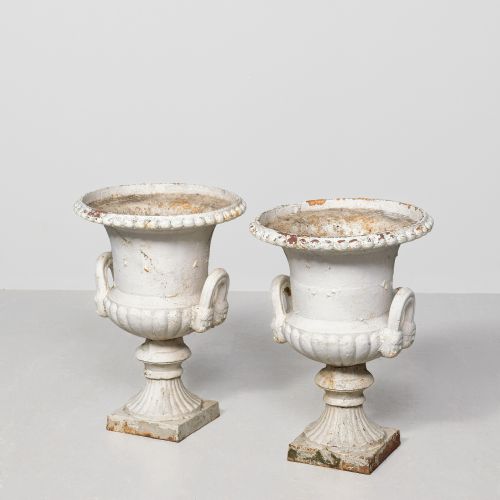
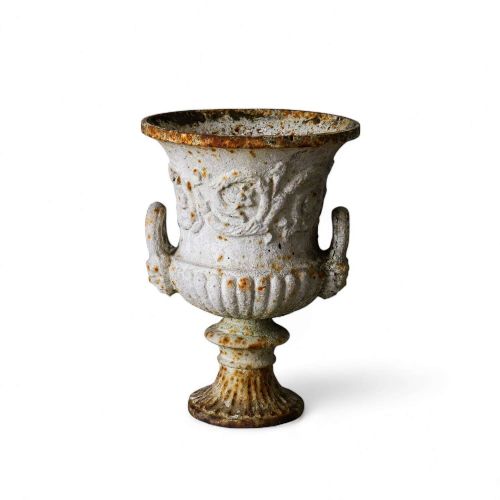
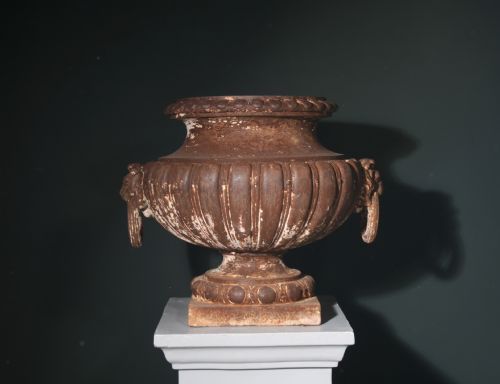
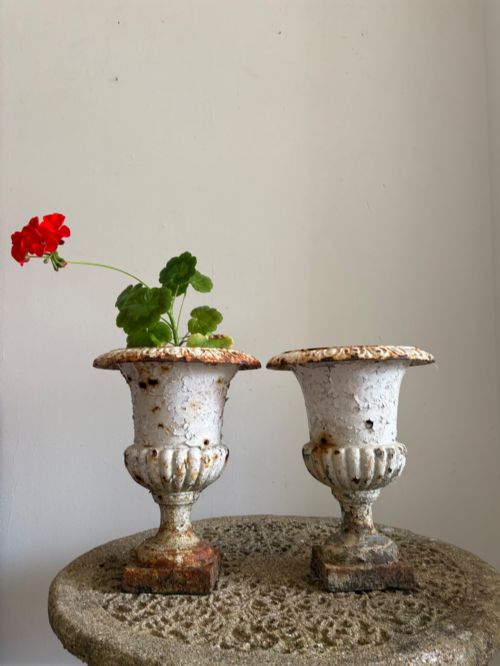
Decorative garden urns are substantial vessels designed for outdoor display, taking forms such as Campagna shapes, tazzas, and classical vases on pedestals. The selection spans the nineteenth century, including Victorian and Edwardian examples alongside French nineteenth century designs.
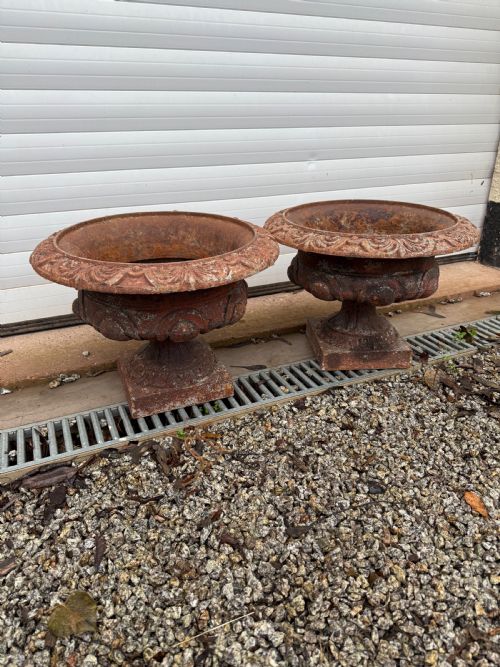
Buyers will most frequently encounter cast iron examples, often shaped as Campana urns or paired planters, alongside earthenware jars and occasional terracotta pieces. These objects serve as focal points for terraces and formal lawns, echoing classical architecture.
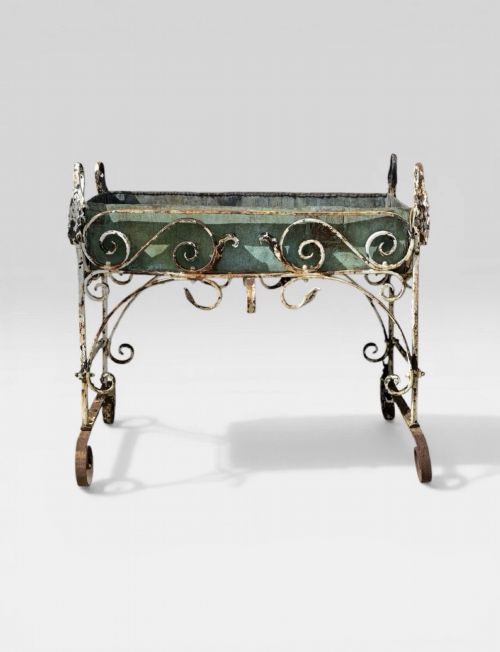
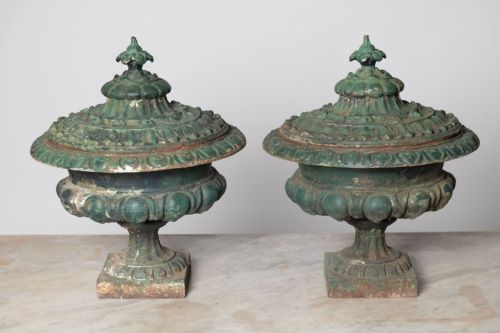
The objects listed range from sturdy garden planters to specific architectural items like finials and covered vases, reflecting both British and French nineteenth century traditions.
Materials and construction
Cast iron serves as the primary medium, shaped in foundry moulds to create heavy, durable garden urns that withstand outdoor exposure. Foundries such as Val d'Osne and makers like Andrew Handyside produced these robust iron vessels.
Terracotta and earthenware provide alternative media, formed into olive jars and glazed vases that bring warmth through natural clay tones. Details are sometimes enhanced with paint or gold leaf to accent the moulded foliage and classical lines.
Decorative Garden Urns Retail Price Guide 2026
Typical asking prices for decorative garden urns among the pieces listed under this phrase on Sellingantiques today, from the lower quarter to the upper quarter. They describe what is for sale here now, not the wider market.
Certain Victorian iron planters take the surprising form of marine shrimp.
Assessing quality
Quality in these vessels rests upon the crispness of the cast ornament, such as acanthus leaf detailing, and the integrity of the metal or clay. Superior pieces display clean lines from the mould and retaining hardware that integrates smoothly.
The presence of original surfaces, including early paint or weathered patination, distinguishes finer examples from later or heavily restored items. Provenance marked by identifiable foundry stamps adds distinct character to the structure.
Andrew Handyside·Val d'Osne Foundry·Hakusan
The Decorative Garden Urns Glossary
- Campana
- A bell-shaped urn form popular in classical design and widely utilised in nineteenth century cast iron garden pieces. This silhouette tapers inward toward a stem before expanding at the foot.
- Tazza
- A shallow cup or vase set upon a pedestal, often used for planting or as a decorative focal point in garden settings. These low, wide vessels draw directly from classical prototypes.
- Finial
- An architectural ornament placed at the apex of a structure, garden feature, or roofline. These single decorative elements provide a definitive terminal point.
- Terracotta
- Fired unglazed clay exhibiting warm earthy hues, frequently utilised for Mediterranean olive jars and garden planters. The material weathers naturally in outdoor environments.
- Wrought iron
- Iron beaten into shape by hand rather than cast in a mould, producing robust and resilient supports and planters. This technique allows for distinctive forged structural details.
Decorative Garden Urns: Frequently Asked Questions
How do I care for cast iron urns?
Cast iron garden urns withstand outdoor conditions well, though monitoring the surface helps manage weathering over time.
Applying protective coatings can assist in preserving original paint layers and preventing deep corrosion.
Are these urns suitable for planting?
Many of these vessels function effectively as garden planters for floral displays or small shrubs.
Checking the interior depth and drainage helps ensure the vessel suits the chosen plants.
How do I distinguish nineteenth century pieces?
Nineteenth century examples typically display the weight, casting methods, and surface patination characteristic of Victorian and French manufacturing.
Foundry marks and classical revival motifs like acanthus leaves further indicate this period.
Can these urns remain outside in winter?
Cast iron and heavy terracotta pieces generally tolerate cold weather if drainage is kept clear.
Protecting earthenware from hard freezes prevents cracking in freezing temperatures.