



Decorative Enamelware
Decorative enamelware brings together colourful vessels and objects adorned in fired vitreous glass, prized for intricate metalwork and vibrant surface patterns.
Decorative Enamelware
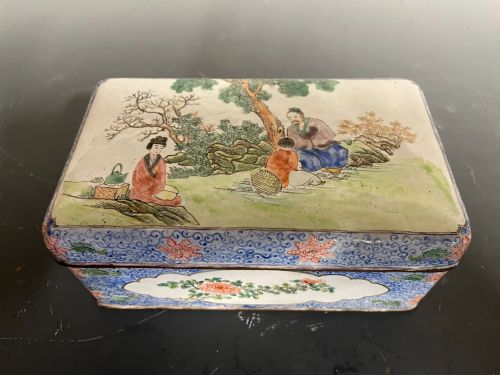
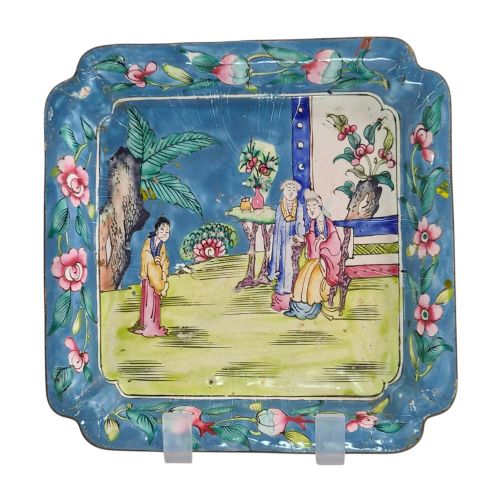
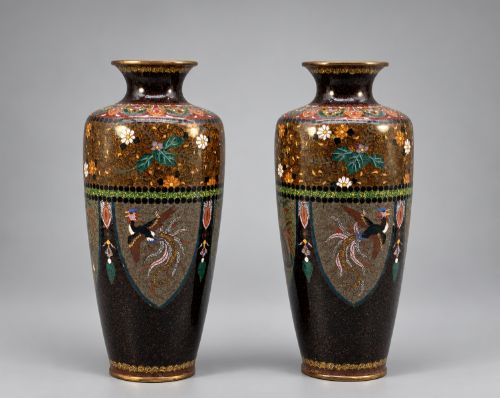
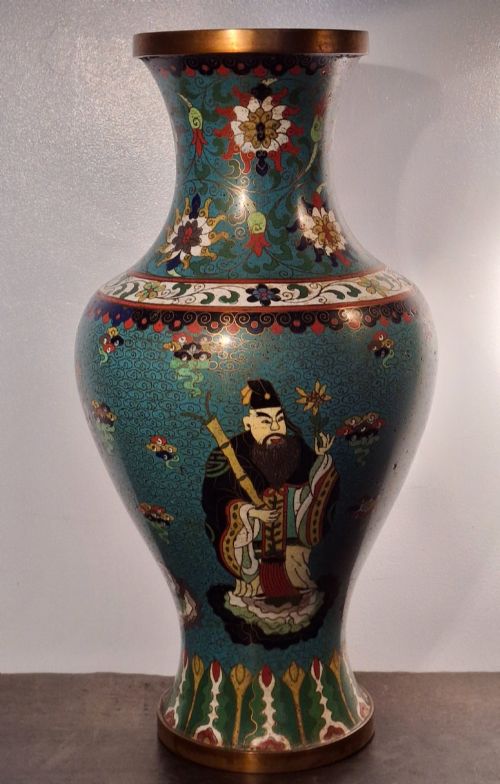
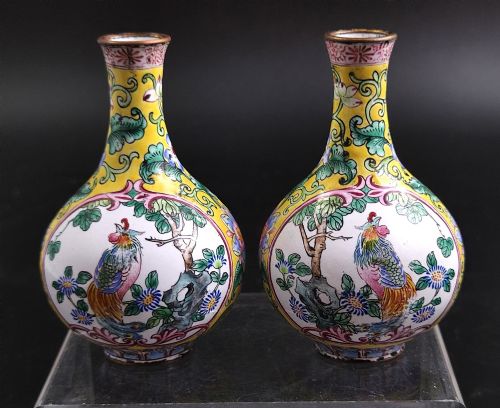
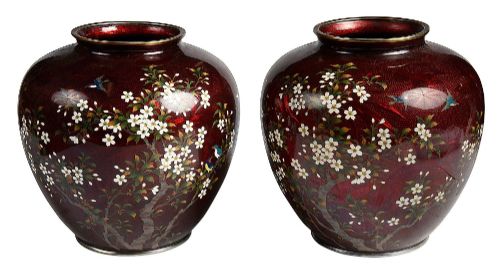
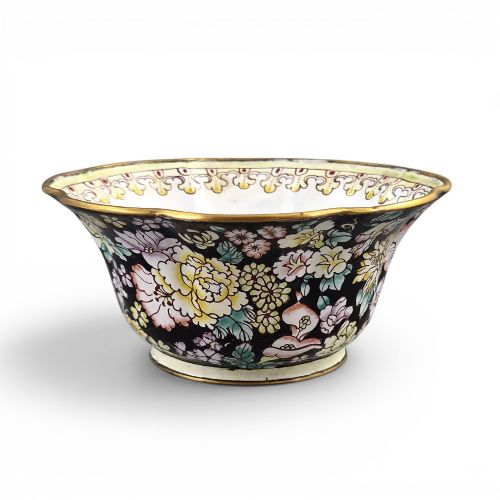
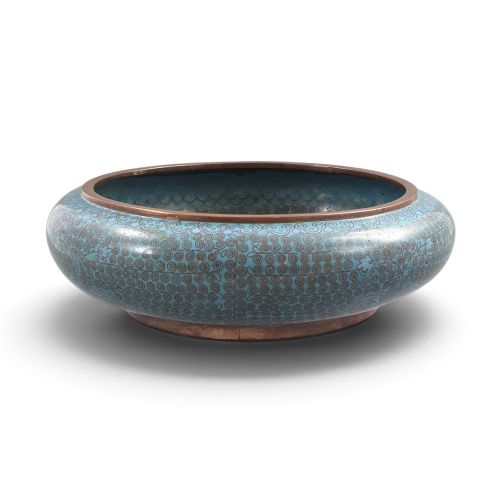
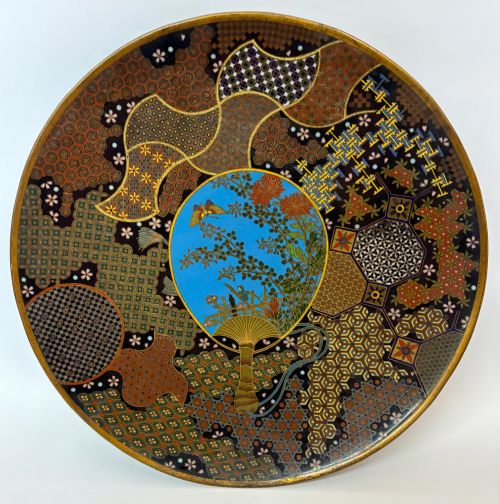
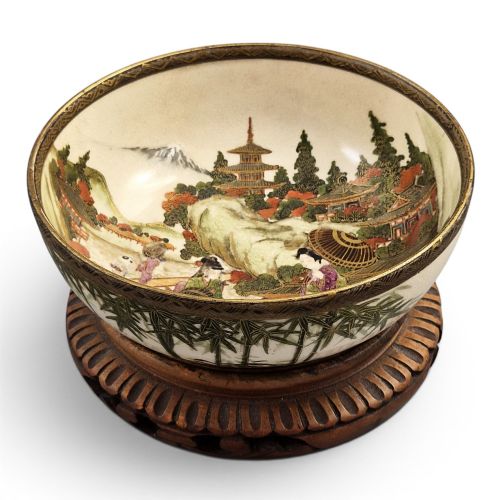
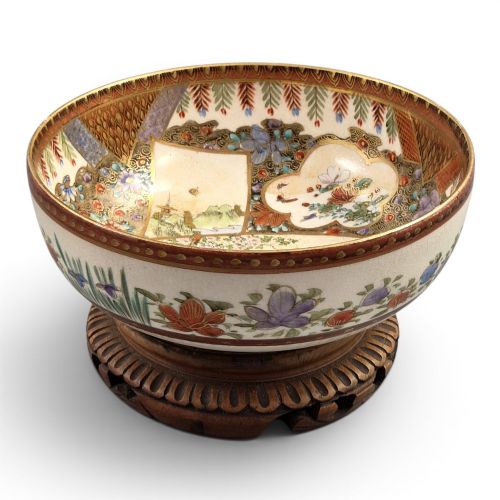
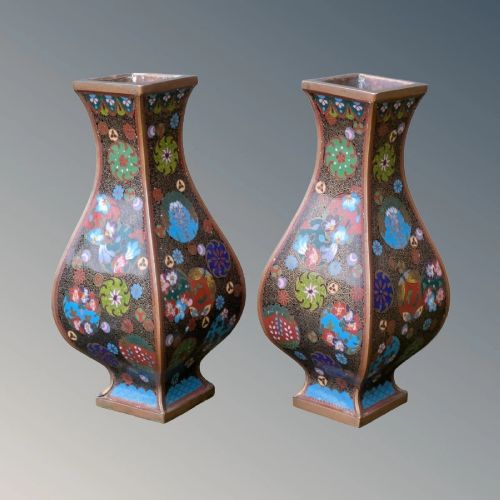
Decorative enamelware comprises vases, dishes, chargers, lidded jars and smaller items such as snuff boxes and ashtrays, formed from copper, brass or earthenware bodies fused with coloured glass. Buyers exploring this category will predominantly encounter pieces originating from Japanese Meiji and Edo periods, alongside Chinese Qing and Beijing workshops.
Forms range from miniature cabinet vases to large chargers decorated with motifs of birds, dragons, flowers and scholars. The selection spans the eighteenth, nineteenth and early twentieth centuries, capturing shifts in technique across Asian export wares and Georgian Bilston pieces.
How they were made
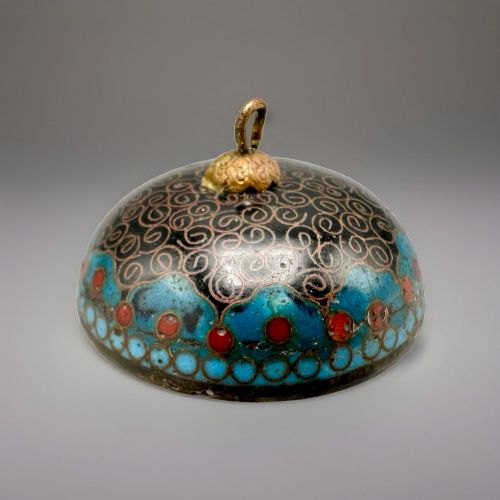
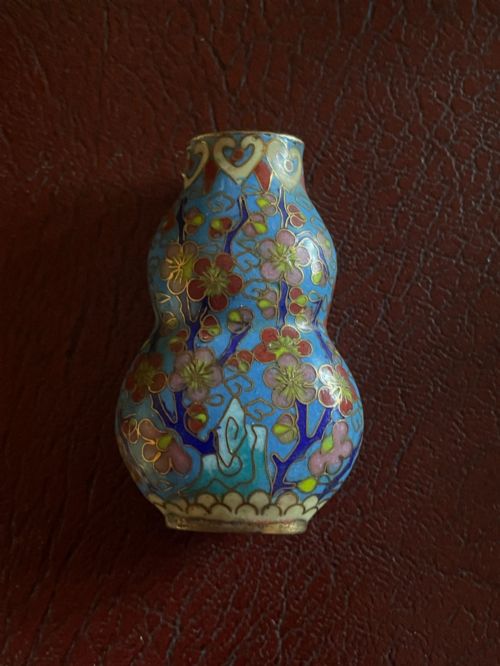
Craftsmen built designs upon metal bases of copper or bronze by soldering thin metal wires to form cells, known as cloisons, which were subsequently filled with coloured enamel pastes and fired in a kiln. Other techniques involved direct painted enamel on copper surfaces or applying gold leaf highlights to earthenware and pottery bodies.
The finished objects underwent multiple firings and surface polishings to achieve smooth textures that integrated the metal framing with vitreous glass colours.
Decorative Enamelware Retail Price Guide 2026
Typical asking prices for decorative enamelware among the pieces listed under this phrase on Sellingantiques today, from the lower quarter to the upper quarter. They describe what is for sale here now, not the wider market.
Listings feature copper, brass and bronze materials paired with cloisonne and painted enamel techniques from nineteenth-century Japan and China.
What varies in quality
Quality rests upon the precision of the wirework and the density of the enamel fill, where finer pieces display microscopic cell division and even coloration without pitting. Superior examples exhibit balanced pictorial compositions, such as detailed figures, birds and flora rendered with clear contrasts against the ground.
The weight of the underlying copper or bronze body and the crispness of the finishing work distinguish master workshop production from standard commercial output.
Kozan
The Decorative Enamelware Glossary
- Cloisonne Enamel
- A decorative metalwork technique where fine wires form raised partitions to hold coloured glass pastes before kiln firing.
- Charger
- A large decorative plate intended for display rather than table service.
- Meiji Period
- The era of Japanese history spanning from 1868 to 1912, noted for technical mastery in metal arts and ceramics.
- Beijing Enamel
- Painted enamelware produced within imperial Chinese workshops during the Qing dynasty.
- Suigaraake
- A traditional Japanese term for a receptacle used as an ashtray or smoker's bowl.
Decorative Enamelware: Frequently Asked Questions
What is decorative enamelware?
Decorative enamelware consists of metal and ceramic vessels fused with vitreous glass coatings to create colourful surface patterns and pictorial scenes.
These pieces include vases, bowls, plates and small boxes produced across Asian and European workshops.
How do I care for antique enamelware?
Clean enamelware gently with a dry or slightly damp soft cloth to preserve the polished glass and metal surfaces.
Avoid chemical cleaners, abrasive cloths and prolonged exposure to direct sunlight or moisture.
What periods do these pieces come from?
The listings span from the eighteenth century up to the early twentieth century, incorporating Georgian English boxes alongside Japanese Meiji and Chinese Qing works.
Nineteenth-century items form a large portion of the available material.