

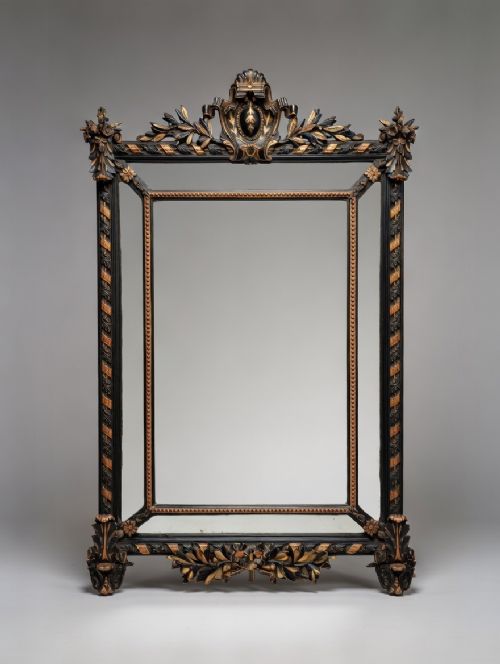
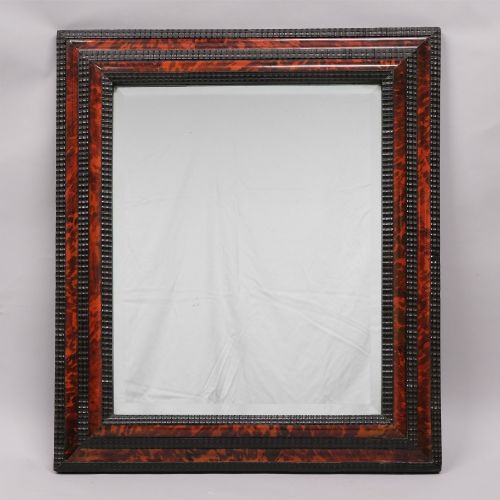
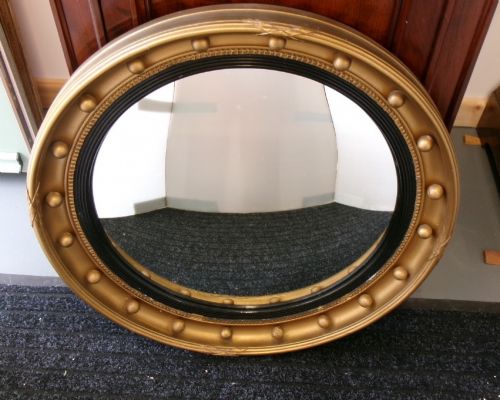
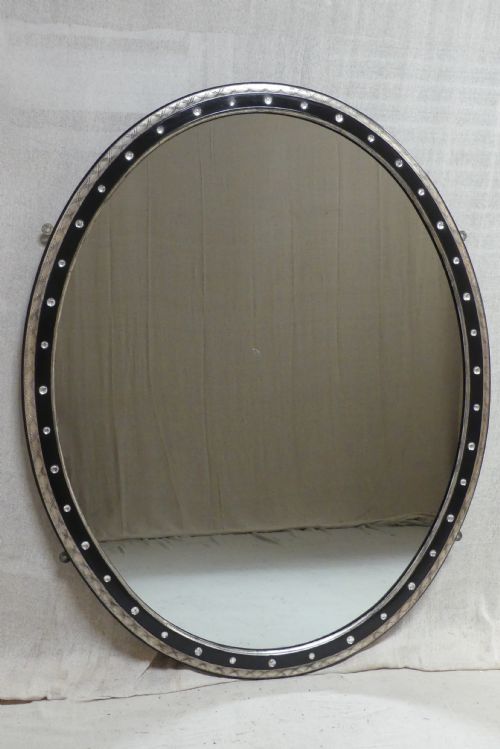


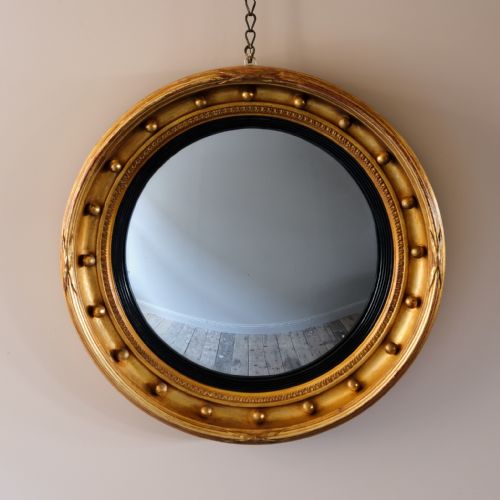


Decorative Ebonised Wall Mirror
A decorative ebonised wall mirror brings dark, striking contrast and deep historic character to an interior.
Decorative Ebonised Wall Mirror
The selections span several periods, with nineteenth-century examples forming the core of the current offerings. Buyers will encounter Victorian, Regency, and Edwardian interpretations alongside distinct Aesthetic Movement and Flemish Revival styles.
Formats vary significantly from traditional rectangular overmantels to convex porthole mirrors and tall narrow pier glasses. Each piece reflects the interior design priorities of its era, combining dark wood finishes with contrasting highlights.
Materials and construction
Frames are constructed from wood finished with ebonising techniques to simulate ebony, often paired with gesso and gold leaf to create parcel-gilt details. Artisans applied successive coats of dark stain or black paint, then rubbed back the surfaces to reveal underlying metallic highlights.
Mirror glass plates from the nineteenth and early twentieth centuries show characteristic silvering variations and occasional hand-etched or engraved patterns. Convex glasses required specialised blowing and cooling techniques to achieve the curved, wide-angle reflection seen in porthole and sorcerer mirrors.
Listings feature eighteenth, nineteenth, and early twentieth-century pieces, spanning Regency, Victorian, and Edwardian periods.
Assessing quality and craftsmanship
Quality in a decorative ebonised wall mirror is determined by the depth of the carved ornamentation and the crispness of the parcel-gilt detailing. Superior examples display meticulously shaped frames where the contrast between the dark wood and the gold leaf remains sharp and balanced.
The integrity of the original mirror glass and the stability of the wooden substrate distinguish finer works from simpler utilitarian pieces. Original backboards, intact gesso mouldings, and minimal distortion in the reflective surface indicate superior original manufacture.
The Decorative Ebonised Wall Mirror Glossary
- Ebonised
- Wood treated with stain, dye, or paint to imitate expensive ebony. This dark finish became popular in furniture and frames during the Victorian and Aesthetic Movement periods.
- Parcel-gilt
- Partially gilded woodwork where gold leaf or paint highlights specific carved details against a contrasting background. It creates a rich visual interplay between dark surfaces and bright metallic accents.
- Convex mirror
- A round mirror with a bulging spherical glass surface that provides a wide panoramic reflection of the room. Often called a porthole or sorcerer mirror, these designs frequently incorporate eagle crests and candle sconces.
- Overmantel mirror
- A large horizontal mirror designed specifically to hang on the wall above a fireplace mantelpiece. These pieces often anchor the decorative scheme of a nineteenth-century drawing room.
- Gesso
- A plaster-like mixture applied to wooden frames as a smooth base for gilding and carving. Its application allows artisans to form intricate low-relief decorative motifs.
Decorative Ebonised Wall Mirror: Frequently Asked Questions
How do I hang a heavy overmantel mirror?
Heavy overmantel mirrors require secure wall fixings anchored directly into structural studs or masonry rather than standard plasterboard hooks. Professional mirror hanging hardware distributed across multiple weight-bearing points ensures safety.
Because these frames often feature substantial wooden structures and thick glass plates, checking the integrity of the original hanging loops on the back is an essential first step before installation.
Where should I place a convex wall mirror?
Convex mirrors excel in smaller spaces, hallways, or opposite windows because their curved glass captures and disperses light across the entire room. Placing them at eye level maximises their unique panoramic visual effect.
Avoid hanging them in direct, harsh sunlight that might intensify reflections or accelerate the ageing of the antique silvering on the glass plate.
How do I clean an antique ebonised frame?
Dust the ebonised frame gently with a soft, dry microfibre cloth to remove surface particles without disturbing the aged finish. Avoid commercial chemical polishes or water, which can damage old gesso and strip the delicate ebonised coatings.
For the glass plate, apply a mild glass cleaner to a cloth rather than spraying directly onto the mirror, preventing liquid from seeping behind the frame edges.
What defines Aesthetic Movement mirror design?
Aesthetic Movement mirrors emphasise artistic refinement and simplicity, drawing inspiration from Japanese design motifs and natural forms. These pieces reject heavy Victorian clutter in favor of clean lines and harmonious proportions.
The frames often combine ebonised surfaces with subtle gilt highlights, reflecting a late nineteenth-century philosophy focused on visual beauty over ornate utility.