





Decorative Display Tray
A decorative display tray brings surface and pattern to a room, offering a neat stage for cabinet china or visiting cards.
Decorative Display Tray
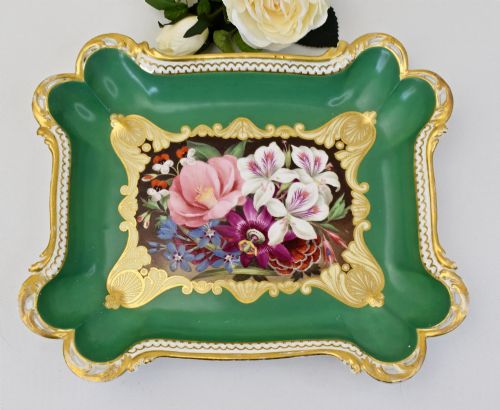
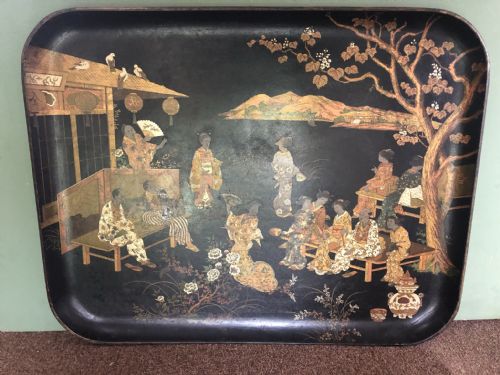
A decorative display tray spans domestic forms from the mid-eighteenth century to the art deco era, encompassing shallow chargers, cabinet dishes, and etagere table inserts. These pieces emerge from diverse traditions, including English porcelain, Japanese cloisonne enamel, and Scottish art pottery, designed primarily for visual effect rather than heavy service.
The selection ranges from Victorian porcelain plaques and brass Chinese plates to Liberty & Co pewter serving trays and opalescent glass salvers. Makers applied these surfaces to varied settings, utilising the form to display intricate floral painting, figural battle scenes, or moulded aquatic motifs.
Makers shaped these items across distinct periods, showing the heavy influence of the arts and crafts movement, rococo revival, and art deco design. Each variation relies on its specific material ground, whether lacquer, ceramic, or metal, to achieve its distinct profile.
Assessing quality
Quality rests upon the crispness of the modelled or chased detail, particularly where metalwork borders or handles meet the main body of the tray. Hand-painted ceramic pieces reveal distinction through the confident brushwork of specialised artists rather than mechanical uniformity.
The integrity of the material ground dictates the lasting stability of the piece, whether seen in the depth of opalescent glass, the tight bonding of enamel wires, or the smooth execution of lacquer finishes. Greater refinement appears when the maker's hand remains evident in every contour without relying on excessive embellishment.
Decorative Display Tray Retail Price Guide 2026
Typical asking prices for decorative display tray among the pieces listed under this phrase on Sellingantiques today, from the lower quarter to the upper quarter. They describe what is for sale here now, not the wider market.
Listings feature ceramics, glass, and metals spanning the eighteenth, nineteenth, and early twentieth centuries.
Doe & Rogers·Liberty & Co·Rene Lalique·Royal Doulton·S Duncomb
The Decorative Display Tray Glossary
- Charger
- A large decorative plate or dish, traditionally used on sideboards or as a base for other service pieces.
- Cloisonne
- An enamel technique where metal wire is soldered to a base to form compartments filled with vitreous paste.
- Salver
- A flat tray, usually of metal or glass, used historically for presenting items or as a decorative centrepiece.
- Etagere
- A piece of furniture with open shelves for displaying small objects, often incorporating removable trays.
- Opalescent glass
- Glass that diffuses light with a milky, milky-blue or fire-opal appearance, popular in early twentieth-century design.
Decorative Display Tray: Frequently Asked Questions
What is a decorative display tray?
A decorative display tray is a shallow dish or plate made for visual presentation rather than active dining or heavy carrying. These pieces highlight specific materials like porcelain, bronze, pewter, or glass.
They function as independent works of art or as surfaces to group smaller cabinet objects together on furniture.
How were these trays used historically?
Historically, these trays rested upon sideboards, etagere tables, or walls to demonstrate household taste and appreciation for fine craftsmanship. Metal chargers and ceramic cabinet dishes acted as focal points in formal rooms.
Smaller trays held visiting cards or served as ornamental accents on occasional tables.
How do I live with a display tray?
Living with these pieces involves placing them on secure, flat surfaces away from heavy traffic where they might be knocked. Metal and ceramic versions require minimal dusting, while glass and lacquer pieces benefit from gentle care.
Wall-mounted chargers need secure fixings designed to support their specific weight safely.
How do I tell different periods apart?
Periods reveal themselves through stylistic clues, such as the naturalistic floral motifs of the Victorian era or the geometric symmetry of art deco design. Material choices and manufacturing marks also anchor pieces in time.
Weights and finishes, from hand-hammered arts and crafts copper to refined porcelain painting, point directly to their era of origin.