

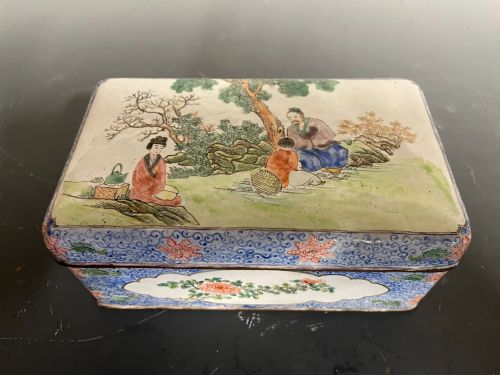


Decorative Copper Box
These decorative copper box examples bring together centuries of metalwork skill and practical utility.
Decorative Copper Box
A decorative copper box brings together metalwork from various periods, ranging from the eighteenth century to the mid twentieth century. Buyers seeking a decorative copper box will encounter forms such as snuff boxes, patch boxes, coal receivers, and desk accessories.
The selection includes pieces created in different international traditions, encompassing Georgian Bilston enamels, Japanese Meiji cloisonne lidded gourd pots, and British Arts and Crafts metalwork. These items serve both ornamental and functional purposes in domestic interiors.
Victorian and twentieth-century examples frequently combine copper with wrought iron or enamel decoration to create sturdy fireside accessories and desktop items. Each object reflects the prevailing design ethos and manufacturing methods of its respective era.
Materials and construction methods
Makers utilised copper alongside brass, gilt metal, and wrought iron to construct these vessels. Enamel and vitreous enamel embellish the surfaces of eighteenth-century boxes, while later pieces rely on copper plating and patination.
Craftsmen shaped the metal through hammering, joining, and mounting techniques suited to the specific form, whether a small patch box or a large coal scuttle. Iron elements provide structural support in fireside pieces, contrasting with the malleability of copper.
Decorative Copper Box Retail Price Guide 2026
Typical asking prices for decorative copper box among the pieces listed under this phrase on Sellingantiques today, from the lower quarter to the upper quarter. They describe what is for sale here now, not the wider market.
One novelty biscuit tin was ingeniously produced to look like an Indian carved hardwood box.
Distinctions in craftsmanship and finish
Quality rests in the precision of the metalwork joints, the crispness of surface decoration, and the preservation of original patination. Hand-hammered Arts and Crafts items demonstrate individual tool marks that distinguish them from mass-produced wares.
The application of enamel and the integration of mixed media, such as wrought iron fittings on coal receivers, dictate the overall standard of execution. Well-preserved surfaces retain their structural integrity and decorative details without excessive modern intervention.
Hunter and Palmer·Tahan of Paris
The Decorative Copper Box Glossary
- Bilston enamel
- A type of vitreous enamel on a copper base produced in Staffordshire during the eighteenth century. These small boxes often feature hinged lids and painted pastoral scenes.
- Cloisonne
- A technique where enamel paste is applied within compartments created by soldering flat metal wire to a metal body. Japanese Meiji pieces demonstrate this method.
- Perdonium
- A Victorian coal container designed for domestic hearths, often constructed from copper combined with iron. These items kept fuel neatly stored near the fire.
- Patch box
- A small container used in the eighteenth and nineteenth centuries to hold cosmetic patches for the face. They typically feature hinged lids with interior mirrors.
Decorative Copper Box: Frequently Asked Questions
What are decorative copper boxes used for?
These items served various practical and ornamental functions throughout different centuries, ranging from holding small personal accessories to storing coal by the fireplace.
Smaller examples like snuff boxes and patch boxes accommodated personal items, while larger vessels managed hearth duties.
How do I care for antique copper?
Maintenance involves keeping the metal dry and free from abrasive cleaning products that can damage the original surface and patination.
Gentle dusting preserves the historical finish without stripping away the character accumulated over decades of use.
How do I date an antique copper box?
Dating relies on observing construction techniques, stylistic markers, and the specific materials paired with the copper, such as vitreous enamel or wrought iron.
Comparing the form and manufacturing stamps to documented historical periods helps establish an approximate timeline.
Are these boxes made entirely of copper?
Many pieces incorporate secondary materials like wrought iron, brass, wood, or enamel alongside the primary copper body.
Fireside items frequently utilise iron for structural strength, while eighteenth-century boxes feature copper as a base for intricate enamelwork.