


Decorative Cast Iron Plate
These decorative cast iron plate items are heavy architectural fittings and hearth pieces built to last centuries in iron.
Decorative Cast Iron Plate
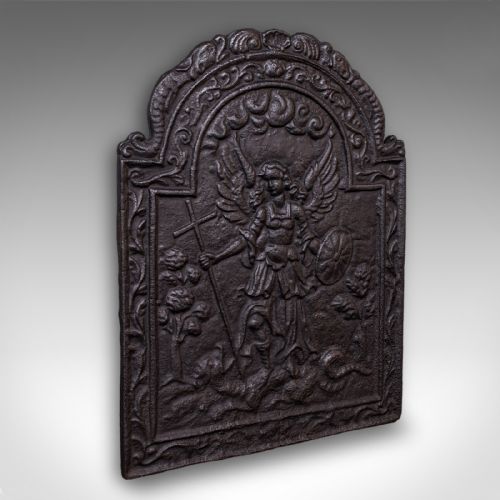
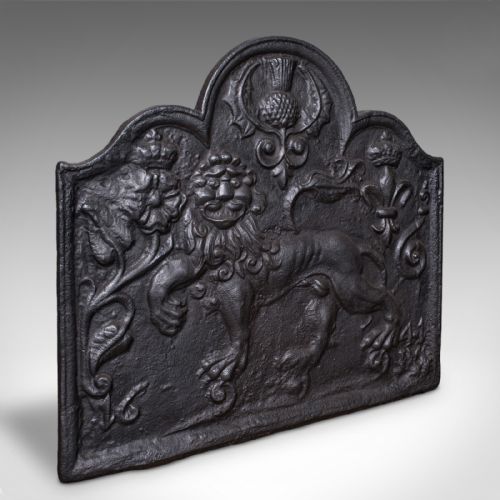
A decorative cast iron plate search covers robust ironwork spanning several centuries of British and continental design. You will most frequently encounter Victorian firebacks and ceiling roses on this page, alongside earlier and later examples.
The selection ranges from large fireplace accessories and firebacks designed to radiate heat to architectural salvage pieces like ceiling roses and pierced chargers. These objects combine practical utility with heavy surface decoration.
Origin points visible in the evidence stretch from seventeenth-century works up to early twentieth-century Russian foundry pieces, showing diverse applications for cast iron in domestic and institutional settings.
How they were made
These items rely entirely upon cast iron, poured into moulds to capture intricate relief work, foliage, and heraldic or architectural motifs. The heavy weight of the metal allowed makers to produce deep textures and robust structural forms.
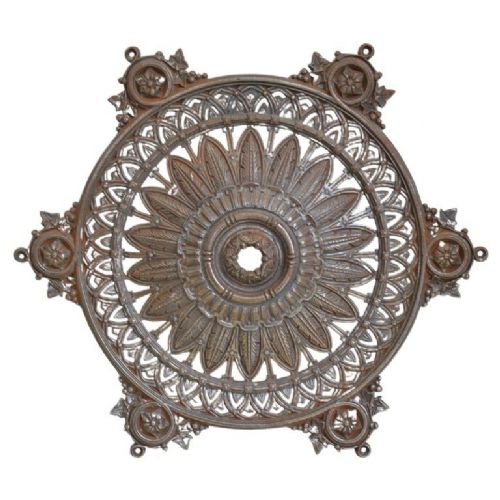
Surface finishing methods and foundry techniques varied according to the era, yielding everything from smooth classical ceiling roses with feather and leaf details to deep rustic firebacks intended for substantial hearths.
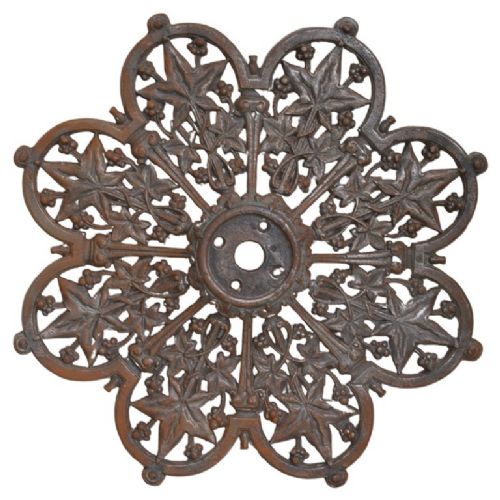
Several plates feature detailed ivy and feather motifs designed to bring botanical life into heavy industrial iron.
What varies in quality
Quality in these iron objects rests upon the crispness of the cast relief and the depth of the moulded details, such as ivy leaves, feathers, or baroque ornamentation. Sharper definition in the iron indicates a superior mould and a more skilled foundry process.
The heaviness and integrity of the iron plate itself also distinguish standard utilitarian items from finer decorative plaques, chargers, and architectural salvage pieces produced by notable foundries.
Kasli Foundry
The Decorative Cast Iron Plate Glossary
- Fireback
- A heavy iron plate placed at the back of an open hearth to protect the masonry and reflect heat into the room. These often feature elaborate relief designs.
- Ceiling Rose
- A decorative circular moulding fixed to a ceiling, frequently cast in iron with botanical motifs such as ivy or feathers.
- Pierced Charger
- A large decorative plate featuring openwork or pierced metal patterns, produced by specialist foundries.
- Architectural Salvage
- Building elements recovered from older structures, including heavy iron plates and ceiling fixtures.
- Relief
- Sculptural projection from a flat surface, defining the botanical and architectural patterns found on these iron plates.
Decorative Cast Iron Plate: Frequently Asked Questions
What is a decorative cast iron plate used for?
These items serve primarily as functional hearth protection or architectural ornamentation. Firebacks sit inside fireplaces to radiate heat and shield the wall behind.
Ceiling roses and decorative plaques are fitted directly onto architectural surfaces to ornament rooms with botanical or classical motifs.
How do I date a cast iron plate?
Dating relies upon stylistic markers, foundry stamps, and recorded periods such as Victorian, Georgian, or the seventeenth century. Heavy relief styles and specific botanical motifs often point to particular decades.
Comparative study of foundry catalogues helps narrow down the period of manufacture for unmarked architectural salvage and hearth pieces.
Are these iron plates very heavy?
Yes, these items are cast from solid iron and possess significant weight, particularly the large firebacks and architectural chargers. Their mass is essential for durability and heat retention.
Buyers should ensure proper wall or hearth support when installing these heavy iron pieces in a home.
Where were these iron pieces made?
The listings show English manufacture alongside continental examples, including Imperial Russian work from specific foundries. Regional foundry traditions dictated the style of decoration.
Local ironworks produced standard fireplace accessories, while specialised foundries created pierced chargers and intricate ceiling roses.