
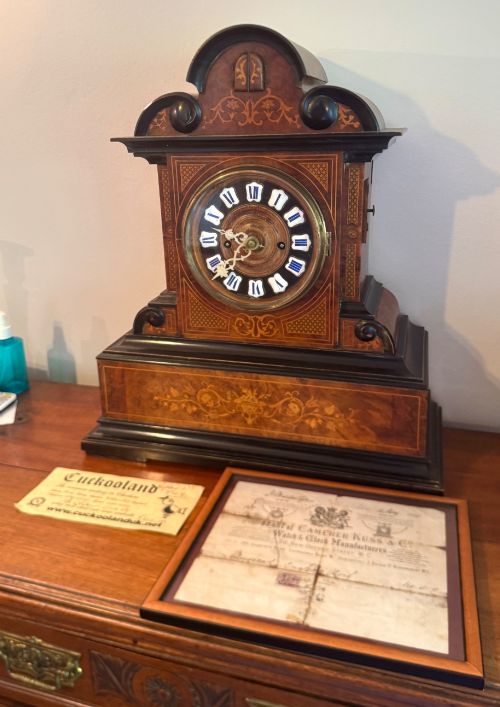
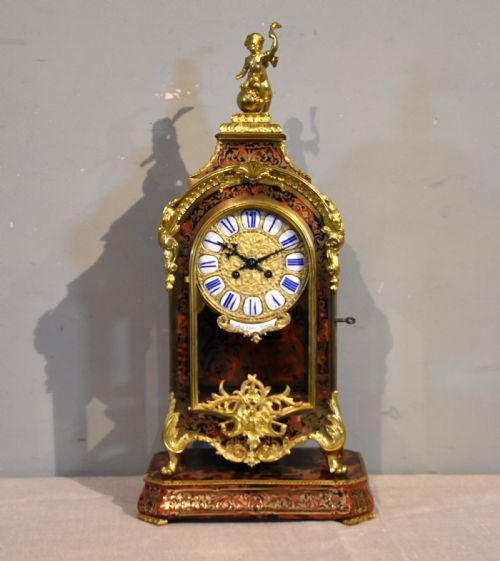




Decorative Bracket Clock
A decorative bracket clock brings the weight of brass, mahogany and ormolu into a room, marking time through centuries of precise mechanical craft.
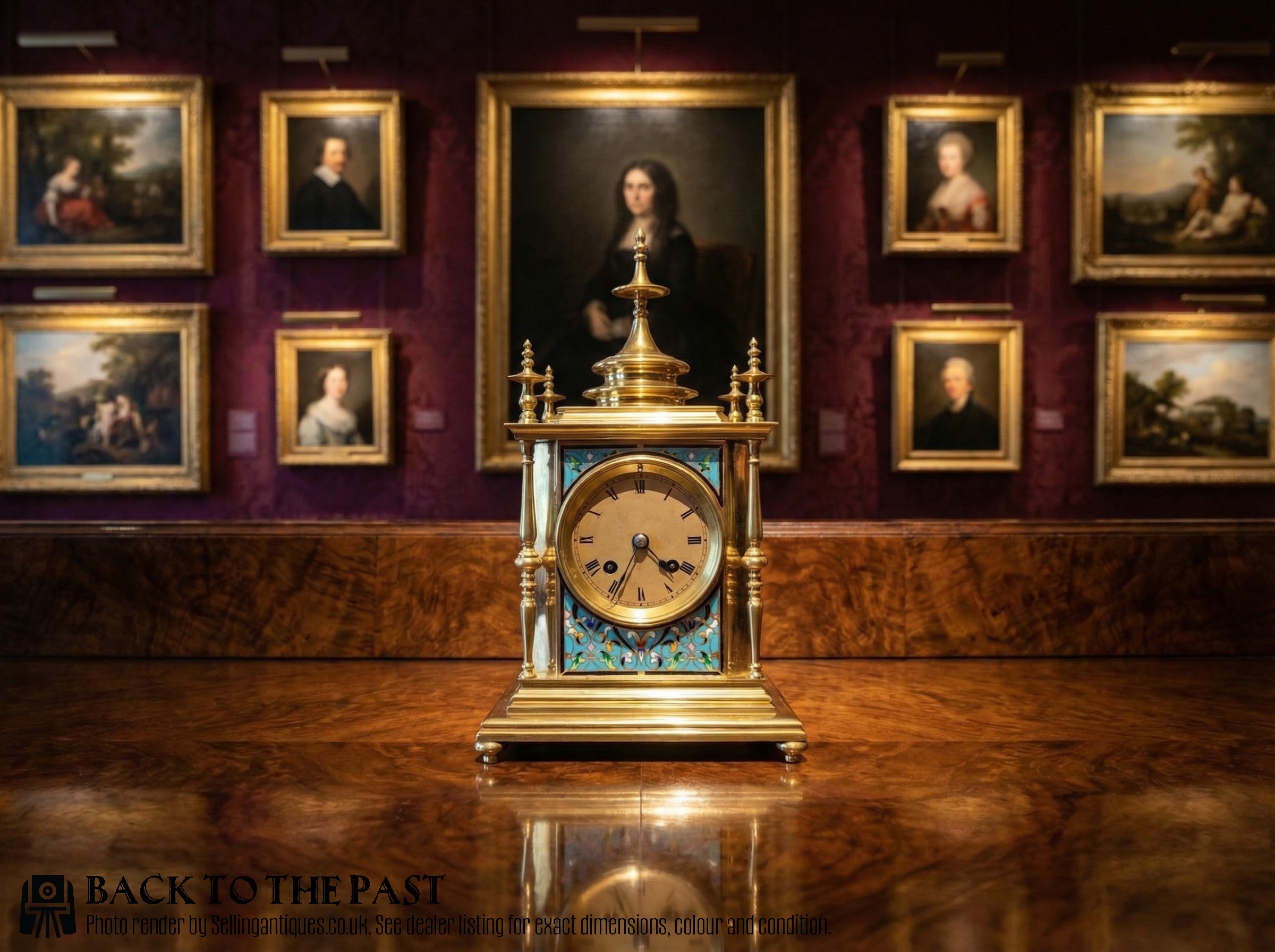
Decorative Bracket Clock
A decorative bracket clock sits on a table, shelf or dedicated wall bracket, operating as both a precise timekeeper and a centrepiece of interior design. When searching for a decorative bracket clock, buyers encounter nineteenth-century pieces alongside earlier eighteenth-century examples and later revivals.
The selection ranges from French Boulle work in tortoiseshell and cut brass to English mahogany fusee movements and elaborately cast ormolu. Victorian interpretations and Louis XIV or French Rococo styles dominate the forms, reflecting centuries of European horological ambition.
How They Were Made
Makers utilised dense timbers such as mahogany, walnut and ebonised wood to form the structural cases, often incorporating intricate marquetry or applying tortoiseshell and faux tortoiseshell veneers. Metalwork played an equally vital role, with cast ormolu mounts and champlevé enamel dials adding rich visual texture to the wooden carcasses.
Movements relied on complex mechanical engineering, notably fusee systems designed to equalise the pull of the mainspring for accurate timekeeping. Brass components, glass bezels and hand-carved oak further demonstrate the diverse materials combined by period workshops.
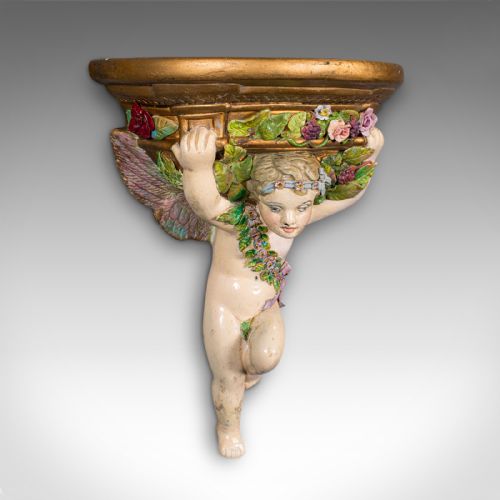
Cupid occasionally oversees your minutes, lingering in cast ormolu on nineteenth-century French clock cases.
What Varies in Quality
The refinement of the casting and the depth of the case ornamentation set exceptional pieces apart from standard examples. Hand-carved details, finely chiselled ormolu mounts and intricate Boulle marquetry reveal the artisan's hand more clearly than pressed metal or plain wood.
The integrity of the movement, the quality of the enamel dial and the harmonious preservation of original veneers dictate the standing of a piece. Works associated with known makers or bearing distinct regional characteristics command greater attention from serious collectors.
Seller of Reading·John Leroux London·Winterhalder Hofmeier·Payne London·Henri Dasson
The Decorative Bracket Clock Glossary
- Bracket clock
- A portable timekeeper originally designed to sit upon a wall bracket to aid projection of sound and visibility. These clocks evolved to stand independently on mantels and tables while retaining their traditional name.
- Fusee
- A conical pulley used in spring-driven clocks to maintain equal power as the mainspring unwinds. This mechanism ensures consistent timekeeping across the duration of the wind.
- Boulle
- A method of marquetry utilising brass and tortoiseshell inlaid in contrasting patterns, named after the famous French cabinetmaker. It brings a shimmering, reflective quality to clock cases.
- Ormolu
- Gilded bronze used extensively for decorative mounts on furniture and clock cases during the eighteenth and nineteenth centuries. The technique involves applying a mercury and gold amalgam to cast bronze.
- Champlevé
- An enamelling technique where troughs or cells are carved into a metal surface and filled with vitreous enamel before firing. It creates vibrant, colourful patterns across dials and bezels.
Decorative Bracket Clock: Frequently Asked Questions
What is a bracket clock?
A bracket clock is a portable mechanical timekeeper housed in a decorative wooden or metal case. They were originally designed to sit on a matching wall bracket.
Over time, many came to rest directly on mantelpieces or tables while keeping their traditional name.
How do fusee movements work?
A fusee movement uses a conical pulley connected to the mainspring via a fine chain or cord. As the spring loses tension, the chain pulls on a wider part of the cone to maintain steady power.
This clever mechanical device ensures the clock keeps accurate time throughout its entire running cycle.
What is Boulle work?
Boulle work is an elaborate marquetry technique involving tortoiseshell and brass cut together in contrasting negative and positive patterns. It was perfected in France and heavily revived during the nineteenth century.
This technique gives clock cases a rich, shimmering surface texture that catches the light.
Where should I place my clock?
These clocks suit stable surfaces away from direct sunlight, excessive moisture and sudden temperature changes. Placing them on a sturdy mantelpiece, sideboard or secure wall bracket protects the delicate mechanical movements.
Ensuring the surface is level helps the pendulum swing evenly and keeps the clock ticking reliably.