

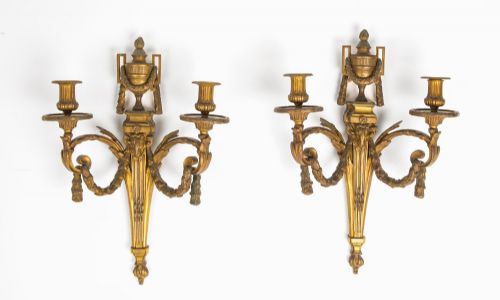


Decorative Wall Lights
These decorative antique wall lights bring warmth and character to a room, offering functional illumination paired with historical craftsmanship.
Decorative Wall Lights
Decorative antique wall lights encompass a variety of fixtures designed to mount onto vertical surfaces, providing ambient or task illumination. Buyers exploring this category encounter numerous matched pairs and sets originating from French, Italian, and British workshops.
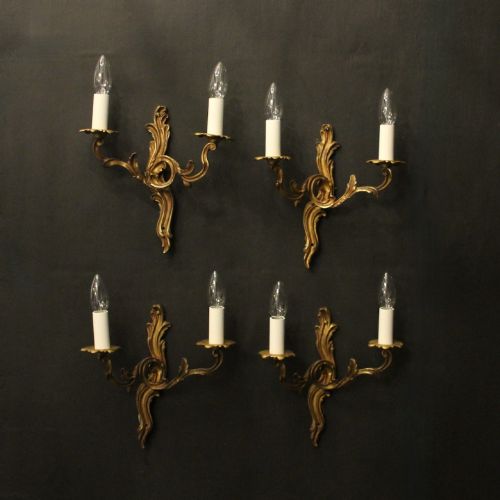
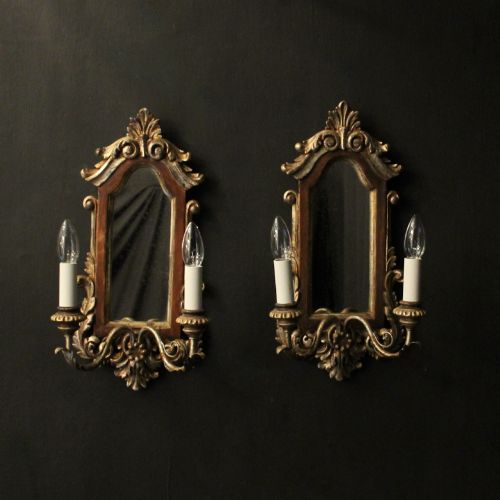
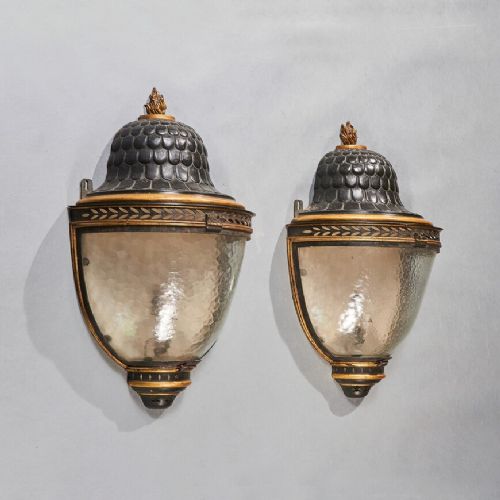
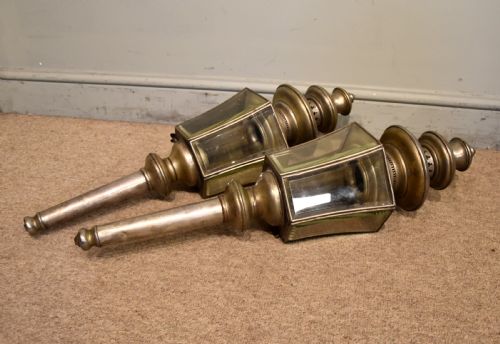
The selection ranges from elaborate giltwood girandoles and twin-arm sconces to coaching lamps and tole peinte lanterns. Pieces date from the seventeenth century through to the twentieth century, with a strong representation of Edwardian and interwar items.
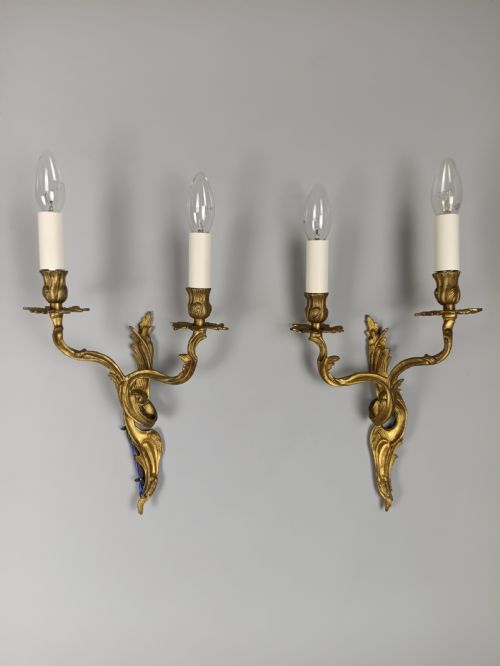
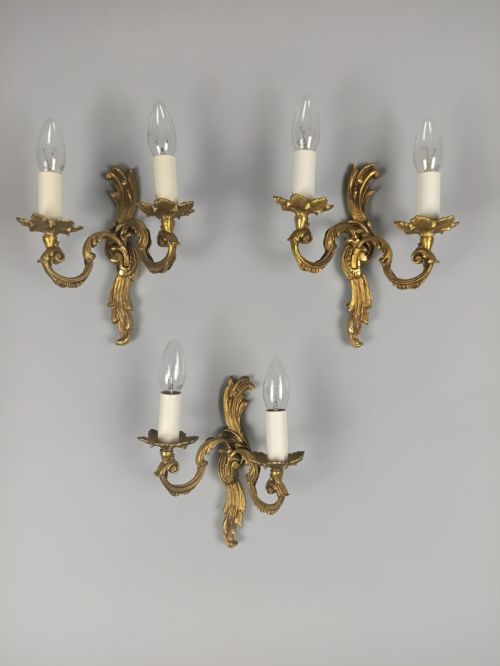
French designs dominate the selection, often drawing on neoclassical, rococo, and empire styles. Common configurations include two-arm and multi-branch fixtures utilising brass, bronze, and carved wood.
How they were made
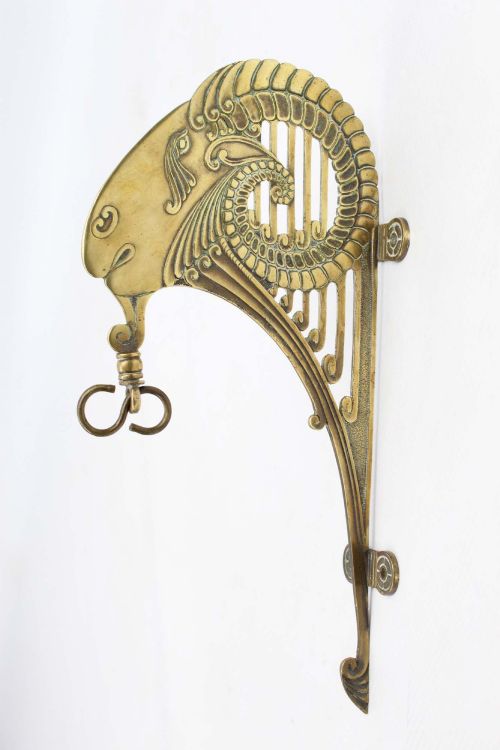
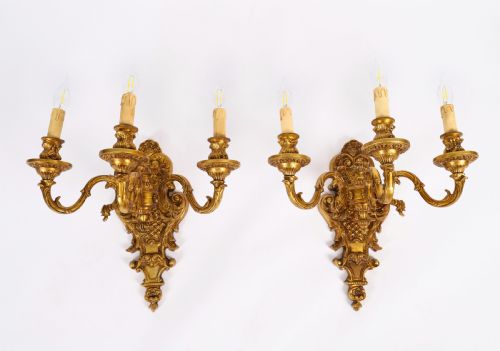
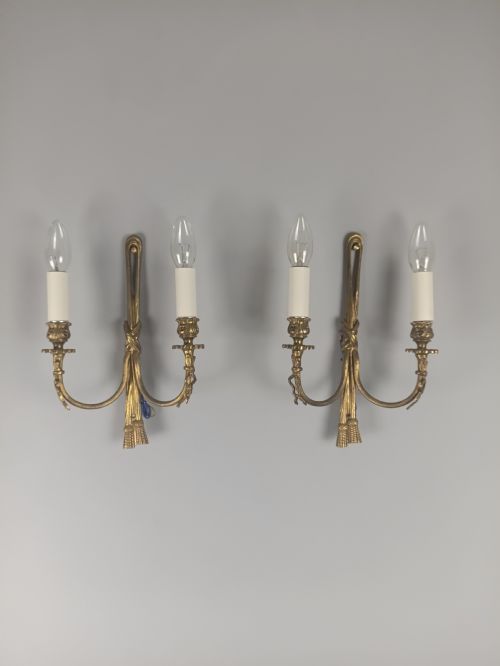
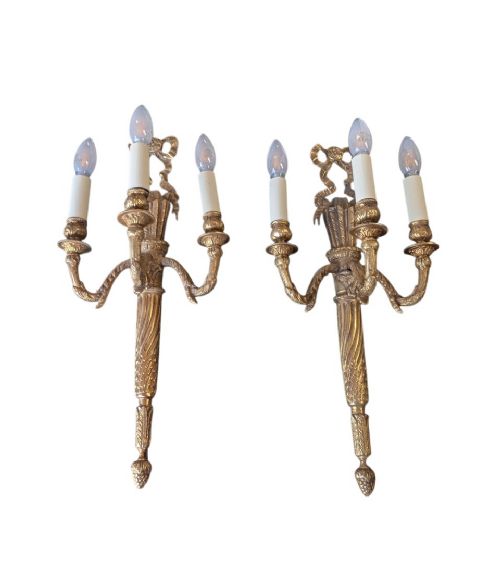
Casting and gilt work form the foundation of many pieces, utilising brass, gilt bronze, and ormolu applied to metal or wooden frames. Gilded brass and giltwood are frequently paired with gesso to build up intricate decorative motifs such as ribbon ties and ram's head masks.
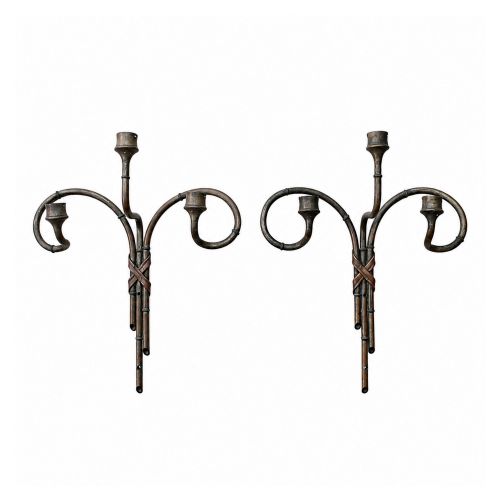
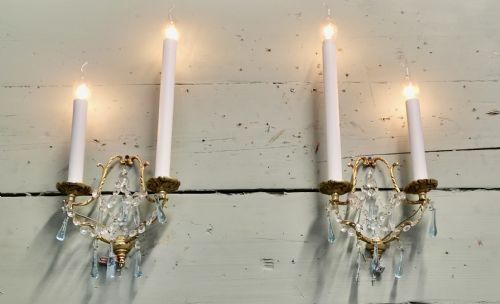
Carpentry and metalworking techniques vary by region, with Italian and French makers employing hand-carved wood, wrought iron, and polychrome painted finishes. Glass components, mirrored panels, and tole peinte are integrated to reflect candlelight and early electric illumination.
Materials represented across the inventory include gilt bronze, carved wood, tole peinte, wrought iron, and mirrored glass.
What varies in quality
The refinement of the casting and carving distinguishes standard production from finer examples. Crisp detail in bronze ormolu work and deeply undercut carving in giltwood indicate higher workshop standards.
Material composition also dictates quality, with genuine fire gilding and heavy cast brass outperforming lighter stamped metal alloys. The retention of original gilding, painted surfaces, and matching glass elements heavily influences the integrity of the piece.
Maison Baguès·Liberty
The Decorative Wall Lights Glossary
- Girandole
- A branched wall light or sconce, frequently incorporating a mirror to multiply the effect of the candles. These fixtures often feature elaborate giltwood or carved wooden frames.
- Ormolu
- Gilded bronze, typically produced by applying a mercury and gold amalgam to a bronze base and heating it. This technique yields a durable, deep golden finish seen on French neoclassical sconces.
- Tole Peinte
- Painted sheet metal, often shaped into lanterns or decorative shades. The technique allows for rich coloration and intricate surface decoration.
- Sconce
- A wall-mounted lighting fixture designed to hold candles or electric bulbs. Sconces often project outward on decorative arms.
- Gesso
- A plaster-like mixture applied to wood surfaces as a base for gilding and painting. It allows craftsmen to sculpt fine relief details before applying gold leaf.
Decorative Wall Lights: Frequently Asked Questions
How do I install antique wall lights?
Most antique wall sconces require professional installation by an electrician to ensure safe wiring and secure mounting to wall studs. Many older fixtures are adapted for modern electrical supplies while retaining their original sockets and backplates.
It is advisable to check the weight of cast bronze or wooden girandoles before installation to ensure the wall structure can support the load. Wall anchors and patress boards are frequently employed for heavier pieces.
How do I clean gilded wall lights?
Dusting with a soft, dry brush or feather duster prevents the accumulation of grime on delicate giltwood and ormolu surfaces. Moisture and abrasive cleaners must be avoided, as they can strip gold leaf and damage painted finishes.
Professional conservation cleaning is recommended for fragile surfaces or deeply tarnished metalwork. Gentle care preserves the original patination acquired over centuries.
How do I identify the period of a wall light?
Dating relies on examining construction methods, material composition, and stylistic motifs associated with specific eras like the Regency or Edwardian periods. Tool marks on cast brass, the type of screws used, and the composition of the wood or gesso offer clues to age.
Comparing the decorative vocabulary, such as Louis XVI ribbon motifs or Victorian cast brass patterns, helps place the object within a historical timeframe. Archive examples and documented workshop styles provide further reference points.