






Dark Yew Windsor Chair
A dark yew windsor chair brings deep timber colour and robust country craftsmanship directly to a traditional seating arrangement.
Dark Yew Windsor Chair
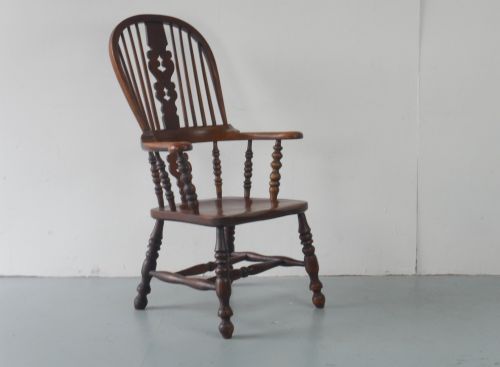
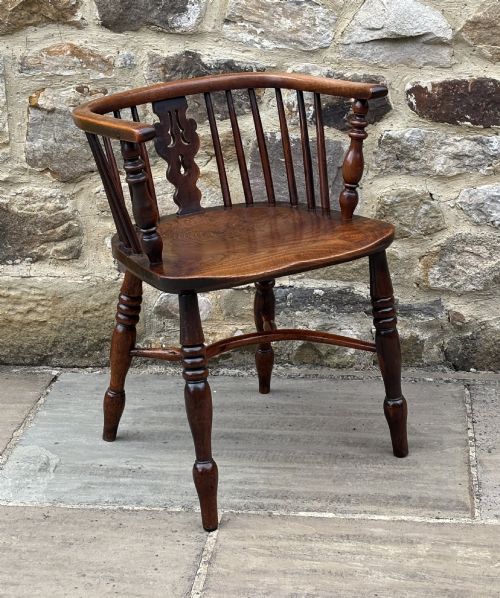
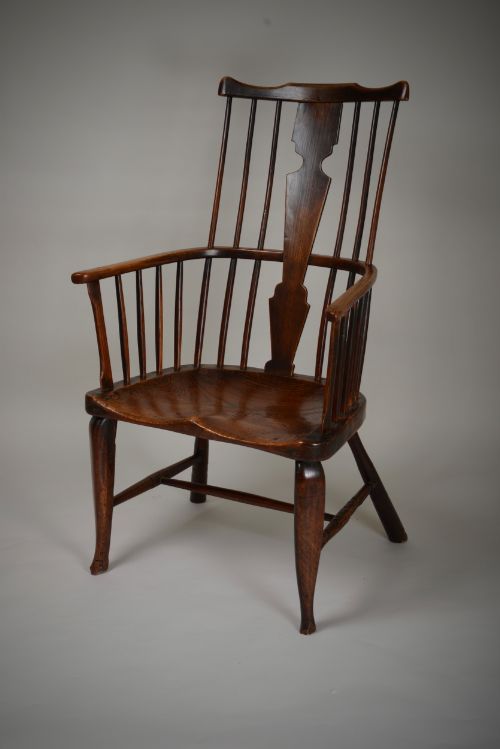
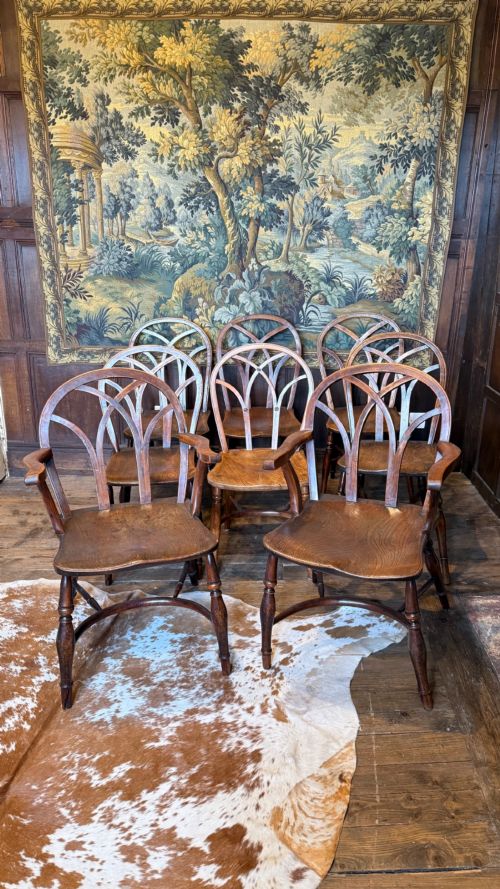
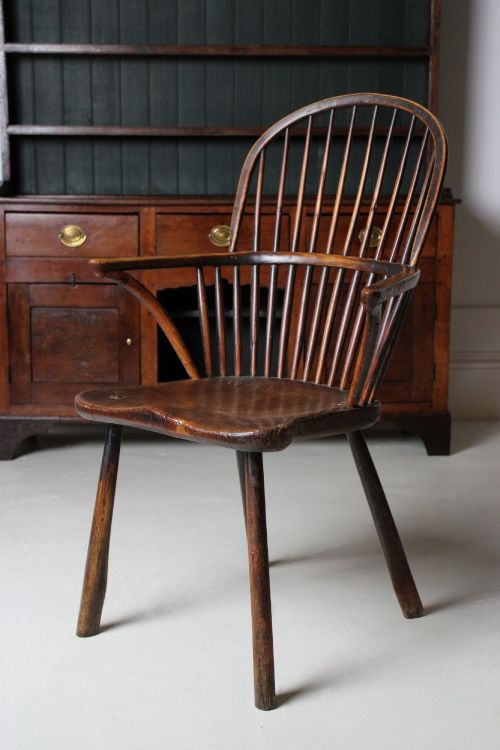
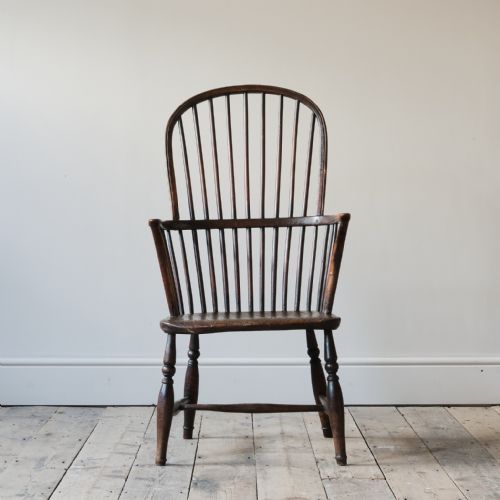
A dark yew windsor chair represents a distinct tradition of regional wooden seating found across English country houses and farmhouses. These pieces combine a solid wooden seat with spindles and a bentwood bow or comb back.
The selections here span the eighteenth and nineteenth centuries, including Georgian and Victorian examples. Regional forms such as the Thames Valley and Yorkshire styles appear alongside children's chairs and rocking chairs.
Makers ranged from local provincial joiners to named regional workshops. Their designs utilise native timbers shaped for both domestic utility and enduring strength.
Materials and Construction
Makers built each dark yew windsor chair by wedging legs and back spindles directly into a thick sculpted wooden seat, usually carved from elm. This method created a rigid, unified frame without traditional box stretchers.
The upper frameworks rely on steam-bent yew wood or ash for the bows and comb backs, taking advantage of the natural elasticity of these timbers. Additional elements incorporate beech, fruitwood, and oak for structural supports.
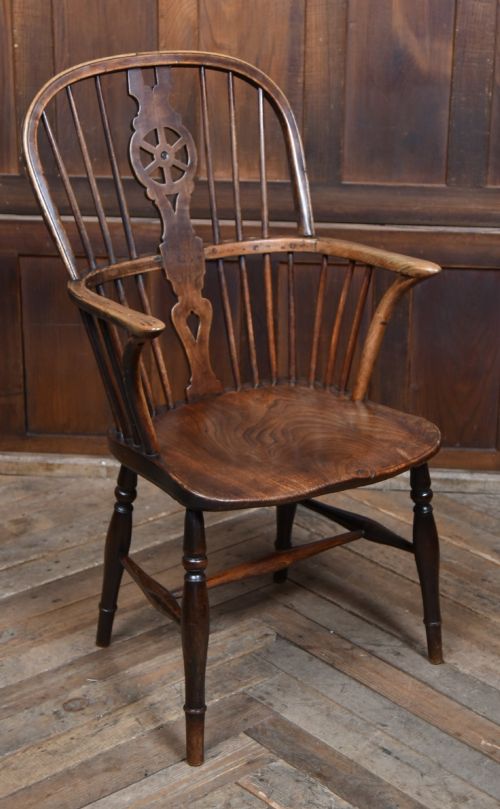
Surfaces often display a rich, dark patination developed through generations of daily use and waxing. Carved details such as wheel backs, broad arms, or snake head motifs reveal the individual hand of the regional artisan.
Dark Yew Windsor Chair Retail Price Guide 2026
Typical asking prices for dark yew windsor chair among the pieces listed under this phrase on Sellingantiques today, from the lower quarter to the upper quarter. They describe what is for sale here now, not the wider market.
Listings feature eighteenth and nineteenth century periods, incorporating regional styles such as Thames Valley and Yorkshire.
Assessing Quality and Character
Quality rests in the balance of the timber selection and the purity of the regional form. Yew wood with rich figuring and deep grain contrast elevates a piece above standard ash or beech construction.
The depth of the saddle seat carving and the grace of the bentwood bow dictate the visual success of the chair. Heavier, thicker arm profiles and well-defined spindle turnings distinguish superior workshop output from plain utility seating.
John Brand of Sleaford·John Moss Worksop·John Shadford Windsor Lincolnshire·Rockley Maker
The Dark Yew Windsor Chair Glossary
- Comb back
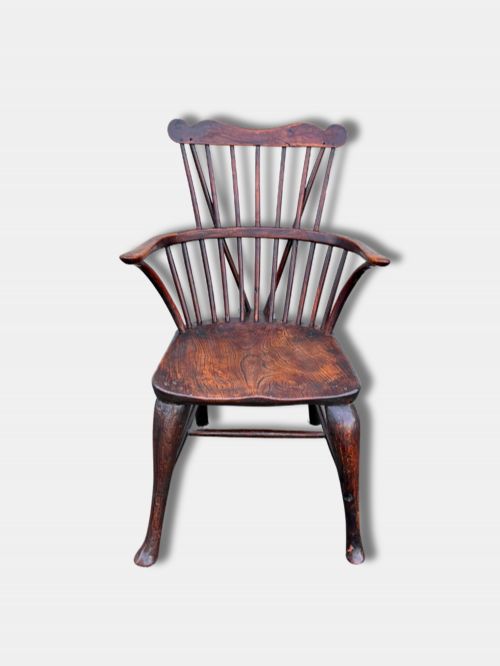
- A Windsor chair style where the vertical spindles extend upward to form a horizontal crest rail resembling a traditional hair comb.
- Wheel back
- A Windsor chair design featuring a pierced wooden splat carved in the shape of a cartwheel placed centrally in the backrest.
- Broad arm
- A chair featuring enlarged, flattened wooden armrests designed for writing or resting hands comfortably.
- Vernacular
- An architectural or furniture style shaped by local traditions, available materials, and practical necessity rather than formal academic design.
- Thames Valley
- An English regional style associated with nineteenth century production along the river, noted for refined yew wood construction and distinctive turnings.
Dark Yew Windsor Chair: Frequently Asked Questions
What is a windsor chair?
A windsor chair is a wooden seat constructed by inserting individual legs and back spindles directly into a thick, saddle-shaped wooden seat base.
This method differs from standard framed furniture by relying on bored holes and wedged tenons for structural integrity.
How do I identify yew wood?
Yew wood displays a dense, highly figured grain pattern with rich variations of amber, brown, and deep reddish tones.
Over time, finishing oils and natural ageing deepen this timber into a dark, lustrous surface patina.
Where were these chairs made?
These chairs originated in various English regions, with particular stylistic traditions developing in areas like Yorkshire and the Thames Valley.
Local rural workshops utilised whatever strong native hardwoods grew nearby, including elm, ash, and fruitwood.
How should I care for yew wood?
Maintain the timber by applying a microcrystalline wax periodically and buffing it gently with a soft cloth to preserve the finish.
Keep the chair away from direct heat sources and sudden humidity shifts to prevent the dry wood from splitting.