
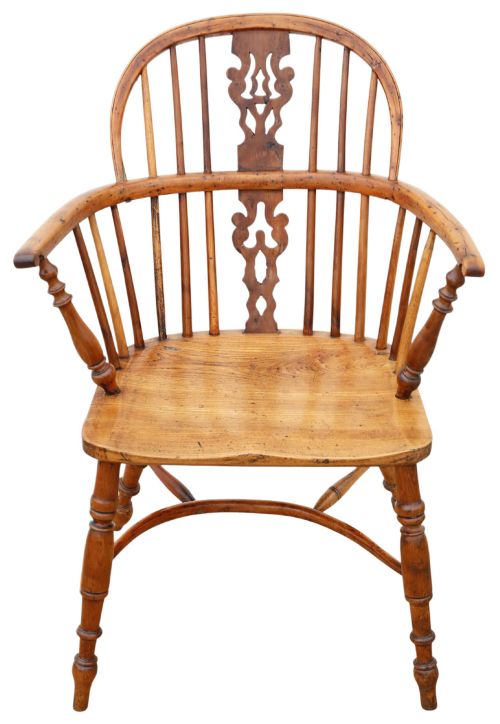
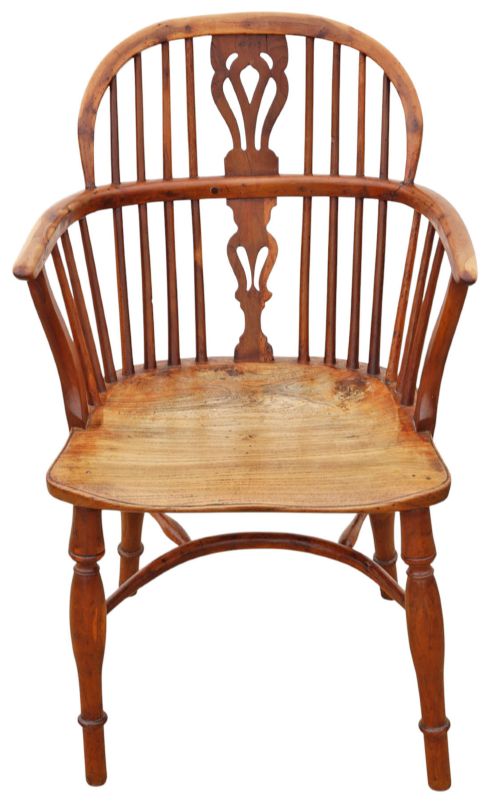


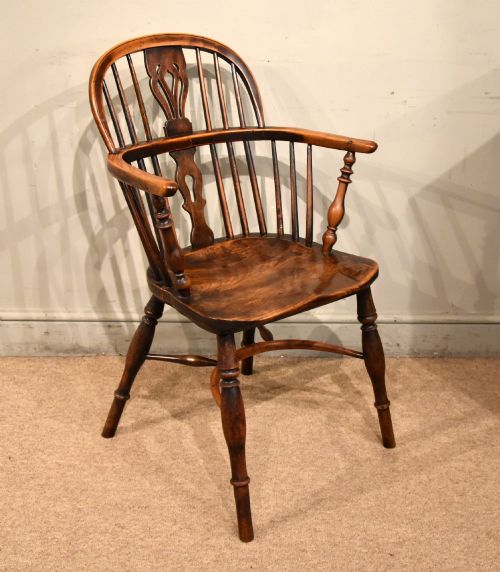
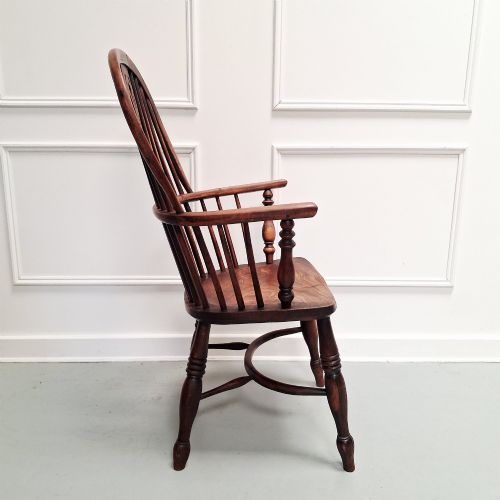
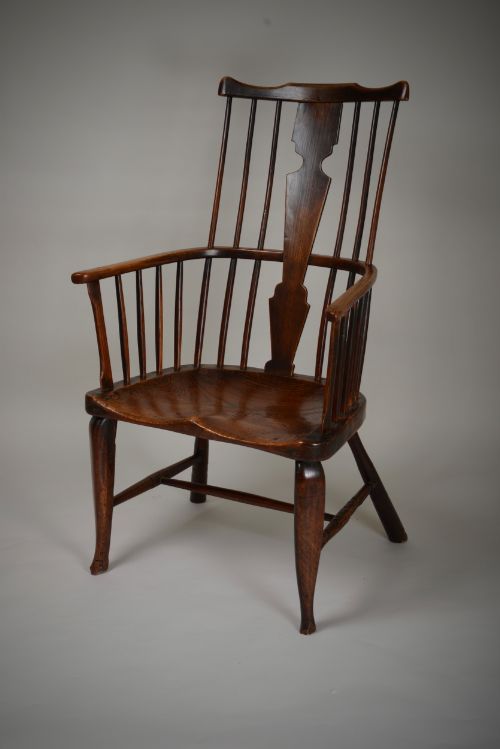
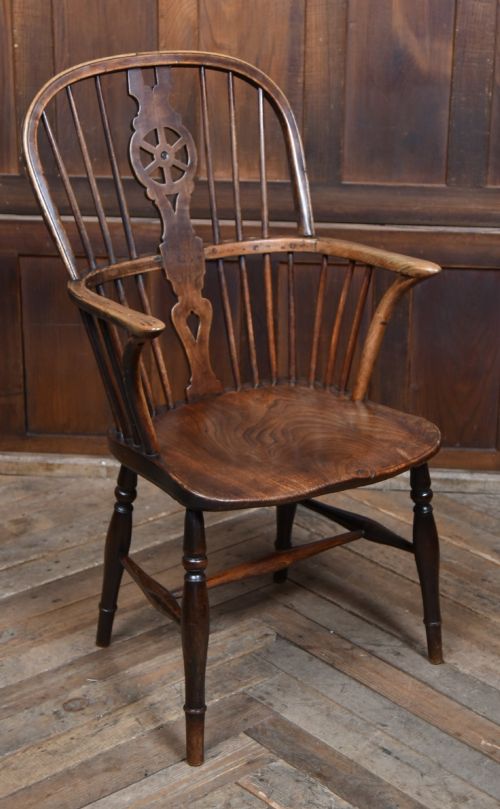
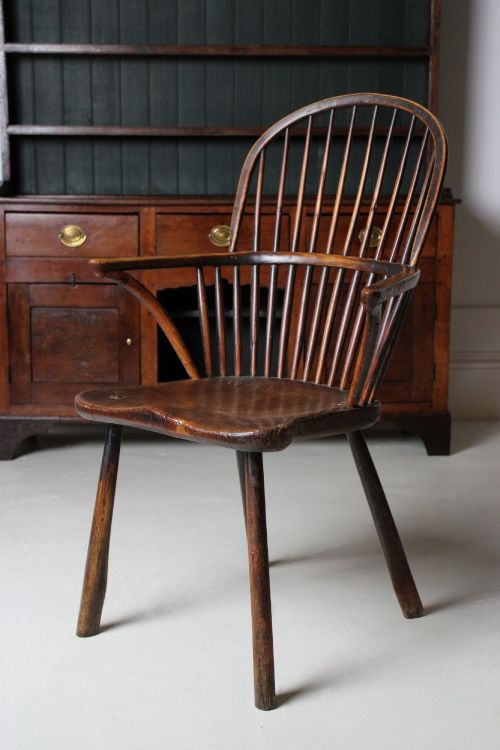
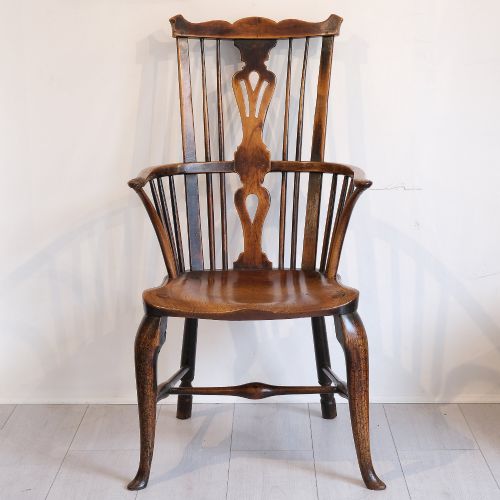
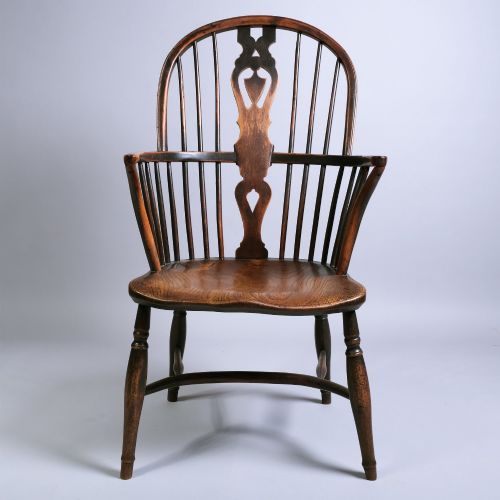
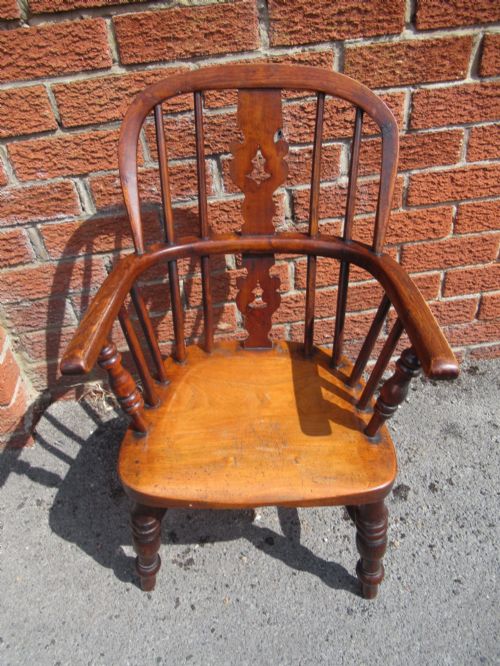
Antique English Yew Armchair
An antique english yew armchair brings the warmth of country craftsmanship and rich timber grain directly into a room.
Antique English Yew Armchair
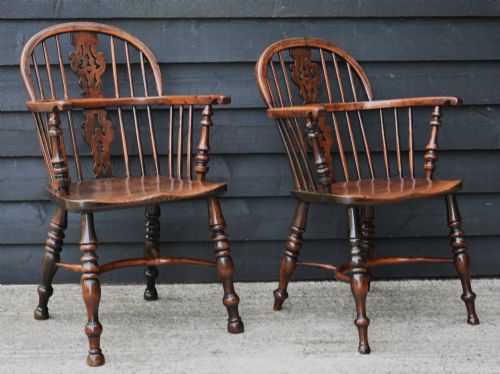
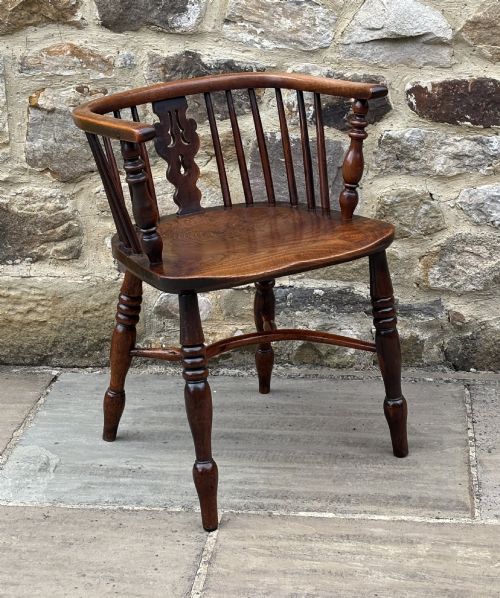
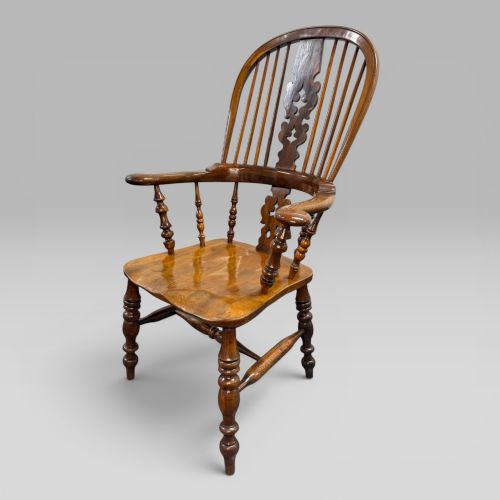
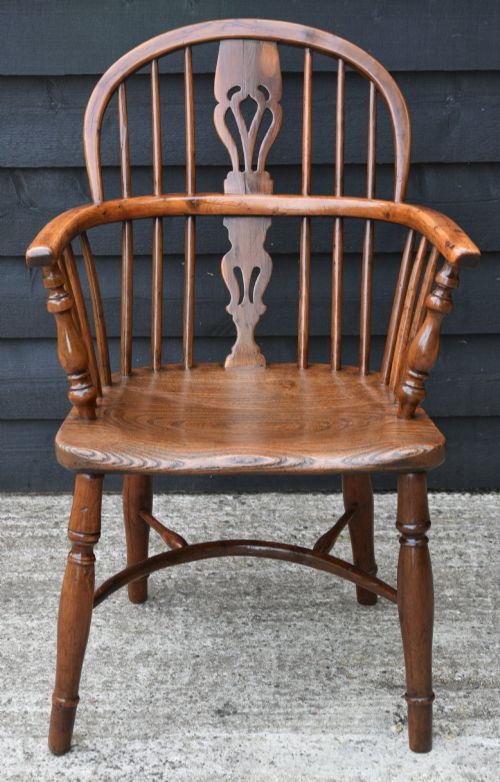
When searching for an antique english yew armchair, the buyer encounters vernacular seating forms rooted in domestic rural traditions. The most frequent iteration on this page is the Windsor chair, recorded across Georgian and Victorian periods.
These seats appear primarily as armchairs and carvers, alongside low-back, high-back, comb-back, and hoop-back variants. Regional origins emerge in English country houses and districts such as the Thames Valley and Worksop.
Makers utilised resilient local timbers, pairing yew wood with elm seats and occasional elements of ash, beech, or oak. Surviving examples range from single pieces to matched pairs and larger sets of dining chairs.
How They Were Made
Construction relies on a traditional stick-back or spindle-back framework assembled around a solid shaped wooden seat. Artisans turned supporting spindles and legs on a lathe while steaming and bending continuous wooden bows for the backrests.
Makers selected contrasting native woods for specific structural properties, combining tough yew for the upper bows and arms with dense elm for carved saddle seats. Additional reinforcement came from turned stretchers, including crinoline varieties fitted between the legs.
Listings feature 19th century and Georgian periods alongside materials including yew wood, elm, ash, and beech.
What Varies in Quality
Quality rests in the visual depth of the timber grain and the complexity of the turned components. Richly figured yew wood with deep natural figuring commands greater visual presence than plainer grain patterns.
Proportion and structural harmony dictate the distinction at the upper end of the range. Elegant bow sweeps, well-sculpted saddle seats, and crisp turning on the legs separate refined vernacular items from simpler utilitarian seating.
J Spencer·Gabbitass Worksop·John Brand of Sleaford
The Antique English Yew Armchair Glossary
- Windsor Chair
- A wooden chair built with a thick solid seat into which the legs and back spindles are directly dowelled. This form defines the majority of vernacular seating found in English country houses.
- Comb Back
- A Windsor chair variation where the central vertical splat extends upward to support a horizontal top rail resembling a decorative comb. It stands as a distinct stylistic marker of Georgian country seating.
- Crinoline Stretcher
- A curved under-framing rail linking the legs of a chair in a continuous loop. This feature provides structural rigidity while adding a graceful decorative element beneath the seat.
- Hoop Back
- A continuous bentwood bow forming the arms and backrest of a chair in a single flowing curve. It provides ergonomic support through its rounded upper profile.
- Carver
- An armchair designed with generous proportions to sit at the head of a dining table or serve as an occasional fireside seat. These pieces match the styling of smaller side chairs in a set.
Antique English Yew Armchair: Frequently Asked Questions
What is an antique english yew armchair?
An antique english yew armchair is a traditional wooden seating form built with a shaped solid seat and turned spindle backrests. These chairs embody centuries of regional domestic craftsmanship.
Craftsmen built them using native timbers, predominantly yew wood and elm, to serve practical functions in country homes. Today they remain sought after for their organic forms and warm wood tones.
How do I identify a Windsor chair?
A Windsor chair is recognised by its heavy sculpted wooden seat that directly anchors the legs underneath and the back spindles above. Unlike upholstered furniture, the construction exposes the structural joinery.
Variations include hoop backs, comb backs, and low backs, each reflecting different regional preferences and periods of manufacture across the eighteenth and nineteenth centuries.
Where were these chairs made?
These chairs originated in rural English workshops, often associated with vernacular traditions in the Thames Valley and northern regions like Worksop. Local joiners utilised timber harvested directly from surrounding woodlands.
Such regional centres developed distinct design characteristics, from the pitch of the armrests to the specific turning patterns found on the legs and stretchers.
How do I live with an antique yew armchair?
Living with an antique yew armchair involves placing the piece away from direct heat sources and sudden temperature fluctuations to protect the timber. Regular dusting and occasional wax application help maintain the natural lustre of the wood.
These chairs integrate easily into contemporary and traditional interiors alike, functioning effectively as desk seats, reading chairs, or fireside companions.
How do I tell different periods apart?
Differentiating periods relies on observing shifts in construction techniques, timber selection, and overall silhouette. Eighteenth-century examples often feature delicate comb backs and cabriole legs, while Victorian pieces tend toward broader proportions and high-back formats.
Tool marks, wear patterns, and the patination of the yew and elm woods also provide reliable clues to a chair's chronological age.