
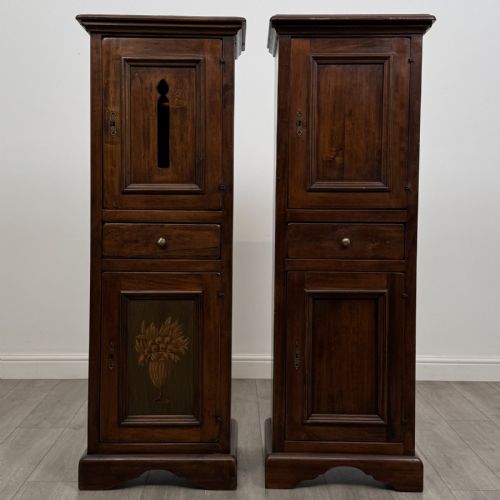
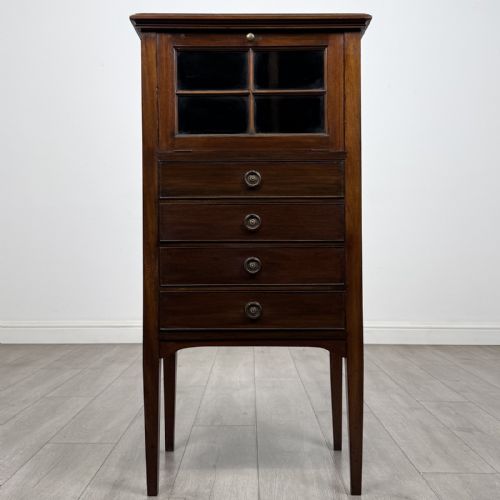
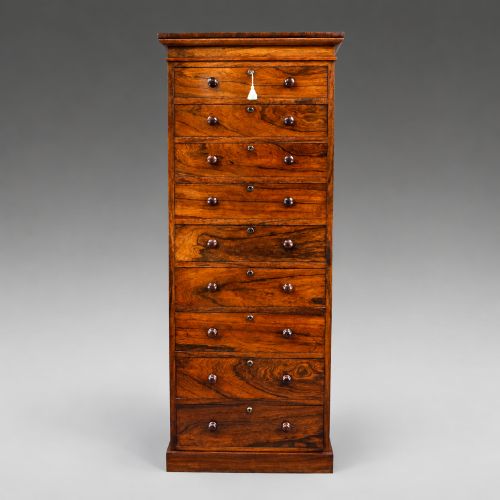
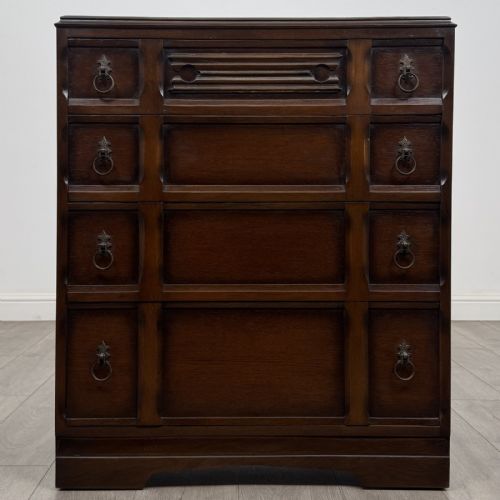
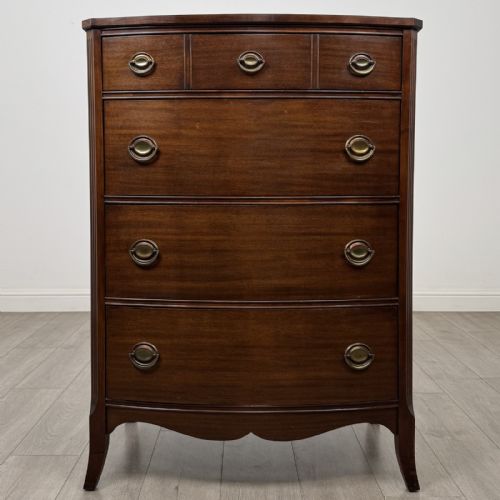
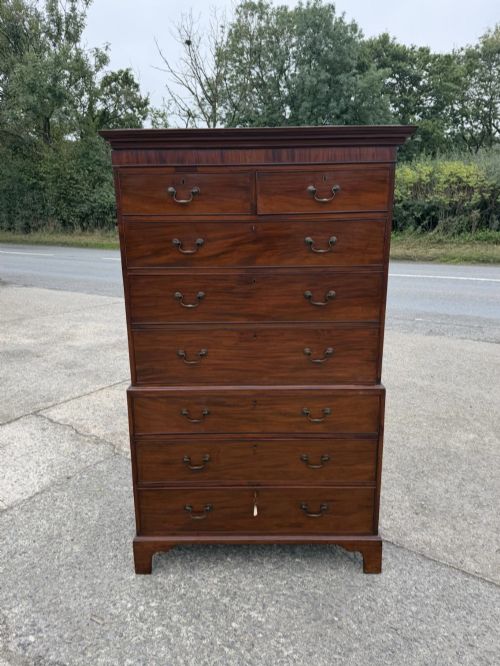
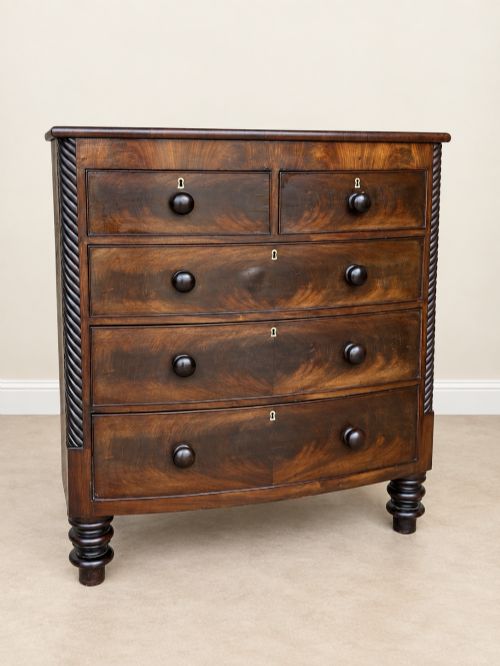
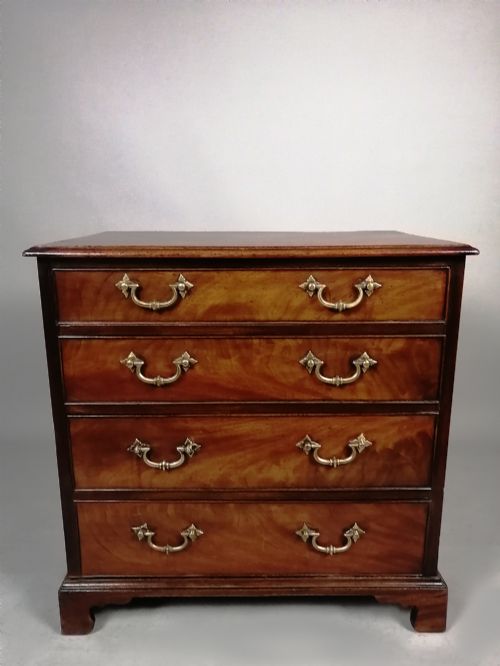
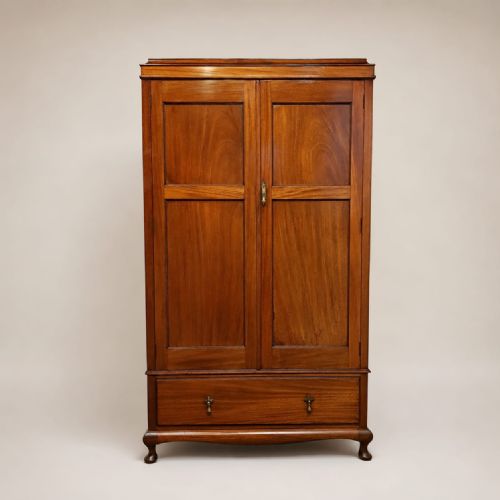
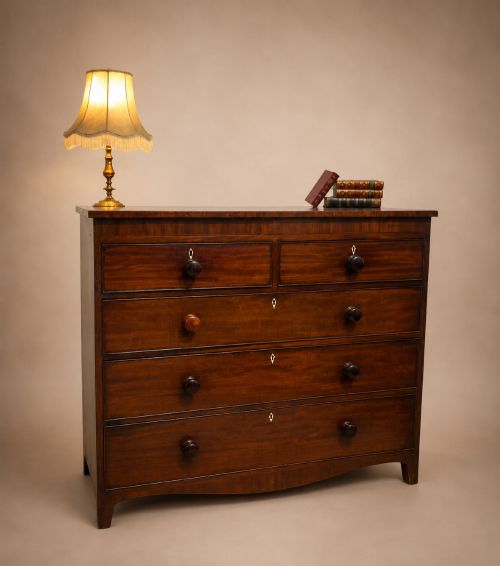
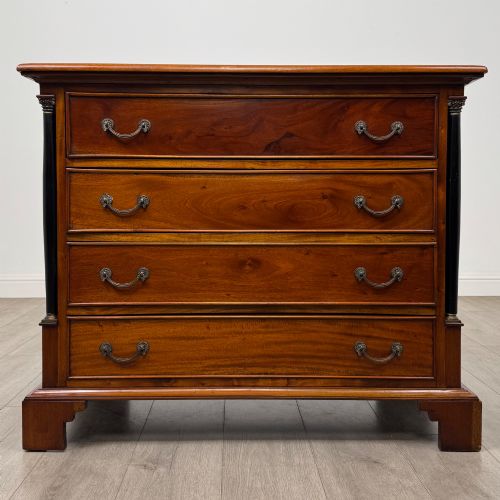
Dark Wood Tallboy Cabinet
A dark wood tallboy cabinet delivers commanding vertical storage in rich timber, bringing timeless proportion and practicality to any room.
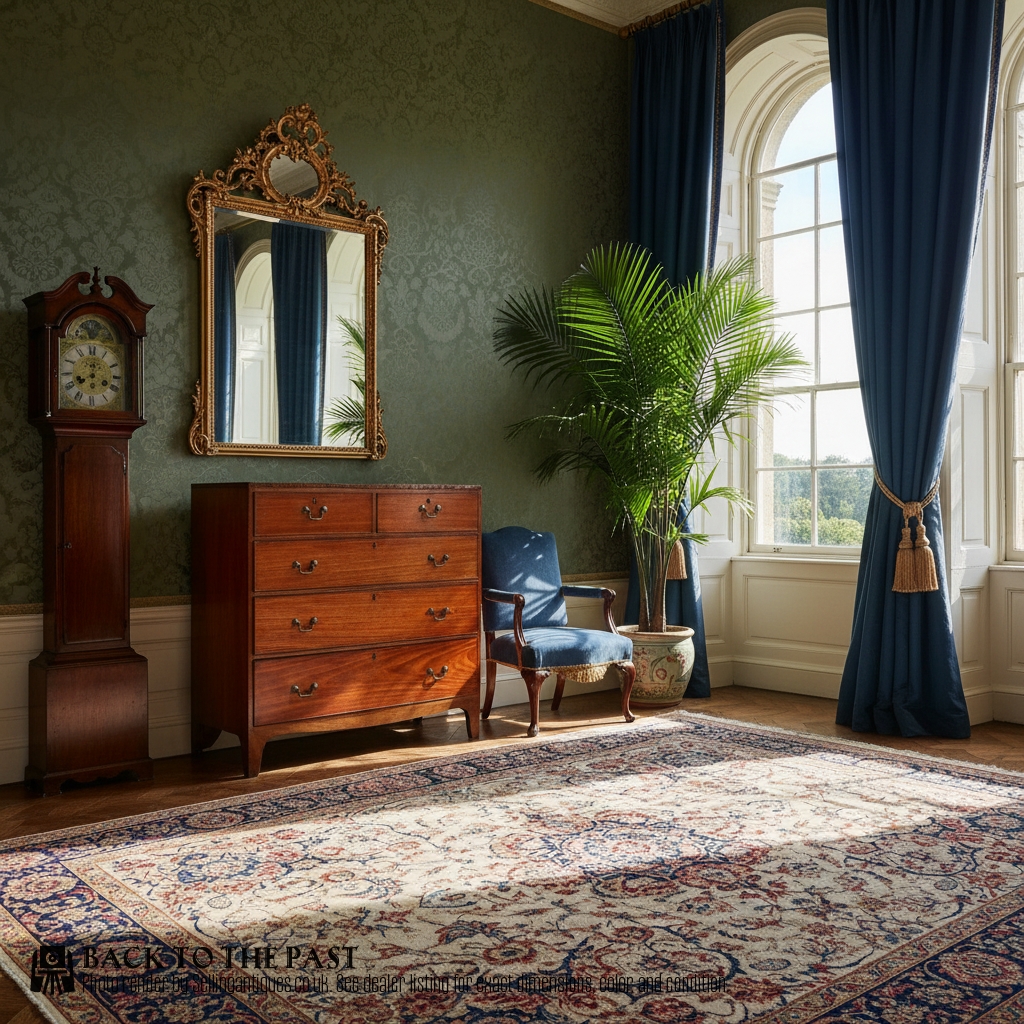
Dark Wood Tallboy Cabinet
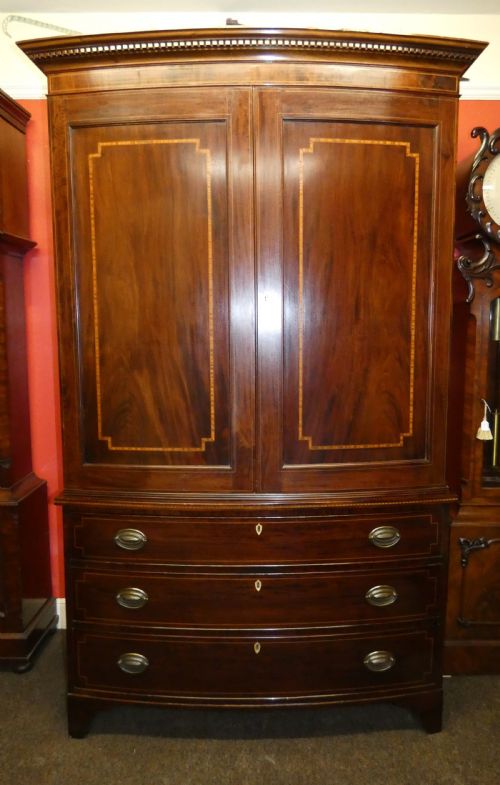
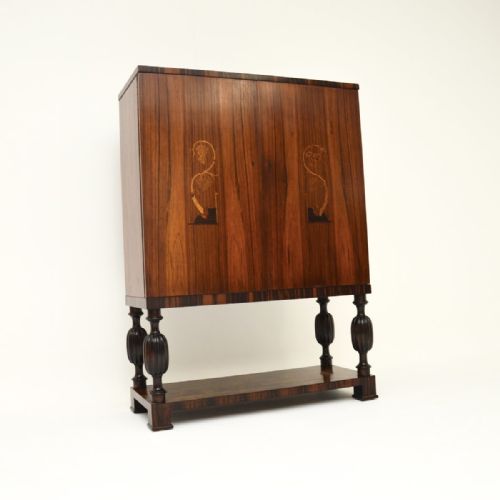
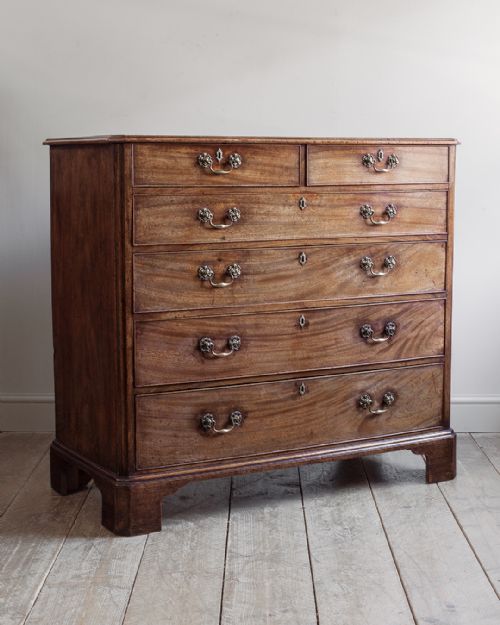
The dark wood tallboy cabinet groups together tall stacking furniture designed to maximise storage without claiming excessive floor space in a room. Buyers searching this phrase encounter tall chests, chests on chests, linen presses, and secretaire semaniers spanning multiple historic periods.
Mahogany, rosewood, walnut, and oak dominate the timber selections across the inventory, reflecting the dark wood aesthetic prized by cabinetmakers for centuries. Examples range from eighteenth-century George III pieces to Edwardian and nineteen-twenties productions.
The forms vary from simple narrow drawer stacks to complex tallboys featuring secretaire drawers, fitted linen presses, and glazed bookcase tops. Georgian and Victorian iterations appear frequently, alongside Regency designs and twentieth-century interpretations.
Materials and Construction
Cabinetmakers utilised dense hardwoods such as mahogany, rosewood, walnut, and oak as the structural foundation for these tall pieces, frequently applying flame veneers and marquetry for visual depth. Crossbanding in contrasting timbers such as satinwood and rosewood frames drawer fronts and panel edges on finer examples.
Traditional joinery underpins the construction, employing hand-cut dovetails for drawer boxes and framed carcasses designed to bear the heavy weight of dense timbers. Turned handles, brass drop handles, and brass escutcheons secure the drawer fronts and doors.
The selection spans from seventeenth-century floral marquetry down to mid-twentieth-century carved cabinets and nineteen-thirties elm veneer chests.
Assessing Quality and Craftsmanship
The hierarchy of quality rests on the selection of timber figures, such as matched flame mahogany or intricate marquetry patterns, and the precision of the cabinetmaker's joinery. Superior pieces display continuous grain alignment across stacked drawer fronts and tight, hand-cut dovetailing that remains secure over centuries.
Hardware integrity and internal secondary woods also distinguish finer examples, where oak or mahogany lines the drawer interiors rather than cheaper softwood substitutes. Original brass fittings, well-fitted dust boards between drawers, and smooth drawer running actions separate high-end workshop production from utilitarian output.
Mawer & Stephenson·Maison Krieger
The Dark Wood Tallboy Cabinet Glossary
- Tallboy
- A tall chest of drawers, often constructed as a chest on chest or a single towering carcass designed to maximise vertical storage. This form provides substantial drawer capacity while maintaining a compact footprint on the floor.
- Secretaire
- A cabinet or chest incorporating a pull-down writing drawer fitted with small pigeonholes and inner compartments. This dual-purpose feature allows a drawer to transform into a compact writing desk.
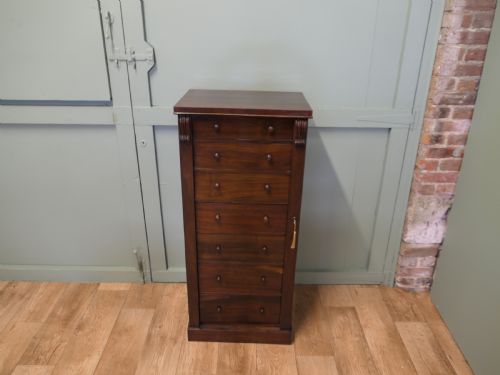
- Wellington chest
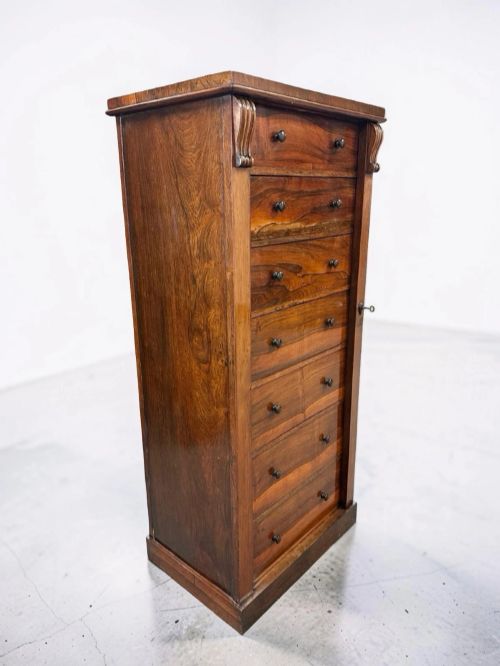
- A tall, narrow chest of drawers secured by a hinged locking side pilaster that fastens over the drawer edges. Originating in the nineteenth century, this locking mechanism secures every drawer simultaneously with a single key.
- Linen press
- A large tall cabinet featuring upper doors enclosing sliding trays or shelves above a chest of lower drawers. Originally built for storing household linens flat, these pieces offer deep internal volume.
- Crossbanding
- A decorative border technique where thin strips of veneer are laid outward around the perimeter of a panel or drawer front so the grain runs perpendicular to the central surface. This frames the primary timber and adds contrast.
Dark Wood Tallboy Cabinet: Frequently Asked Questions
How do I use a tallboy cabinet?
These tall cabinets serve primarily as high-capacity storage solutions for clothing, linen, or personal documents in bedrooms and dressing rooms. Their vertical orientation provides generous drawer space while occupying minimal floor area.
Larger versions with secretaire drawers or cabinets double as writing desks or display spaces. Positioning them against a sturdy wall ensures stability given their height.
What is a chest on chest?
A chest on chest consists of a smaller upper chest stacked directly onto a wider lower base chest, creating a tall storage unit. This two-part construction made heavy furniture easier to transport up narrow staircases in historic homes.
Cabinetmakers often finished both sections with matching timber grains and decorative mouldings to present a unified facade.
How do I date a dark wood cabinet?
Dating relies on examining construction methods, timber choices, and hardware styles across the piece. Hand-cut dovetails, secondary timbers like oak, and period-specific brass drop handles provide key chronological clues.
Stylistic markers such as Georgian bracket feet, Regency brass inlay, or Edwardian proportions further narrow down the decade of manufacture.
How do I care for antique dark wood?
Protect antique wood surfaces by keeping them away from direct sunlight and maintaining stable room humidity. Sudden temperature shifts cause timber to expand and contract, which can crack veneers or warp panels.
Applying occasional natural wax feeds the timber and maintains the sheen without building up heavy silicone residues.