





Reddish Brown Mahogany Dresser
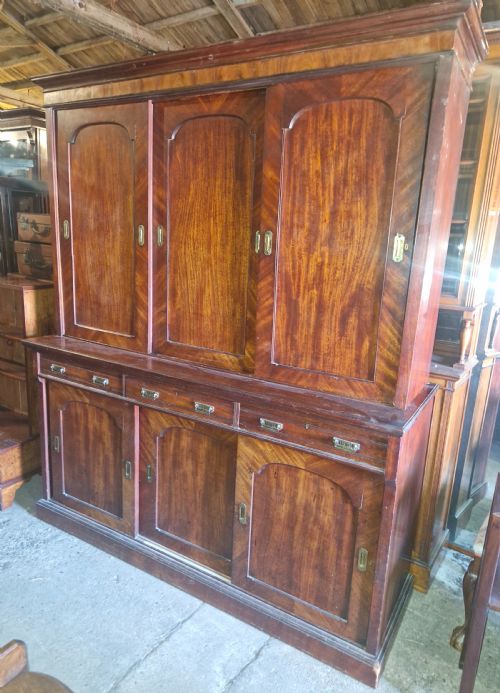
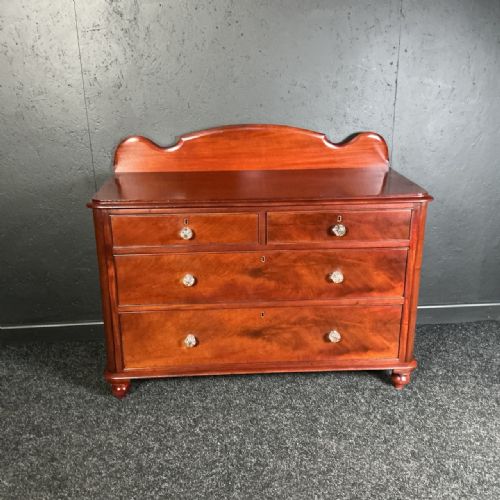
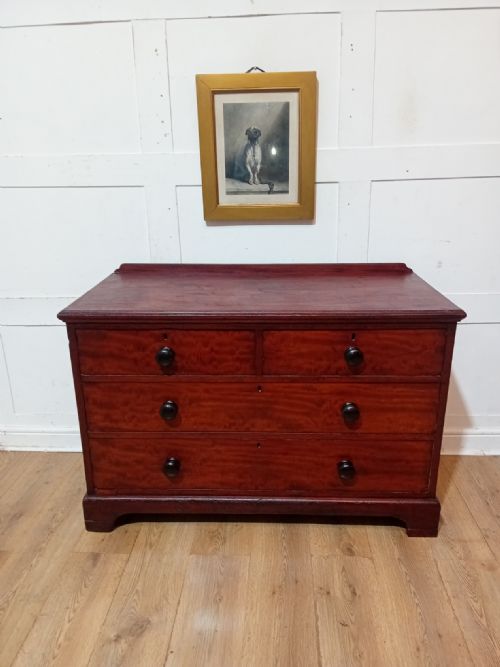
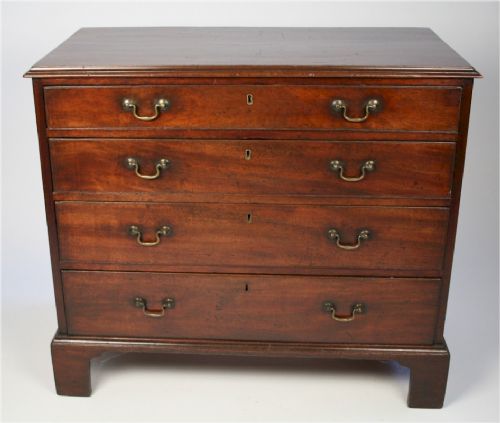
These reddish brown mahogany dresser pieces are solid timber storage items that bring deep colour and period presence into a room.
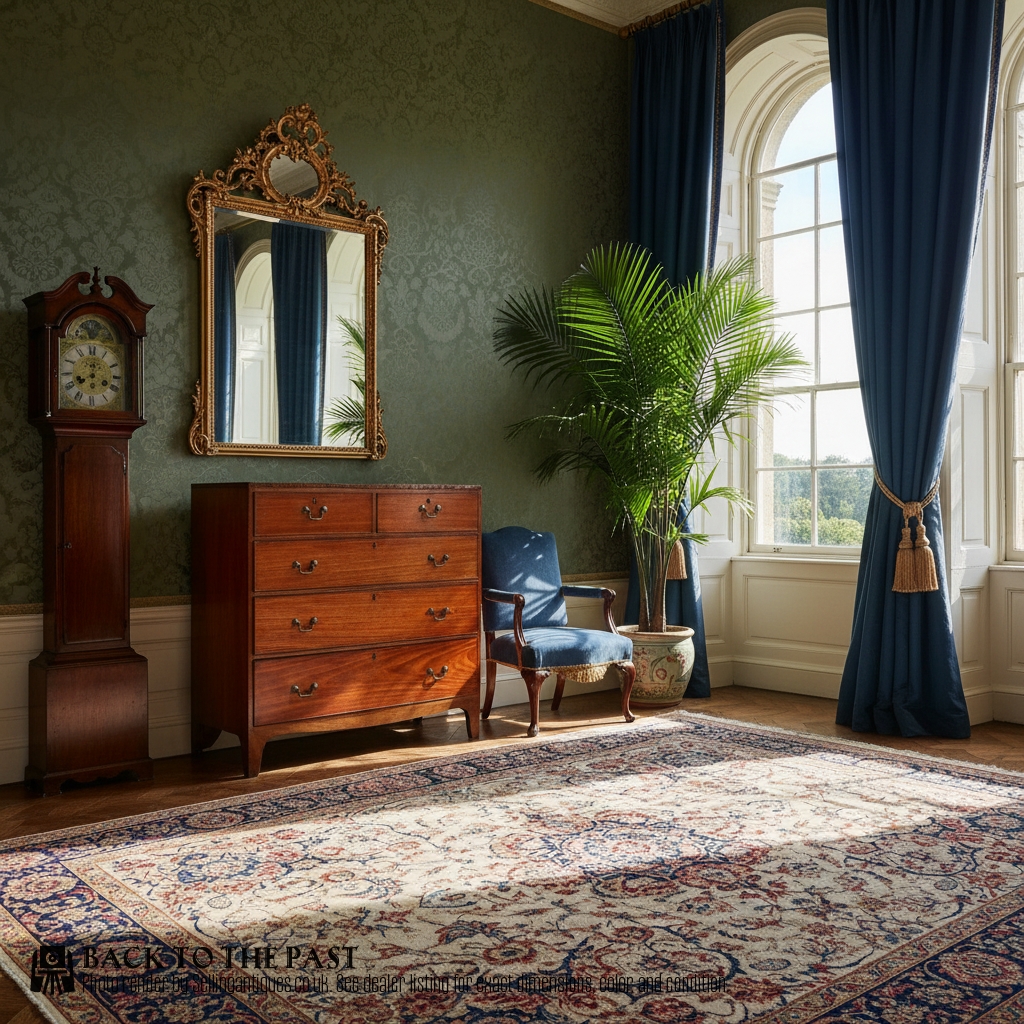
Reddish Brown Mahogany Dresser
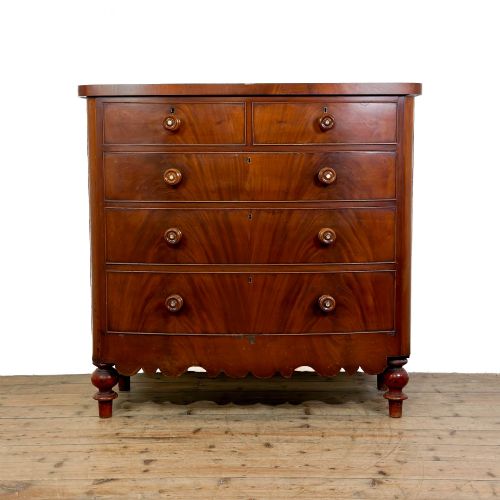
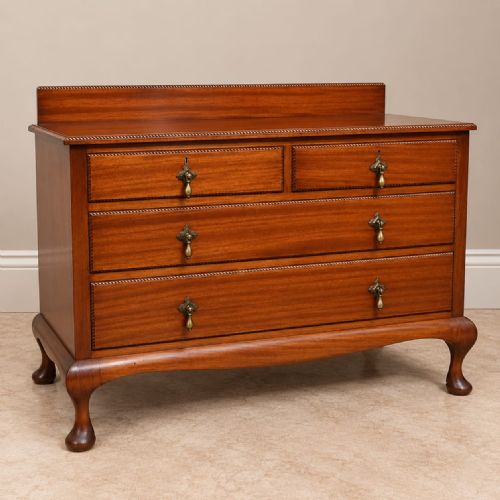
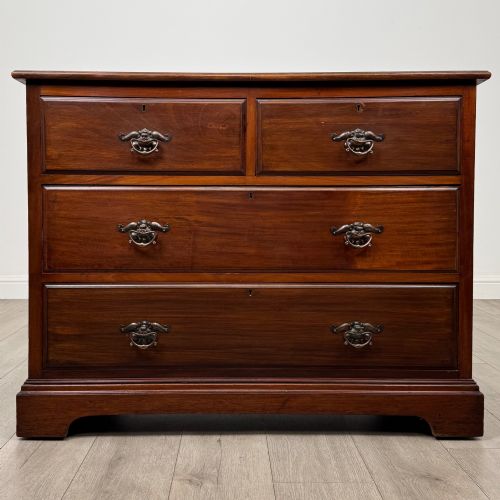
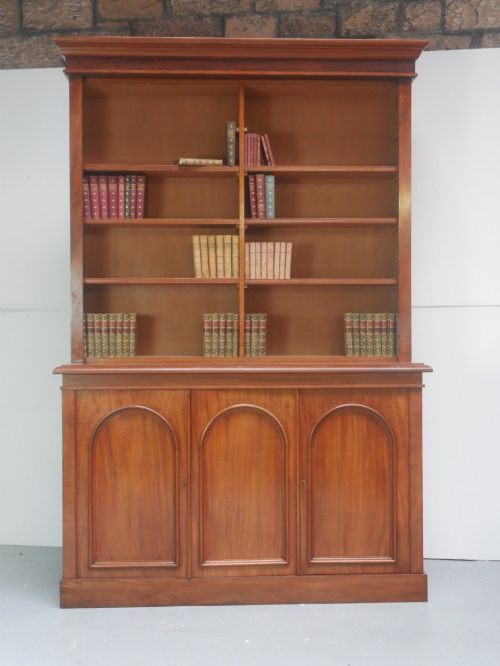
A reddish brown mahogany dresser search brings up substantial wooden furniture designed for storage, most commonly seen as chests of drawers spanning the Georgian, Victorian, and Edwardian periods. These forms range from simple three-height chests and bowfront designs to larger country house estate office cabinets and bookcases.
The materials you encounter most frequently on this page are mahogany timber paired with secondary woods like pine and chestnut, often accented by brass handles and occasional boxwood inlay or mother of pearl details. Object types extend from standard chests of drawers to sideboards, credenzas, and cupboards.
Pieces date across the eighteenth, nineteenth, and twentieth centuries, showing styles that run from Georgian and Regency through Grand Regency to Victorian and Edwardian. The typical survivor is a chest of drawers constructed with deep reddish brown timber and functional storage capacity.
How they were made
Construction relies on solid mahogany timber, sometimes supported by secondary woods such as pine and cedar for drawer linings, reflecting the structural needs of large furniture. Cabinetmakers utilised dovetail joints for drawer construction and integrated brass hardware for pulls and handles.
Surface decoration appears through contrasting boxwood inlay and mother of pearl detailing set into the timber. Makers shaped the wood into bowfront facades and straight chests, applying polished finishes that highlight the reddish brown grain of the mahogany.
Listings feature mahogany, pine, chestnut, and cedar alongside brass hardware, glass, boxwood inlay, and mother of pearl across Victorian and Georgian periods.
What varies in quality
Quality shows in the selection of the mahogany timber and the precision of the cabinet work, particularly in how drawers are lined and fitted. Pieces featuring original handles and subtle boxwood inlay demonstrate a higher level of workshop attention.
The refinement of the proportions and the joinery separate standard utility furniture from finer examples across the Georgian and Victorian eras. Subtleties in the grain and the execution of bowfront shapes dictate the standing of an individual piece.
The Reddish Brown Mahogany Dresser Glossary
- Bowfront
- A curved front facade curving outward in the centre, commonly seen on Georgian and Victorian chests of drawers. This shape required skilled woodworking to achieve the smooth sweep across the timber.
- Brushing slide
- A pull-out shelf integrated into the upper section of a chest of drawers, used historically as a surface for folding clothes or grooming. It slides back flush with the cabinet frame when not in use.
- Boxwood inlay
- Narrow strips of pale boxwood set flush into the darker mahogany surface to create contrasting geometric or linear borders. This decorative technique highlights the edges and drawer fronts of Edwardian and Georgian pieces.
- Dovetail
- An interlocking woodworking joint formed by interlocking wedge-shaped fingers, used extensively to join drawer corners securely. The tightness and regularity of these joints indicate the skill of the maker.
Reddish Brown Mahogany Dresser: Frequently Asked Questions
What periods do these come from?
The listings span the eighteenth, nineteenth, and twentieth centuries, encompassing Georgian, Regency, Victorian, and Edwardian eras. Each period brings distinct proportions and decorative details to the mahogany timber.
Cabinetmaking methods evolved across these centuries, moving from Georgian structural joinery to later Victorian and Edwardian production while maintaining the core reddish brown wood.
How do I maintain the mahogany surface?
Keep the wood away from direct sunlight and extreme temperature changes to prevent the reddish brown finish from drying out or fading. Regular dusting with a soft, dry cloth preserves the polish.
Apply a traditional wax polish occasionally to nourish the timber and maintain the natural lustre of the grain without building up heavy residues.
Where were these pieces used?
These items served primarily in bedrooms, hallways, and estate offices for storing linens, documents, and personal belongings. Large pieces functioned as main storage units in period homes.
Country house estate office cabinets and sideboards were built to handle heavy administrative work or dining room storage needs in larger households.
How do I spot a bowfront chest?
Look at the front profile of the cabinet to see if the central section curves outward in a smooth convex sweep. This design adds depth and a softer silhouette to standard rectangular chests.
Bowfront chests appear frequently in Georgian and Victorian examples, offering curved drawer fronts that require specialised carpentry to fit properly.